Small Apartment Kitchen Ideas: More Counter Space Without Remodeling
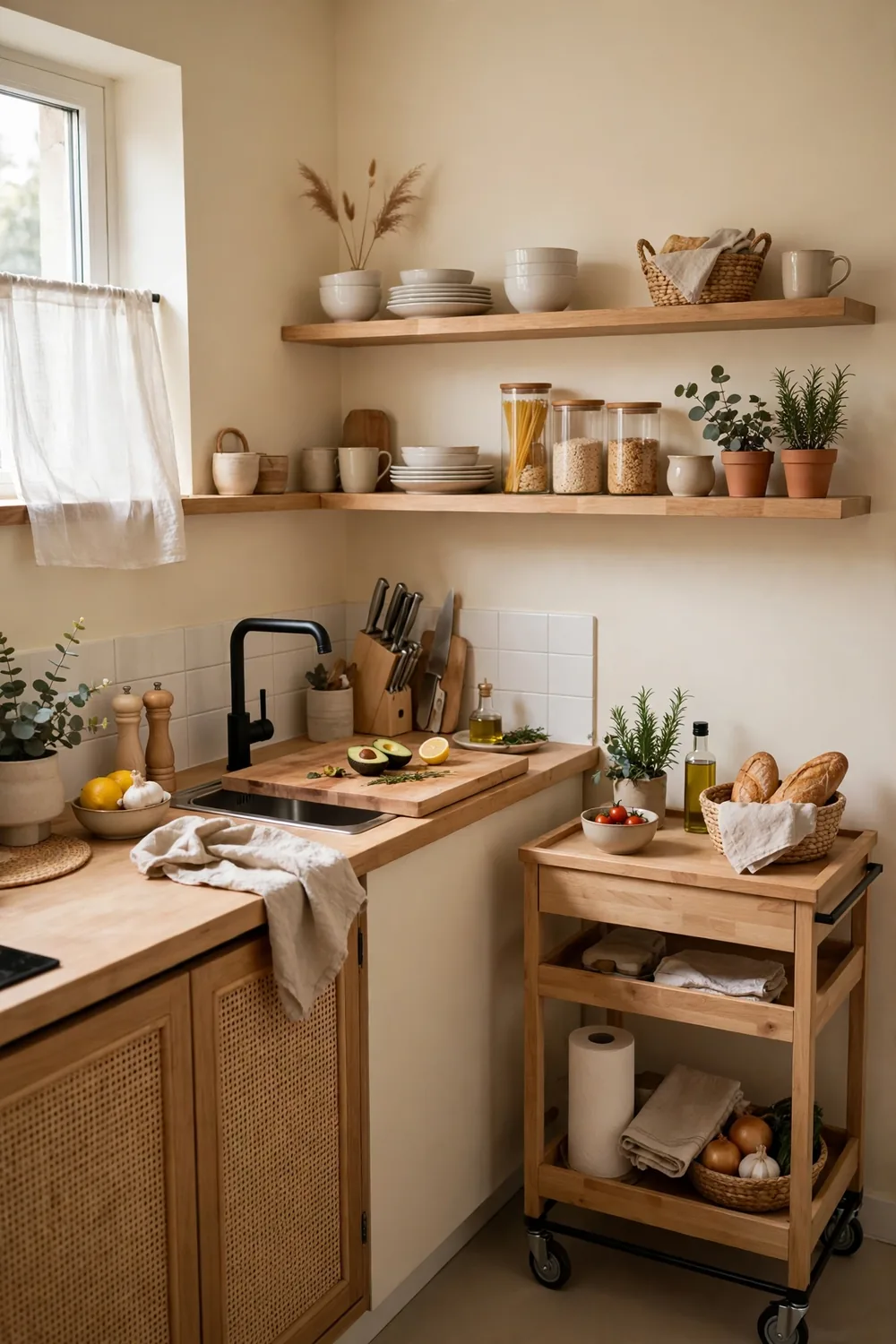
You can add counter space to a small apartment kitchen without remodeling by filling gaps you have with portable surfaces. A rolling cart, a fold down wall table, an over sink board, or a stove cover can add 2 to 6 square feet of prep space for $25 to $300, with no permits and no changes to cabinets or plumbing.
The ideas below focus on surfaces you can move, fold away, or remove when you move out.
Where does extra counter space come from in a small kitchen?
Most small kitchens lose counter space to the sink, the stove, and the gap beside the fridge.
1. Rolling kitchen cart with a butcher block top
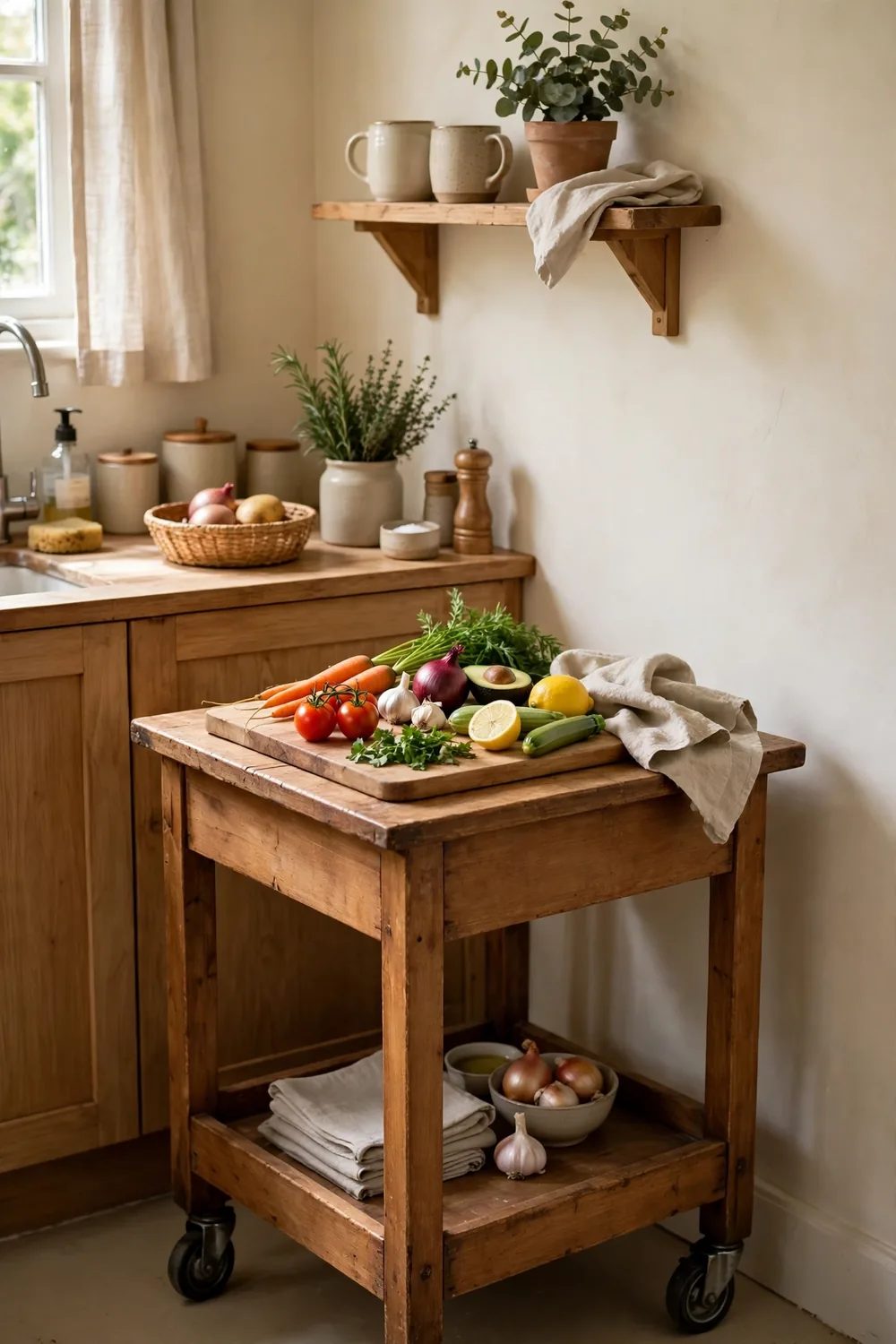
A rolling cart adds about 24 inches wide by 36 inches long of prep space, or 6 square feet, and most models stand 35 to 36 inches tall to match standard counters. Prices usually run $90 to $250, with solid wood tops at the higher end and laminate tops at the lower end. Look for locking casters and a shelf below. The trade off is floor space. A cart needs a clear path to roll out and a parking spot when dinner is done, so it suits cooks with at least 36 inches of open floor and does not suit a galley kitchen where two people cannot pass each other.
2. Fold down wall mounted table
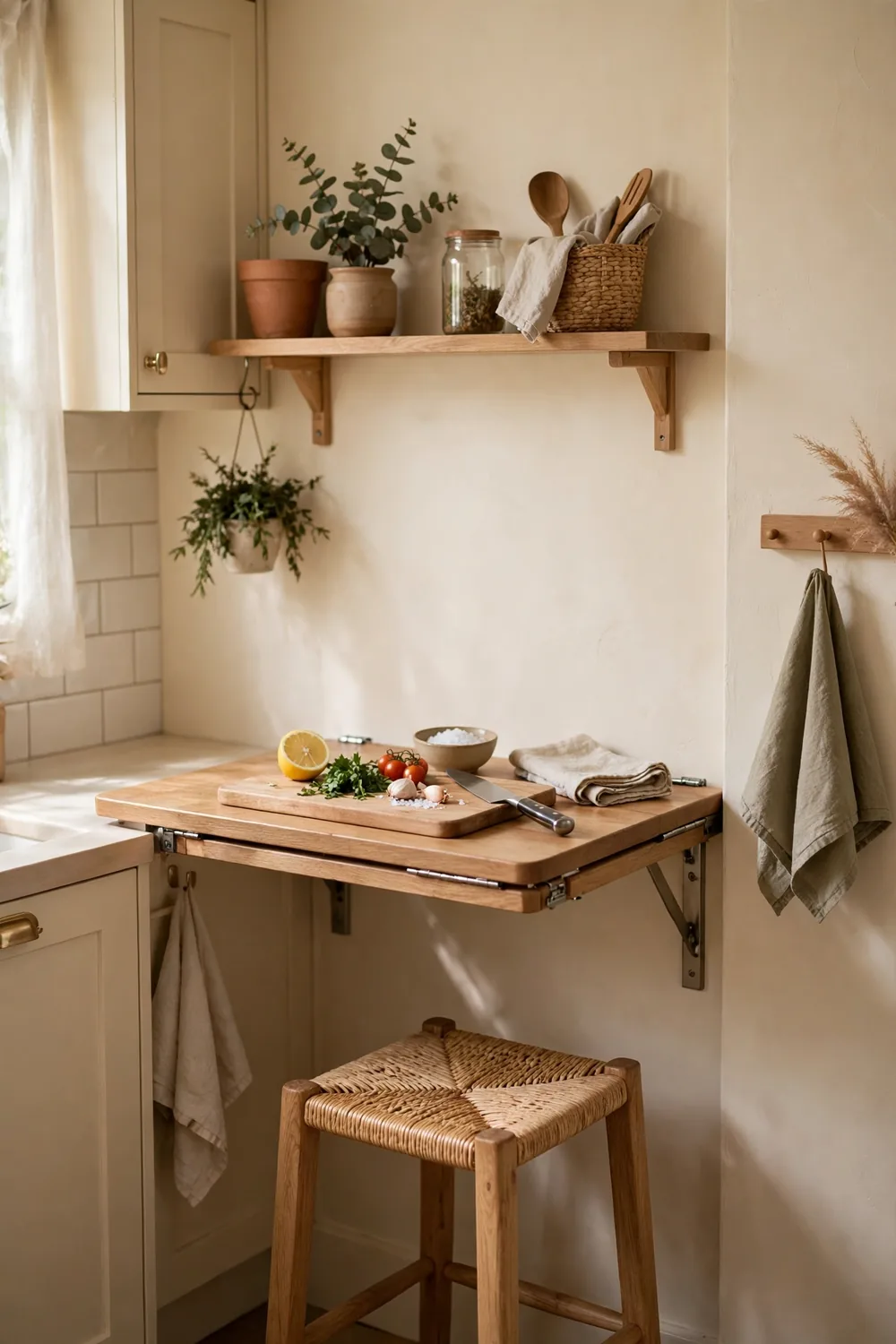
A fold down wall mounted table gives you a 24 inch by 30 inch surface when it is up and almost no footprint when it is down, which makes it useful in kitchens with one short stretch of blank wall. Prices usually run $60 to $180 for the table and brackets, plus $15 to $40 for anchors if the wall needs extra support. Mount it at 36 inches high so it lines up with your counters. The trade off is weight. It often holds only 30 to 50 pounds and needs a stud or a solid anchor to stay safe, so it is not a good fit for heavy appliances or for renters who cannot drill into the wall.
3. Over sink cutting board
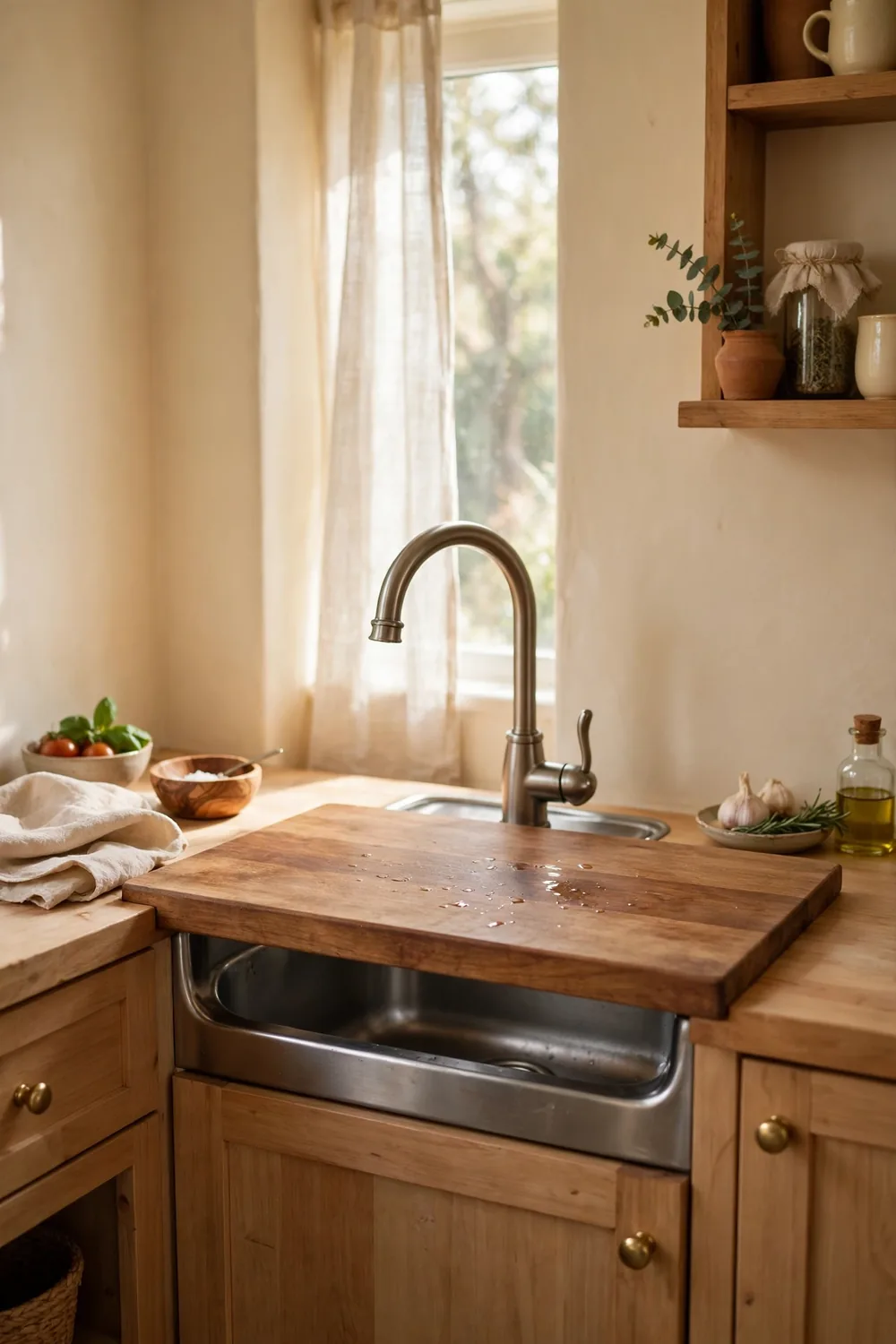
An over sink cutting board turns a standard sink into prep space in seconds. Most boards measure 17 inches by 20 inches and sit on the sink rim, with a lip that keeps the board from sliding while you chop. Prices usually run $25 to $60 for wood or bamboo and $20 to $45 for plastic. It works best over a single basin sink at least 16 inches wide. The trade off is that you lose the sink while the board is in place. It does not suit cooks who wash produce and chop at the same time.
Which portable options give the most usable surface for the money?
Portable islands and covers cost less than new cabinets and can move with you to the next apartment.
4. Stove top cover
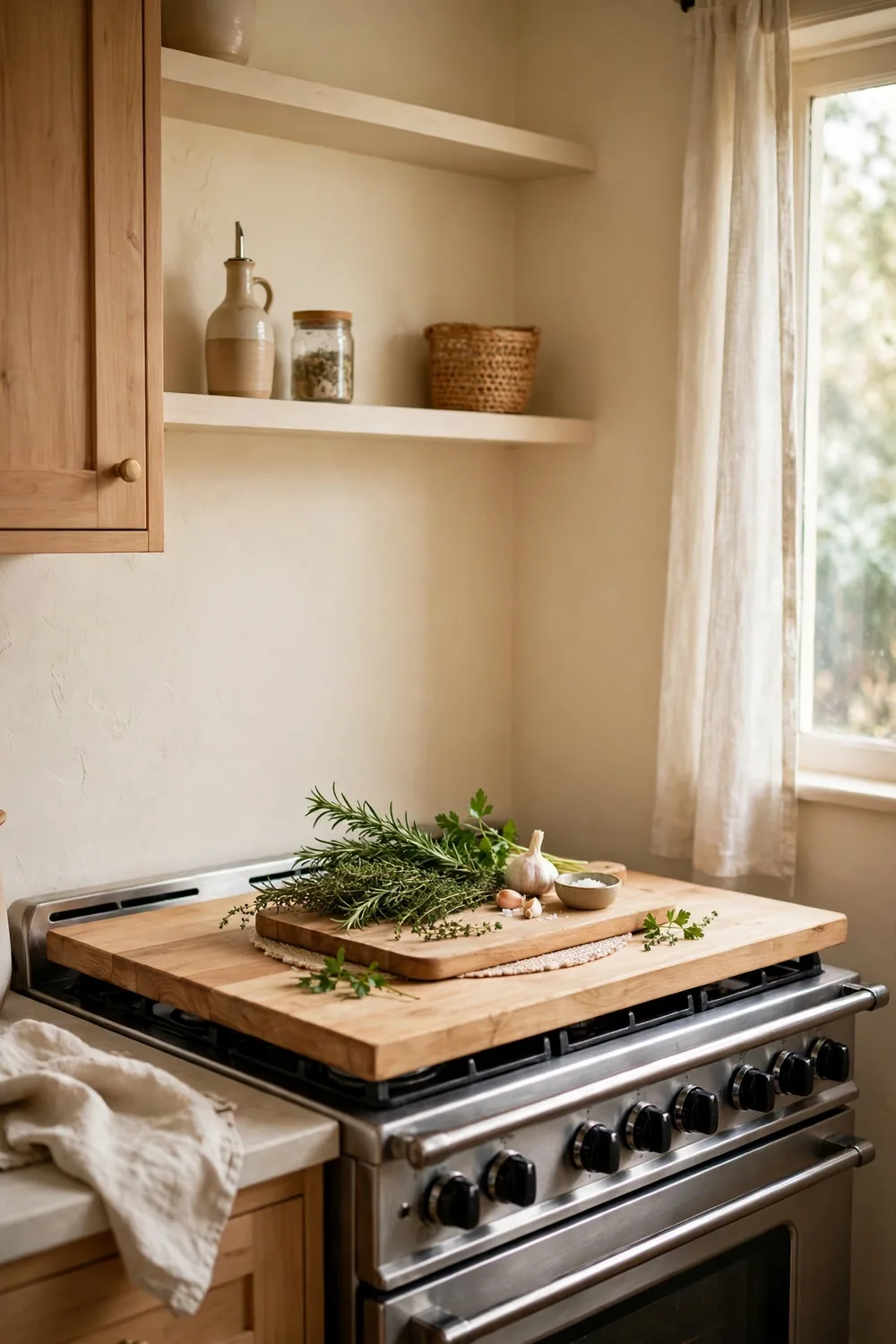
A stove top cover adds about 30 inches wide by 21 inches deep of flat surface over a standard four burner stove when the burners are off and cool. Prices usually run $40 to $90 for wood and $30 to $60 for heat resistant silicone or metal. It gives you a landing spot for groceries, a cooling rack, or a cutting board in a kitchen with almost no counter beside the stove. The trade off is safety and habit. You must remove the cover before you turn on a burner and wait until the stove is fully cool before you put it back. It does not suit cooks who use the stove several times a day.
5. Freestanding butcher block island
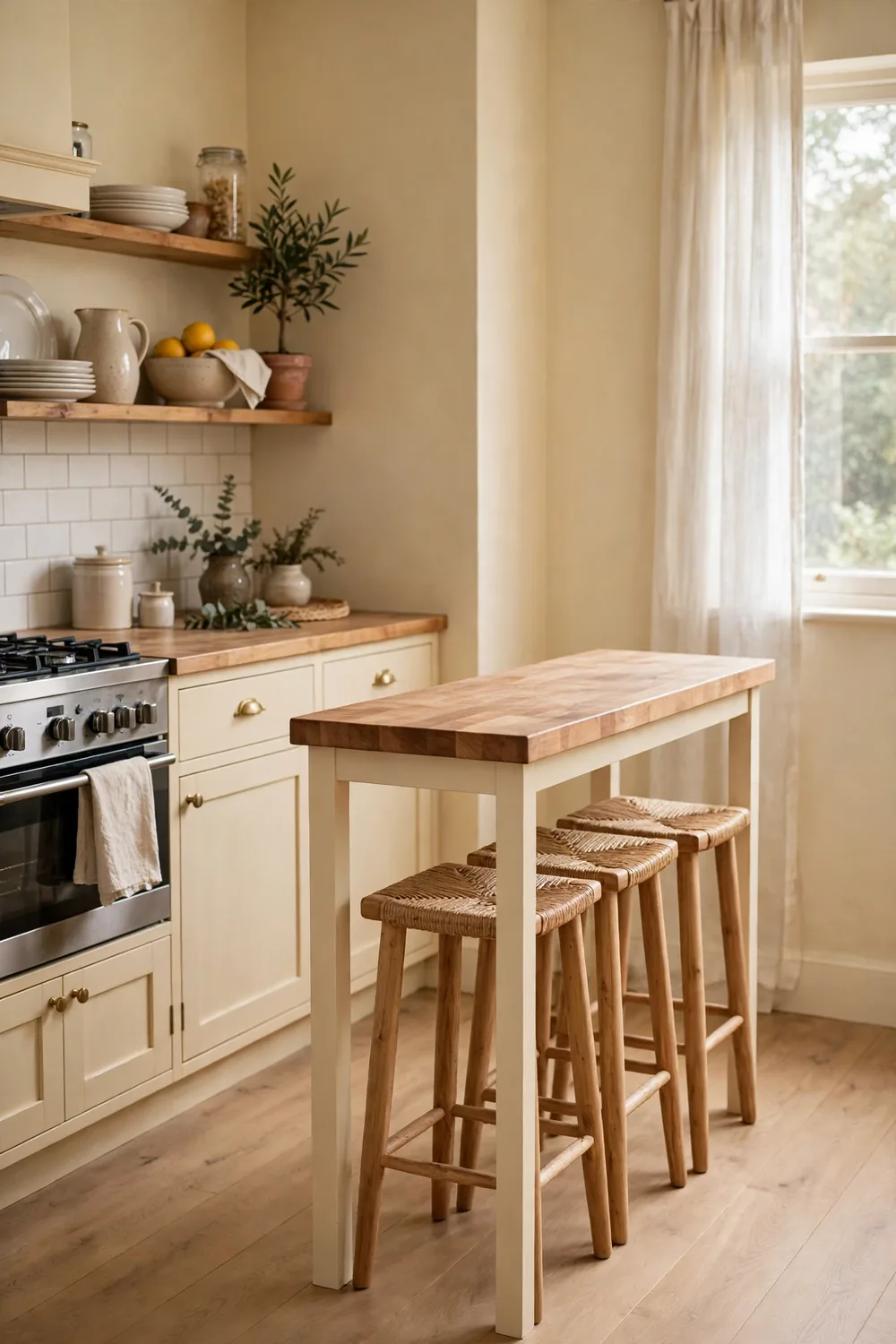
A freestanding butcher block island is the closest thing to a new counter without construction. Common sizes are 36 inches wide by 24 inches deep and 48 inches wide by 24 inches deep, both about 36 inches tall, with prices from $150 to $300 for the smaller size and $220 to $450 for the larger size. Many models add a shelf or a drawer, which helps in a kitchen with little storage. The trade off is weight. A solid wood island can weigh 60 to 90 pounds, so it is hard to move for cleaning and it needs at least 36 inches of clearance on the working side. It does not suit renters who move often or kitchens where it would block the fridge or oven door.
6. Narrow console table as a prep station
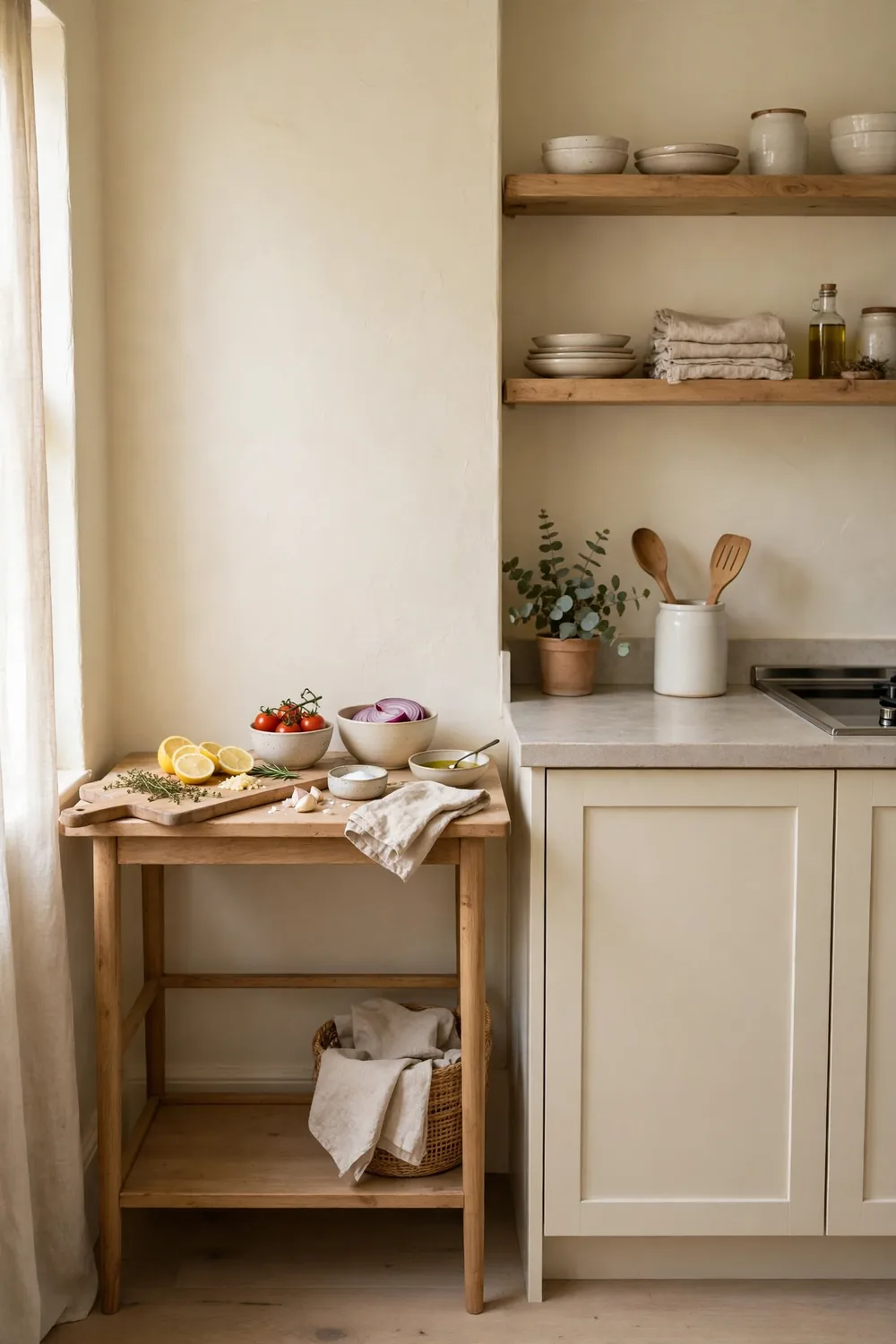
A narrow console table can serve as a prep station when it is 12 to 14 inches deep, 36 to 48 inches long, and 34 to 36 inches tall, which fits along a wall or at the end of a counter run. Prices usually run $70 to $180, with metal frames and wood tops at the lower end and solid wood at the higher end. It holds a cutting board, a small appliance, and a few bowls, and it leaves the main counter free for cooking. The trade off is depth. A 12 inch surface is too narrow for a large cutting board plus a mixing bowl side by side, and a table without a lower shelf adds no storage. It does not suit cooks who roll dough or need a wide surface for large trays.
How do you keep a small kitchen workable once you add a new surface?
Extra surface helps only if you can still move, open doors, and reach the sink and stove.
7. Clamp on countertop extender
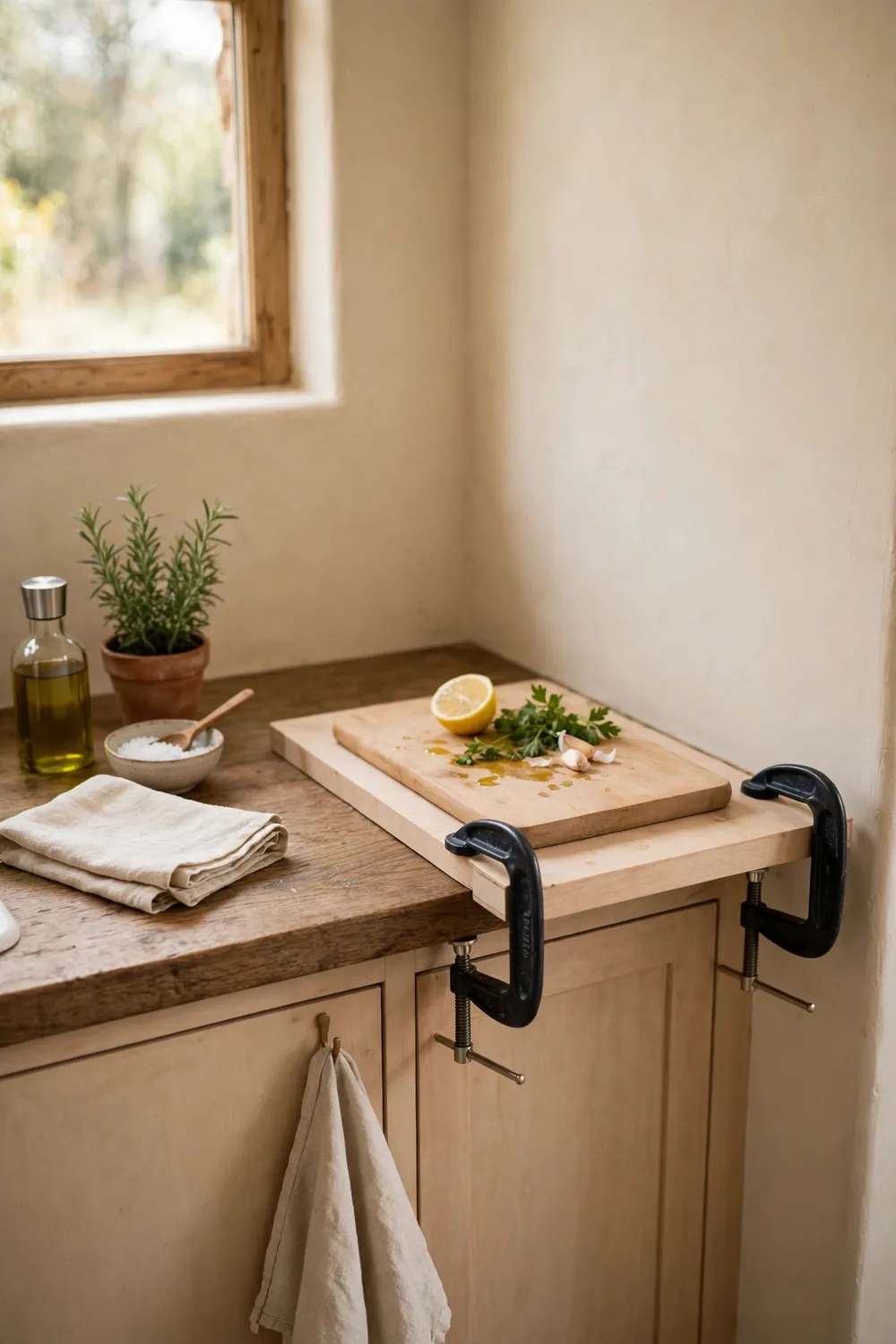
A clamp on countertop extender adds a shelf about 12 inches deep by 18 to 24 inches wide to the edge of an existing counter, with no screws and no permanent change. Prices usually run $35 to $80, and most models clamp to counters 1 to 1.5 inches thick. It is useful as a landing spot for a coffee maker, a toaster, or a cutting board, and you can remove it in a minute. The trade off is weight and stability. Most extenders hold 15 to 25 pounds, so they are not made for a stand mixer or a full stockpot, and they can wobble if the clamp is loose. It does not suit heavy daily use or counters with a thick rounded edge.
8. Tiered shelf riser on the counter
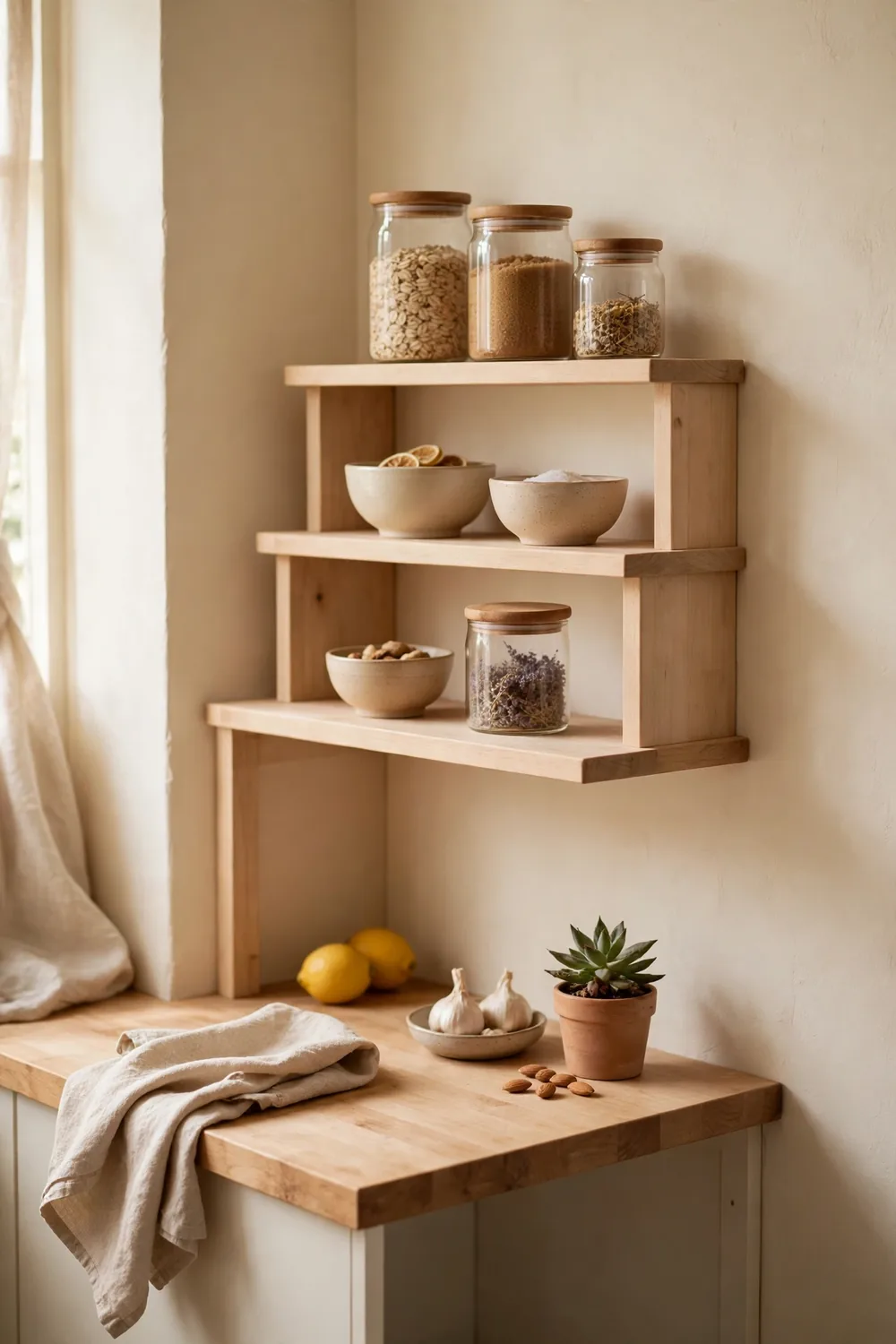
A tiered shelf riser does not add square footage, but it adds a second level over 12 inches by 24 inches of existing counter, which frees the surface below for prep. Prices usually run $25 to $55 for bamboo or metal, with two tier models at the higher end. Use the top tier for spices, oils, or small jars and keep the lower level clear for a cutting board. The trade off is reach and clutter. Items on the top tier can be hard to reach under high cabinets, and a riser can turn into a storage shelf if you let it fill up. It does not suit cooks who need a wide open surface.
A small kitchen works better when every new surface has a clear job, a clear place to live, and a clear path to put it away.
Frequently Asked Questions
How much counter space can I add without remodeling?
Most portable options add 2 to 6 square feet. A rolling cart or a freestanding island adds the most, while an over sink board or a stove cover adds 2 to 4 square feet.
What is the cheapest way to add counter space in a rental?
An over sink cutting board or a tiered shelf riser is usually cheapest, at $25 to $60. Both need no drilling and no changes to the apartment.
Can a rolling cart replace a kitchen island?
A rolling cart can work like a small island for prep and storage if you have at least 36 inches of open floor. It does not replace a fixed island for seating, for a sink, or for heavy daily use.
How do I choose between a fold down table and a rolling cart?
Choose a fold down table if wall space is free and floor space is tight, since it folds away. Choose a rolling cart if you need storage below the surface and a work spot you can move.