Small Living Room Ideas That Actually Make the Room Feel Bigger
A small living room feels bigger when the furniture fits, the floor stays visible, and light reaches every corner. Start with a sofa that leaves 30 inches of walking space, a rug large enough for the front legs of every seat, pale walls, and one mirror across from a window. Skip the oversized sectional and the tall closed cabinet. Those four moves do more than any single purchase.
How do I pick a sofa that fits a small living room?
Measure first, shop second. A standard three seat sofa runs about 84 inches wide and 36 to 40 inches deep. In a room under 12 feet wide, that size eats the whole wall and leaves no room to walk. An apartment sofa at 66 to 72 inches wide usually fits better, and a loveseat at 48 to 60 inches works in the tightest rooms.
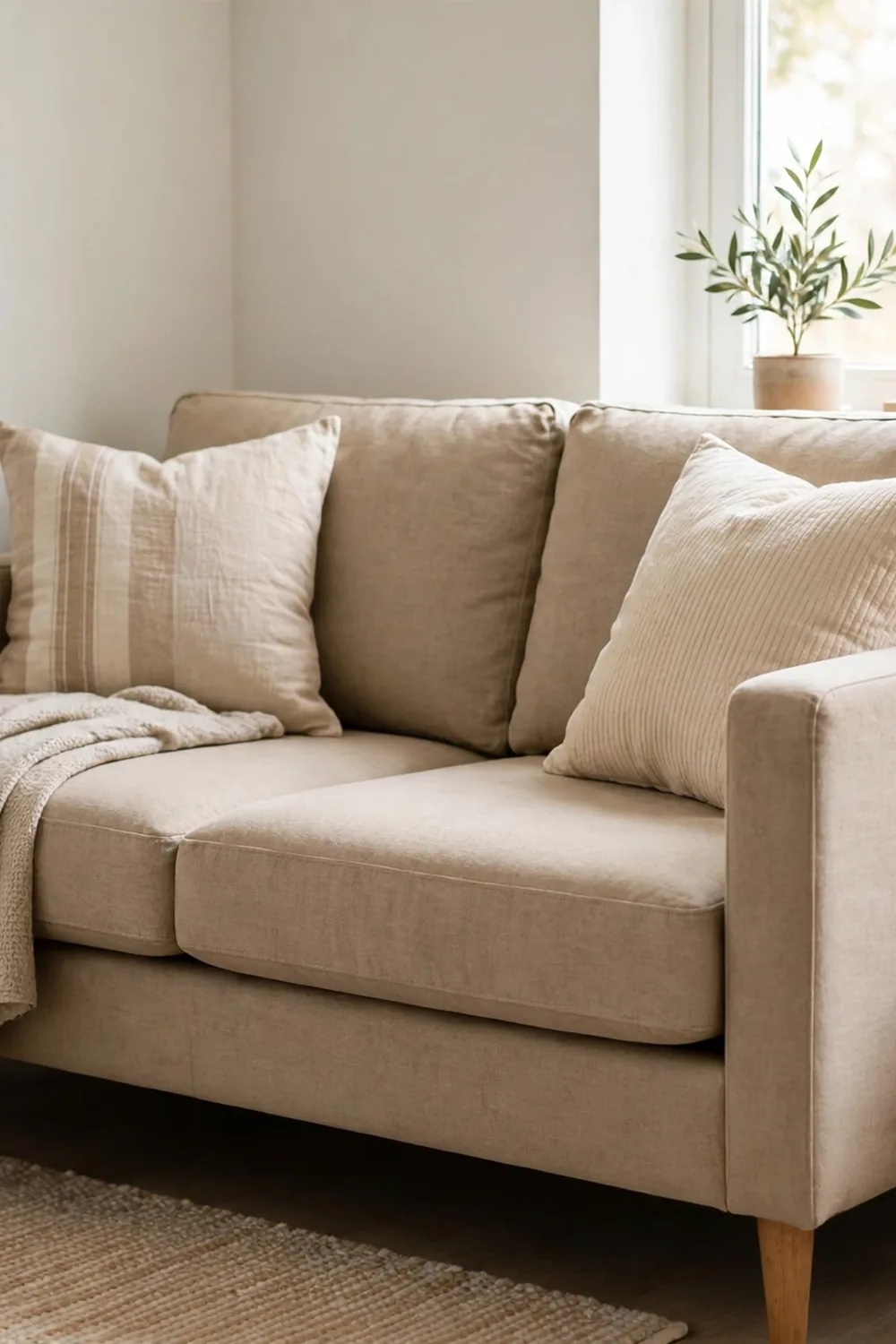
Depth matters as much as width. A sofa deeper than 40 inches pushes you far from the coffee table and steals floor space you need for walking. Look for a seat depth around 22 inches and an overall depth near 36 inches. Seat height between 17 and 19 inches suits most adults and keeps the sofa low enough that it does not block the window line.
Slim arms save real space. A sofa with track arms or no arms at all can save 6 to 8 inches of width compared with rolled arms, and that is often the difference between fitting a side table or not. Legs matter too. A sofa on short tapered legs shows a few inches of floor underneath, and that strip of visible floor tricks the eye into reading the room as larger.
The trade off is seats. A smaller sofa seats two people comfortably, three only if they like each other. If you host often, add a lightweight accent chair you can move around instead of buying a bigger sofa. A chair weighs less visually than a sectional and you can push it aside when you need floor space.
Before you order anything, measure the doorways and the stairwell. Most apartment doors are 30 to 32 inches wide, and a sofa that fits the room still has to get through the front door.
What rug size actually works in a small room?
Most small living rooms need a bigger rug than people expect. A 5×7 rug looks fine in the store and too small at home. It floats in the middle of the floor, touches nothing, and makes the seating area look like a raft. An 8×10 rug suits a room around 10 by 12 feet, which covers a huge number of apartments and small houses.
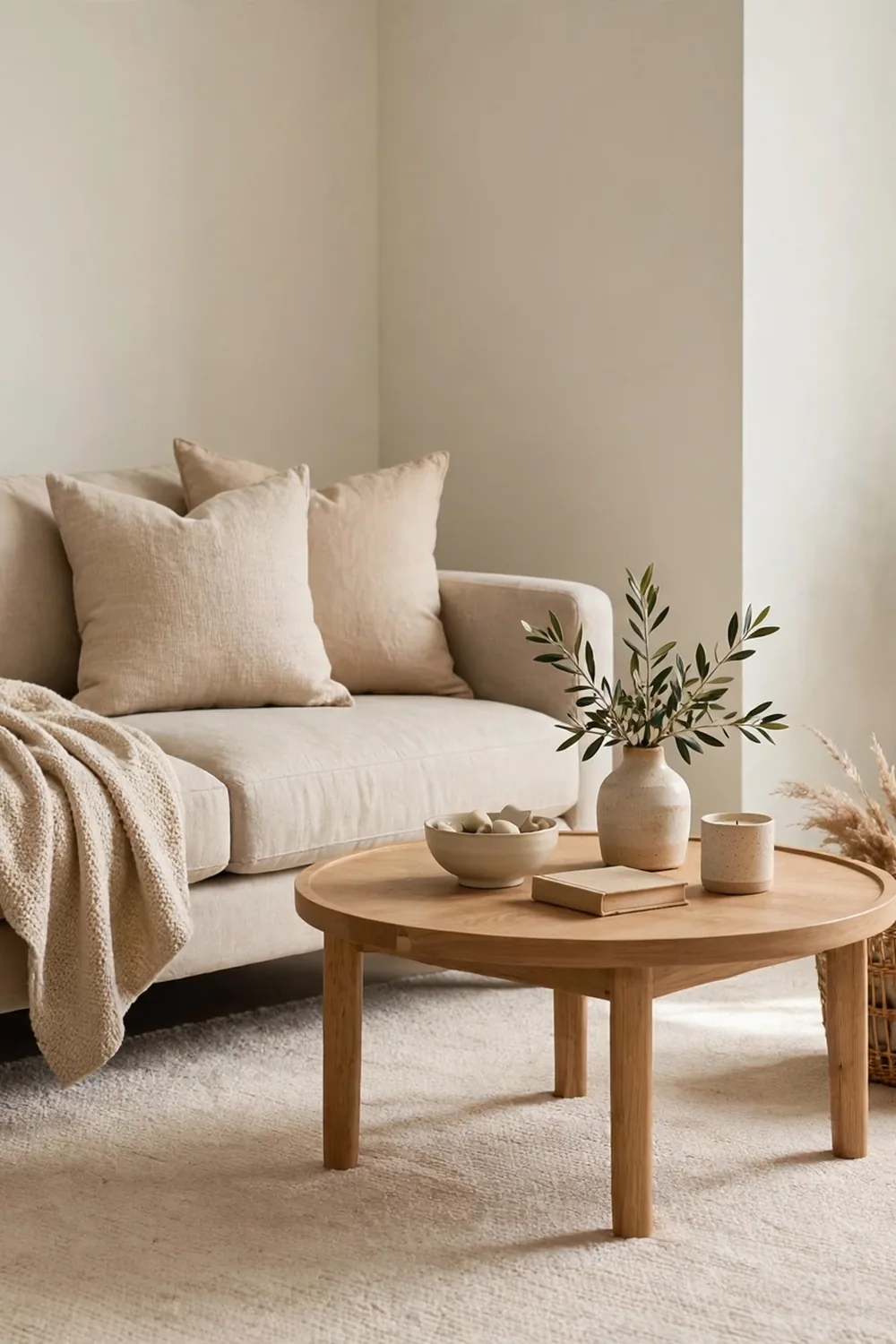
The rule is simple: the front legs of the sofa and every chair should sit on the rug. That ties the seating together into one zone and makes the floor read as a single surface. Leave 6 to 12 inches of bare floor between the rug edge and the wall so the rug looks placed on purpose instead of wall to wall.
Low pile rugs work best in small rooms. They are easier to vacuum, chairs slide without catching, and the flat surface keeps the room looking calm. A thick shag rug eats visual space and shows every footprint.
The trade off is price. An 8×10 rug in a wool blend often runs $200 to $600 at major retailers, while a 5×7 of the same quality runs about half that. If the budget is tight, a flatweave cotton rug in 8×10 costs less and still fixes the scale problem. What you should not do is buy the small rug and hope the room looks bigger. It does the opposite.
Where should the TV and seating go?
Put the sofa where it faces the longest wall, not the window. A sofa with its back to the window blocks light and makes the room feel closed. The TV belongs on the longest wall, with the center of the screen about 42 inches from the floor, which is seated eye level for most adults.
Distance decides the screen size. Sit 1.5 to 2.5 times the screen diagonal away from the TV. A 55 inch TV needs roughly 7 to 9 feet of viewing distance. If your sofa sits 6 feet from the wall, a 43 inch screen fits better than a 65 inch one that fills your whole field of vision.
Mounting the TV saves floor space and lets you use a slim console or a floating shelf underneath. The downside is holes in the wall and a TV that is harder to move, which matters if you rent or rearrange often. A low media console, 16 to 20 inches tall, keeps the screen at the right height and gives you closed storage for cables and game consoles.
Leave about 18 inches between the coffee table and the sofa. That gap is enough to walk through and close enough to set down a cup without reaching. A round coffee table works well in tight rooms because it has no corners to bump into, and a glass top keeps sightlines open.
How can paint and color make the room feel bigger?
Light paint reflects light, and reflected light makes walls feel farther away. Look for a paint color with a Light Reflectance Value, or LRV, above 70. Most paint brands print the LRV on the swatch or the product page. Warm whites, pale greige, and soft sage all sit in that range and suit a calm living room.
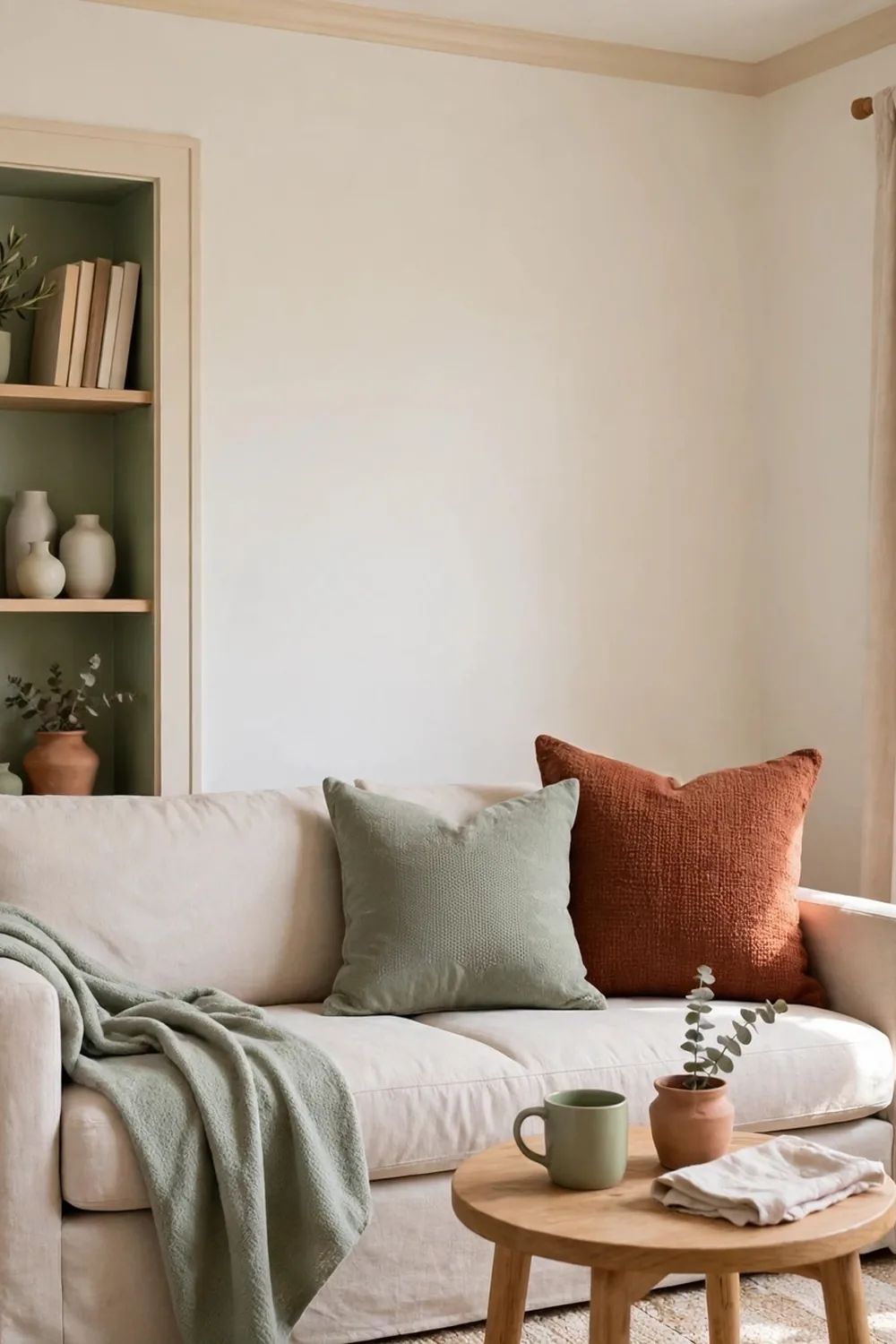
Paint the walls and the trim the same color. When the trim matches the wall, the eye does not stop at every door frame and baseboard, so the room reads as one continuous space. Use a flat or matte finish on walls that have bumps and patches, since flat paint hides flaws. Use satin on trim so it wipes clean.
One dark accent wall can look dramatic in photos, but in a small room it pulls that wall closer and makes the room feel narrower. If you love deep color, use it on a small area, like the back of a bookshelf or one throw pillow, and keep the walls light.
The trade off is upkeep. White and pale walls show scuffs and fingerprints faster than mid tone colors, so keep a small jar of touch up paint. The payoff is a room that feels brighter all day, even on cloudy days.
What is the fastest way to add light?
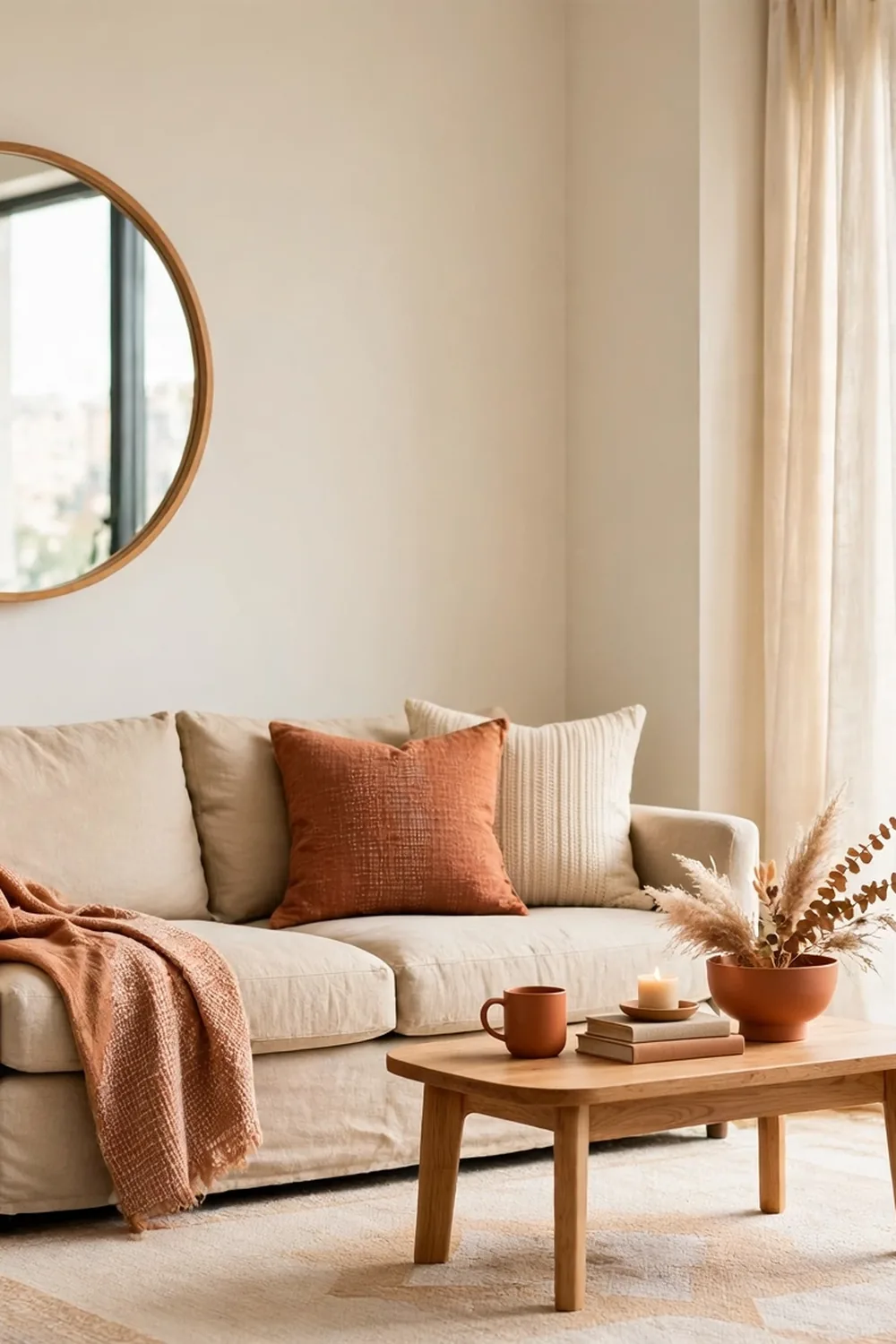
Hang one large mirror across from the window. A mirror opposite the glass doubles the light in the room and gives you a view of the outdoors from the sofa. A mirror 24 by 36 inches is a good size for most small living rooms, and it costs far less than a new window.
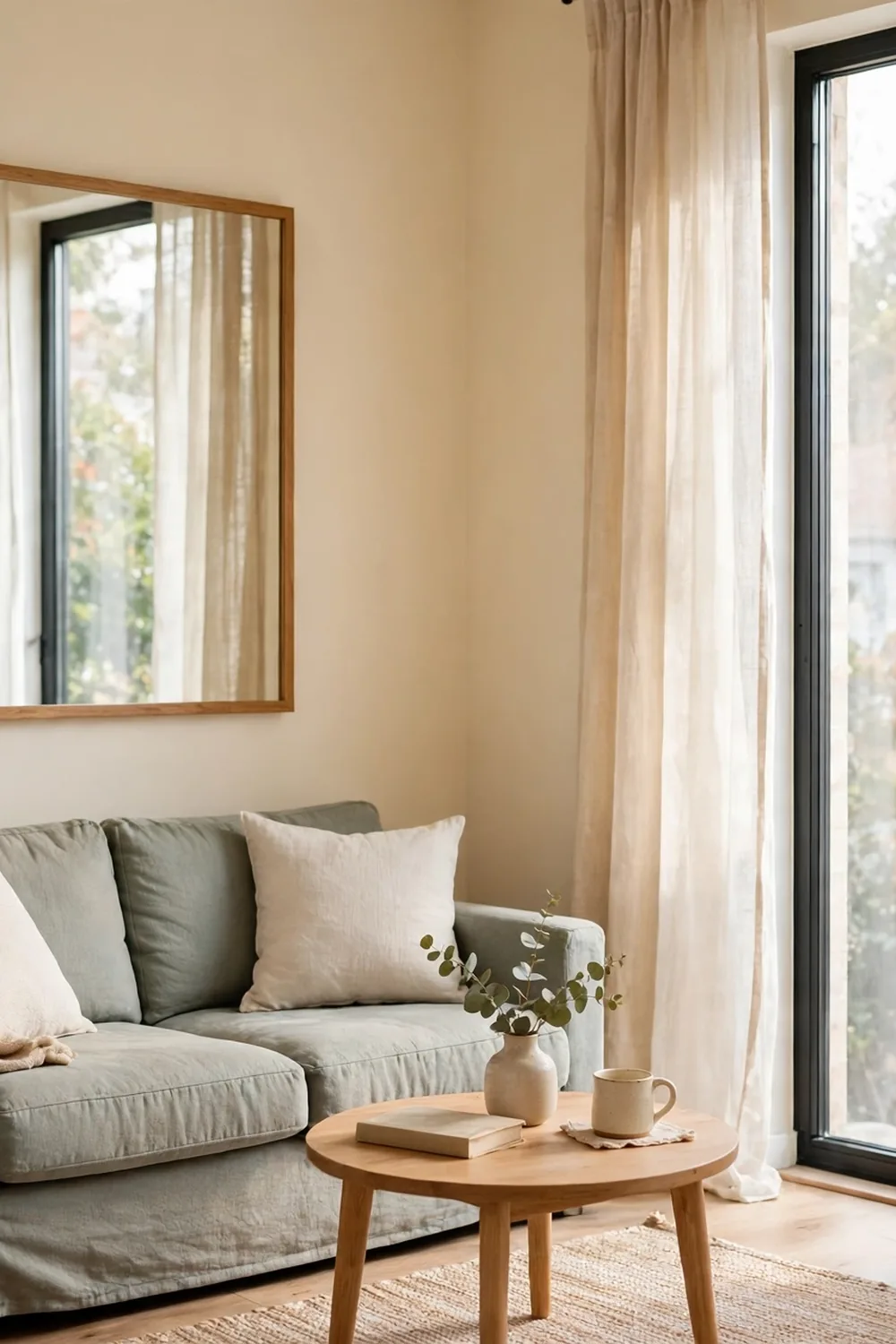
Curtains change the light more than people expect. Hang the rod 4 to 6 inches above the window frame and 6 to 12 inches wider than the frame on each side. The window looks larger, the curtains stack off the glass instead of covering it, and more daylight gets in. Sheer linen curtains soften the light without blocking it.
Use three light sources instead of one ceiling light. A floor lamp beside the sofa, a table lamp on a side table, and the ceiling light together remove dark corners. Warm white bulbs around 2700K suit a living room and make skin tones look natural. Cool white bulbs can make a small room feel like an office.
The trade off with sheer curtains is privacy. At night, anyone outside can see in. Pair sheers with a simple roller shade or a lined curtain panel you can close after dark.
How do I add storage without crowding the room?
One tall closed cabinet stores more than five small baskets and looks calmer doing it. A cabinet 72 inches tall and 30 inches wide holds board games, blankets, and cables behind two doors, while five baskets spread around the room read as clutter even when they are tidy.
Floating shelves work when they are shallow. A shelf 10 to 12 inches deep holds books and a few objects without sticking out into the walkway. Hang two shelves instead of five, and leave breathing room between objects. A shelf packed edge to edge looks like a store display.
A storage ottoman earns its floor space twice. It holds throw blankets and remotes, and it works as extra seating or a footrest. Pick one with a lid that stays open on its own so you are not holding it with one hand while digging with the other.
Open storage has a real downside: it collects dust and needs styling to look good. Closed storage hides the mess but can feel boxy if the piece is too deep. A good rule is to keep closed storage under 18 inches deep in a small living room, and to let one piece be tall while the rest stay low.
Which layout mistakes make a small room feel smaller?
Pushing every piece of furniture against the wall is the most common one. It sounds logical, but it leaves a dead empty middle and makes the seating feel like a waiting room. Pull the sofa 3 to 4 inches off the wall. That small gap lets the room breathe and makes the arrangement look placed on purpose.
Too many small decorations hurt more than one large piece. Ten tiny objects on a shelf read as clutter. One large vase or one framed print reads as a choice. The same applies to pillows. Three pillows on a loveseat look styled. Six look crowded.
A rug that is too small is another classic mistake. It shrinks the seating area and makes the sofa look oversized by comparison. If you can only afford one rug, buy the right size in a simple flatweave instead of a small rug in a fancy pattern.
Heavy curtains in a dark color close the room in. They absorb light and hide the window frame, which is the one feature that makes a small room feel connected to the outside. Light fabric and a high rod do the opposite job for the same money.
What should I buy first on a tight budget?
Buy in this order: paint, rug, curtains, mirror, lighting. Paint is the cheapest big change. A gallon of decent wall paint runs $30 to $60 and covers a small living room in a weekend. The rug comes second because it fixes the scale of the whole seating area. Curtains come third because they change the light and the window proportions for $25 to $80 per panel.
A mirror comes fourth. A 24 by 36 inch mirror runs $40 to $120 depending on the frame, and it pays off every day by bouncing light around. Lighting comes last because you can add one floor lamp at a time as the budget allows.
Skip the accent chair, the throw pillows, and the wall art until the big pieces are right. Decor on top of a bad layout is money spent hiding a problem instead of fixing it. Once the sofa fits, the rug fits, and the light works, a $20 pillow suddenly looks like it belongs.
A room feels bigger when you can see the floor and the walls. Everything else is decoration.
Frequently Asked Questions
Can a sectional work in a small living room?
Yes, if it stays under 84 inches wide and has a chaise on one side instead of a full second sofa. Measure the walkways first. If the sectional leaves less than 30 inches to walk past, it is too big for the room.
What color makes a small room look bigger?
Light warm whites and pale neutrals with an LRV above 70. Test a swatch on the wall and look at it in daylight and at night before you commit to a gallon.
Should I mount my TV or use a stand?
Mount it if floor space is tight and you plan to stay put. Use a low stand if you rent and cannot drill, or if you rearrange often. Either way, keep the screen center near 42 inches from the floor.
How big should a rug be in a small living room?
An 8×10 rug fits most rooms around 10 by 12 feet. The front legs of the sofa and chairs should sit on the rug, with 6 to 12 inches of bare floor at the edges.