Tiny Entryway Ideas: 9 Setups With a Place for Everything
A tiny entryway works when everything you grab on the way out has a home within arm’s reach. Coats, keys, shoes, and the mail need one spot each, and the whole setup has to fit in a space that is often less than 3 feet deep. These 9 setups use hooks, benches, and slim storage to give every item a place, even in a hallway that barely fits one person.
What goes in a tiny entryway first?
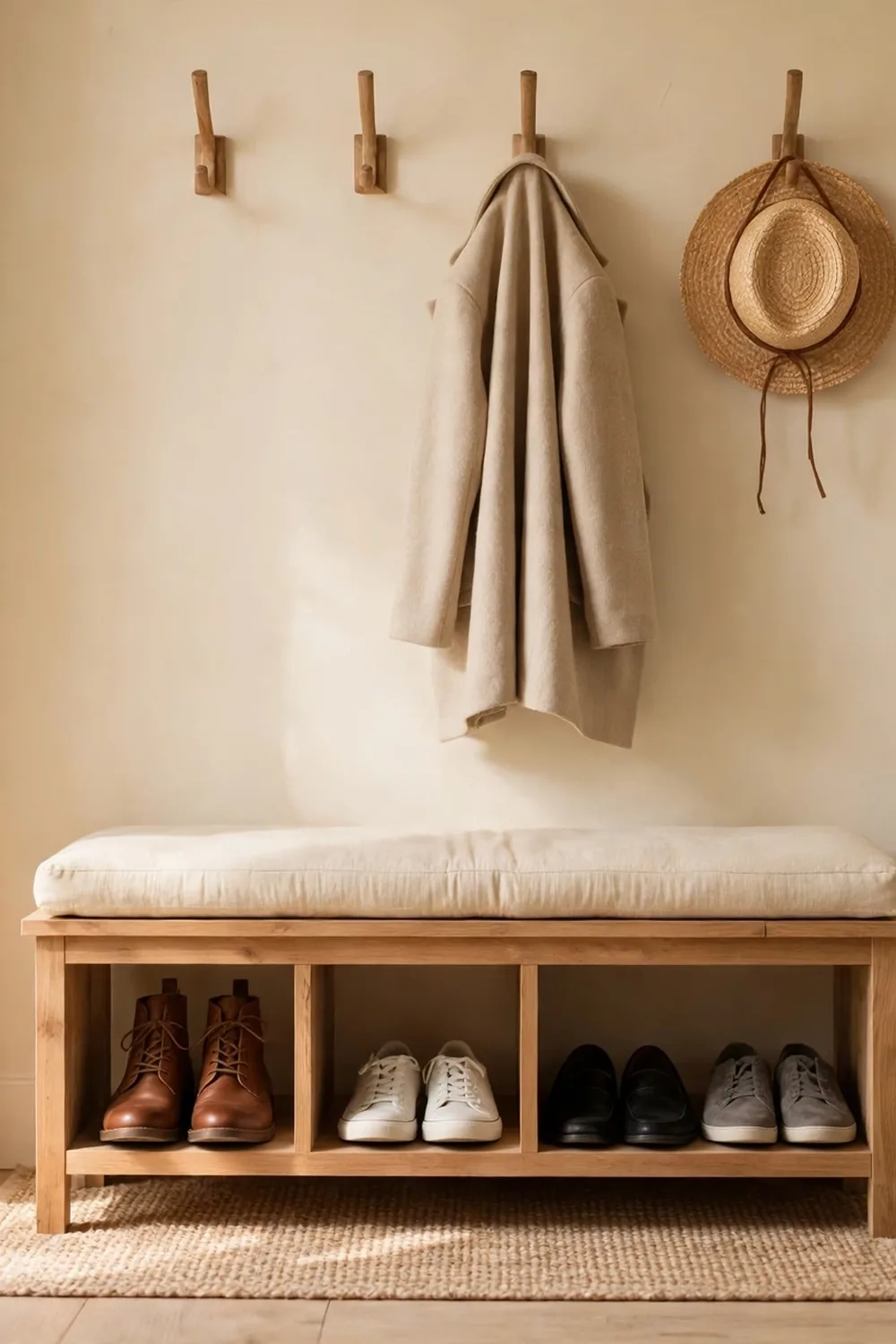
1. Wall hooks and a slim bench
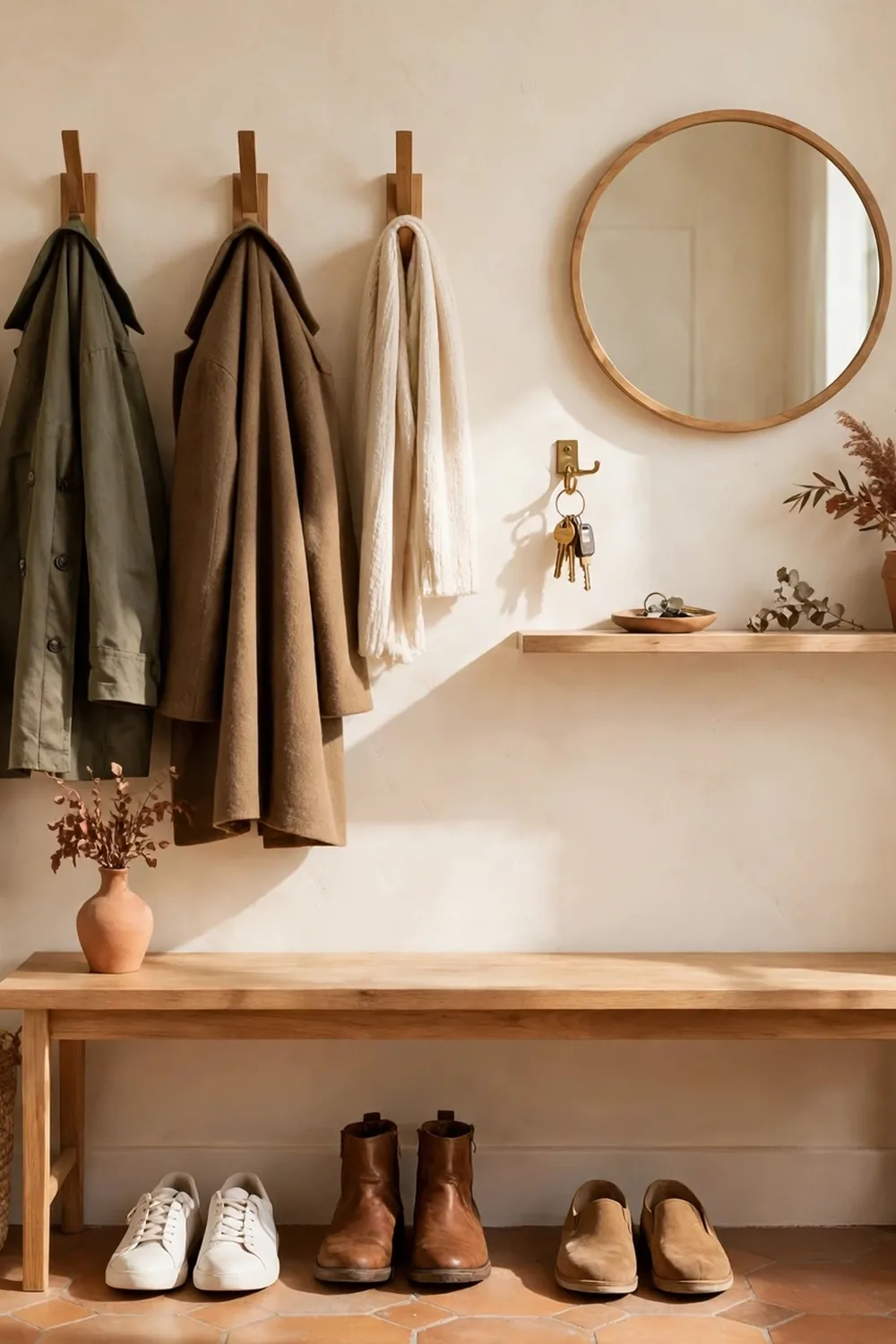
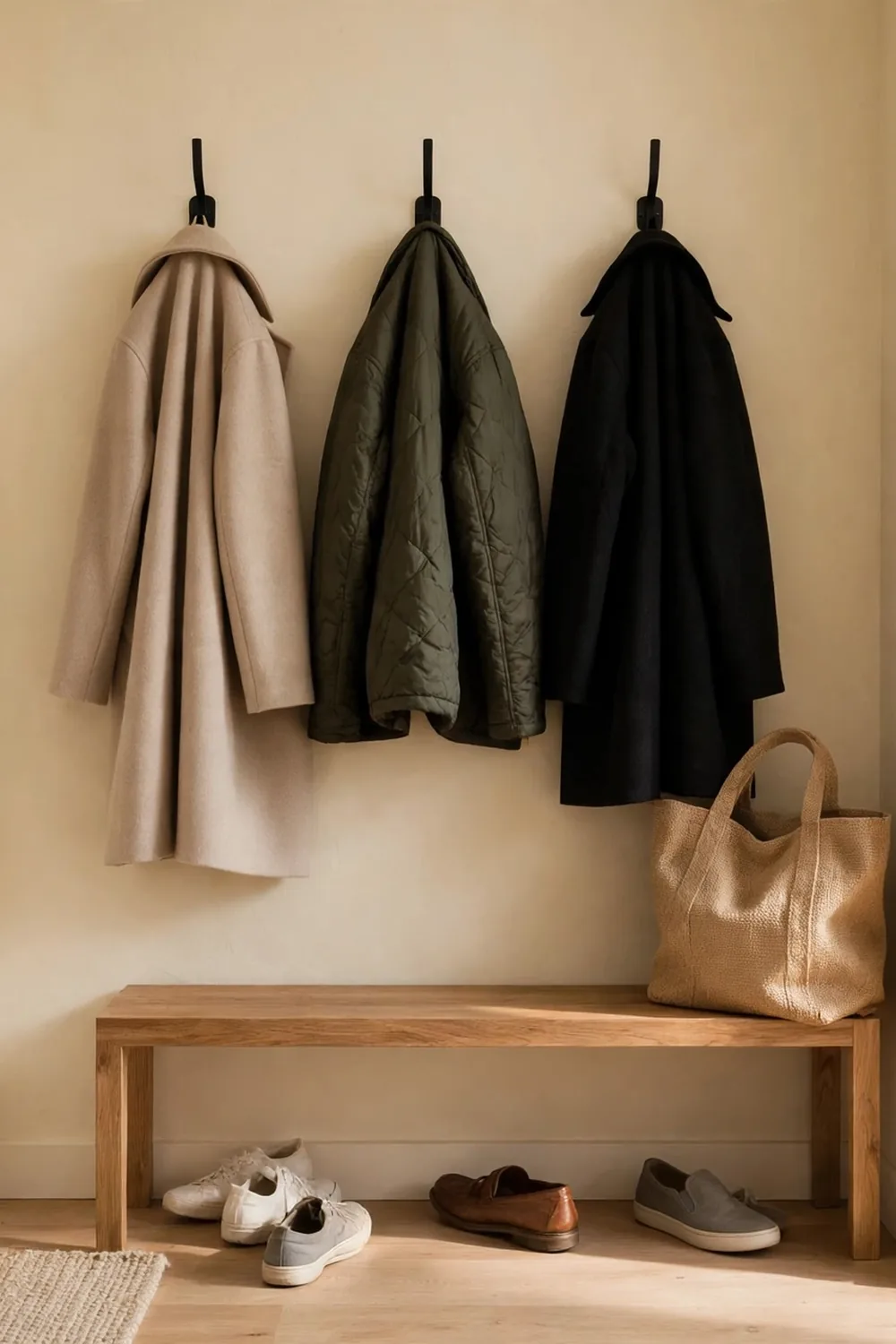
Hooks and a bench cover the two things you do most: hang a coat and sit to put on shoes. Mount a row of three or four hooks at 60 to 66 inches high, which suits most adults and keeps coats off the floor. Put a bench 12 to 14 inches deep and 16 to 18 inches high underneath. Shoes slide under the bench and bags sit on top. The trade off is that open hooks show every coat you own, so keep the row to what you actually wear this season.
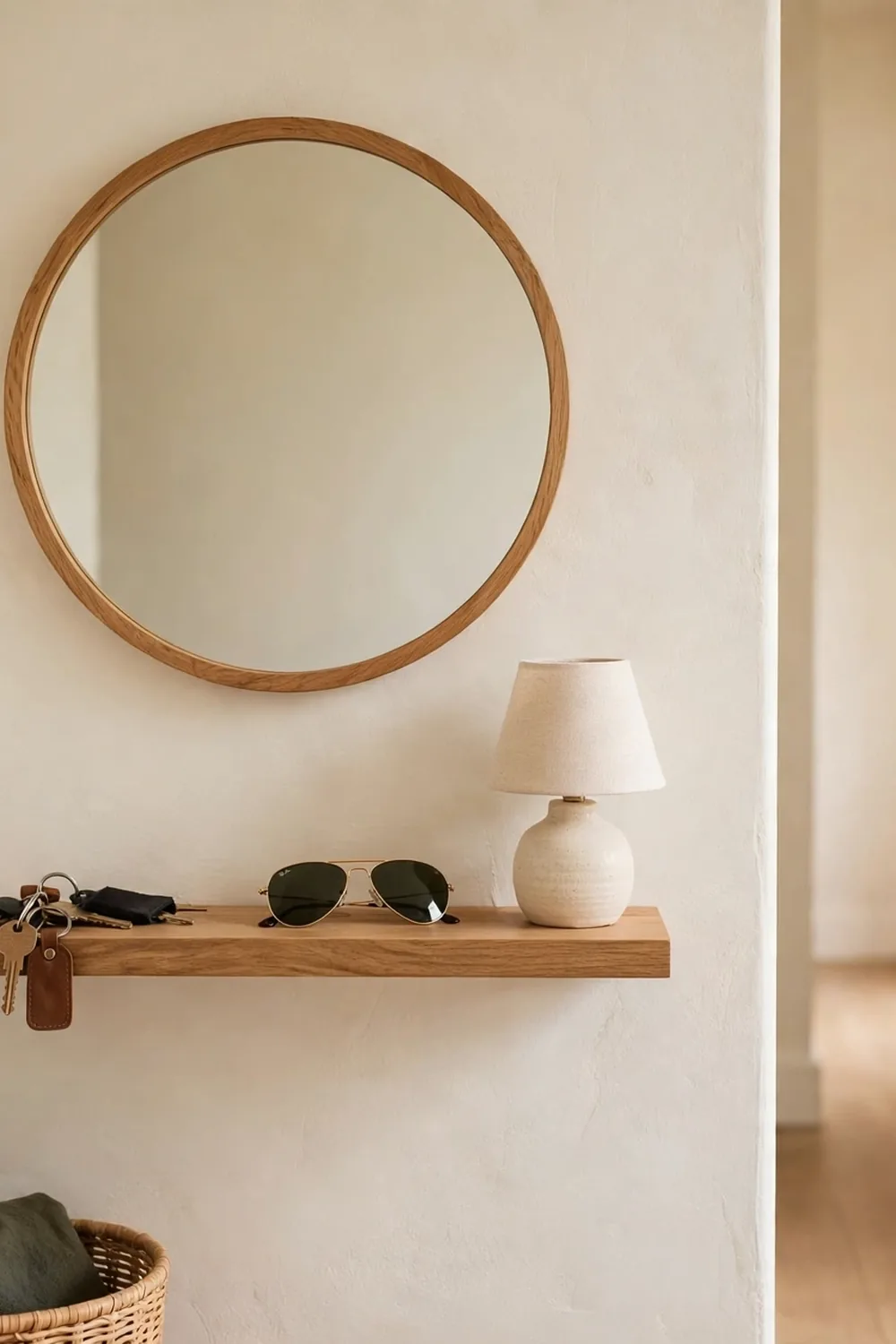
2. Floating shelf and a mirror
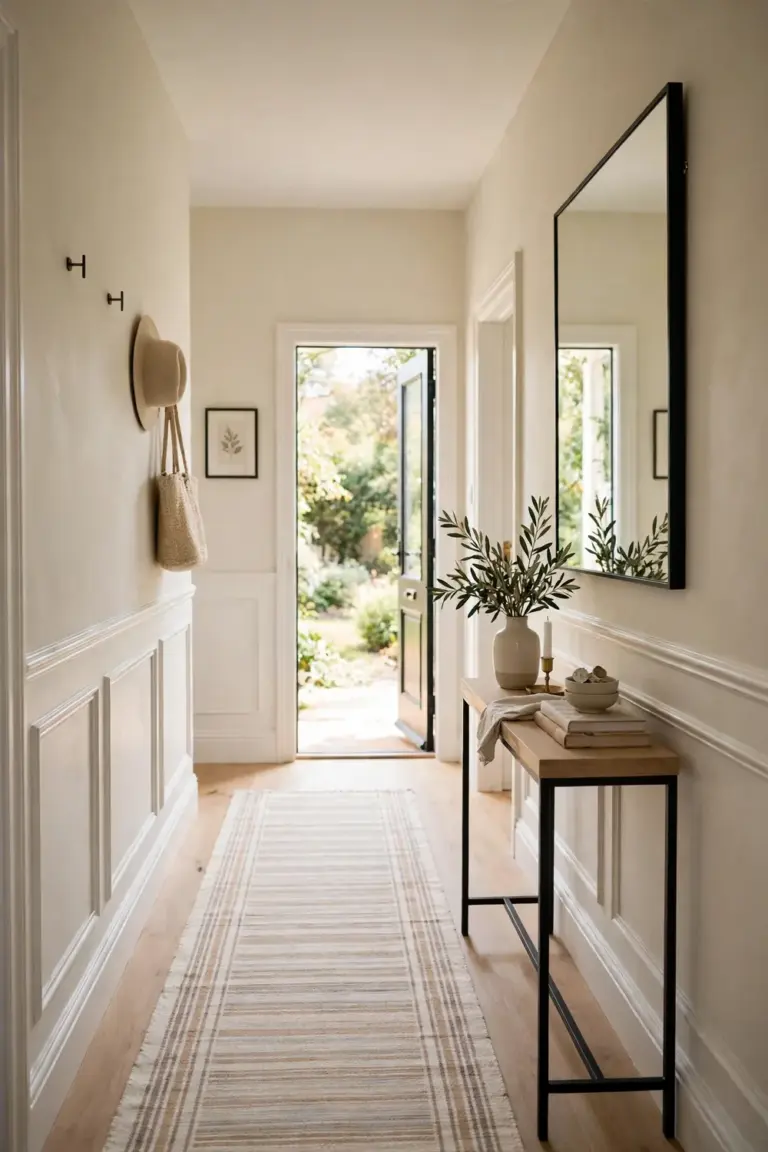
When there is no floor space at all, go up the wall. A floating shelf 10 to 12 inches deep holds keys, sunglasses, and mail. Hang a mirror above it at eye level, with the center around 57 to 60 inches from the floor, so you can check yourself on the way out. The mirror also bounces light down a dark hallway. The trade off is storage: a shelf holds the daily essentials, not the winter coats or the extra shoes.
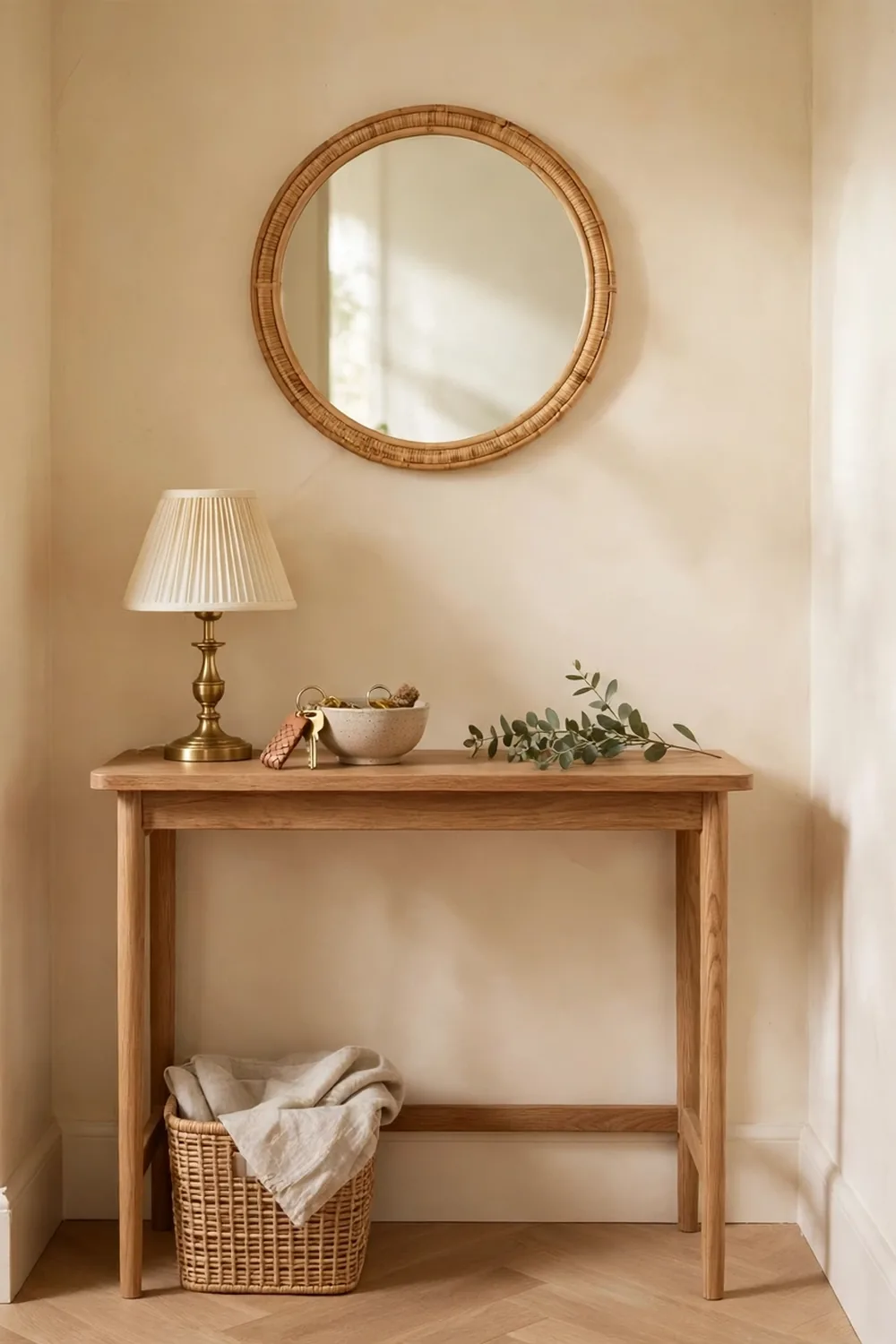
3. Narrow console table
A console table 10 to 12 inches deep fits in a hallway that a normal table never would. Use the top for a small lamp or a bowl for keys, and the lower shelf for two pairs of shoes. A table with slim legs looks lighter than a solid one, and a light wood finish keeps a narrow hall from feeling dark. The trade off is stability. A narrow table tips more easily than a wide one, so anchor it to the wall if you have kids or a large dog.
How do I store shoes in a tiny entryway?
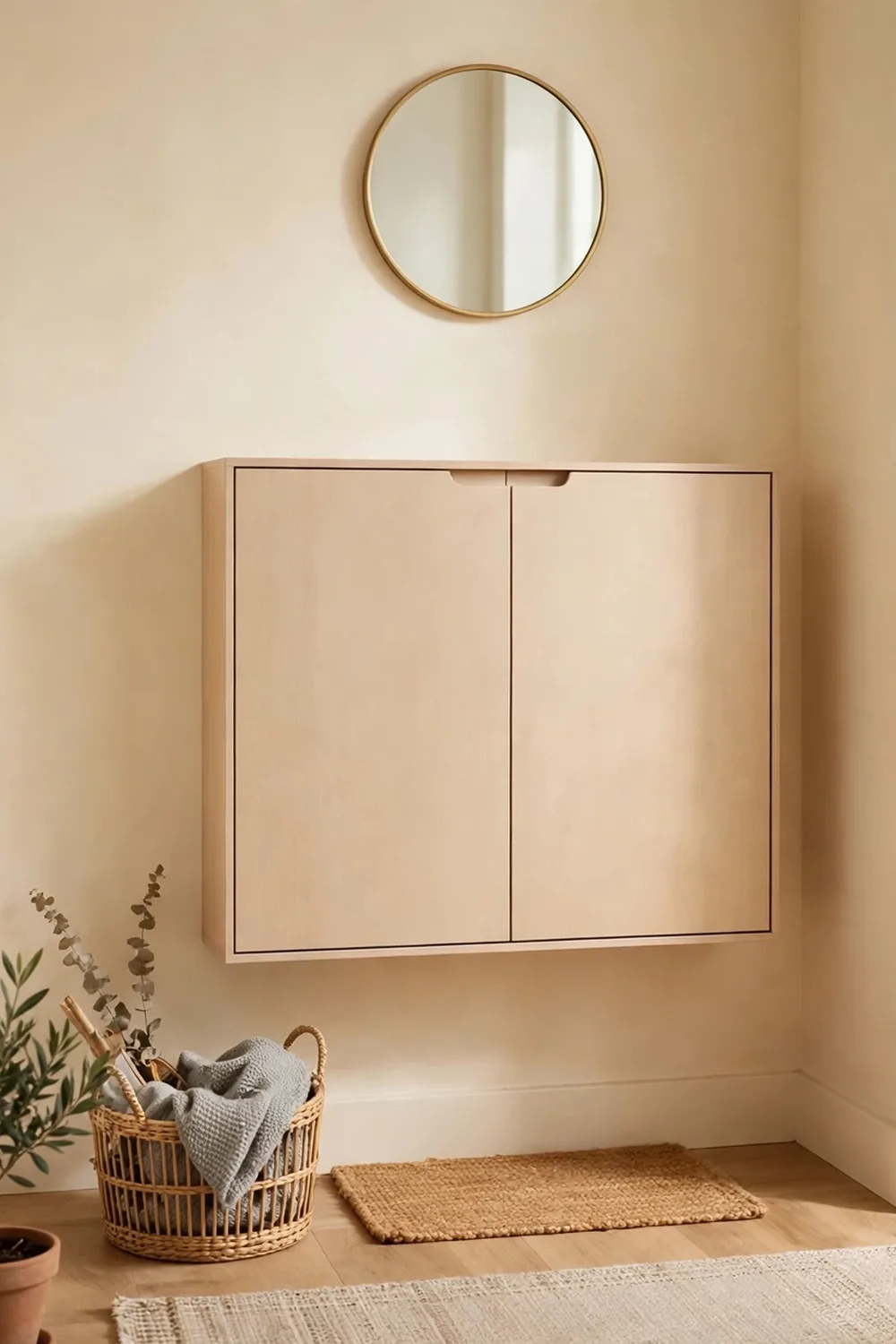
4. Slim shoe cabinet
A shoe cabinet with tilted compartments stores 8 to 12 pairs in a box only 8 to 10 inches deep. It mounts flat against the wall and looks like a plain cabinet when closed. Measure your longest shoes first, since tall boots may not fit the tilted slots. The trade off is access: you open one compartment at a time, so the shoes you wear daily should live in the top row.
5. Bench with shoe cubbies
A bench with open cubbies underneath stores shoes where you sit to put them on. Two cubbies per person is enough for daily shoes, and the bench top holds bags and mail. The trade off is dust, since open cubbies show everything. A simple fabric bin inside each cubby hides the mess and pulls out for cleaning.
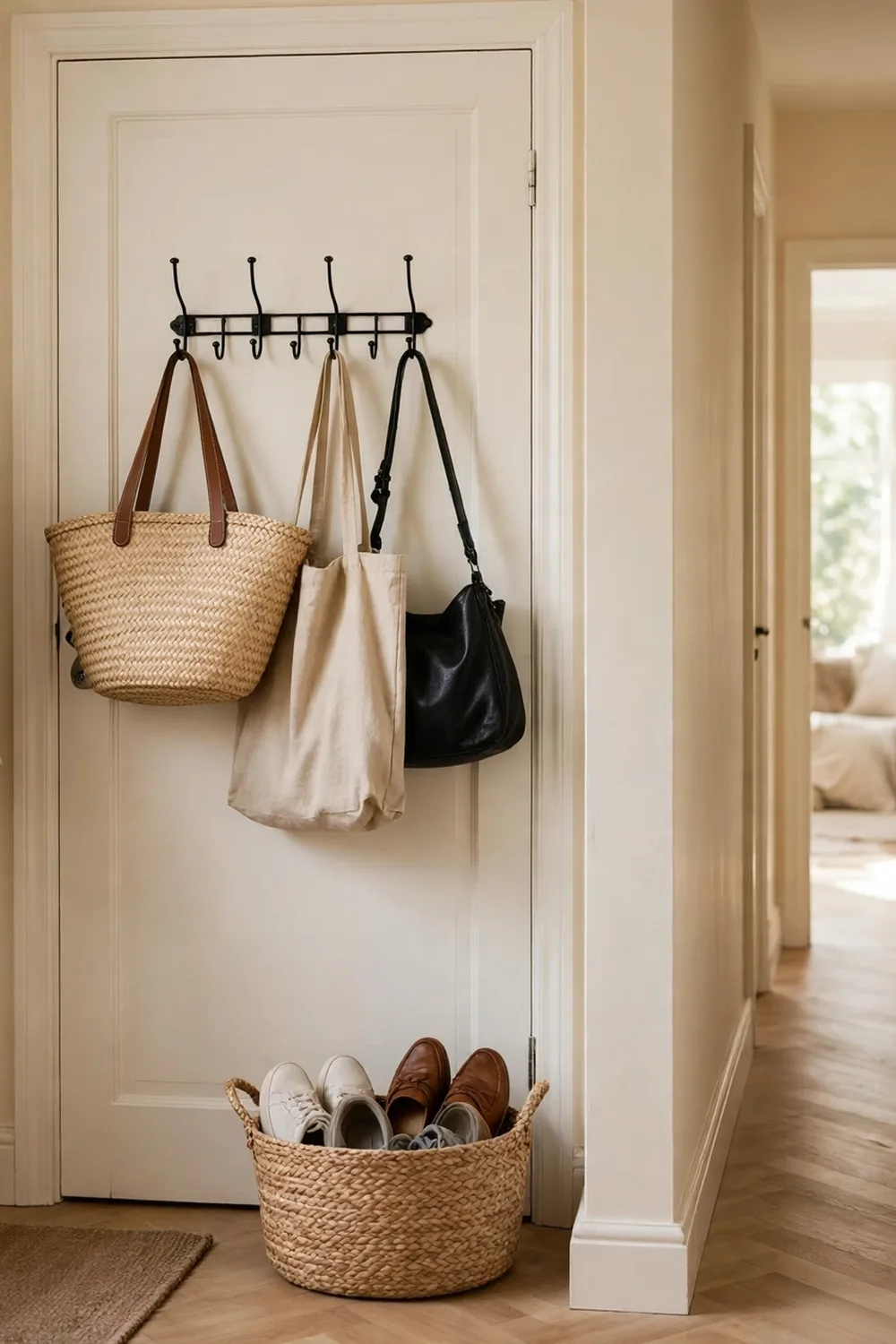
6. Over the door hooks and a basket
When the wall has no free space, use the door. Over the door hooks hold coats and bags, and a basket on the floor beside the door holds shoes. This setup costs almost nothing and needs no drilling, which suits renters. The trade off is that the door gets heavy and may not close smoothly if the hooks are overloaded, so keep it to two or three items.
What makes a tiny entryway look finished?
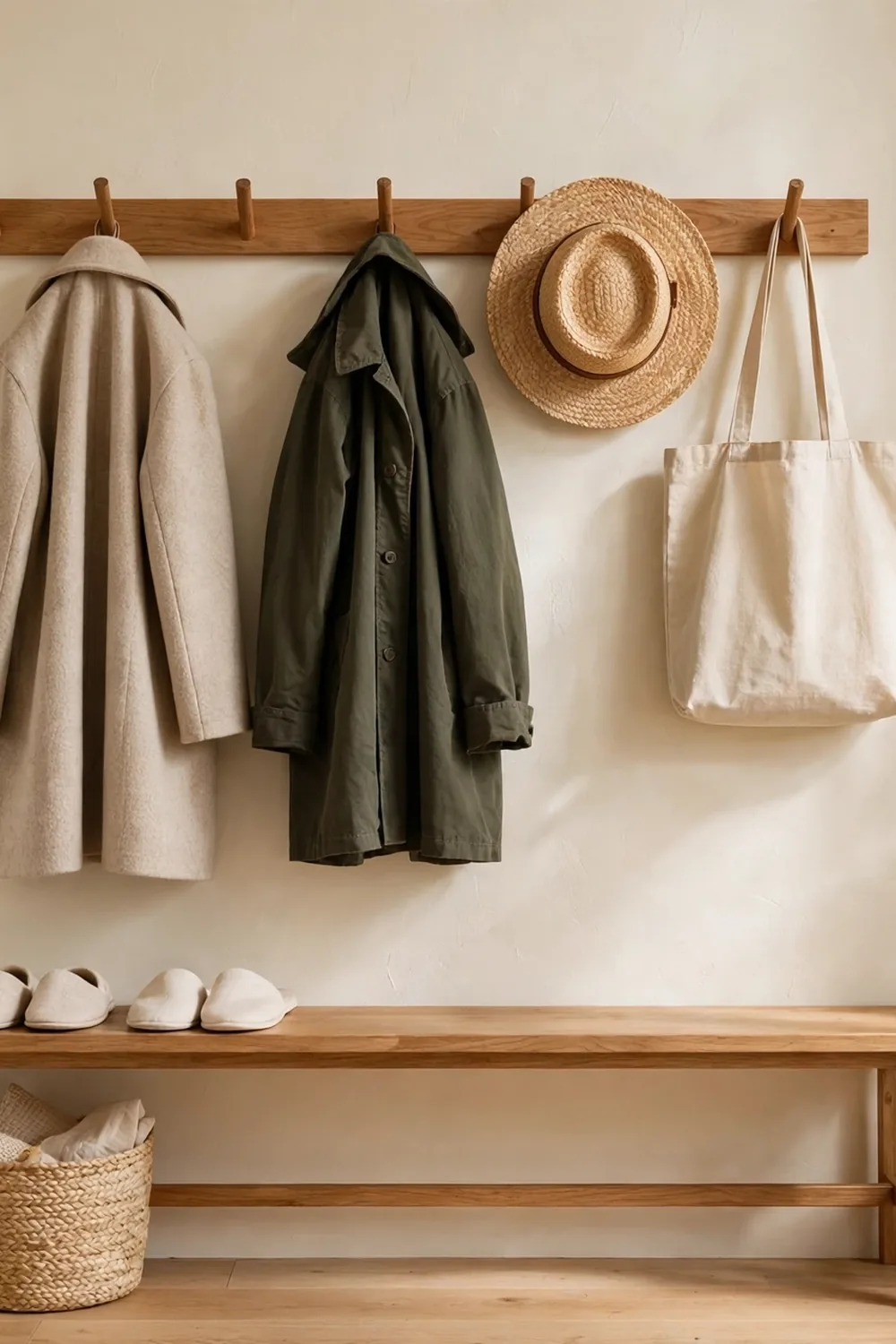
7. Peg rail along one wall
A peg rail is a strip of wood with pegs every 6 to 8 inches, mounted at 66 inches high. It holds coats, hats, dog leashes, and tote bags, and it looks tidy because everything hangs in a straight line. A rail 36 to 48 inches long suits most entryways. The trade off is capacity. A peg rail holds less than a row of double hooks, so it works best for one or two people.
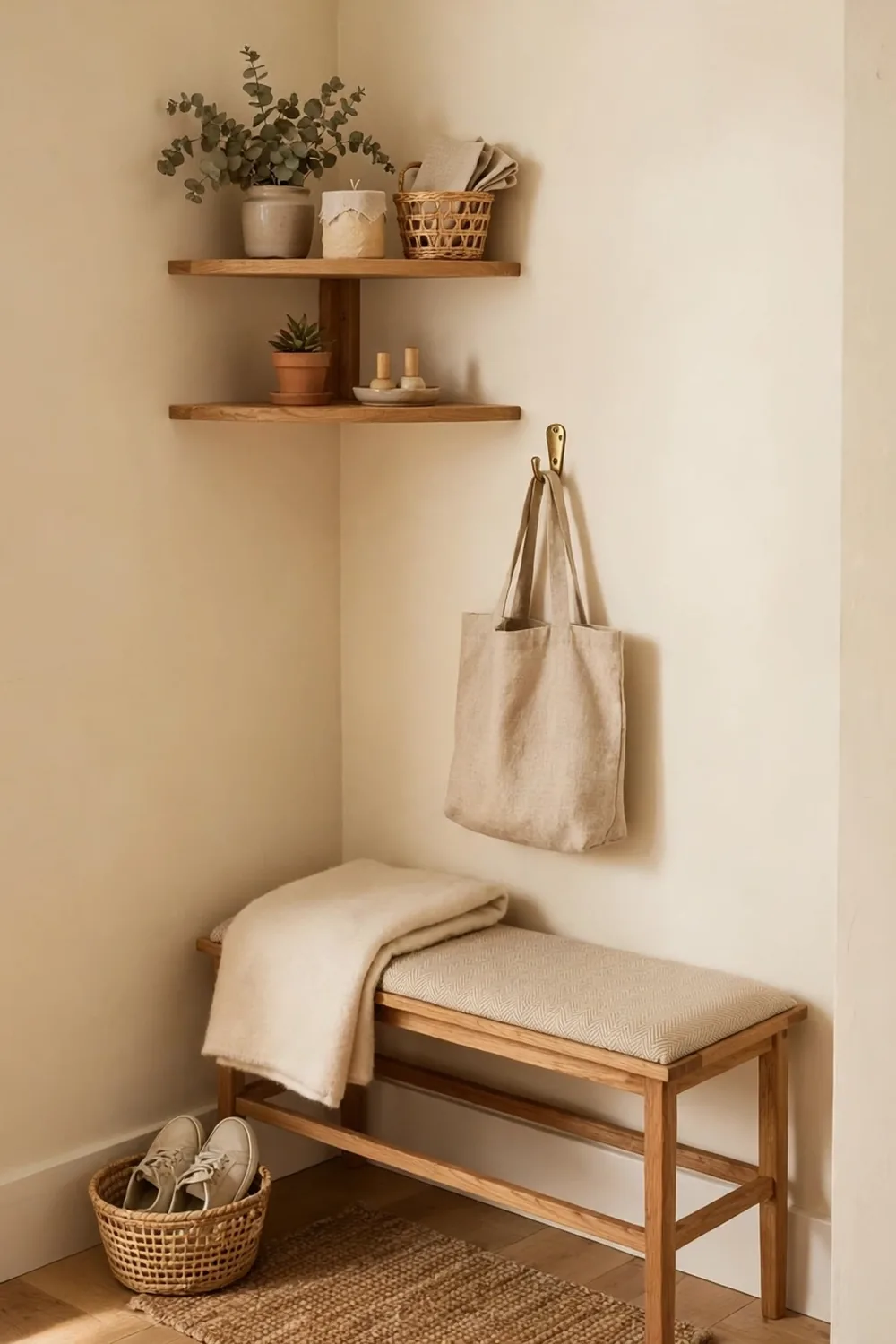
8. Corner setup
A corner that looks dead can hold a whole entryway. Put a small triangular shelf or a narrow bench in the corner, add two hooks on each wall, and hang a small mirror on one side. The corner keeps the walkway clear because nothing sticks out into the path. The trade off is reach: the far corner is harder to get to, so keep daily items near the front edge.
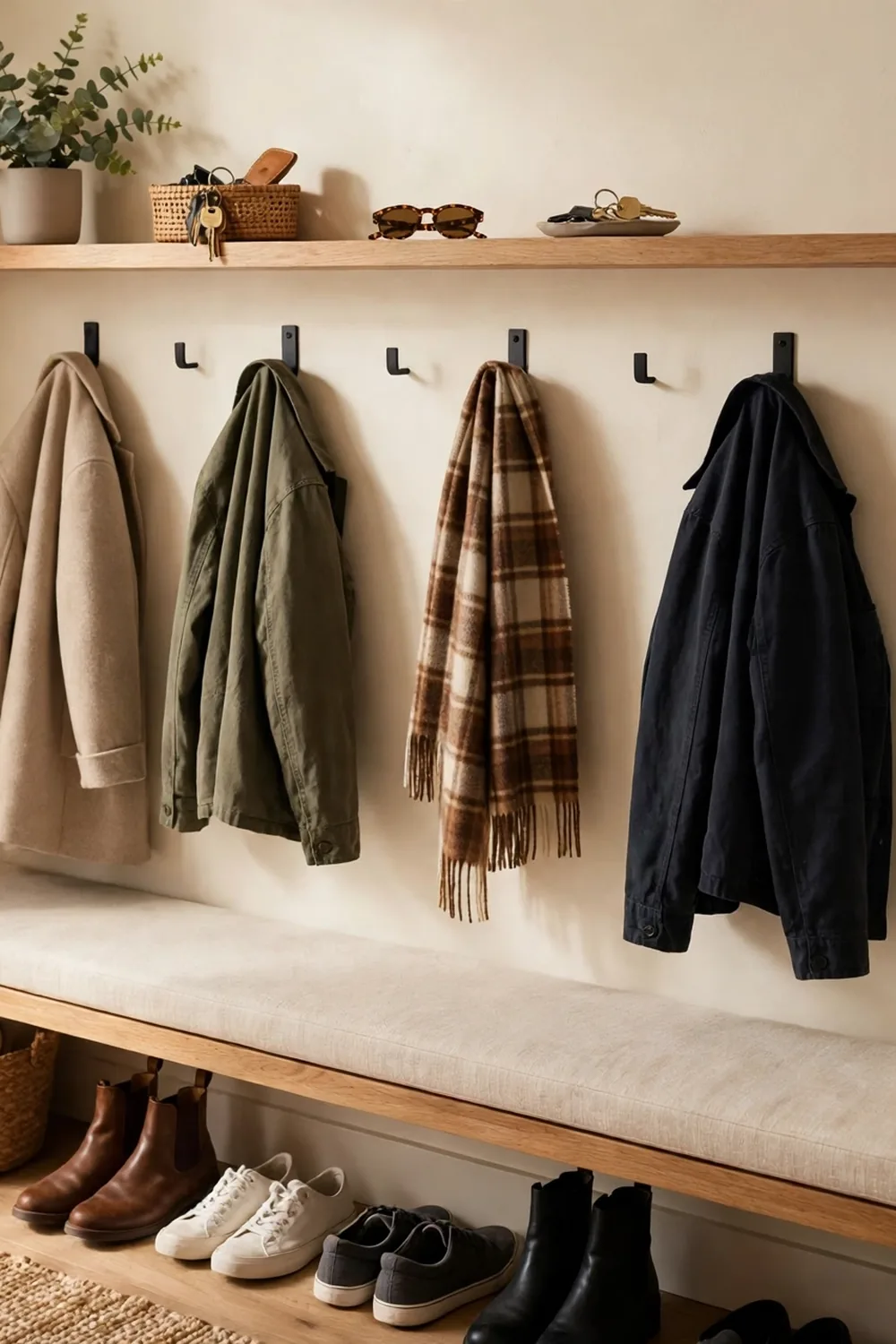
9. Full wall: hooks, shelf, and bench in one run
When one wall is free, combine all three pieces in a single run. Hooks on top at 66 inches, a shelf at 48 inches for keys and mail, and a bench below at 18 inches high with shoe storage underneath. A run 48 to 60 inches wide covers a whole household’s daily gear. The trade off is commitment: a full wall setup is the most work to install, so measure twice and use proper wall anchors.
An entryway is not a room. It is a habit with a place to live, and it only needs one hook, one shelf, and one spot for shoes.
Frequently Asked Questions
How deep should entryway furniture be?
Keep it under 14 inches deep in a narrow hall. A bench 12 to 14 inches deep and a console 10 to 12 inches deep leave room to walk past without turning sideways.
How high should entryway hooks be?
Mount coat hooks at 60 to 66 inches high for adults. Add one lower row at 48 inches if kids use the same entryway.
What is the best shoe storage for a tiny entryway?
A slim cabinet with tilted compartments, 8 to 10 inches deep, stores the most pairs in the least space. An open bench with cubbies works better if you want shoes visible and easy to grab.
How do I make a dark entryway feel brighter?
Hang a mirror across from the nearest light source, paint the walls a warm white, and use a small lamp or a battery powered sconce. A light colored rug in a 2×3 or 2.5×4 foot size also helps the floor reflect light.