Kitchen Cabinet Color Ideas That Age Well
Short answer: The cabinet colors that age best are warm white, soft sage green, deep navy on lower cabinets only, and warm greige, because each one has looked current in kitchens for about 10 years and still does. Pick one family, test large samples in your own light for a full week, and match the hardware to the color. That is the whole method.
| Time to decide | About one week of sample testing |
| Difficulty | Beginner; no tools except a brush and sample boards |
| Best for | Kitchens you plan to live with for years, not flip fast |
| How long the color stays fresh | About 10 years for the four colors in this guide |
| Renter-friendly | Yes, if you paint only what you own or get written permission |
My kitchen cabinets were a trendy pale gray when I moved in, and by year three they looked tired. Not damaged, just dated. The gray had a cold blue undertone that clashed with the warm wood floor, and every winter afternoon it made the room feel like a cloudy day indoors.
That mistake taught me the rule this guide follows. A cabinet color ages well when it has a warm undertone, a long track record, and enough depth to hide the small marks of daily cooking.
Why do some cabinet colors look dated in five years?
A color dates fast when it leans hard on one trend. The cool grays of the early 2020s looked modern next to white subway tile, then felt cold once warm wood and brass came back. A bright stark white dates the same way when it turns blue under north light.
The colors that survive sat quietly in kitchens long before the trend cycle found them. Warm white has been on cabinets since painted kitchens became common. Time is the test that matters. A color that still looked good after about 10 years in real kitchens has already passed it.
What makes a cabinet color age well?
Three things decide it, and you can check all three before you buy a full gallon.
First, undertone. Warm undertones (yellow, green, or red hiding under the main color) age better than cool undertones (blue or violet) because wood floors, warm lighting, and skin tones are all warm. A warm white reads creamy. A cool white reads clinical. Hold a pure white sheet of paper next to a swatch and the undertone shows itself at once.
Second, light reflectance value, known as LRV. This is the number paint brands print that says how much light a color reflects, on a scale from 0 to 100. The colors in this guide sit in the middle ground, which is why they work in both bright and dim rooms.
Third, depth. A color with some depth hides fingerprints, steam marks, and the faint scuffs that come from pots and pans. Pure flat white shows every mark. A soft sage or a warm greige hides them for a week between cleanings.
How do I choose a cabinet color that lasts 10 years?
Work through the seven steps in order. The first five narrow the choice to one color family. The last two lock it in before you commit to the whole kitchen.
1. Start with warm white if you want the safest color of all
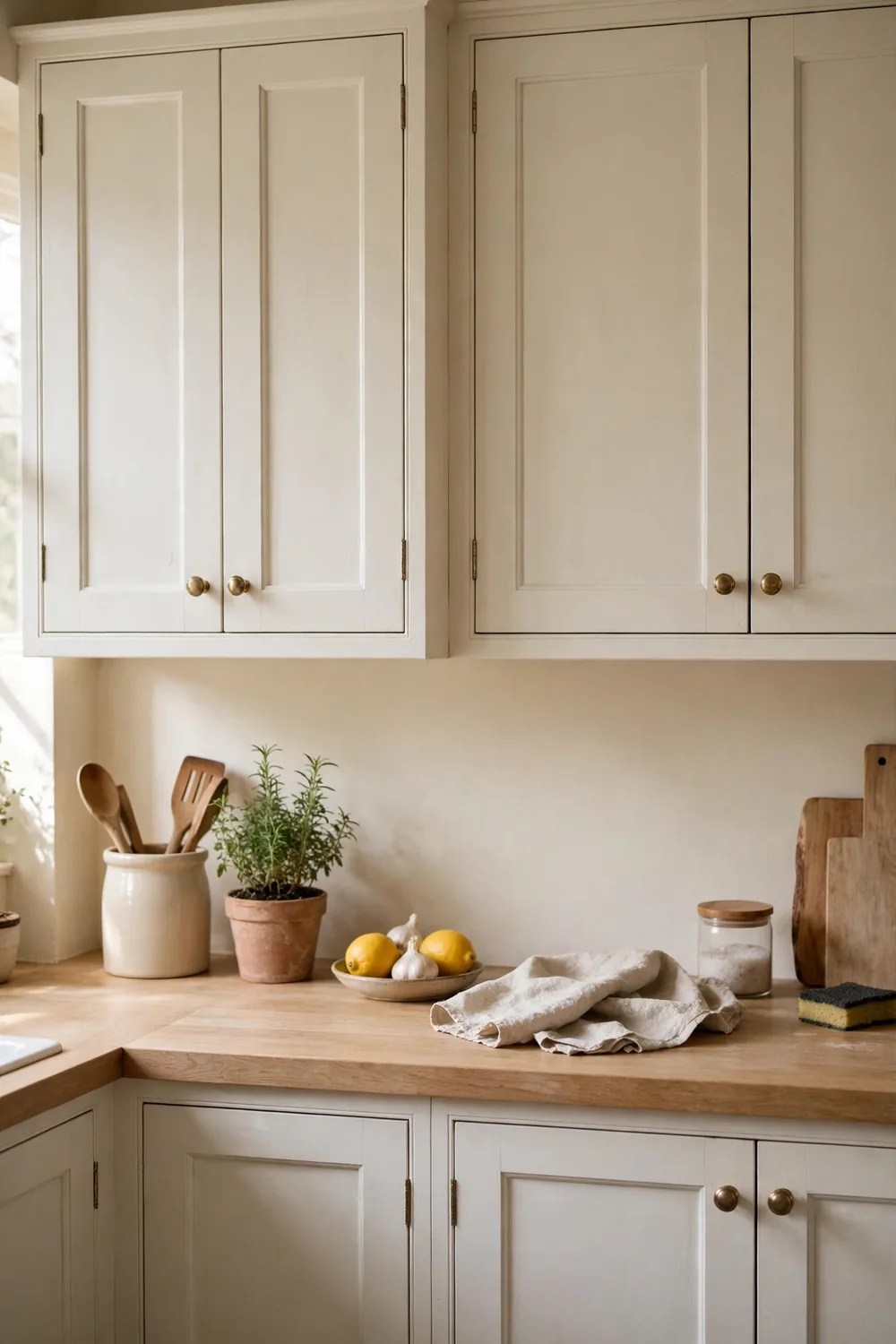
Warm white is the safest cabinet color ever made, and it is also the easiest to get wrong. The trick is the undertone. Benjamin Moore White Dove OC-17 has an LRV of 85.38 and a soft yellow undertone that keeps it from turning blue in north light. Sherwin-Williams Alabaster SW 7008, LRV 82, is a touch warmer and creamier, and it pairs well with white oak and brass.
2. Pick sage green for a calm color that still feels classic
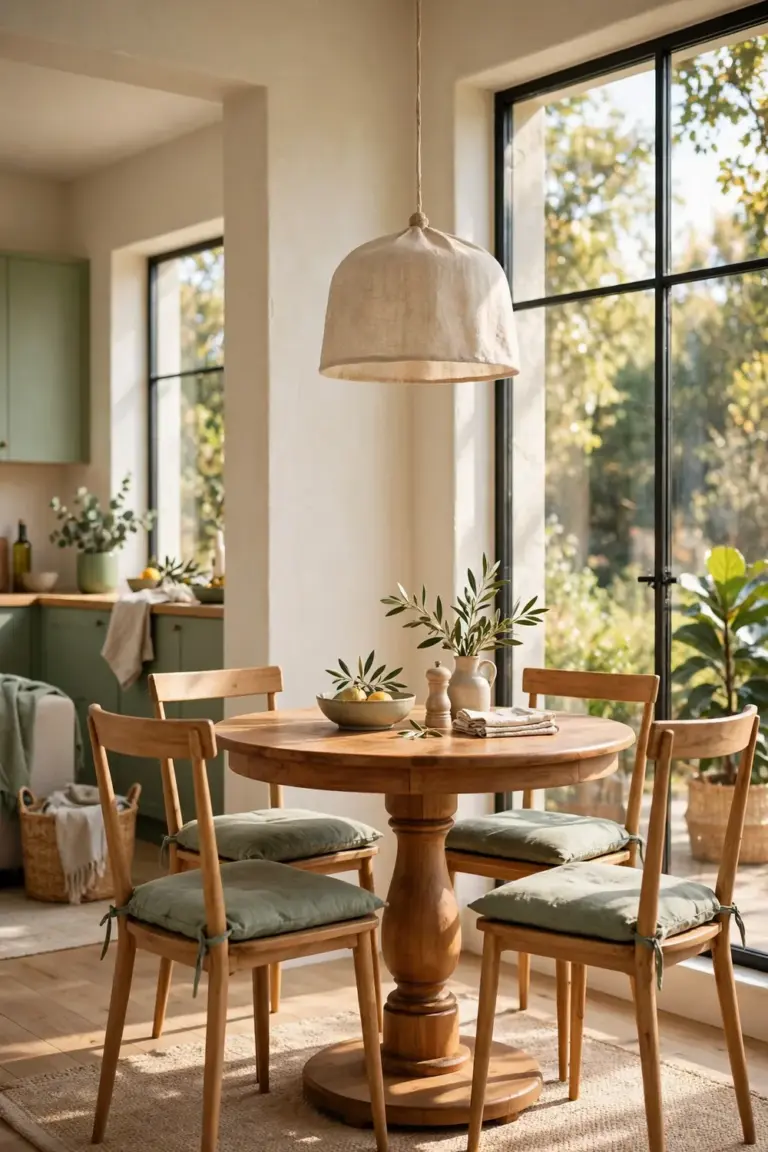
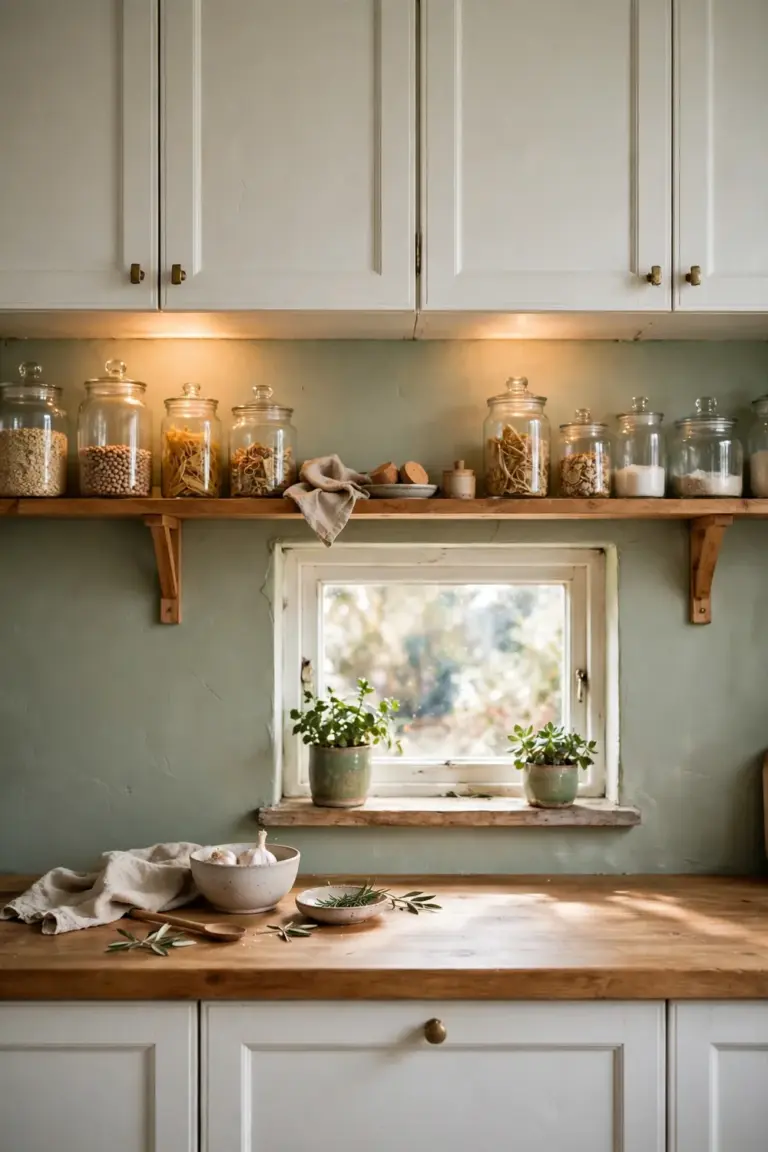
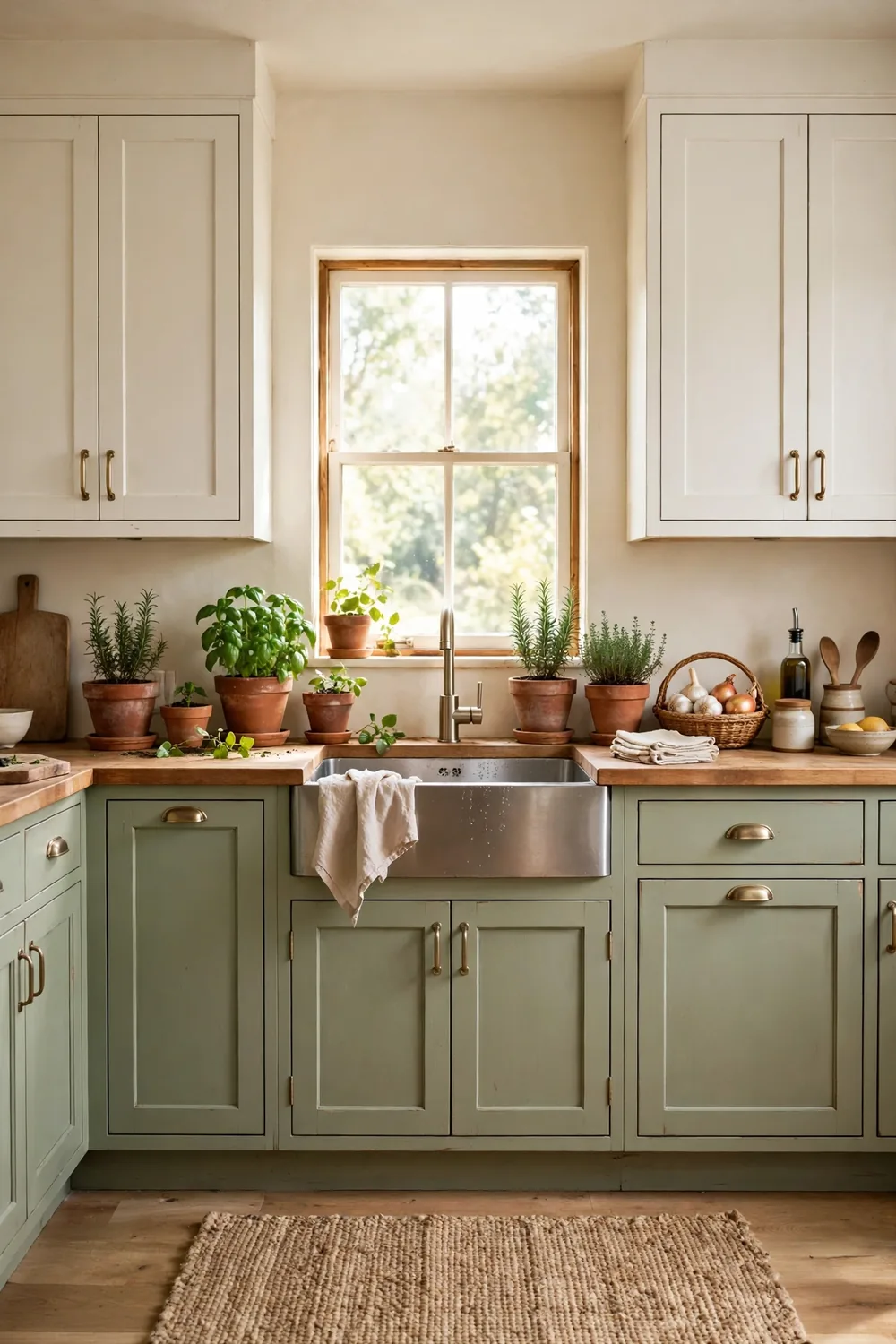
Sage green is the color for a kitchen that should feel calm at 7 in the morning. Benjamin Moore Saybrook Sage HC-114 is a soft muted green with gray in it, and it has been a favorite for painted cabinets for years. Sherwin-Williams Evergreen Fog SW 9130 is a touch deeper and greener, and it works well with warm white uppers and butcher block counters.
Sage works because green is the color our eyes rest on. It also hides cooking marks better than white, which matters on the cabinets nearest the stove. In a dim kitchen, use sage on the lowers only and keep the uppers warm white.
3. Use navy only on the lower cabinets
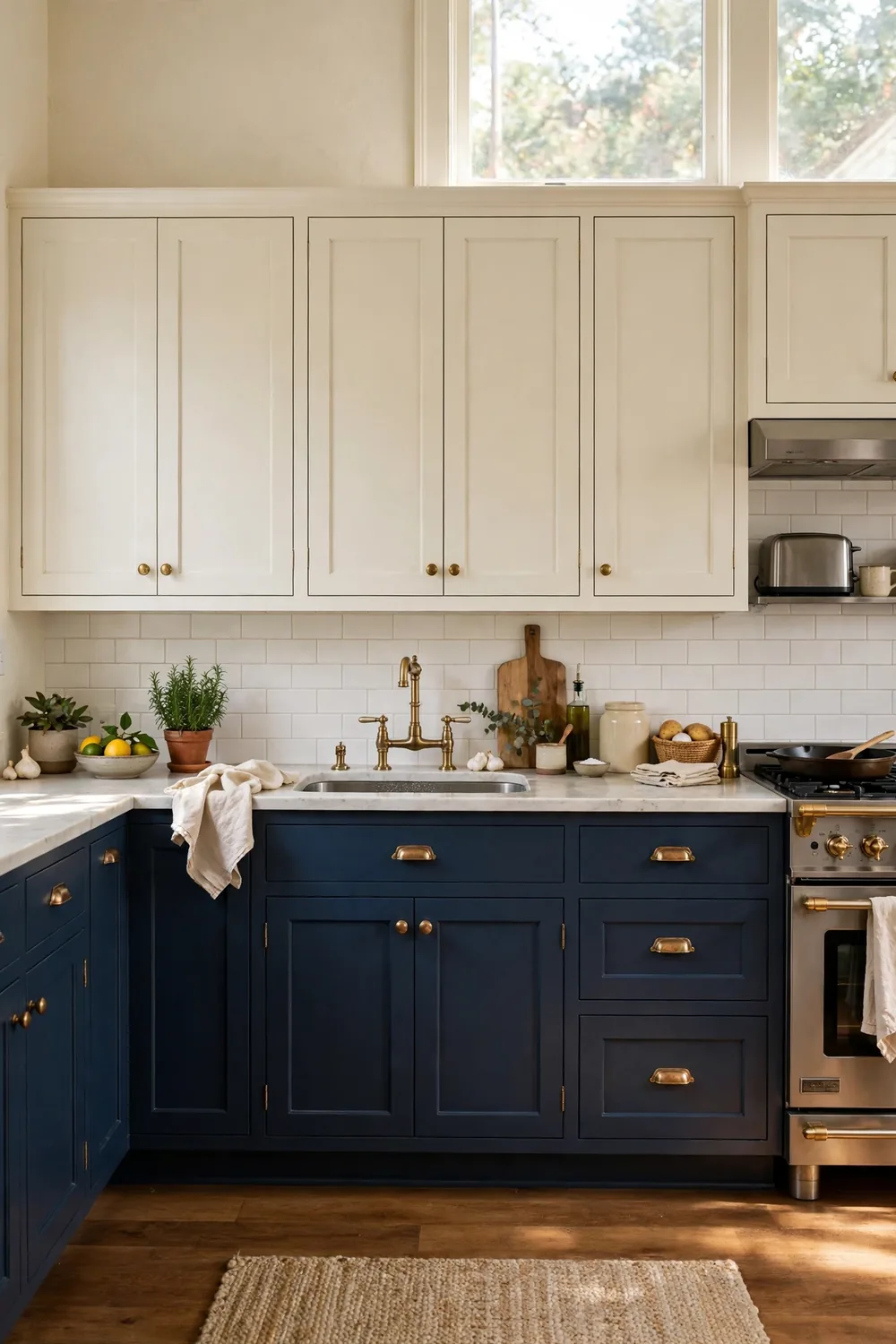
Navy is the boldest color in this guide, and the rule for it is simple: lower cabinets only. Benjamin Moore Hale Navy HC-154 and Sherwin-Williams Naval SW 6244, LRV about 4, are both deep classic navies that read almost black in dim light and clearly blue in daylight.
Navy on every cabinet can overwhelm a small kitchen and make the uppers feel heavy. Navy on the lowers, with warm white uppers, gives the same drama with half the risk. The white above keeps the room bright, and the navy below hides the scuffs that happen at knee height.
4. Choose a warm greige when white feels too stark
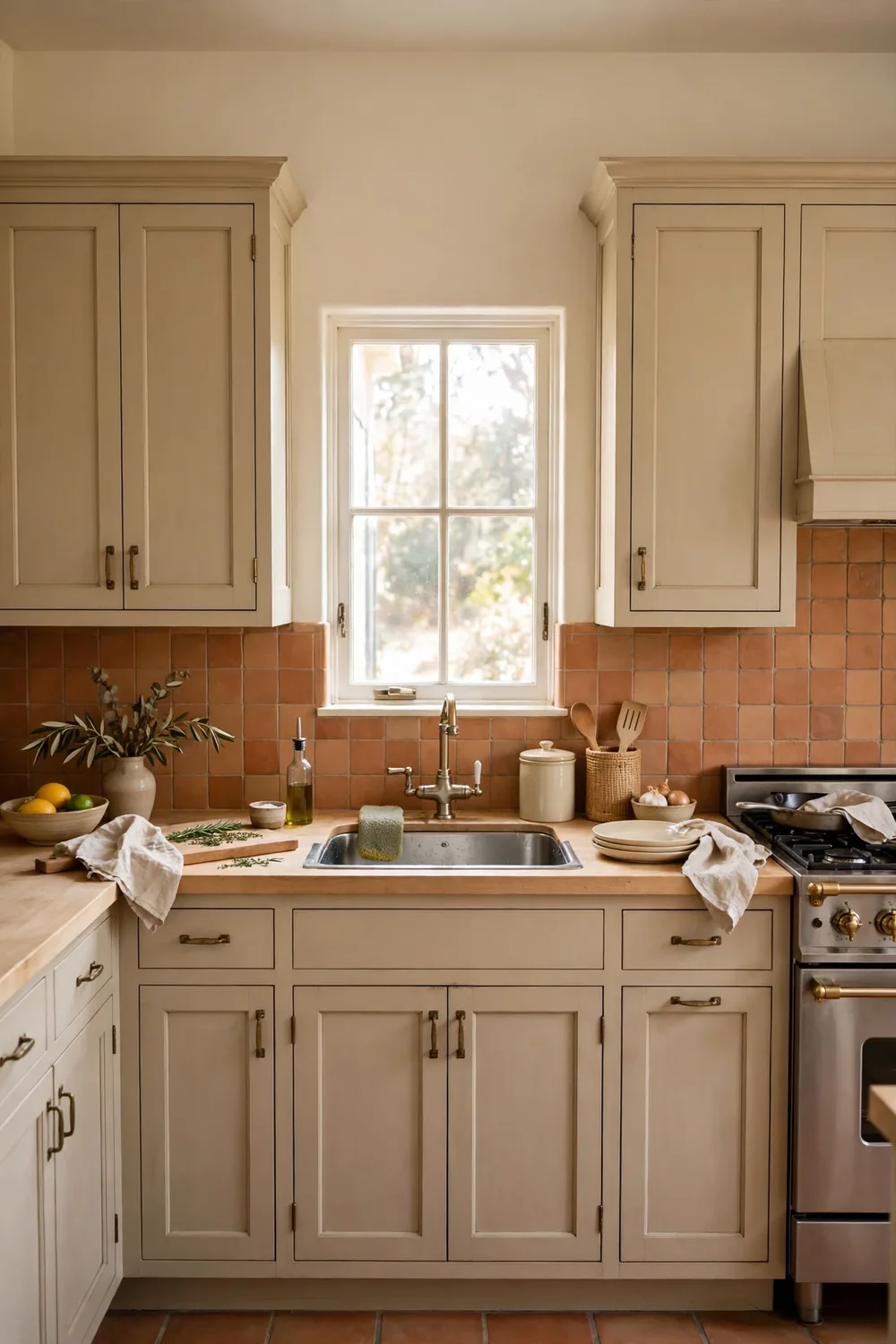
Greige is the blend of gray and beige, and the warm version of it is the quiet workhorse of this guide. Benjamin Moore Revere Pewter HC-172, LRV 55.51, is a warm greige that has been popular for more than a decade, which is itself proof that it ages well. Sherwin-Williams Accessible Beige SW 7036, LRV 58, is a touch lighter and warmer, and it works well in kitchens with cream tile.
Greige suits a kitchen where pure white feels too bright and sage feels too green. It warms up a room with cool light, and it sits comfortably next to both warm wood and stainless steel.
5. Try a two-tone plan before you commit to one color
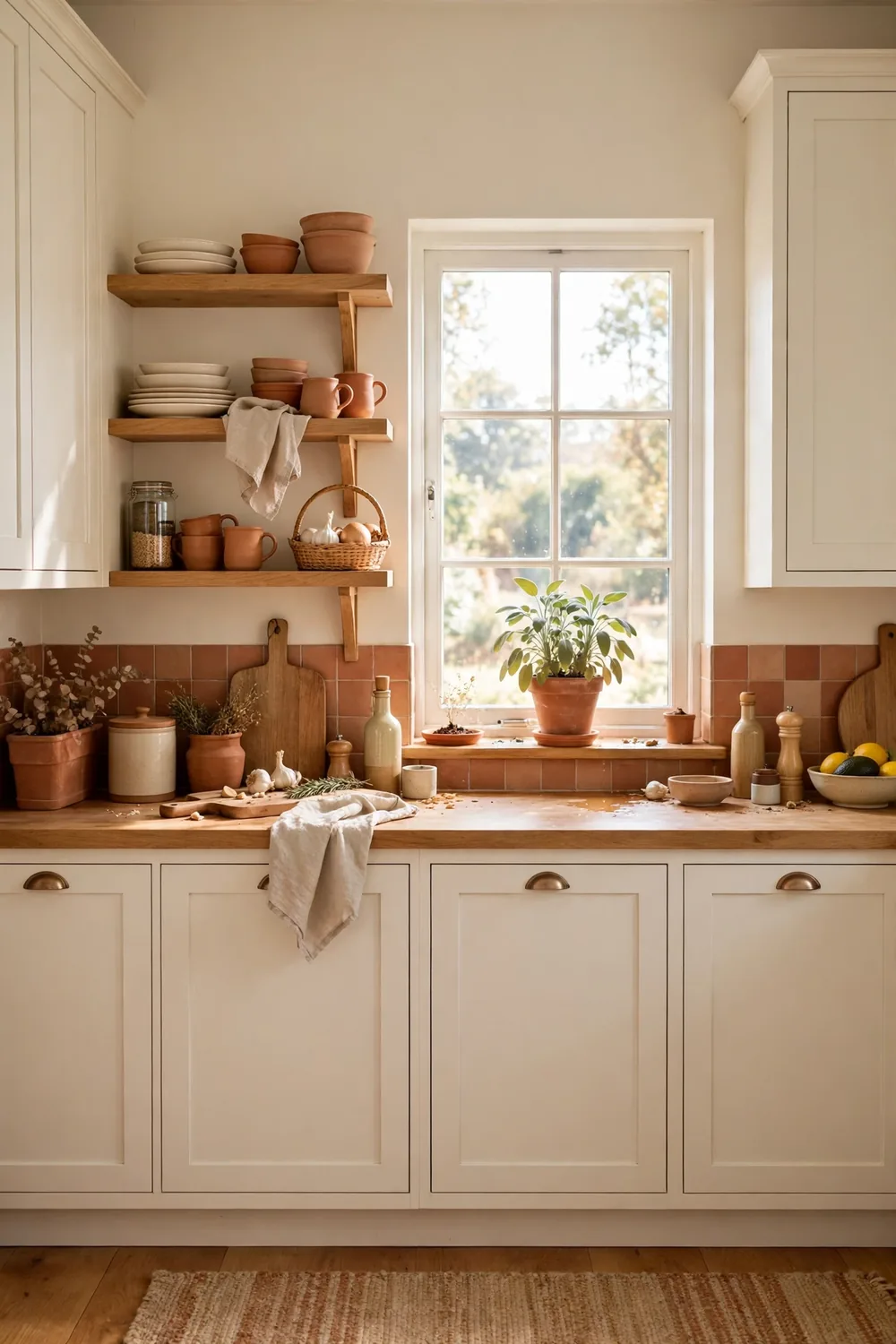
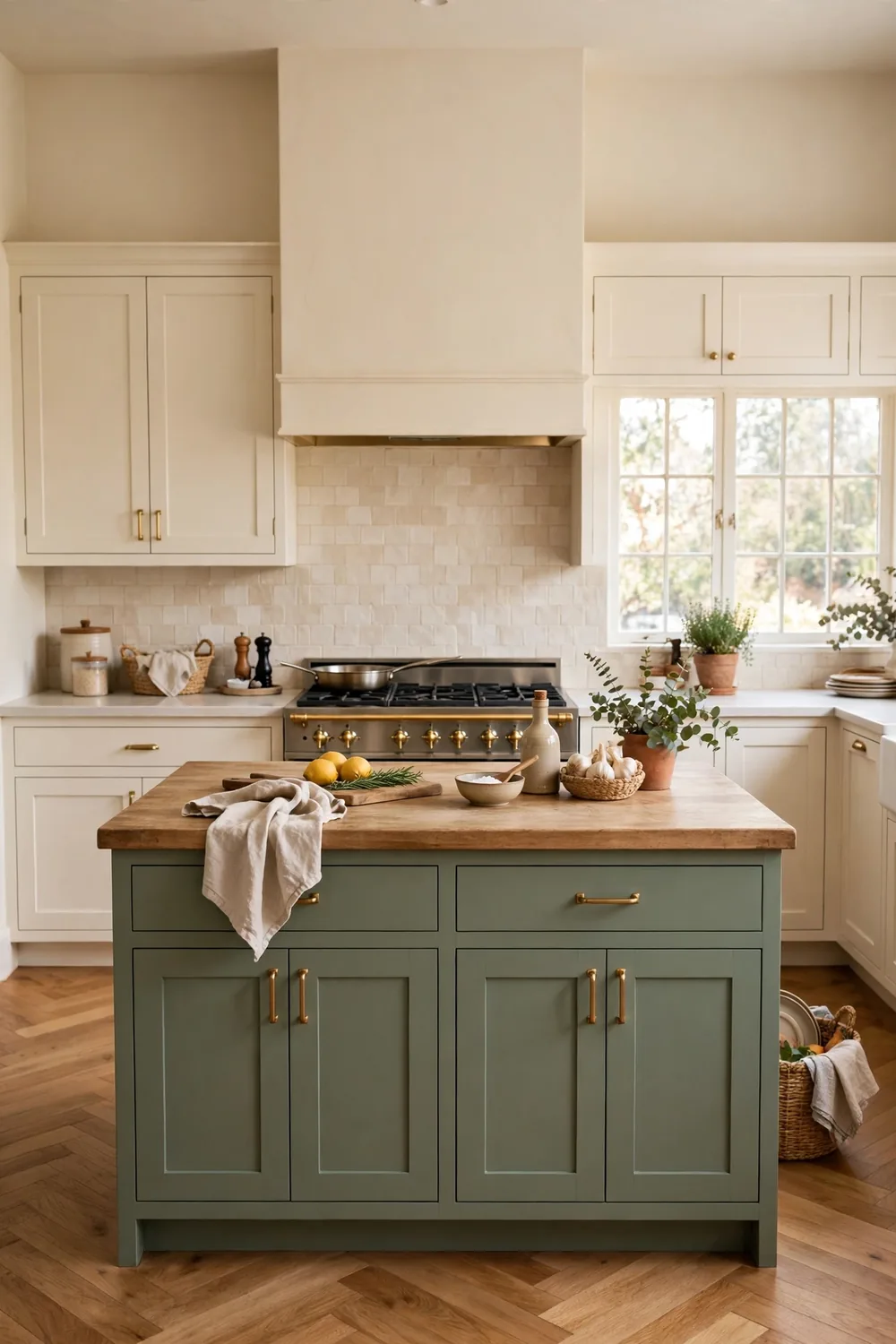
Two-tone kitchens pair one color on the uppers with another on the lowers or the island, and they age well when the pairing follows one rule: one light color, one deeper color, both warm. Warm white uppers with sage lowers is the calmest pairing. Warm white uppers with navy lowers is the boldest. Warm greige uppers with deep sage lowers sits between the two.
Keep the split simple. Two colors is enough. Three colors on cabinets is where a kitchen starts to look busy, and busy is what dates fastest. The island is the safest place for the second color, because it reads as furniture and can be repainted alone later if tastes change.
6. Live with large samples for a full week before you commit
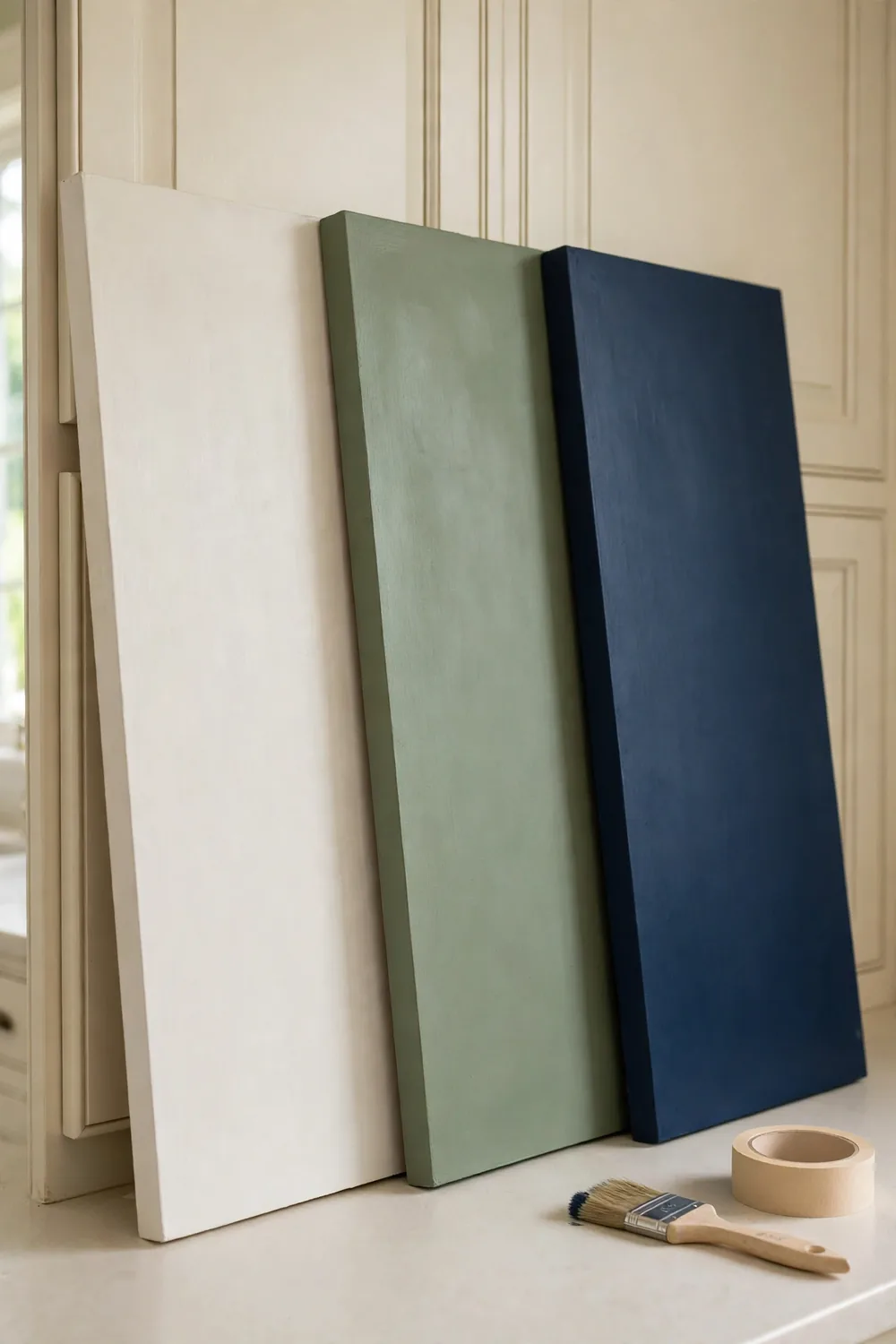
This is the step people skip, and it is the step that saves the repaint. Buy sample pots of your top two colors and paint them on 12 by 12 inch boards, not on the wall and not on a tiny paper swatch. A small swatch lies. A large board tells the truth about how a color fills a cabinet door.
Move the boards around the kitchen, from the window to the darkest corner. Look at them in morning light, in evening light, and under the under-cabinet lights at night.
A full repaint feels big, but one can of paint is enough to test a color on one bank of cabinets before you commit to the whole kitchen. If the sample still looks right after seven days of real cooking light, it is the color. If you keep noticing it and not in a good way, it is not.
7. Match the hardware and finish to the color family
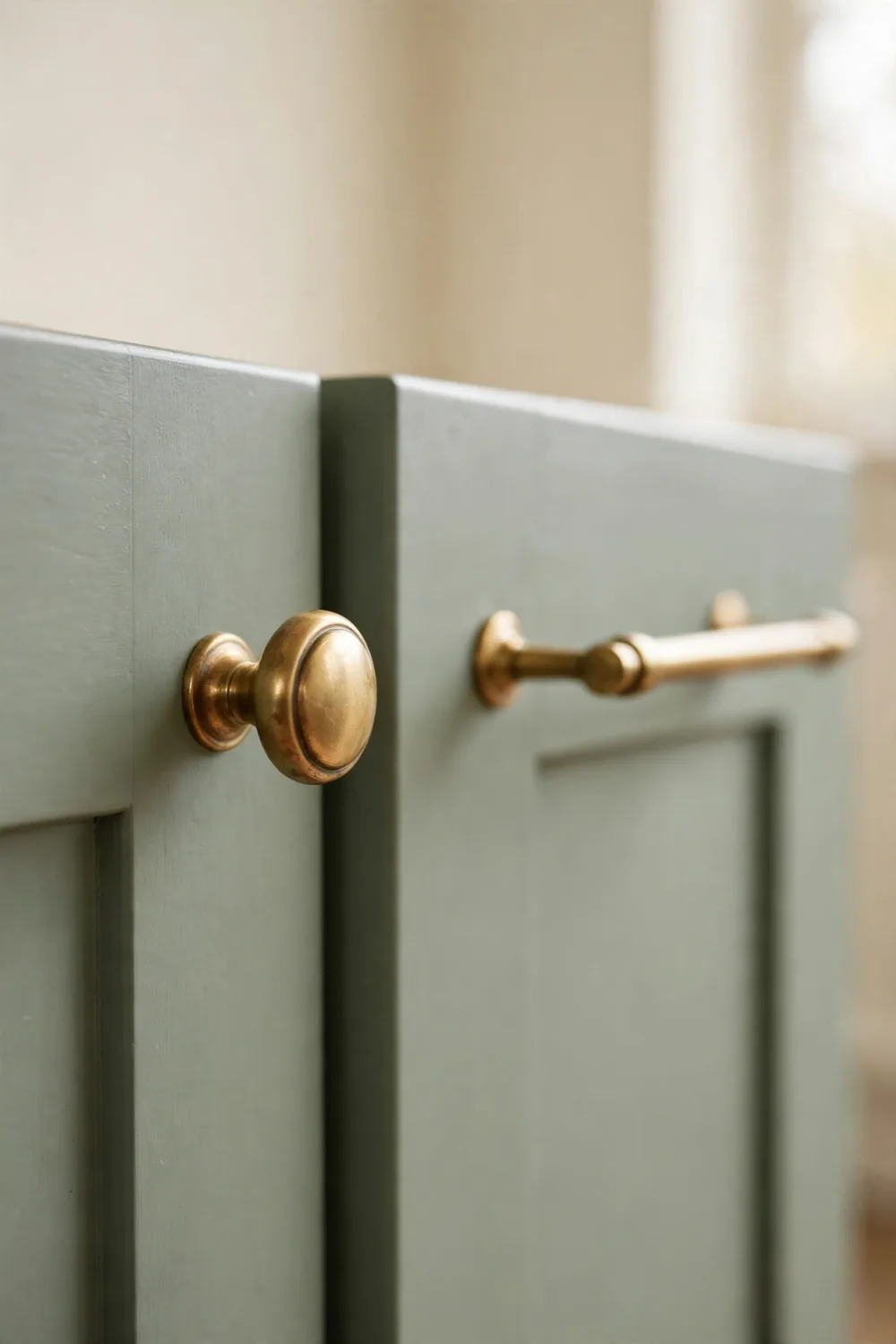
Hardware is the jewelry of the kitchen, and the wrong metal can age a good color. Warm brass and unlacquered brass suit warm white, sage, and greige, because the metal and the color share a warm undertone. Matte black suits navy best, because it keeps the dark cabinets from looking formal. Polished chrome suits none of these four colors as well as the warm metals do, and it can make sage and greige look cold.
Finish matters as much as metal. A satin or eggshell finish on cabinets hides brush marks and wipes clean, which is what a working kitchen needs. Satin is the middle ground that hides brush marks and wipes clean.
What went wrong when I skipped the sample step
I once painted a pantry door in a sage I had only seen on a paper swatch, and the color dried two shades deeper than I expected. In the dim hallway light it read almost forest green, and it clashed with the warm white cabinets beside it. The fix took a full weekend: sanding, priming, and repainting with the lighter sage I should have tested first.
The mistake was the size of the test. A paper swatch is about 2 by 3 inches, and a cabinet door is about 24 by 30 inches, so a color always looks deeper on a large surface. Test on a board at least 12 by 12 inches, in the darkest corner of the kitchen.
A cabinet color always looks deeper on a full door than on a paper swatch, so test large and test in the dark corner first.
What I would do differently now
If I painted my kitchen again tomorrow, I would pick sage on the lowers and warm white on the uppers, and I would spend the full week on samples without apology. My first kitchen was all warm white, and I loved it for years, but it showed every steam mark near the stove and I wiped those cabinets more than any other surface in the house. Sage would have hidden that wear, and the white uppers would have kept the room bright.
I would also change the hardware sooner. That is my honest take: the color gets the attention, but the hardware decides whether the color reads warm or cold.
Once the color is set, small kitchen organization keeps the counters clear enough for the new color to show. A clear counter is what lets a cabinet color do its work, and it costs nothing except an hour of putting things away.
FAQ
How long will a cabinet color really stay in style? The four colors in this guide have looked current for about 10 years each, and none of them depends on a single trend.
Should I paint all the cabinets one color or go two-tone? One color is safer and easier to repaint later. Two-tone suits a kitchen that needs one bold note, like a dark island or navy lowers, with warm white above to keep it bright.
What is the best cabinet color for a small kitchen? Warm white, because it reflects the most light. Benjamin Moore White Dove OC-17 and Sherwin-Williams Alabaster SW 7008 are both warm whites that stay creamy in north light.
Does navy make a kitchen look smaller? Navy on all the cabinets can make a small kitchen feel smaller, because its LRV is about 4 and it absorbs light. Navy on the lowers only, with warm white uppers, keeps the room bright while the dark base hides scuffs.
How many samples should I test before deciding? Test two colors, not five. Two large boards, 12 by 12 inches each, moved around the kitchen for a full week, tell you more than a wall of small swatches.
What finish should cabinet paint have? Satin or eggshell. Both wipe clean and hide brush marks, which is what a working kitchen needs.