Rug Size Guide for Living Rooms and Bedrooms (With Diagrams)
A rug that is too small makes even a good sofa look like it floated in from another room. The fix is simple: choose a rug large enough that the front legs of the sofa and chairs rest on it, usually an 8 by 10 foot rug in a standard living room. The seven rules below cover living rooms, bedrooms, and dining rooms, with the sizes to measure before buying.
Rug size is the most common sizing mistake in home decor, and the easiest to avoid. People measure the rug, fall in love with the pattern, and forget to measure the room. The result leaves the sofa and the chairs stranded on bare floor with a small island of pattern between them.
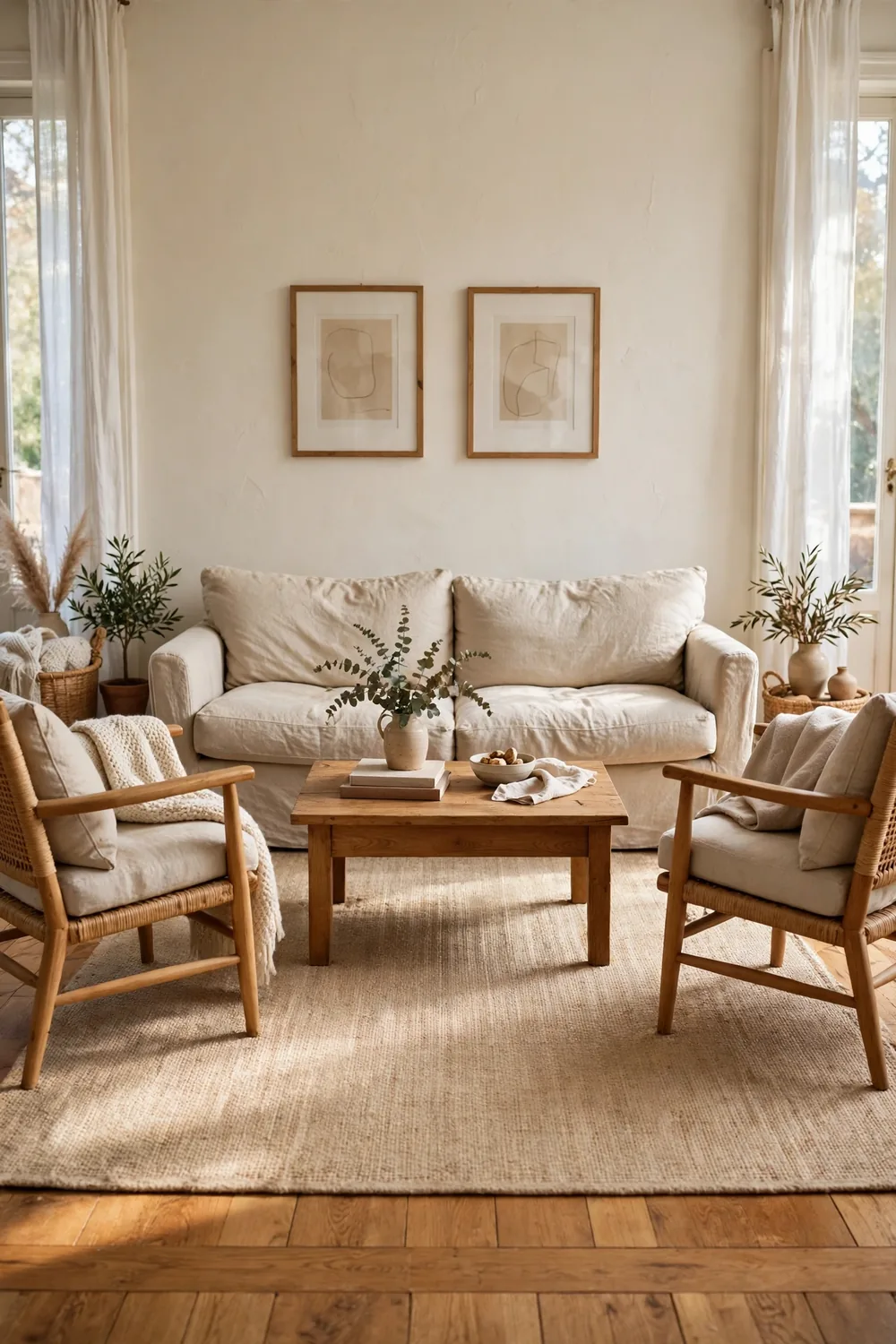
Think of a rug as the frame for the furniture, not as a decoration under it. The rug defines where the seating area begins and ends, and everything in the group should touch it. Get the size right and the whole room looks pulled together.
Why does rug size change the whole room?
A rug does three jobs at once: it softens the floor, it quiets the sound, and it draws the boundary of a seating area. When the rug is too small, all three jobs fail. Feet land on bare floor, the room echoes, and the furniture looks scattered because nothing ties the pieces together. When the rug is the right size, the seating area reads as one room inside the room.
Three habits cause most of the trouble: measuring the rug instead of the furniture group, choosing the size that feels safe instead of the size that fits, and forgetting the walking space around the rug. A rug that is a foot too short in each direction leaves the front legs off the edge, which is the single most visible rug mistake there is. The fix is the same for all three: measure the furniture group first, then choose the rug that covers it, with room to walk around the edges.
What are the 7 rug size rules that work in almost any room?
Seven rules, from the living room diagram to the care that keeps the edges flat.
1. Measure the seating area first
Before looking at a single rug, measure the furniture group the rug must serve. Push the sofa and chairs into their final positions, then measure from the outer edge of one piece to the outer edge of the other, length and width. Add 6 to 12 inches on each side for the border of rug that shows around the furniture, and that total is the smallest rug that will work.
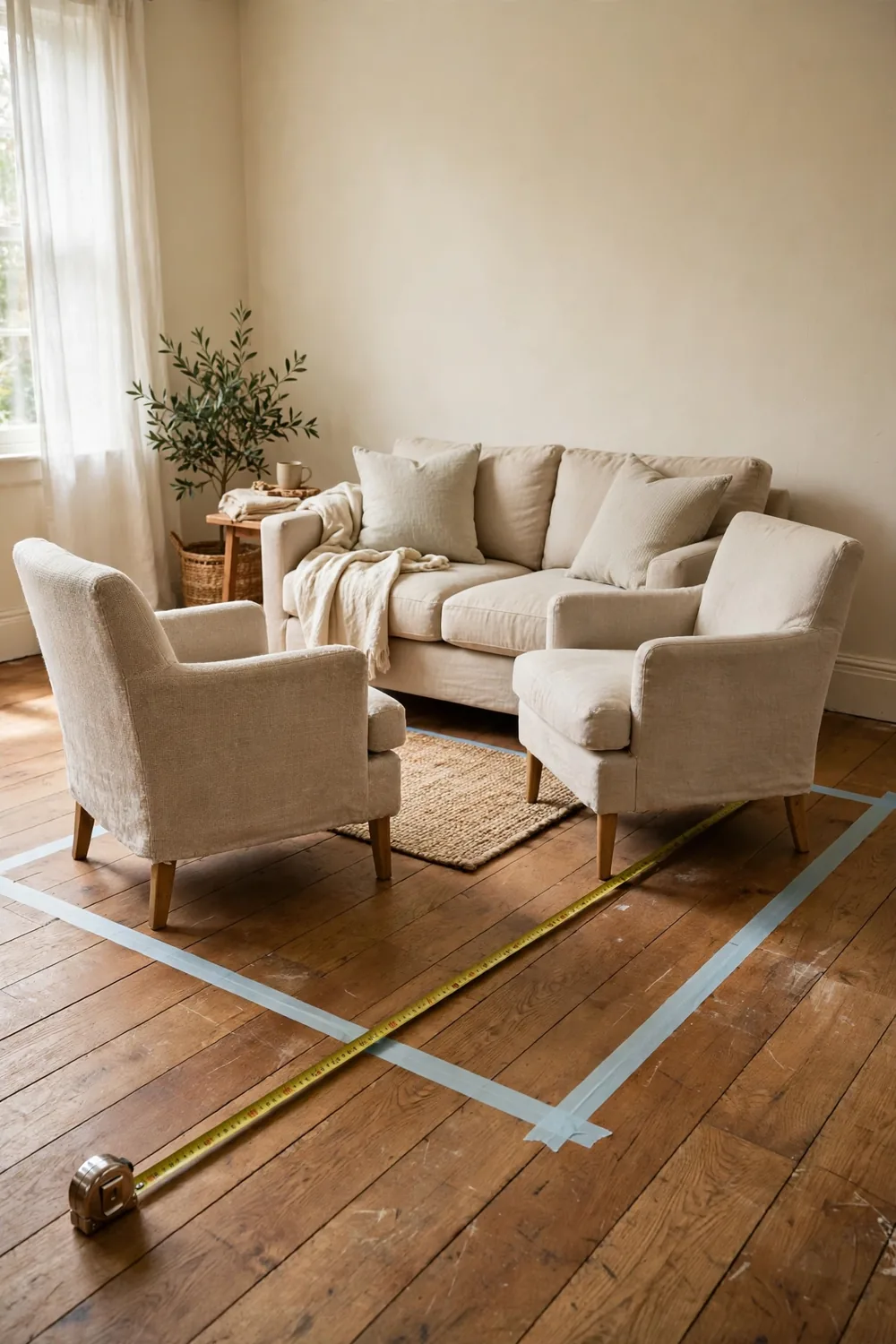
A tape measure beats a guess every time. Mark the rug outline with painter’s tape and live with the taped rectangle for a day before buying anything. The tape shows what a catalog photo cannot: whether the rug leaves enough bare floor to walk on and whether the front legs will reach it. Time note: about 15 minutes to measure and tape the outline.
2. Living room: the 8 by 10 standard
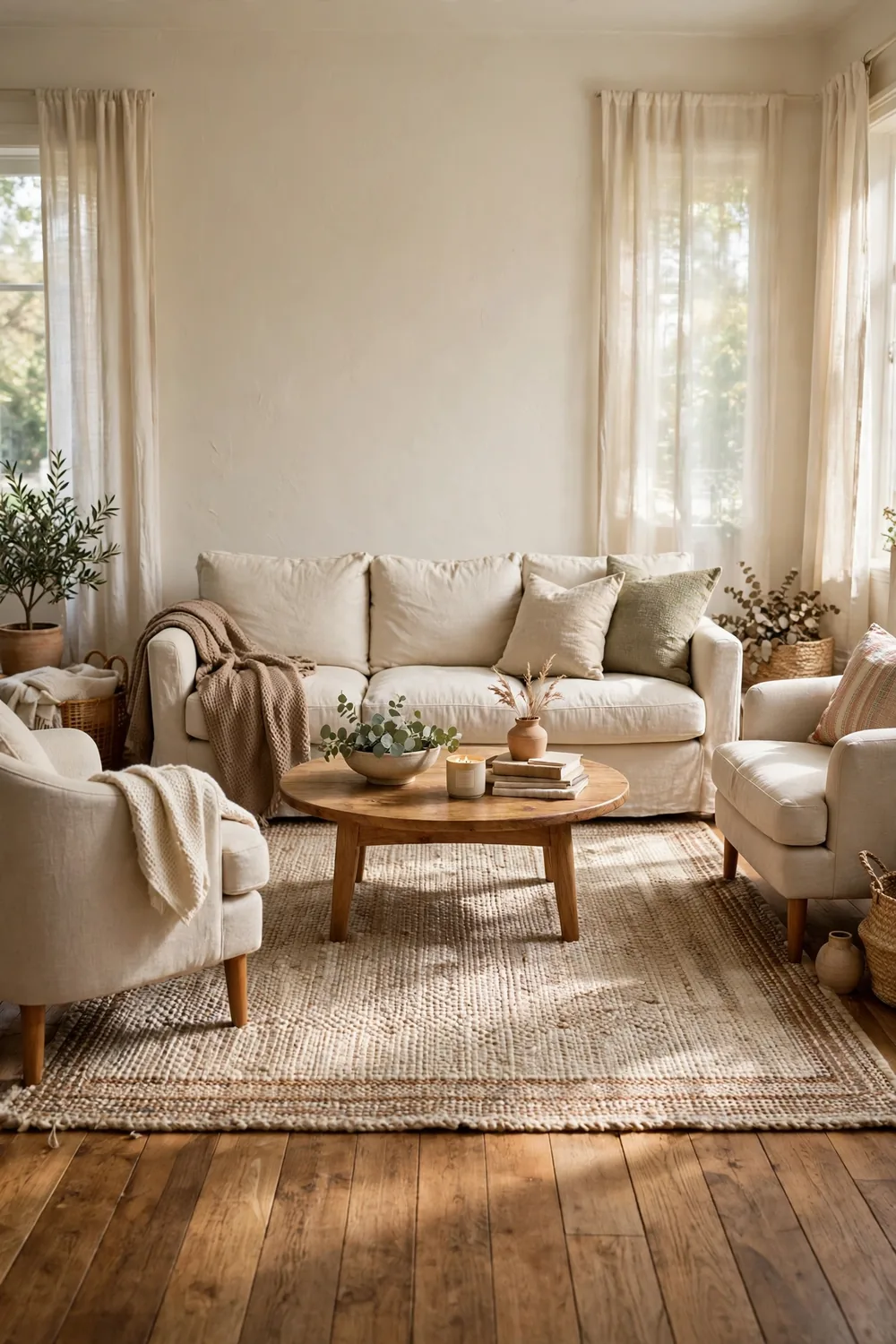
In most living rooms, an 8 by 10 foot rug is the starting point, and a 9 by 12 foot rug is the upgrade. The 8 by 10 fits a standard three seat sofa with two chairs, with the front legs of every piece resting on the rug. The 9 by 12 suits a larger seating group or an open plan room, where the rug must define the whole area.
Picture the diagram from above: the sofa sits along one long edge with its front legs on the rug, the chairs sit along the other edges the same way, and the coffee table sits in the middle with all four legs on the rug. If the rug is smaller, the chairs slide off the edge every time someone sits down. Time note: about 20 minutes to tape the outline and test the layout.
3. Bedroom: the rug goes under the bed
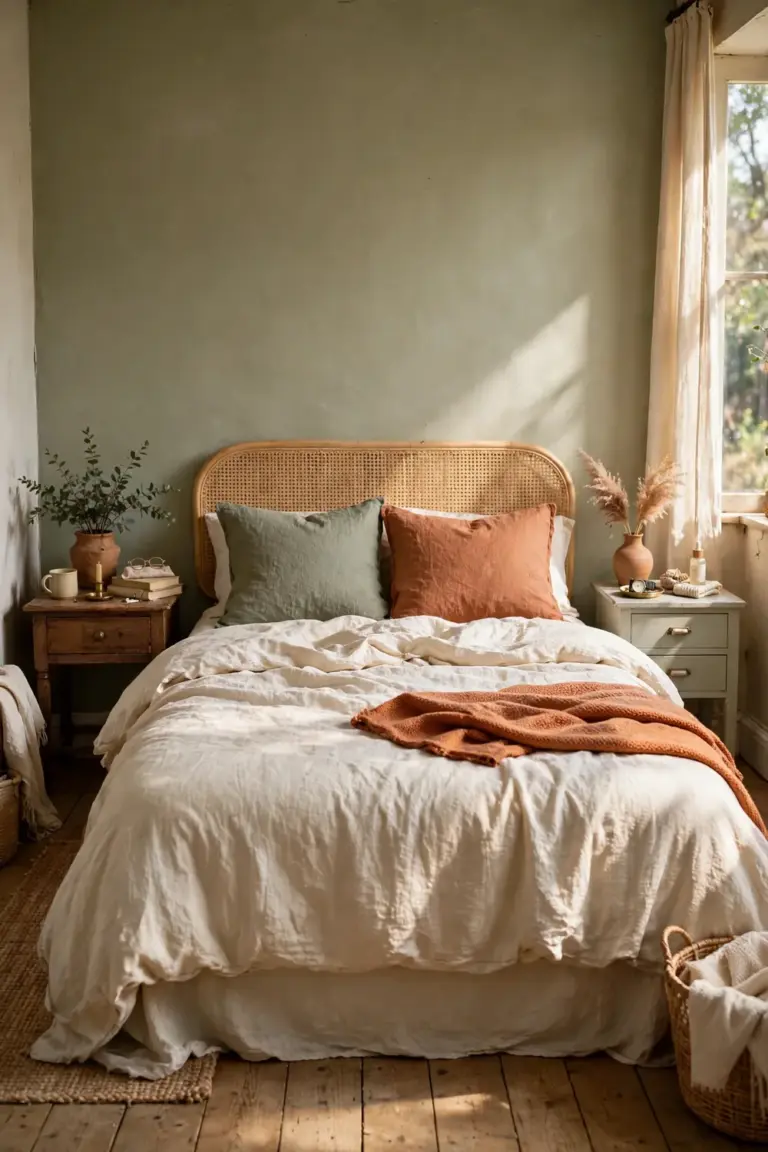
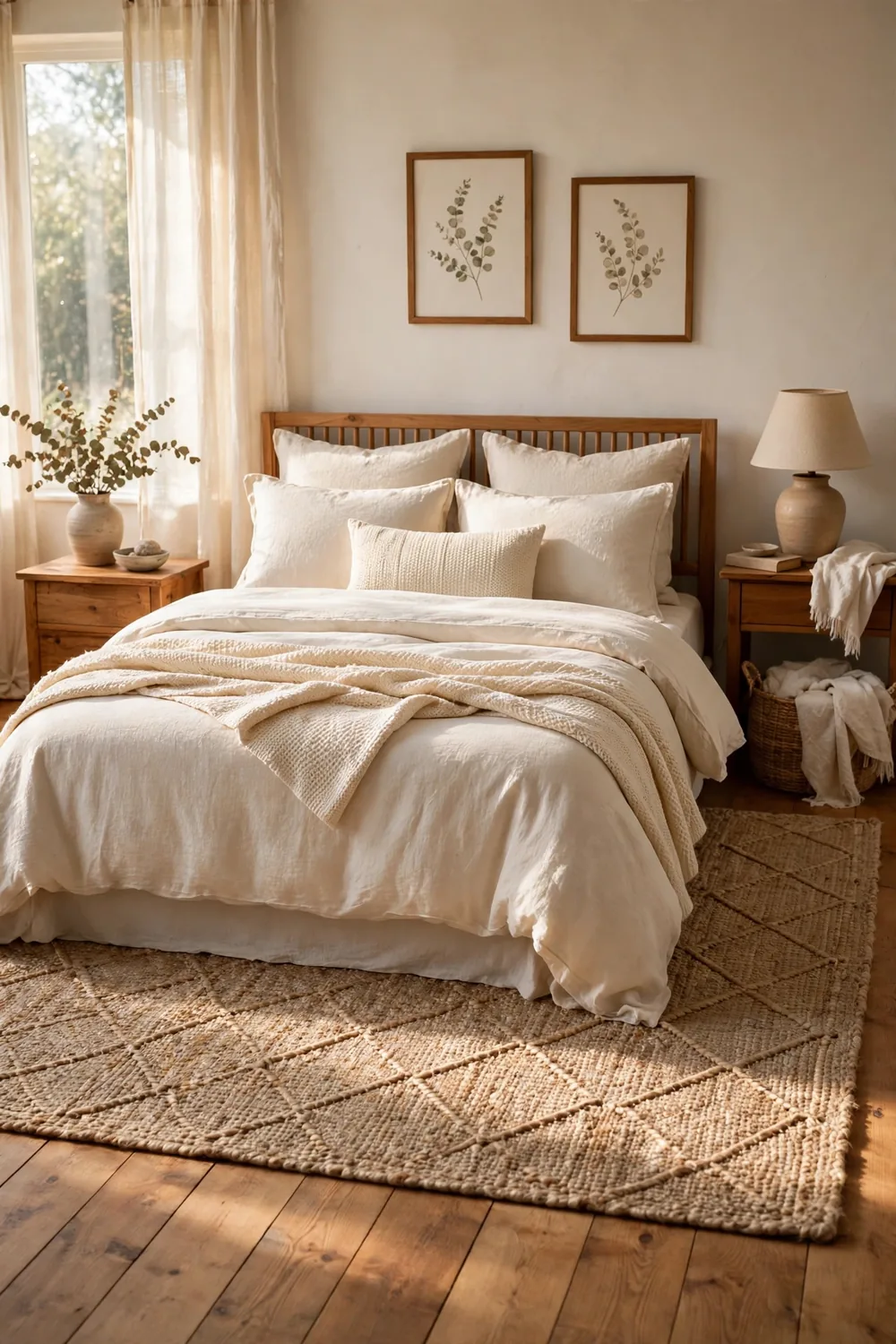
In a bedroom, the rug belongs under the lower two thirds of the bed, extending 24 inches or more beyond each side and past the foot of the bed. That extension is where bare feet land in the morning, so it is the part of the rug that matters most. A queen bed usually pairs with an 8 by 10 foot rug, while a king bed needs a 9 by 12 foot rug for the same 24 inches on each side.
If a full rug under the bed feels like too much, a pair of runners on each side of the bed is the lighter alternative. The runners should run at least two thirds of the length of the bed and sit far enough from the wall that feet land on soft fibers, not on the cold floor beside the runner. The same thinking behind good cozy bedroom ideas applies here: the first thing feet touch in the morning sets the tone for the day. Time note: about 15 minutes to measure and position.
4. Dining room: chairs stay on the rug
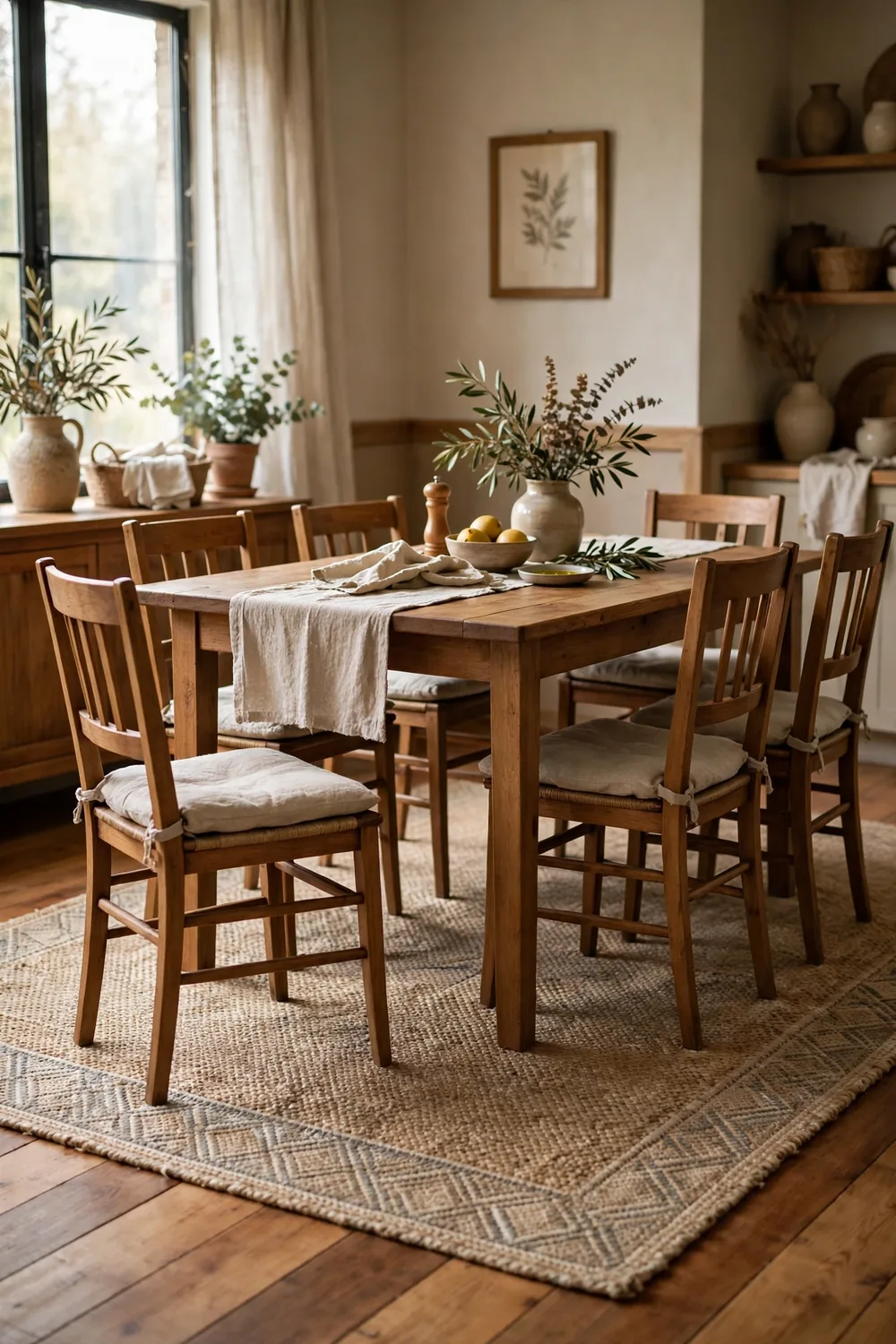
A dining rug must be large enough that the chairs stay on it even when pulled out. Measure the table, then add 24 inches on every side, and that total is the smallest rug that works. A table that seats six usually needs an 8 by 10 foot rug, while a table that seats eight needs a 9 by 12 foot rug, and a round table needs a round rug at least 24 inches wider than the table on all sides.
The 24 inch rule is not decoration, it is function. A chair that slides half off the rug every time someone sits down wobbles and wears a line into the fibers within months. Test it before buying: pull a chair out as far as a person would, and check that all four legs are still on the rug. Time note: about 10 minutes to measure and test with the chairs.
5. Layer a small rug over a large one
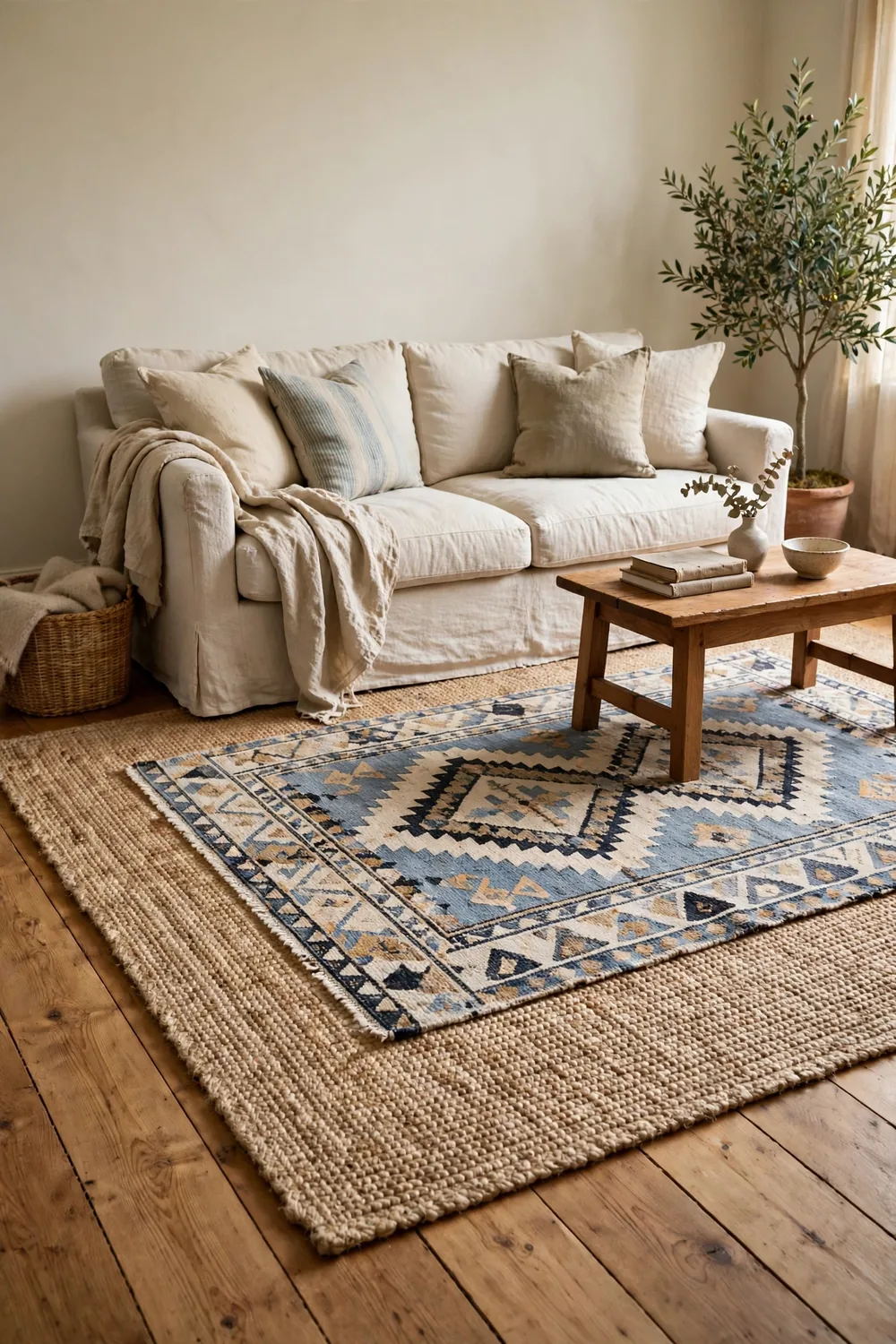
Layering solves the problem of a rug you love that is too small for the room. Lay a large plain rug first, in jute or a flat weave, sized to the furniture group, then layer the smaller patterned rug on top, centered on the seating area. The large rug does the sizing job and the small rug does the decorating job, the same base-plus-accent logic behind gallery wall ideas.
Keep the top rug at least a foot smaller than the base rug on every side, so the base reads as a border, and use a rug pad between the layers. Layering also works in a bedroom, a small patterned rug over a large plain one beside the bed, and in a hallway, a runner over a wider flat weave. Time note: about 20 minutes to position both layers and the pad.
6. Small rooms: go bigger than feels right
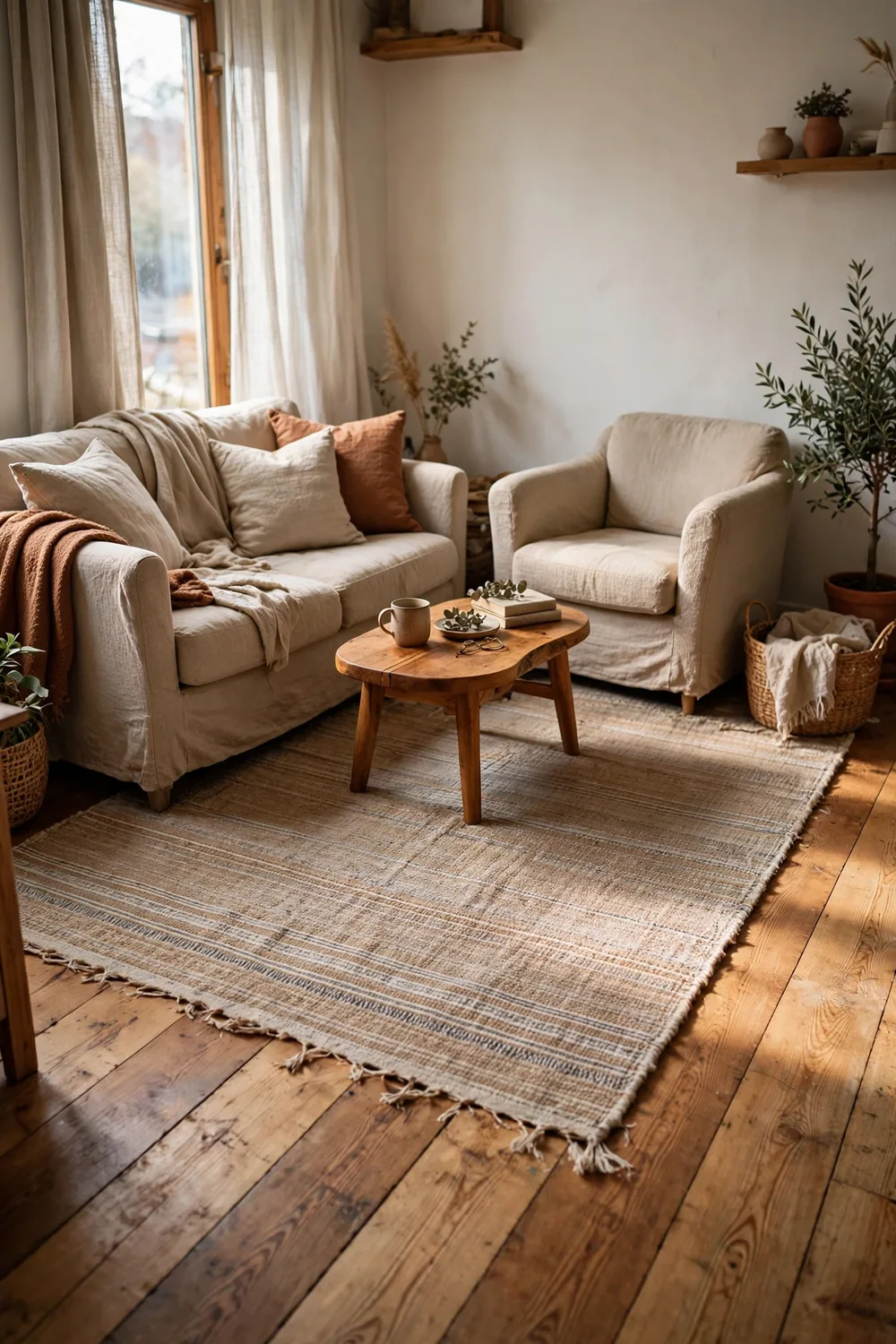
In a small room, the instinct is to buy a small rug, and the instinct is wrong. A small rug chops a small room into pieces: a patch of pattern here, bare floor there, and furniture floating between them. A larger rug does the opposite. It unifies the floor into one surface, which makes the room feel bigger, because the eye reads one continuous plane instead of fragments.
Leave 6 to 12 inches of bare floor showing around the edges of the rug, enough to frame it, and let the rug run under the front legs of every piece of furniture. In a studio apartment, one large rug can define the living area and separate it from the sleeping area. Time note: about 15 minutes to tape the outline and check the border.
7. Pads, edges, and keeping it flat
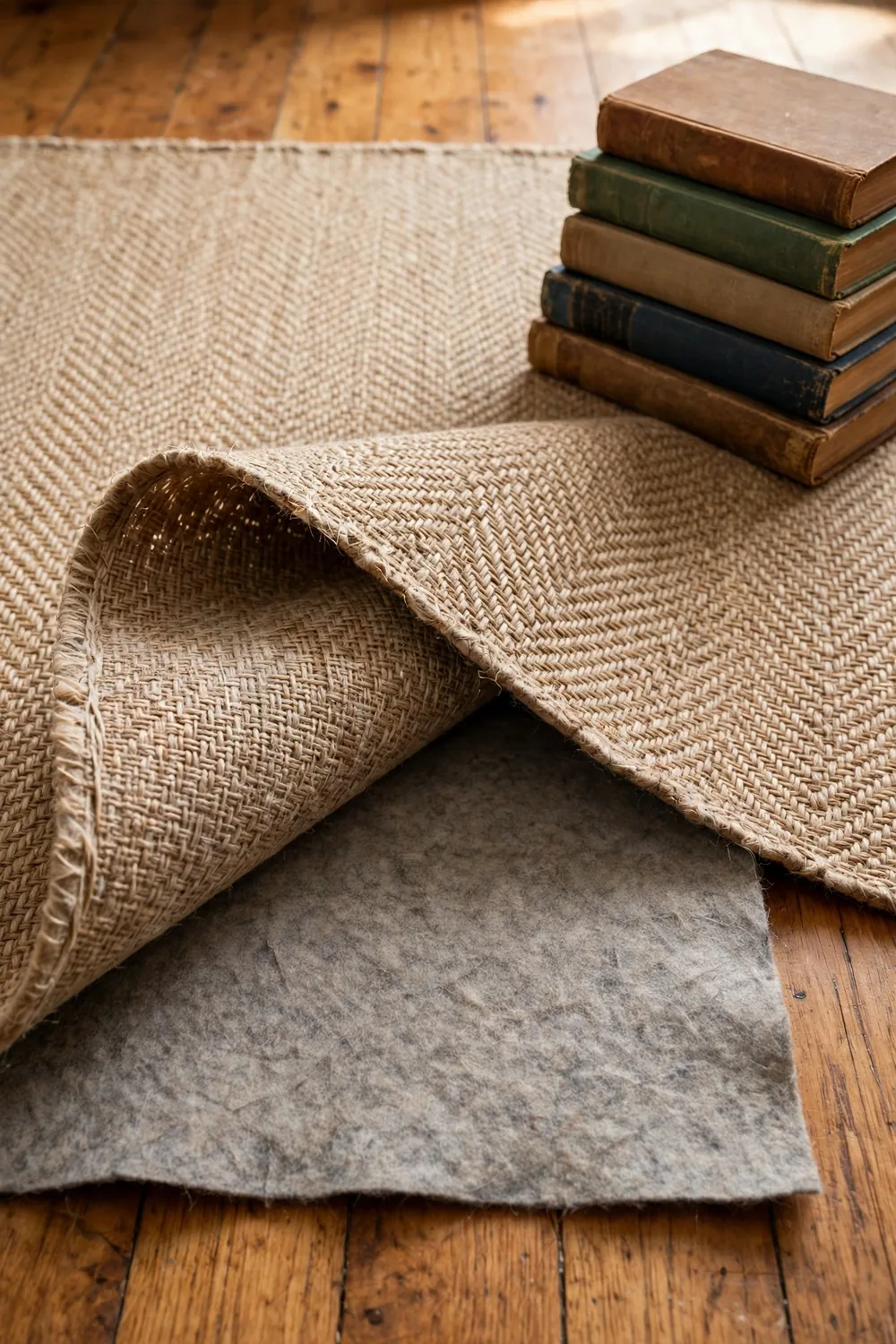
A rug pad is not optional. It keeps the rug from sliding, adds softness underfoot, and protects the floor beneath. Choose a pad slightly smaller than the rug, about an inch short on every side, so the pad never peeks out from under the edge.
New rugs curl at the corners, and the fix is simple: roll the rug backward for a day, or place heavy books on the corners overnight, and the fibers relax. Vacuum from the center outward, never against the edge, and rotate the rug a quarter turn every few months so wear and sunlight stay even. Time note: about 10 minutes to place the pad and flatten the corners.
Common mistakes
Three patterns show up in almost every disappointing rug choice, and each one has a simple fix.
The first is a rug that is too small. The front legs of the sofa hang off the edge, the coffee table straddles the border, and the seating area looks scattered. The fix is to measure the furniture group first and buy the rug that covers it, usually an 8 by 10 foot rug in a living room, not the size that feels safe.
The second is forgetting the pulled-out chair. A dining rug fits the table perfectly and fails the moment someone sits down, because the chair legs slide off the edge. The fix is the 24 inch rule: add 24 inches on every side of the table, and test it by pulling a chair out before buying.
The third is skipping the rug pad. The rug slides a little every day, ripples at the corners, and wears faster where feet catch the edge. The fix is a pad slightly smaller than the rug, placed before the furniture goes back, which keeps the rug flat, quiet, and safe underfoot.
Editor’s pick
For a first rug, we would choose an 8 by 10 foot rug in a plain weave for the living room, with the front legs of the sofa and chairs resting on it. It is the size that fits most rooms, the plain weave lets the furniture and the art do the talking, and a larger rug can always be layered with a smaller patterned one later.
A rug is finished when every front leg rests on it. If a chair slides off the edge, the rug is too small, not the room too big.
FAQ
What size rug goes in a living room? An 8 by 10 foot rug fits most living rooms, with the front legs of the sofa and chairs resting on it. A larger seating group or an open plan room usually needs a 9 by 12 foot rug instead.
How far should a rug extend beyond the bed? At least 24 inches beyond each side and past the foot of the bed, so bare feet land on the rug in the morning. A queen bed usually pairs with an 8 by 10 foot rug, and a king bed with a 9 by 12 foot rug.
How much bigger than the table should a dining rug be? At least 24 inches on every side, so the chairs stay on the rug even when pulled out. Measure the table, add 24 inches in each direction, and test it by pulling a chair out before buying.
Can a rug be too big for a room? Yes, if it leaves less than 6 inches of bare floor showing around the edges. Leave 6 to 12 inches of floor visible to frame the rug, and the room will feel larger, not smaller.
Do rugs need a pad underneath? Yes. A pad keeps the rug from sliding, adds softness, and protects the floor. Choose a pad about an inch smaller than the rug on every side so it never peeks out from under the edge.
Related guides
For the room around the rug, the bedroom ideas for better sleep guide uses the same measure-first logic at room scale, and the gallery wall layouts that work guide shows how one large calm base lets a smaller piece shine.