Indoor Plant Styling: Heights Clusters and Low-Light Picks
A plant in the wrong spot looks like an afterthought, even when the plant itself is beautiful. The fix is simple: group plants in threes at three different heights, keep the tallest near a corner, and put the smallest where hands can reach it for watering. The seven ideas below cover heights, clusters, and low-light picks, and most take about 30 minutes to arrange.
Plants are the only decor that grows, which is both the charm and the challenge. A plant that thrives in one corner sulks in another, and a cluster that looks lush in a photo can look crowded on a shelf. The difference is rarely the plant. It is the height, the grouping, and the light, three decisions that take minutes to make and months to enjoy.
Think of plants as furniture with needs. Each one wants a certain amount of light, a certain amount of room to grow, and a pot that fits its roots. Give it those three things and styling becomes easy: the plant does the decorating, and the job is to place it where it can be seen and reached.
Why do some rooms feel alive with plants while others feel cluttered?
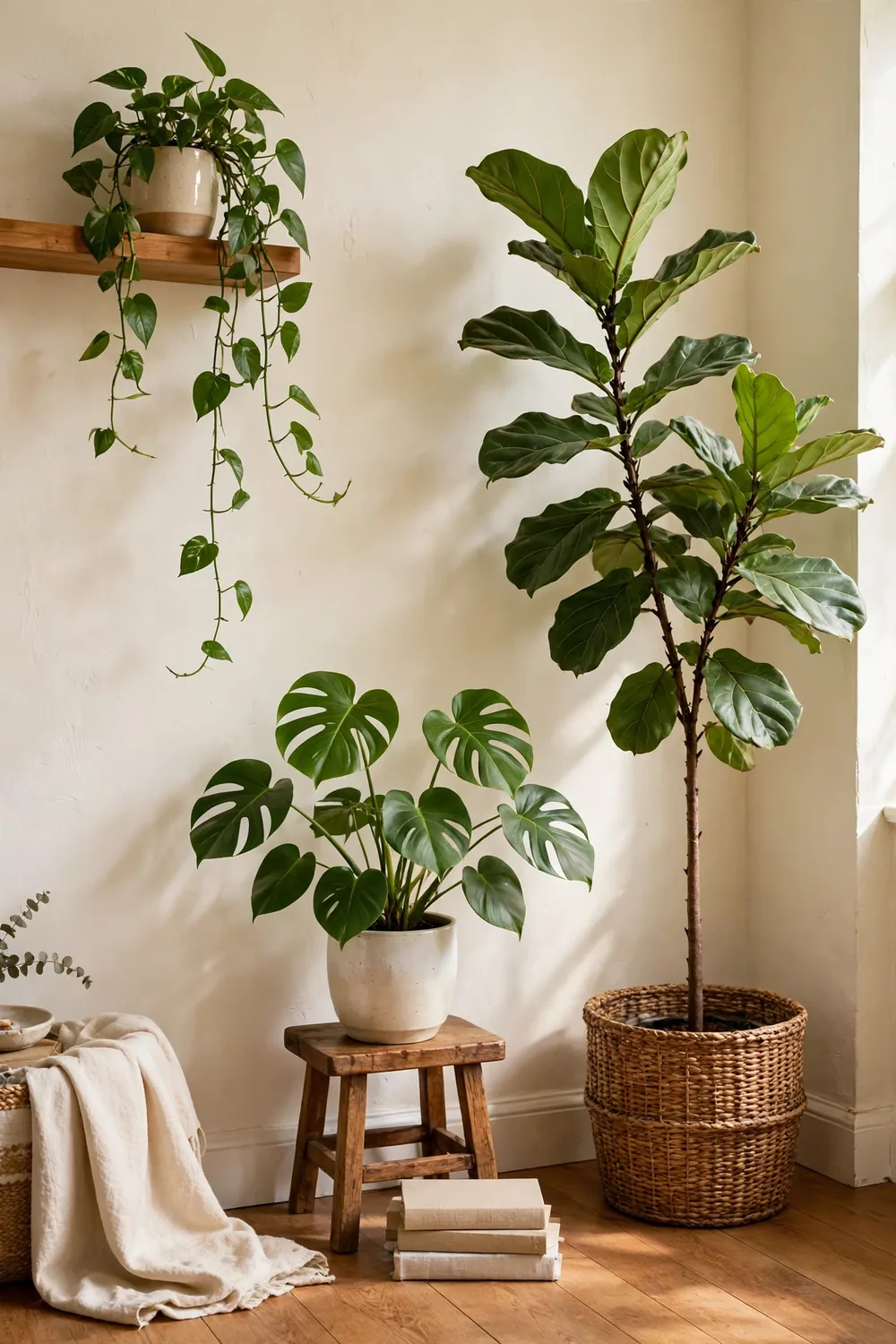
The rooms that work follow a simple pattern: one tall plant, a few medium ones, and one trailing plant, all in the same corner or along the same wall. The heights create a shape the eye can follow instead of a flat row of same-size pots. The rooms that feel cluttered break the pattern: single plants scattered one per surface, each at the same height, each alone.
Three habits cause most of the trouble: buying plants before choosing their spots, grouping by pot instead of by light, and forgetting that a plant grows. A plant bought for a sunny shelf outgrows the shelf in a season. A plant grouped with sun lovers fades in the shade. The fix is the same for all three: choose the spot first, match the plant to the light in that spot, and leave room for a year of growth.
What are the 7 indoor plant styling ideas that work in almost any room?
Seven ideas, from the height ladder to the care routine that keeps them alive.
1. Build a height ladder
The easiest plant arrangement in any room is a height ladder: one tall plant on the floor, one medium plant on a stool or a plant stand, and one trailing plant on a shelf above. The three heights create a diagonal line the eye follows, and the group reads as one deliberate arrangement instead of three separate pots.
Start with the tallest plant in a corner, where its height fills the empty vertical space. Add the medium plant a step forward and a step down, then the trailing plant above and behind it, so the leaves spill toward the lower pots. Keep the pots in the same family, matching ceramic in two finishes at most, so the plants, not the pots, do the talking. Time note: about 20 minutes to arrange a ladder of three.
2. Cluster in threes
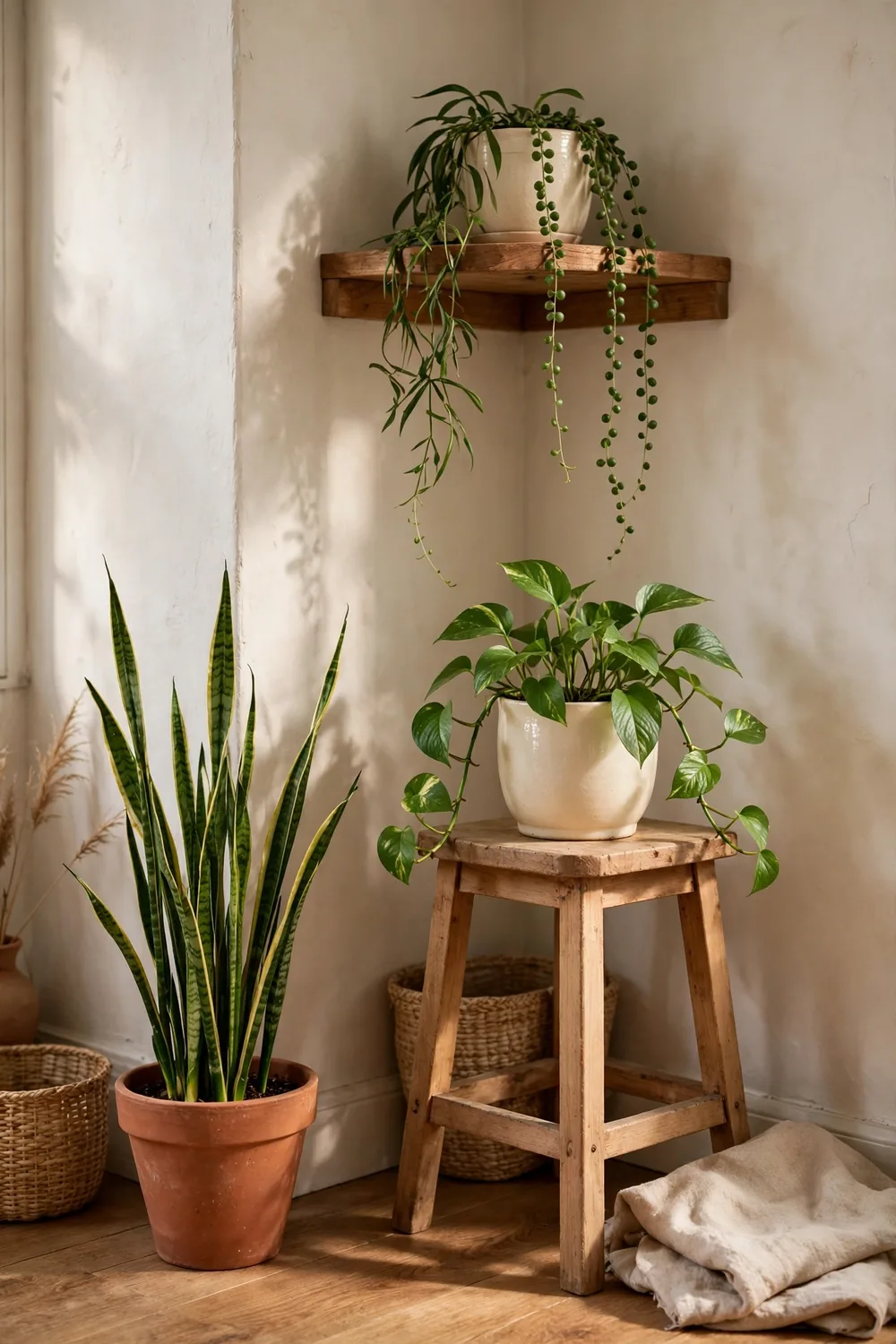
Plants look better in odd-numbered groups, and three is the easiest number to get right. A cluster of three gives the eye a triangle to follow, while a pair can look like a standoff and a group of five can look like a crowd. The rule works on a shelf, a console, and a windowsill alike.
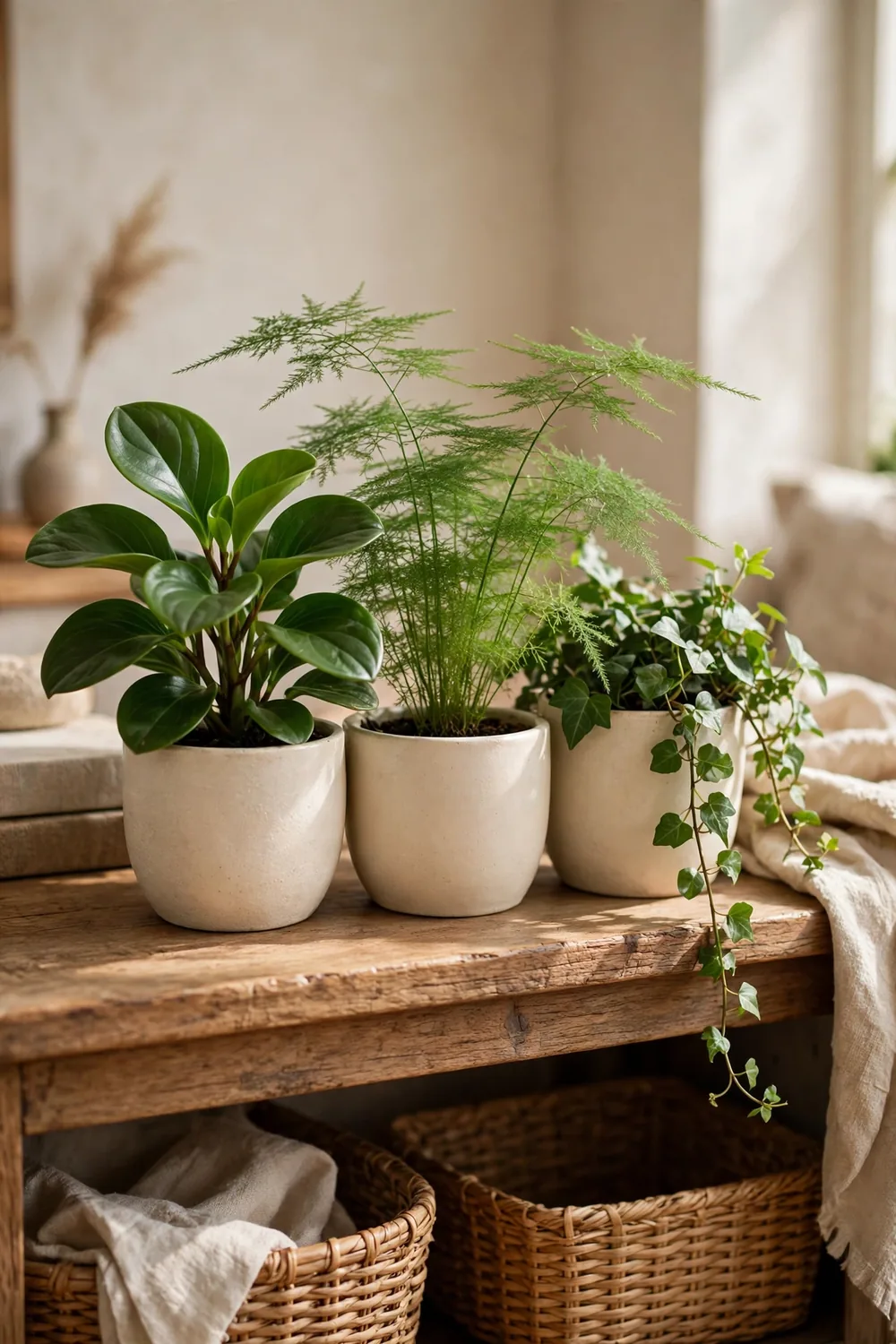
Vary the heights inside the cluster: one tall, one medium, one low, and vary the leaf shapes too, one broad leaf, one fine leaf, one trailing vine. Keep one thing consistent across the three, the same pot color or the same wood tone, so the group reads as collected rather than accidental. A cluster of three small plants can fill a shelf that one large plant would overwhelm. Time note: about 15 minutes to build a cluster of three.
3. Pick low-light plants that actually survive
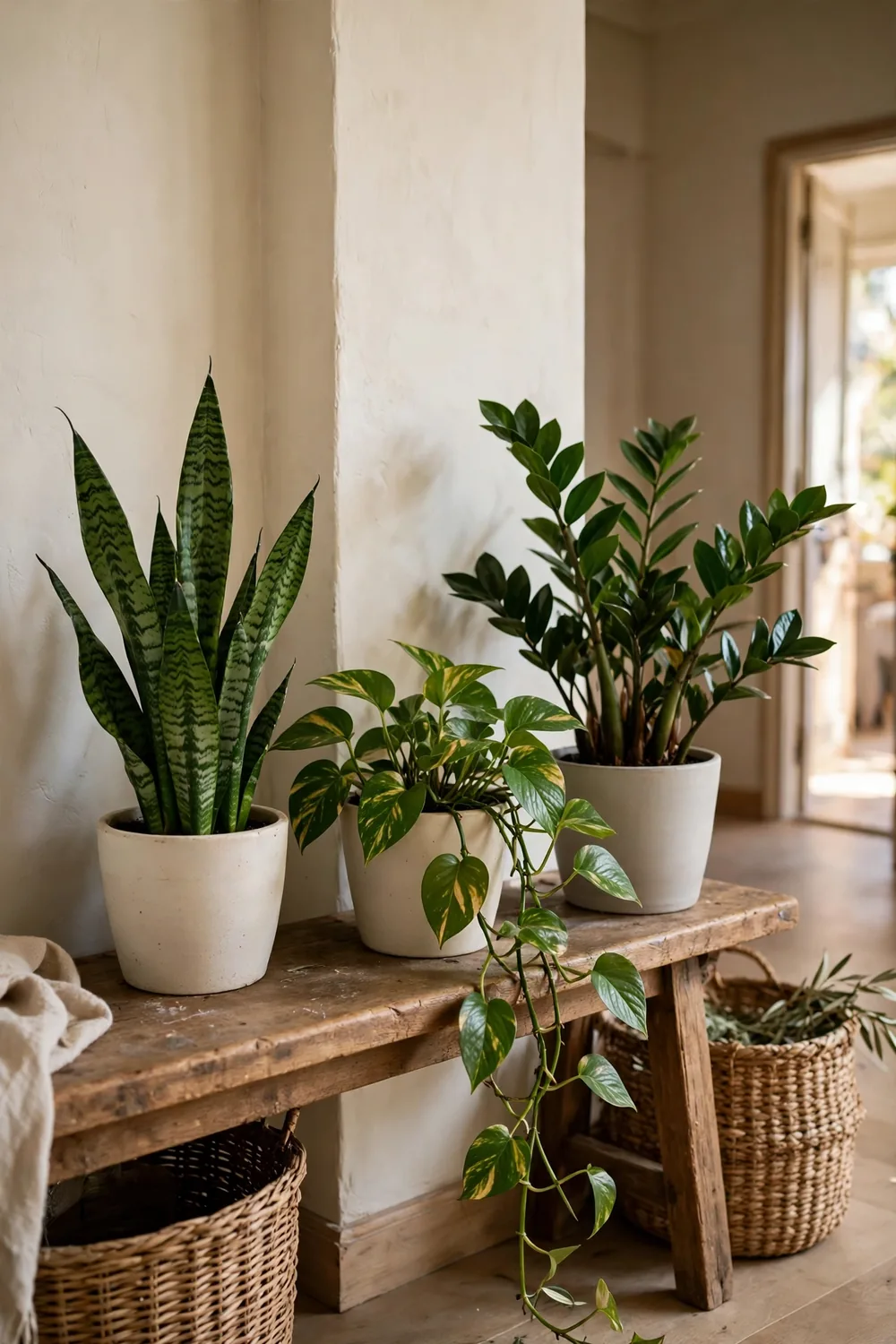
Not every corner gets sun, and the plants that survive low light are the ones that make a room feel finished. A snake plant, a pothos, or a ZZ plant can thrive several feet from a window, in the kind of light that fades most other plants. These three are the workhorses of indoor styling: slow growing, forgiving of missed waterings, and handsome in a plain pot.
Place low-light plants where the room needs green most, a dark hallway, a north-facing bedroom, or the far side of a living room. Keep them out of the one spot that kills them, a dark corner with no light at all, and rotate them toward the window every few weeks so all sides get a share of the light. A snake plant in a tall ceramic pot can anchor a corner that gets almost no direct sun. Time note: about 10 minutes to place and pot one plant.
4. Turn a shelf into a plant wall
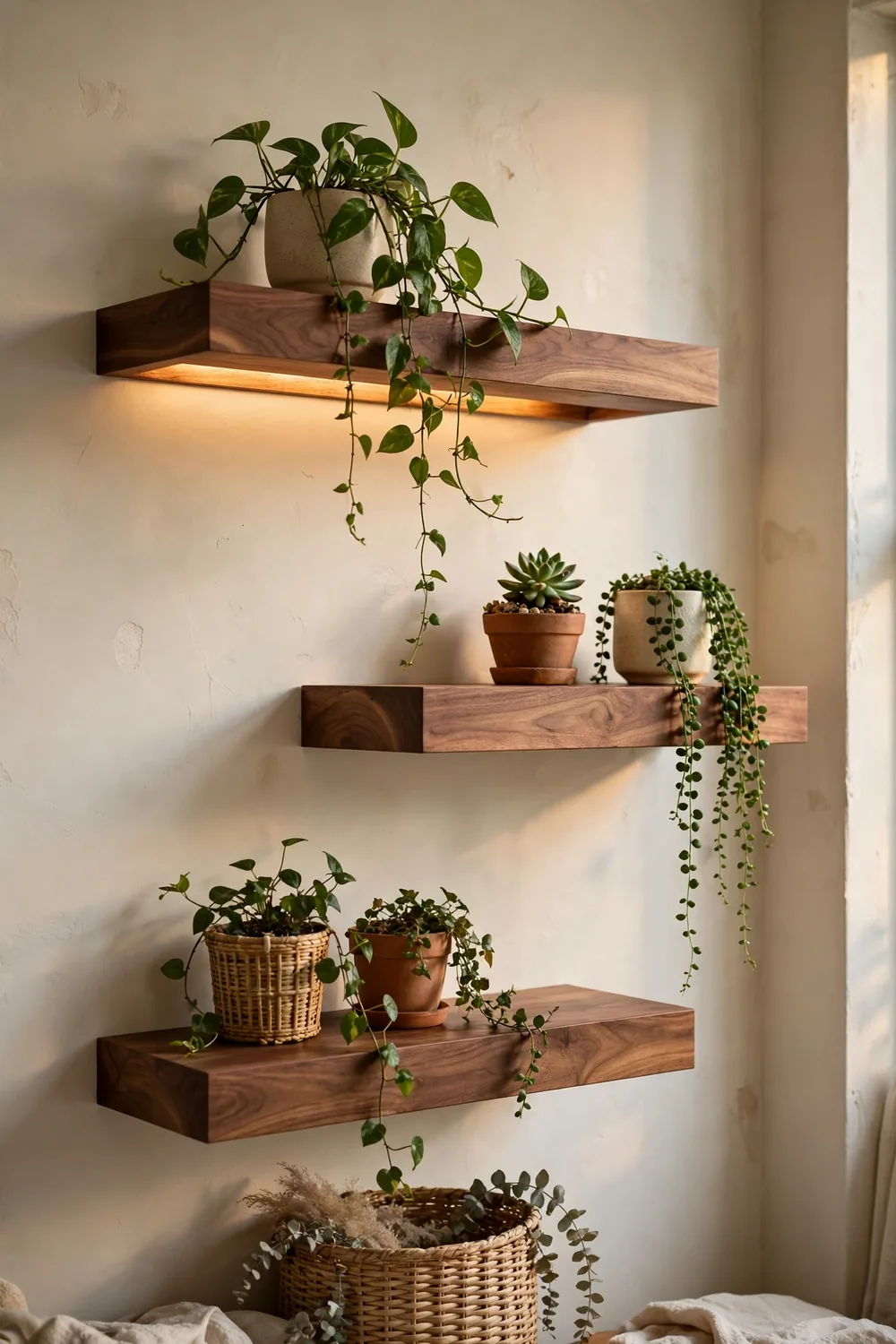
A wall of floating shelves turns a collection of small plants into a feature. Two or three shelves, spaced 12 to 18 inches apart, hold a row of small pots at staggered heights, with one trailing plant at each end so the leaves spill over the shelf edges. The shelves themselves become part of the display, warm walnut against a cream wall, with the green doing the rest.
Hang the lowest shelf at about eye level so the plants are easy to water, and leave one third of each shelf empty. A shelf packed edge to edge reads as storage, while a shelf with gaps reads as a display. Add a warm LED strip under the top shelf and the whole wall glows in the evening, the same trick good reading corner ideas use. Time note: about 30 minutes to hang shelves and style the plants.
5. Anchor a corner with one floor plant
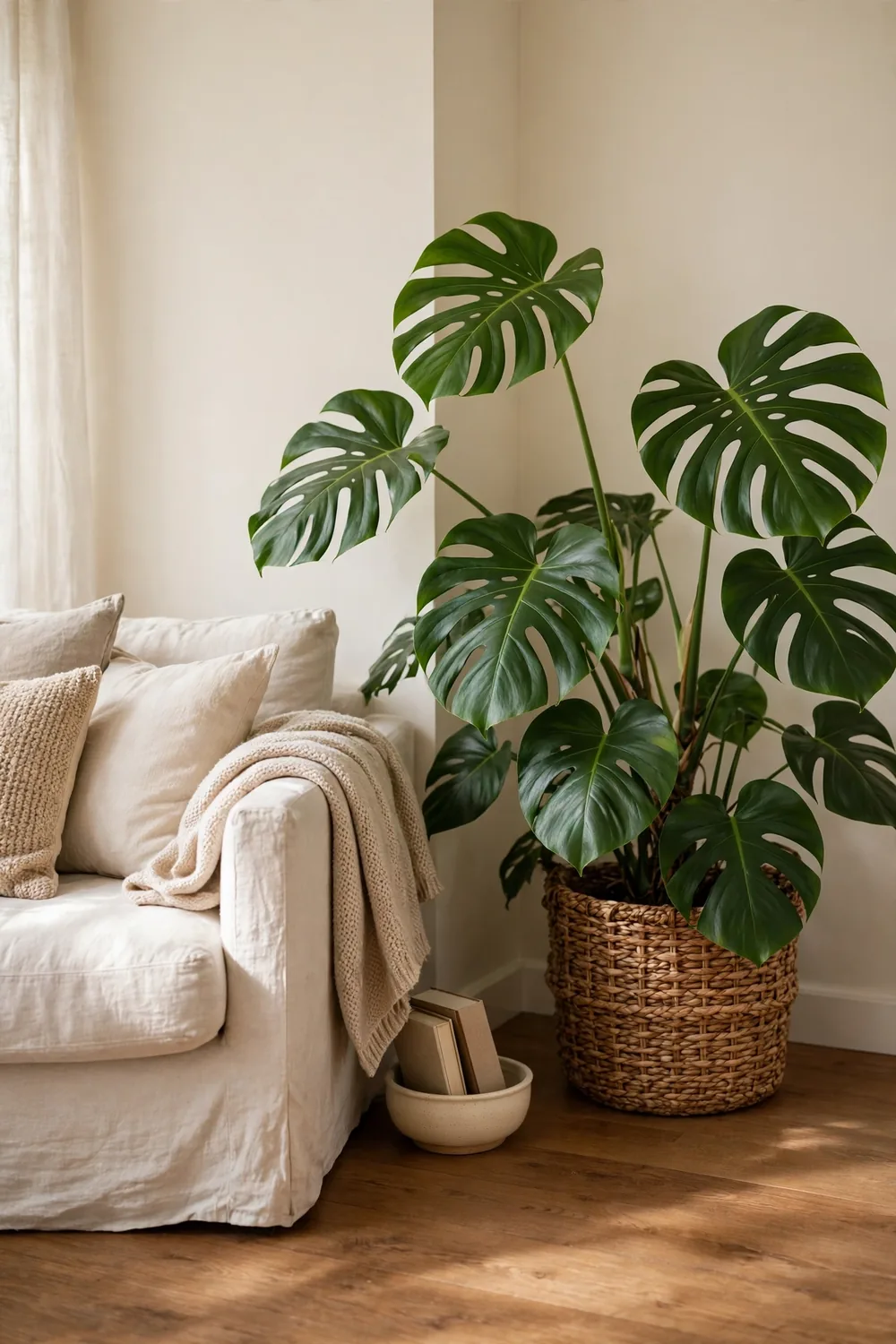
Every room has a corner that feels empty, and one large floor plant is the simplest way to fill it. A fiddle leaf fig, a monstera, or a tall snake plant in a woven basket turns a dead corner into a focal point, and the height balances a sofa or a bookshelf on the opposite wall.
Choose a plant whose mature height fits the corner, with at least a foot of clearance above it, and pick a pot that is wide enough to keep the plant stable. A plant that is too small for its corner looks lost, while a plant that touches the ceiling looks cramped. The same sizing logic behind good small living room ideas applies here: one clear relationship between the plant and the space around it. Time note: about 10 minutes to place and style one floor plant.
6. Style a tabletop trio
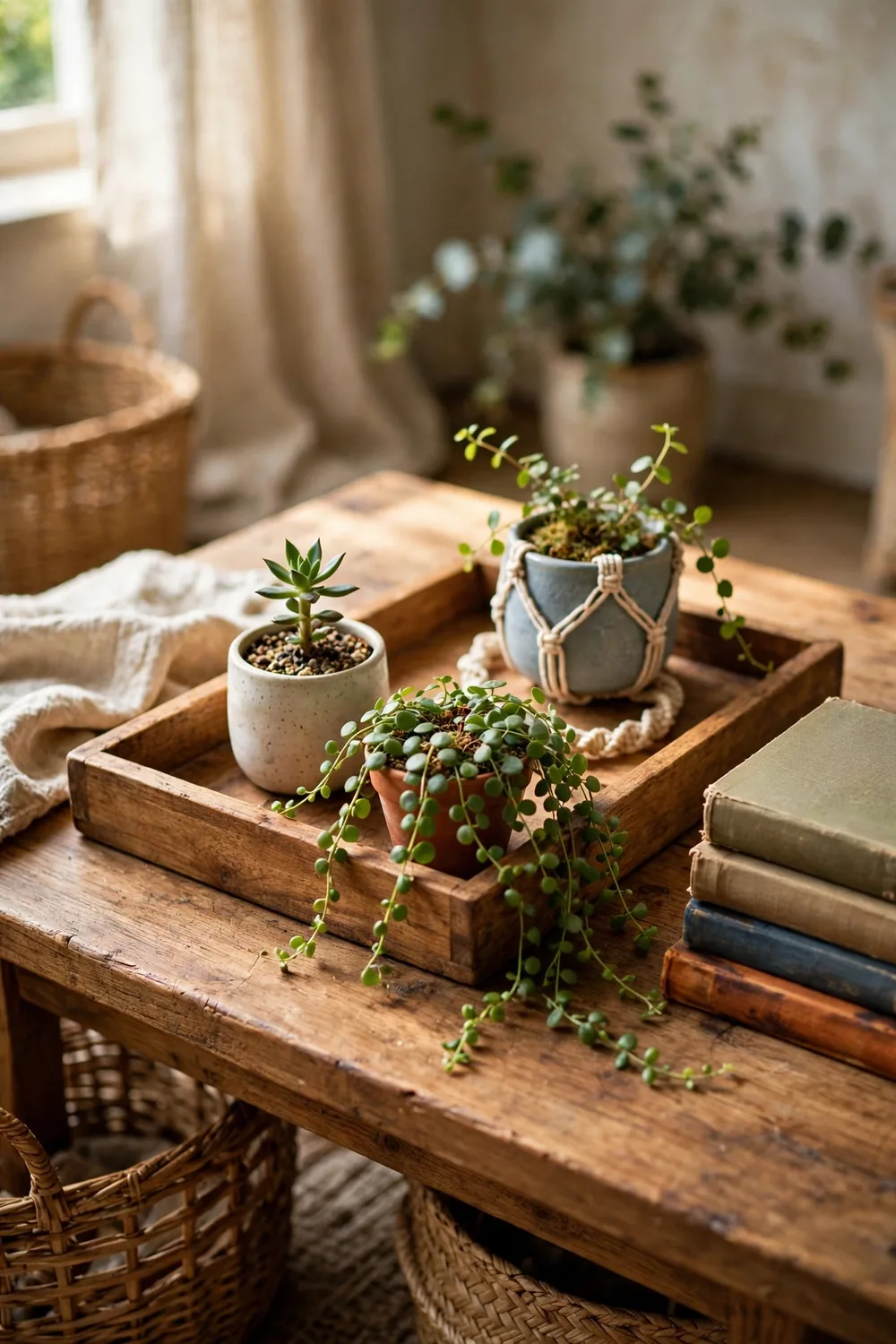
A coffee table, a dining table, or a nightstand needs a different scale of plant: small, low, and easy to move. A trio of tiny plants, one upright, one trailing, and one in a hanging pot, gives a tabletop life without blocking conversation or crowding the surface. Keep the tallest under 12 inches so sightlines stay open across the table.
Use a tray to hold the group together. A wooden or ceramic tray turns three separate pots into one arrangement, catches drips when watering, and lets the whole group slide aside when the table is needed for dinner or work. A small plant that would vanish on a big table looks deliberate on a tray beside a stack of books. Time note: about 10 minutes to build a tabletop trio.
7. Rotate, water, and let them grow
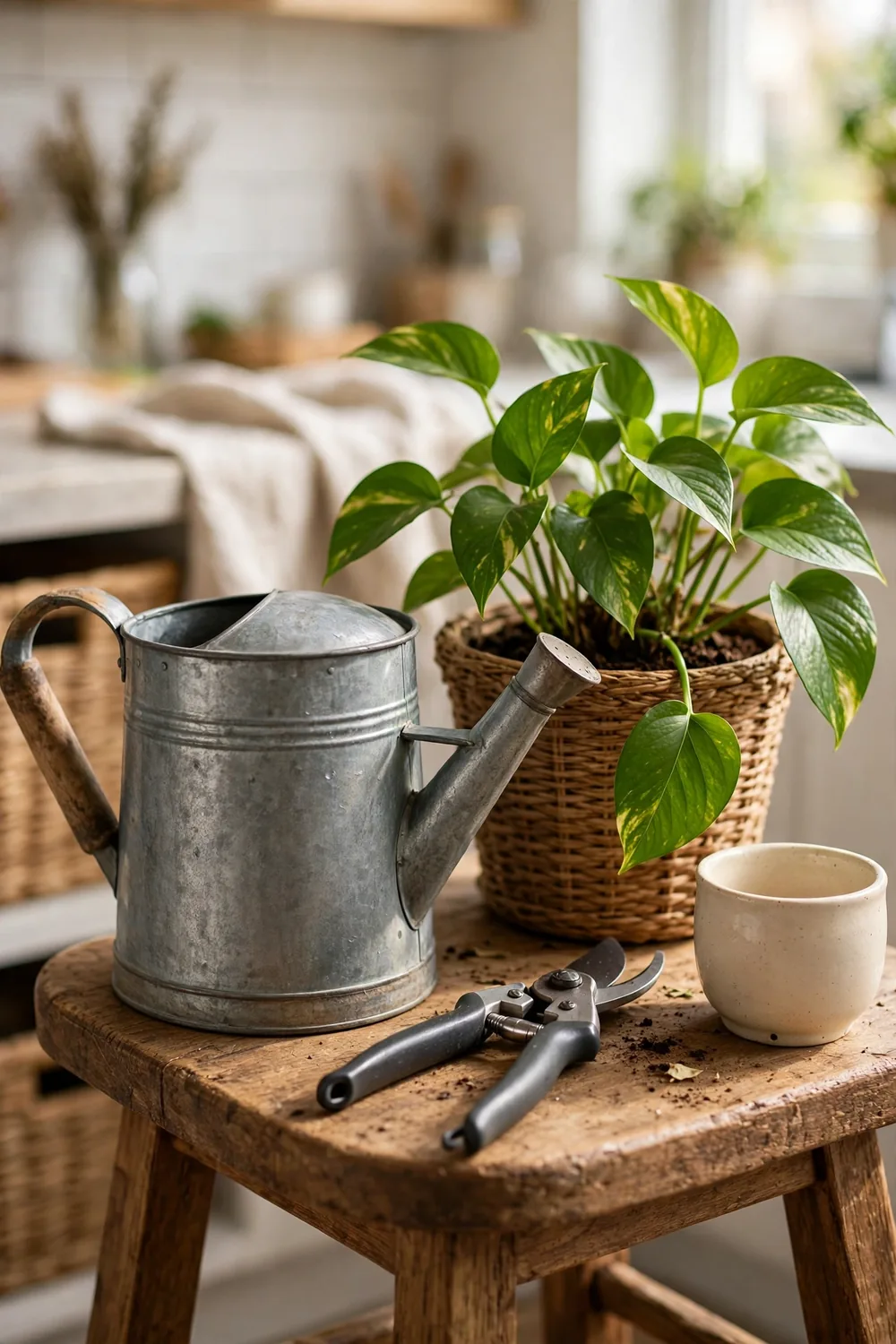
Styling does not end when the plants are placed. A simple care routine keeps the arrangement looking good for months: rotate each pot a quarter turn every two weeks so growth stays even, water only when the top inch of soil feels dry, and trim trailing vines when they reach the floor. Most indoor plants die from too much water, not too little, so a finger in the soil beats a fixed schedule.
Plan for growth when placing plants. A monstera that fits a shelf today will need the floor in a year, and a trailing pothos will reach the shelf below in a season. Leave space around each plant for a year of growth, and move the fast growers to the floor before they crowd their neighbors. Time note: about 15 minutes a week for the whole routine.
Common mistakes
Three patterns show up in almost every disappointing plant display, and each one has a simple fix.
The first is one plant per surface. A single small pot on every shelf and table scatters the green so thin that no spot feels finished. The fix is to cluster: gather the plants into groups of three in one corner or along one wall, and leave the other surfaces calm.
The second is grouping by pot instead of by light. A sun lover and a shade lover share a shelf because the pots match, and one of them fades within weeks. The fix is to group by light first and match the pots second, keeping sun lovers near the window and low-light picks in the darker corners.
The third is forgetting that plants grow. A plant placed tight against a shelf or a wall has nowhere to go, and within months it crowds its neighbors or leans toward the light. The fix is to leave a year of growing room around each plant and to move fast growers to the floor before they outgrow their spot.
Editor’s pick
For a first plant project, we would choose a height ladder in a corner: one tall snake plant on the floor, one medium pothos on a stool, and one trailing plant on a shelf above. It uses the three most forgiving plants, takes about 20 minutes to arrange, and turns the emptiest corner in the room into the liveliest one.
A plant arrangement is finished when the heights form a shape the eye can follow. If every pot sits at the same level, raise one and lower another.
FAQ
What are the best indoor plants for low light? Snake plant, pothos, and ZZ plant are the most reliable low-light picks. They grow slowly, forgive missed waterings, and stay handsome several feet from a window, as long as the corner is not completely dark.
How many plants should be grouped together? Three is the easiest number. A group of three gives the eye a triangle to follow, while a pair can look like a standoff. Vary the heights inside the group and keep the pots in the same family.
How do you style plants on a shelf? Space two or three shelves 12 to 18 inches apart, stagger the heights, and leave one third of each shelf empty. Put one trailing plant at each end so the leaves spill over the edges, and keep the lowest shelf at eye level for easy watering.
How often should indoor plants be rotated? A quarter turn every two weeks keeps growth even, so the plant does not lean toward the window. Rotate when watering, and the habit takes seconds once it becomes part of the routine.
What size plant goes in a corner? One large floor plant whose mature height leaves at least a foot of clearance above it. A plant that is too small looks lost in a corner, while one that touches the ceiling looks cramped.
Related guides
For the corner around the plants, the reading corner that actually gets used guide pairs a chair, a light, and a plant in one small footprint, and the small living room layout ideas guide shows how one tall plant anchors a seating area.