Under-Sink and Drawer Organizers That Actually Fit
Short answer: Most standard sink cabinets are 24 inches wide inside, and that single measurement decides everything. Measure the width, the depth, and the height around the pipes first, then pick organizers that leave room for the plumbing. In one weekend afternoon you can turn a tangled cabinet and one junk drawer into places where every bottle and tool has a spot you can reach without moving five other things.
| Time | One weekend afternoon, about 3 hours hands on |
| Difficulty | Beginner; a tape measure and a screwdriver cover most of it |
| Space | One standard sink cabinet and one kitchen drawer |
I used to open the cabinet under my sink and brace myself. The dish soap fell over, the sponge holder slid to the back, and the spray bottles formed a crowd that blocked the trash bags every single time. My junk drawer was no better. It held batteries, rubber bands, a tape measure, and three pairs of scissors, and finding any one of them meant digging with both hands.
The fix was not a bigger kitchen. It was organizers sized to the space I already had.
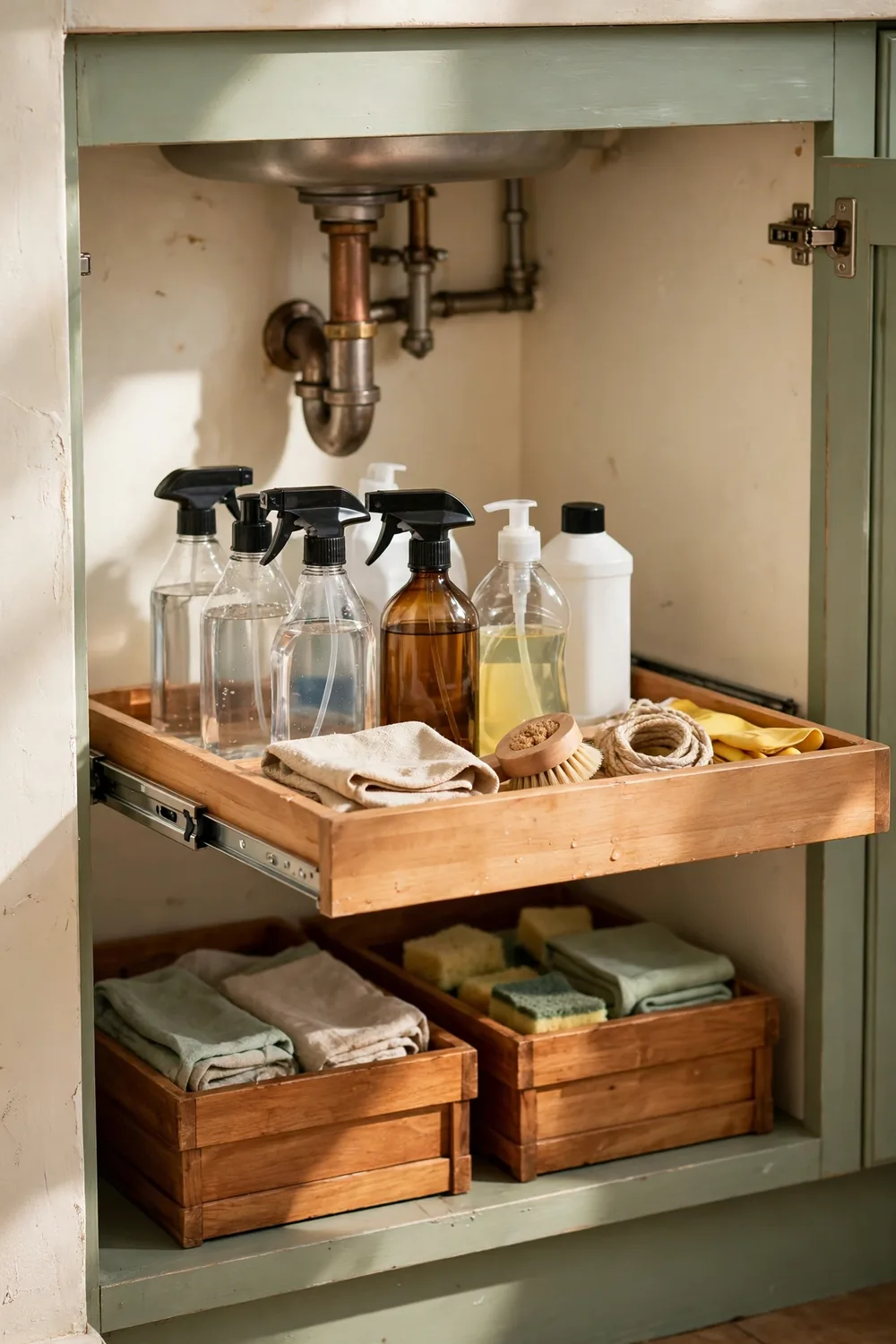
Why does the space under the sink always turn into a mess?
The cabinet under the sink is the hardest storage in a kitchen because it was never designed for storage at all. It was designed around pipes. The drain drops down the middle and the water lines hug the sides. Everything you store there has to dodge the plumbing, so bottles end up shoved wherever they fit.
It is also the cabinet you open with wet hands, in a hurry, while cooking. Grab the soap, set it down anywhere, close the door, and repeat that for a month.
Zones fix it. Cleaning supplies live in one spot, trash bags and extra sponges in another, and the tools you reach for daily sit at the front. Once each zone has a container with sides, things stop migrating.
What should you measure before you buy anything?
Measure three things, and write them on a scrap of paper you take to the store. First, the inside width of the cabinet from one side wall to the other. Second, the depth from the door frame to the back wall. Third, the clear height at the spot where the organizer will sit, because the pipes steal height in the middle and leave more room at the sides.
My cabinet measures 24 inches wide, 22 inches deep, and about 20 inches of clear height beside the drain. Those numbers ruled out half the organizers I liked online. A pullout tray I liked in a photo was 2 inches too wide, and a tall caddy would have hit the drain pipe. Measuring first saved me two returns.
Check the door too. A door rack needs a flat stretch to hang on, and some doors have a raised panel or a hinge that sticks into the opening. If your kitchen is small and the sink cabinet is doing double duty, our small kitchen organization guide shows how the cabinet fits into the bigger picture of freeing up real counter space.
What are the 7 steps to fit organizers that actually fit?
Seven organizers, in the order I would buy them.
1. Start with a pullout tray under the sink
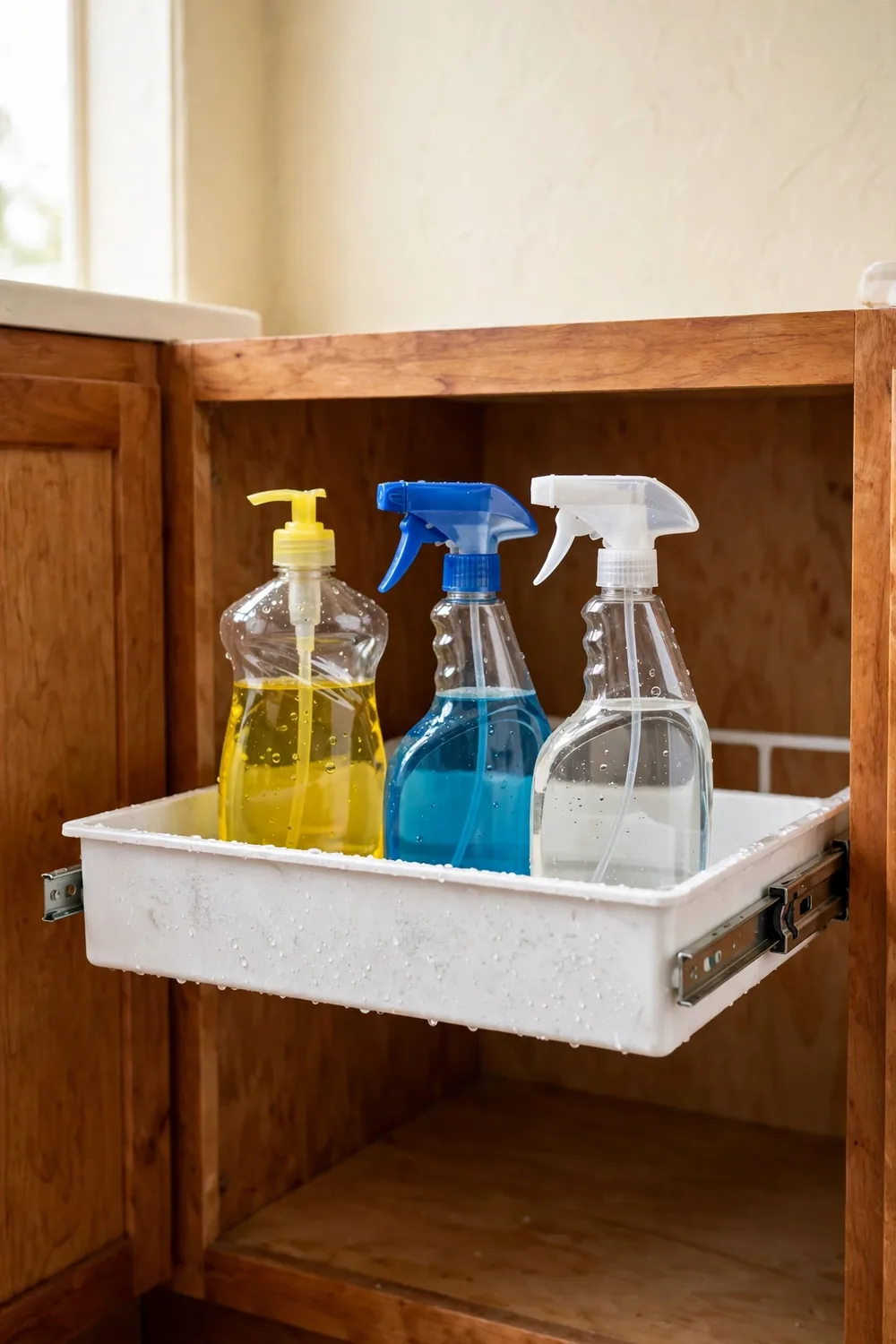
A pullout tray is a shallow drawer that slides out of the cabinet on rails, and it is the single best fix for an under sink cabinet. Without it, everything at the back is unreachable. With it, you pull the tray out and the back row comes to you.
Look for a tray about 20 inches wide and 18 inches deep for a standard cabinet, with sides at least 3 inches tall so bottles stay put when you slide it. Mount the rails to the cabinet floor and test the slide with the drain pipe in place before you load it.
2. Hang a rack on the inside of the cabinet door
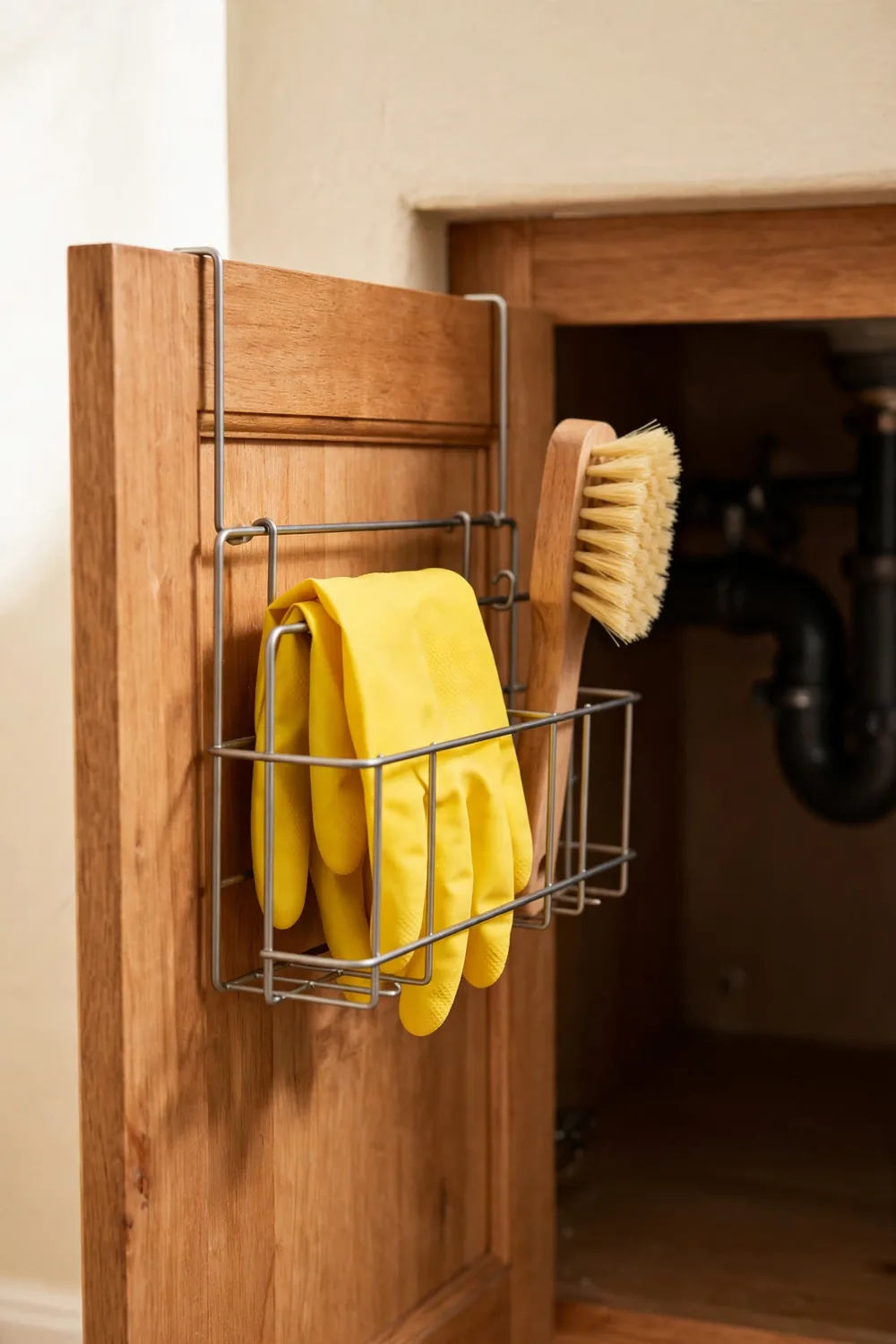
The inside of the cabinet door is free storage that most kitchens waste. A slim wire rack hung over the top edge of the door holds the small things that get lost on the cabinet floor: the scrub brush, the rubber gloves, and the extra sponges.
Pick a rack no wider than the flat part of your door, usually about 12 to 14 inches, and no deeper than 3 inches so the door still closes over the tray inside. Hang it over the door rather than screwing it in if you rent.
3. Divide one drawer with adjustable dividers
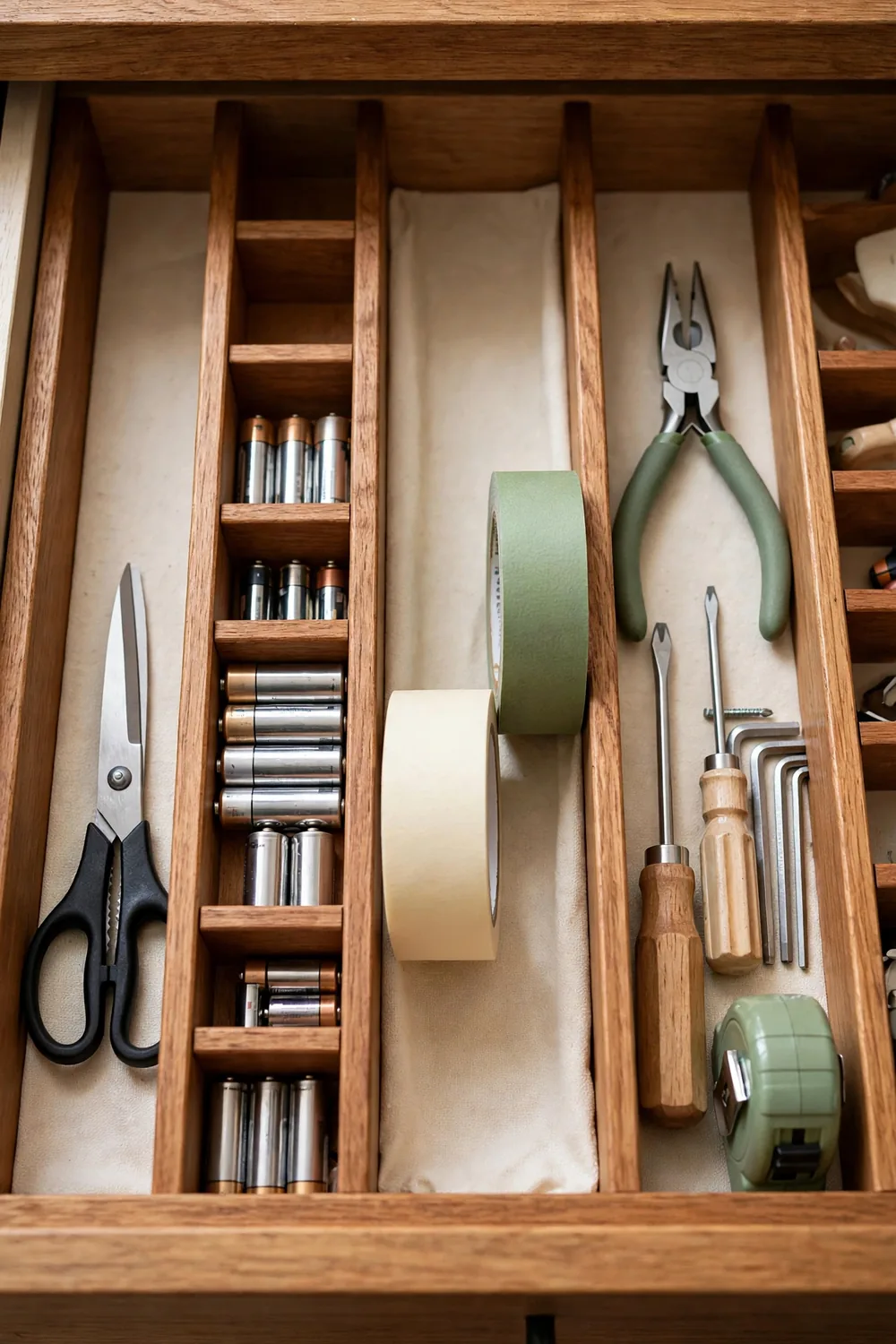
A junk drawer is only junk because nothing in it has edges. Adjustable dividers turn one wide drawer into four or five narrow lanes, and suddenly the scissors stay in their lane and the batteries stay in theirs.
Measure the inside of the drawer first, then buy dividers that expand to fit it. Most kitchen drawers are about 20 inches wide and 18 inches deep, and a set of four dividers will split that into lanes for tools, batteries, tape, and the odds and ends that belong nowhere else.
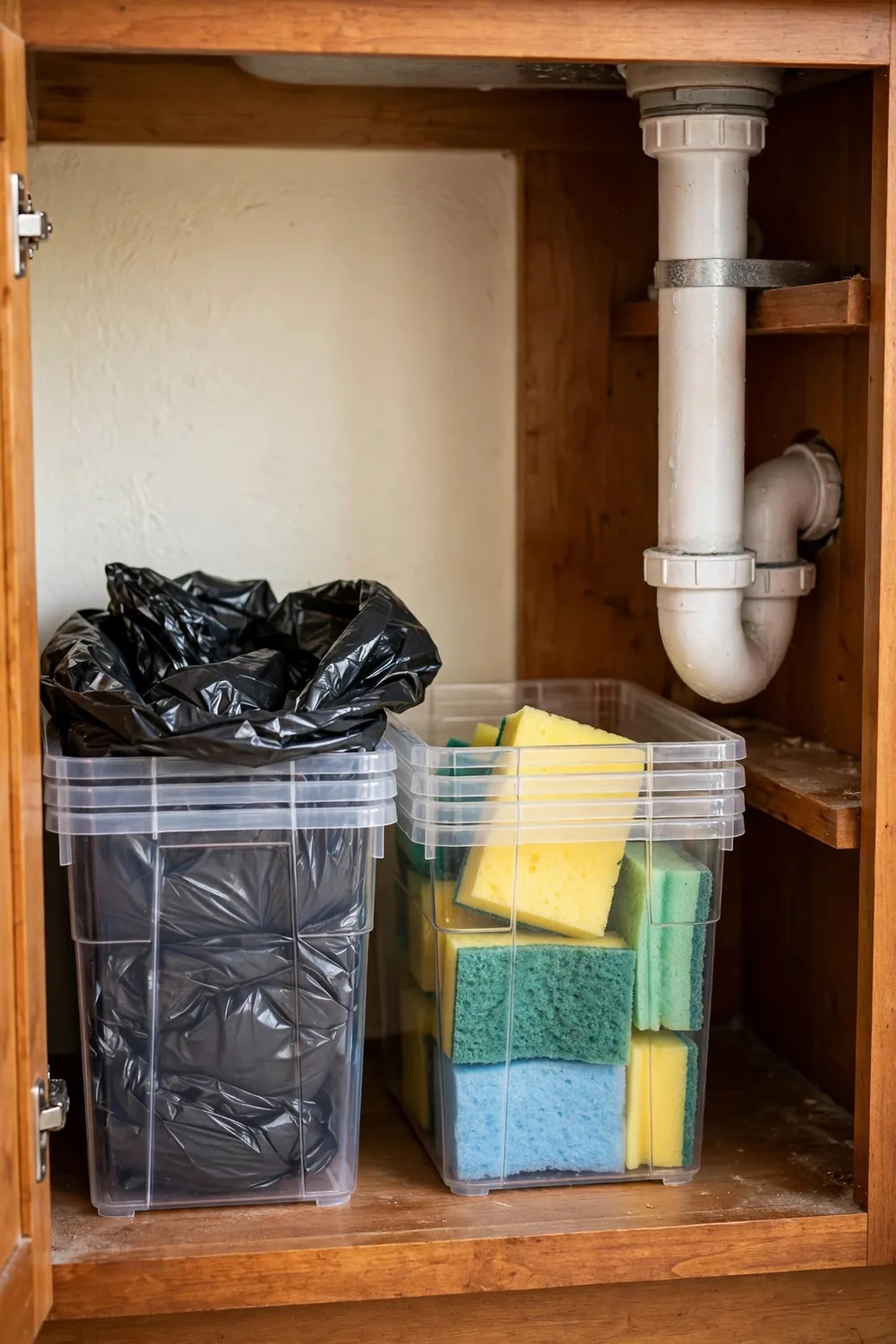
4. Stack bins that match the cabinet height
Stackable bins are the answer for the tall, empty air at the sides of the cabinet, where the pipes do not reach. One bin holds trash bags, one holds extra sponges and gloves, and one holds the dishwasher pods. Stacked two high, they use the vertical space that single layer storage wastes.
Buy bins that fit the height you measured. In my cabinet, two bins of about 9 inches each stack neatly beside the drain, with an inch to spare. Clear bins work best here, because you can see when the trash bags are running low without pulling the stack apart. Label the front of each bin, so everyone in the house puts things back in the right one.
5. Hang a tension rod for spray bottles
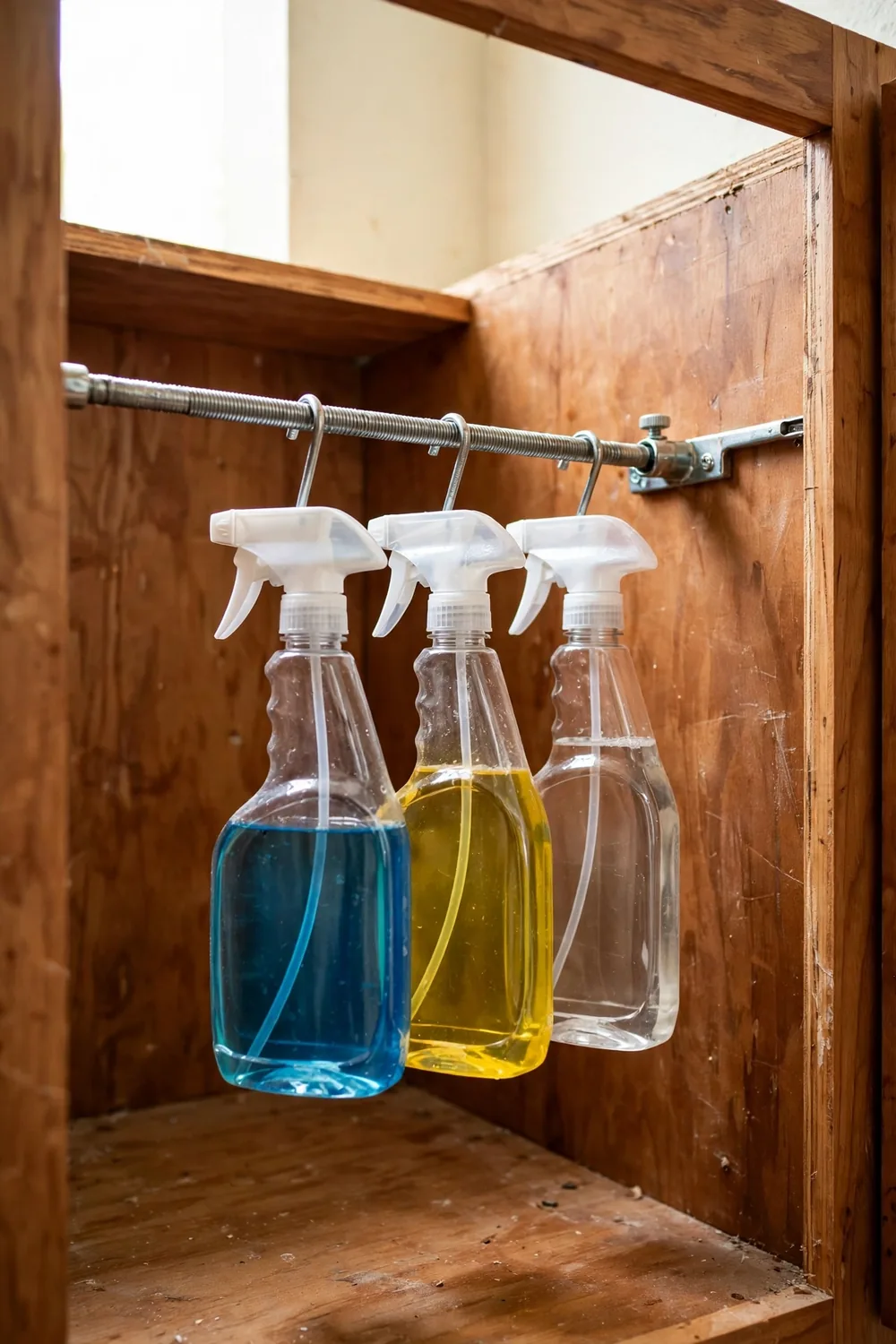
A tension rod wedged between the cabinet walls, about 6 inches below the top of the cabinet, turns dead air into a hanging rack for spray bottles. The bottles hang by their triggers, and the cabinet floor stays clear.
This works only if the rod fits snugly, so measure the inside width at the height where the rod will sit, not at the floor. A rod that is too long will bow, and a rod that is too short will fall the first time you hang a full bottle on it. Twist it until it holds firm, then hang two or three bottles and leave a gap between them.
6. Use a lazy Susan for the deep back corner
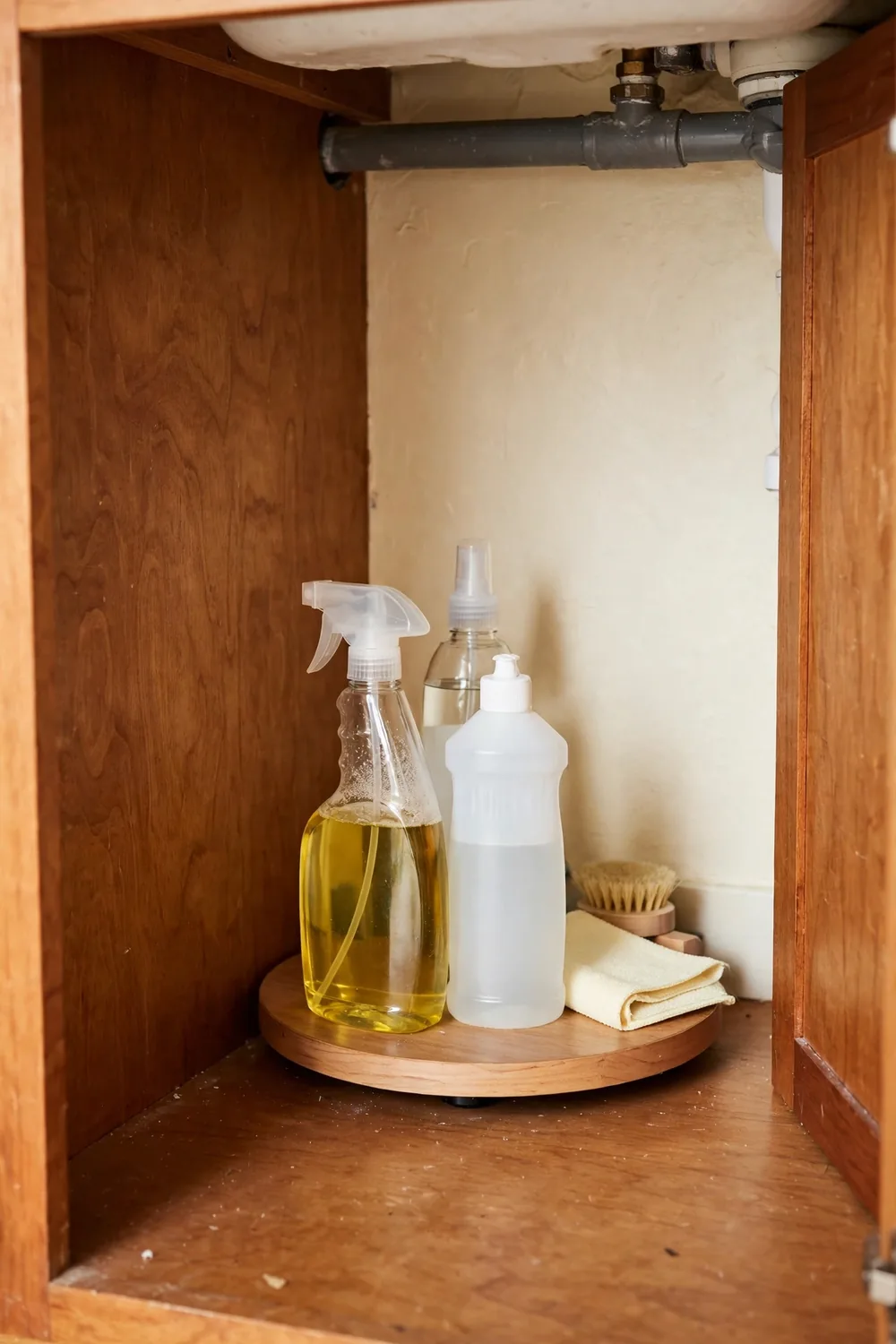
The back corner of a sink cabinet is where bottles go to be forgotten. A small turntable, about 10 inches across, fixes that. Spin it, and the bottle you want comes to the front.
Pick a turntable with a raised edge so bottles do not slide off when it turns, and keep it low, no taller than about 4 inches, so it clears the pipes above it. Put the things you use weekly, not daily, on it: the drain cleaner, the wood polish, the extra dish soap.
7. Finish with labeled jars for the small stuff
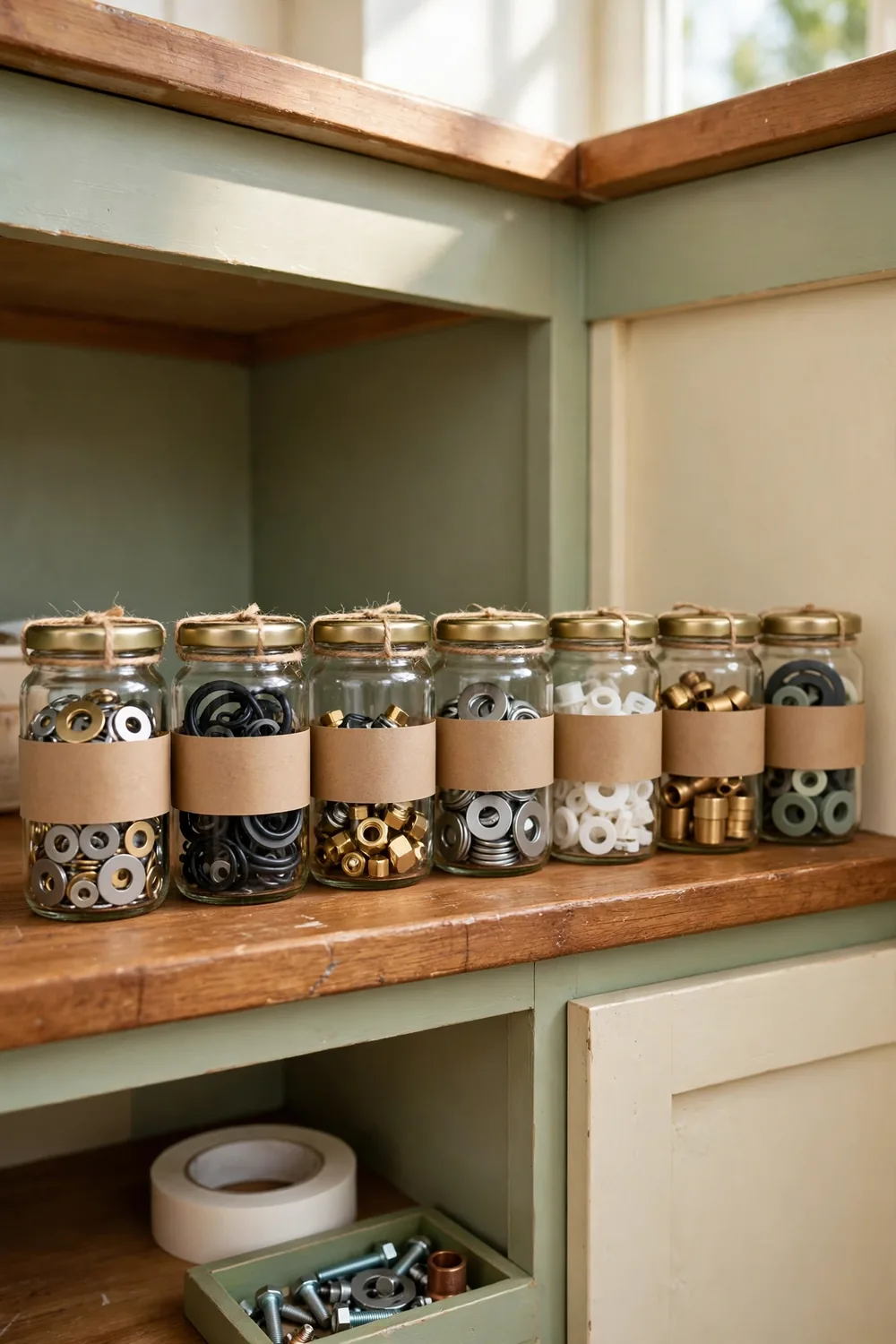
The last step is for the small things that roll around and disappear: extra sink stoppers, the little wrench that came with the faucet, spare washers, and the packet of drain screens. A row of small labeled jars keeps them visible and together.
Use short jars, about 4 inches tall, with wide mouths so you can reach in and grab one washer without tipping the jar over. Label each lid, not the side, because you look down at jars stored on a low shelf. One jar for plumbing spares, one for cleaning cloths, and one for the odds and ends that used to live loose at the back.
What if the pipes get in the way?
Pipes get in the way in almost every sink cabinet, so plan around them instead of fighting them. The drain drops down the middle, which splits the cabinet into two useful zones, one on each side of the pipe. Put the pullout tray on the wider side and the bins on the narrower side.
Measure the clear space on each side of the drain separately, because the two sides are rarely equal. In my cabinet, the left side has about 11 inches of width and the right side has about 9 inches, and the organizers on each side are sized to match.
If the garbage disposal eats the middle of your cabinet, skip the pullout tray and use the door rack, the tension rod, and the bins on the sides instead. If your kitchen also needs more counter space to go with the newfound cabinet order, our small apartment kitchen ideas guide covers rolling carts and fold down tables that add square feet without a remodel.
What went wrong in my first try
My first try failed because I bought the organizers before I measured the cabinet. I fell for a handsome two tier pullout that looked perfect in the listing photos, carried it home, and discovered it was 2 inches too wide and 3 inches too tall for the space beside my drain. I returned it and measured the cabinet properly.
The second mistake was subtler. I organized the cabinet once, beautifully, and then let the household put things back wherever they landed. Within a month the zones had blurred and the spray bottles were blocking the trash bags again. The fix was the labels, and a small rule: anything without a spot lives on the counter until it earns one.
The honest version is that an organized cabinet needs about five minutes of upkeep a week. Skip that for a month and you are back where you started, with better bins.
An organizer only works if it fits the cabinet you have, not the cabinet in the photo. Measure first, buy second, and the pipes stop being the enemy.
FAQ
How wide is a standard sink cabinet? Most standard sink cabinets are 24 inches wide inside, with about 22 inches of depth and around 20 inches of clear height beside the drain. Older homes and apartments often run smaller, so measure first.
Will a pullout tray fit around the drain pipe? Yes, if you buy one sized to the clear space beside the drain rather than the full width of the cabinet. Measure each side of the drain separately and pick a tray that fits the wider side.
Can I install these organizers in a rental? Yes. The tension rod, the over door rack, the drawer dividers, and the stackable bins need no screws at all. The pullout tray usually needs a few screws into the cabinet floor, so ask your landlord first.
What goes on the pullout tray and what goes behind it? Daily items go on the tray: dish soap, all purpose spray, and the sponge holder. Weekly items go behind it or on the turntable: drain cleaner and extra soap.
How do I stop the cabinet from getting messy again? Give everything a labeled spot and spend five minutes once a week putting strays back.
What if my cabinet is smaller than standard? Skip the pullout tray and use the door rack, the tension rod, and one stack of bins sized to your measurements. Fewer pieces that fit properly beat more pieces squeezed in.