Guest Room Ideas That Double as a Home Office
Short answer: A 10 by 12 feet bedroom can work as both a guest room and a home office when each job has its own zone. Give the bed one wall and the desk one corner, keep bedding and office supplies in the closet, and choose a fold-out bed that switches the room in about 10 minutes. The result is an office on weekdays and a guest room on weekends.
| Time | One weekend, about 5 hours of hands-on work |
| Difficulty | Beginner; a tape measure and a screwdriver are the only tools |
| Space | Works in a spare bedroom as small as 10 by 12 feet |
My friend Maya came to stay last spring, and I had nowhere proper to put her. The spare room was my office, full stop. Desk against the window, chair in the middle of the floor, notebooks piled on every flat surface. Maya slept on an air mattress wedged between my desk and the wall, squeaking against the desk leg every time she turned over. She was gracious about it. I was not.
That night is why this room exists. A guest room that doubles as a home office is not about clever furniture. It is about deciding, before anyone arrives, which parts belong to work and which belong to rest, and making the switch easy enough that you actually do it.
The honest judgment is this: most dual-purpose rooms fail because the office never leaves. The desk spreads, the papers spread, and the guest ends up sleeping in a storage room with a bed in it. If the office cannot be tidied away in ten minutes, the room is an office with a mattress in it.
Where does the office go when guests arrive?
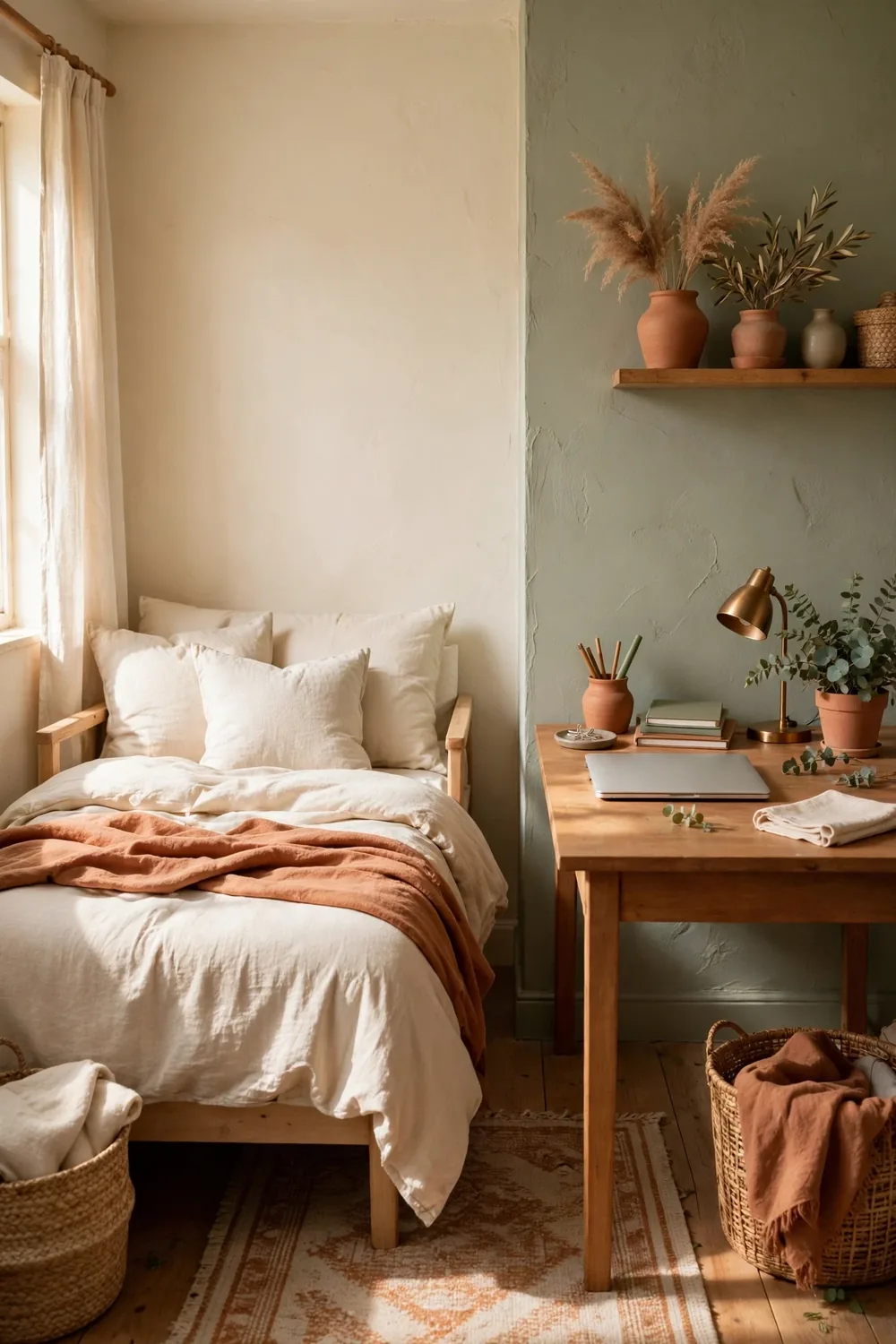
Start with the bed, not the desk. The bed is the bigger piece and the harder one to move, so it gets the best wall first. In a 10 by 12 feet room, that usually means the bed on the long wall opposite the door, where a guest can get in and out without climbing over anything. The desk then takes the corner by the window, where the light is best for work and where a guest never needs to stand. Our guide to studio apartment layouts uses the same wall-first logic in a single room: one clear zone, one job, and a visible line between them.
What are the 7 zones that make a guest room double as a home office?
Seven zones, in the order I would set them up.
1. Start with a fold-out bed that switches the room in minutes
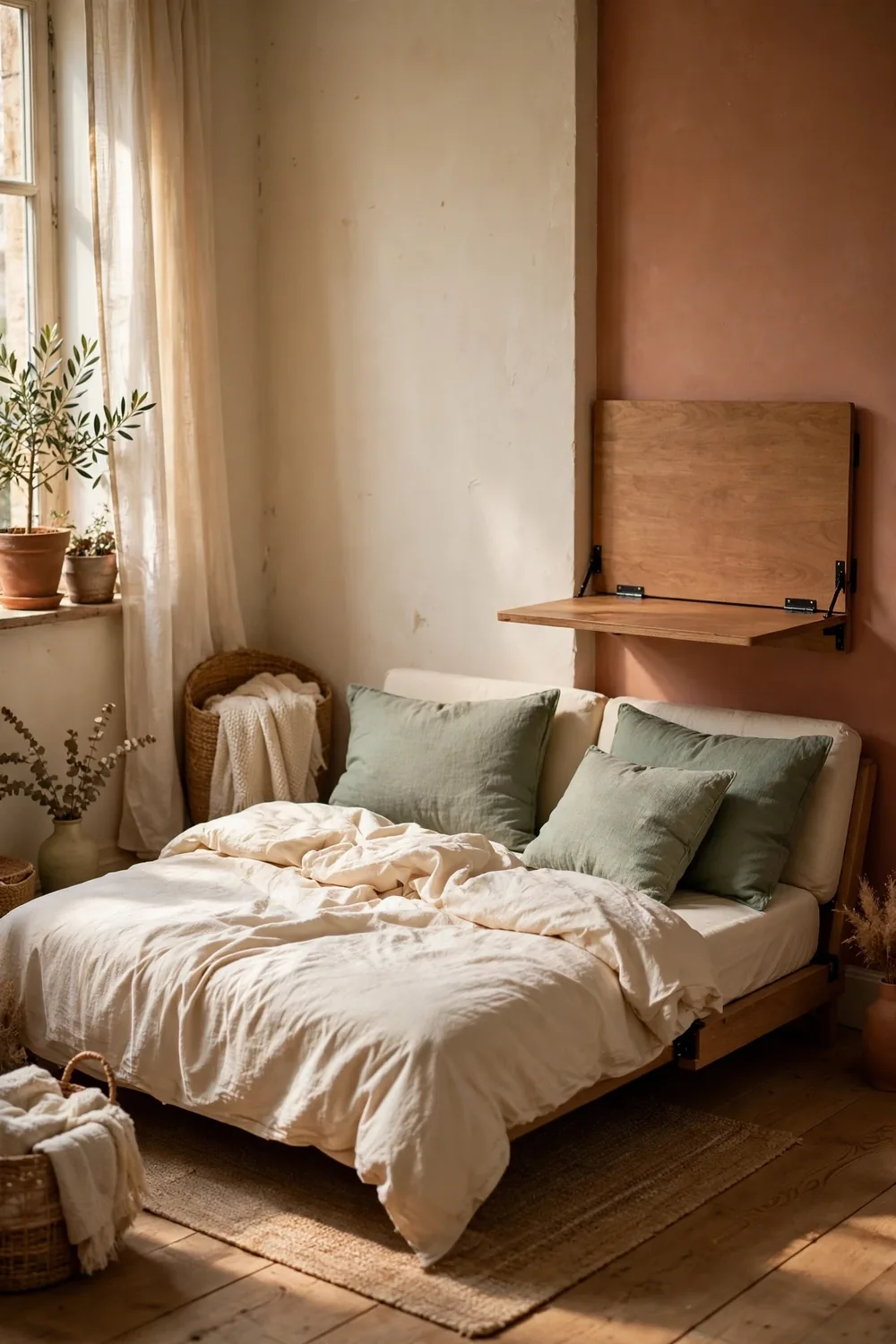
The bed is the piece that decides whether the room works. A fold-out sofa bed or a daybed with a trundle lets the room be an office for five days and a guest room for two, and the switch takes about 10 minutes. Look for a mattress at least 5 inches thick, because a thin mattress is the first thing a guest remembers in the morning.
Set the bed on the long wall, with about 36 inches of clear floor in front of it so a guest can stand, dress, and reach a suitcase without bumping the desk. Keep the bedding close by, in the closet or in a basket under the bed. Test the fold-out mechanism before the first guest arrives. If it sticks, fix it now. A bed that is hard to open stays folded, and your guest is back on the air mattress.
2. Give the desk its own corner, and keep it small
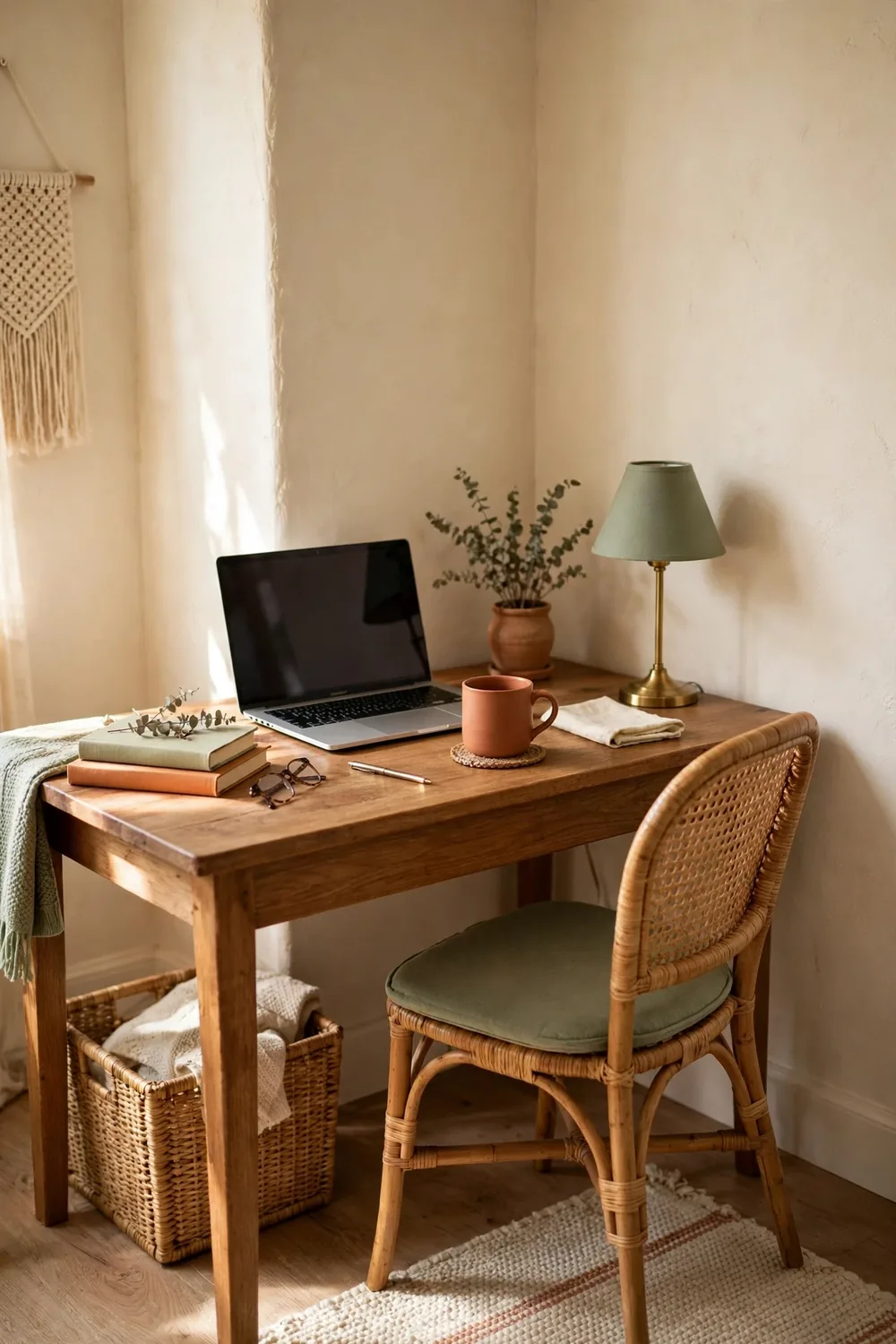
A desk zone works when it is clearly a corner, not a takeover. Choose a wood desk about 48 inches wide and 24 inches deep, small enough for one corner without eating the walkway to the bed. That size holds a laptop, a lamp, and a notebook, all a guest room office needs to hold.
Place the desk facing the window or the wall beside it, never facing the bed. Facing the bed means work calls stare at unmade bedding, and guests wake up staring at a monitor. A chair that tucks fully under the desk when work ends is the other half of this zone. End each workday with a clear desktop: one tray for papers, one drawer for cables, nothing else overnight. A tidy desk is what lets the room change jobs in ten minutes instead of an hour.
3. Hide guest bedding and office supplies in the same closet
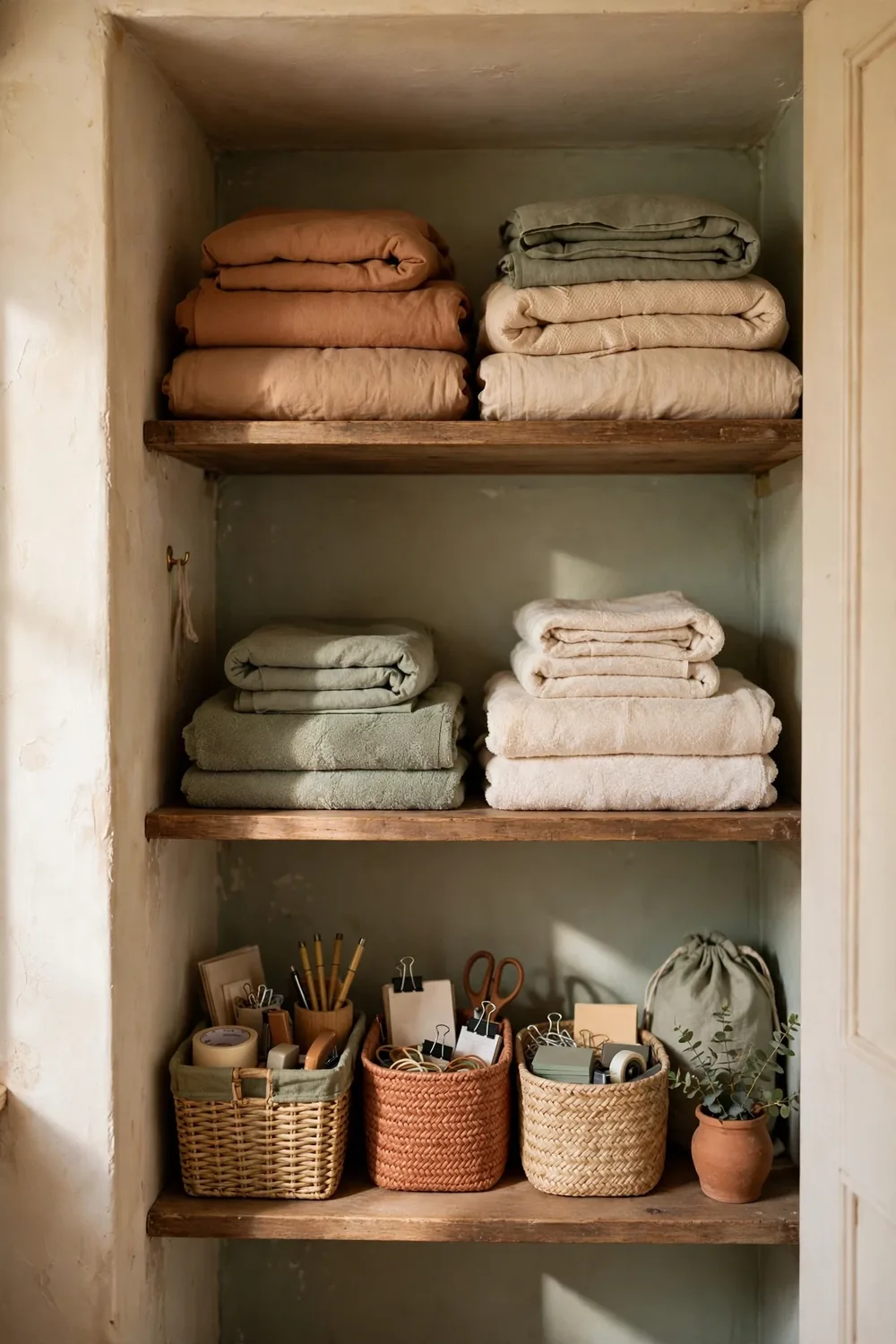
A small closet is the engine of this room, and it needs to hold two different lives. Put folded guest bedding on the top shelf: two sets of cream cotton sheets, two pillowcases, and a light sage green throw, with one bath towel and one hand towel per guest beside them.
Use the lower shelves for office supplies in closed baskets: one for paper and notebooks, one for cables and chargers, one for desk strays. Closed baskets matter, because open shelves read as clutter the moment a guest walks in. Every item needs one home in the closet, so packing the office away takes minutes. When the closet is full, the room is full. That is the rule that keeps the desk from spreading across the floor.
4. Make the bed properly, even for one night
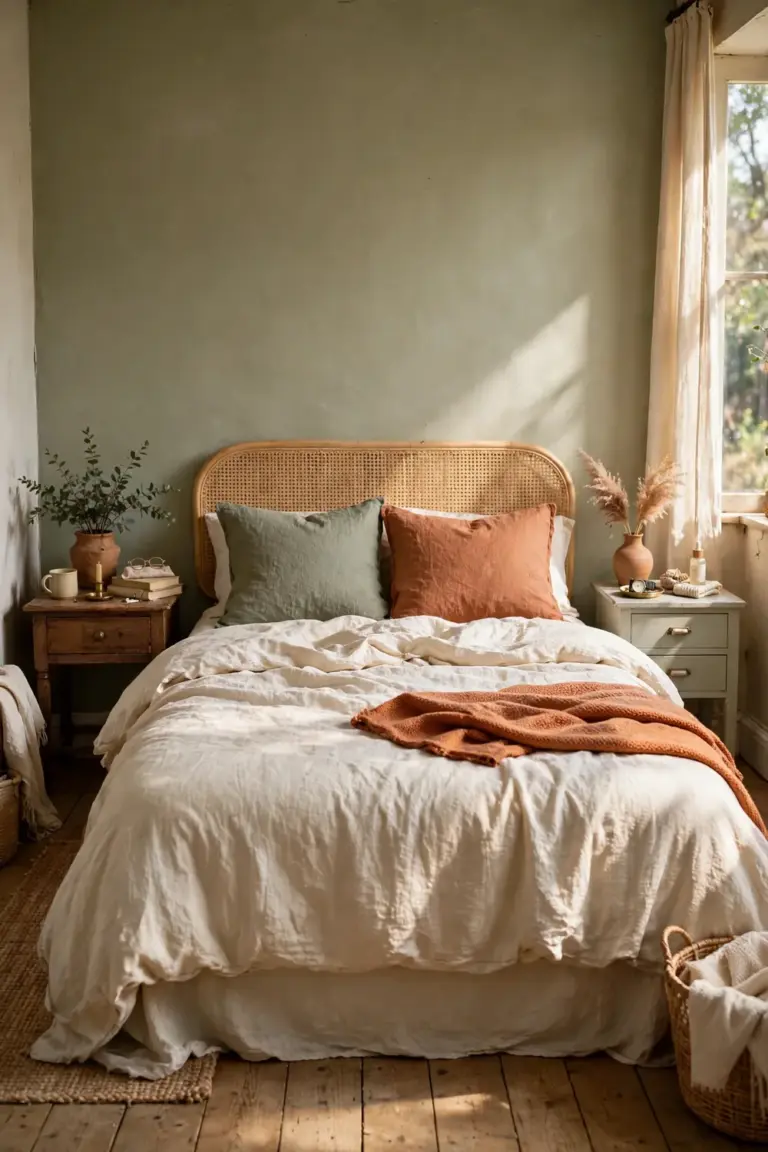
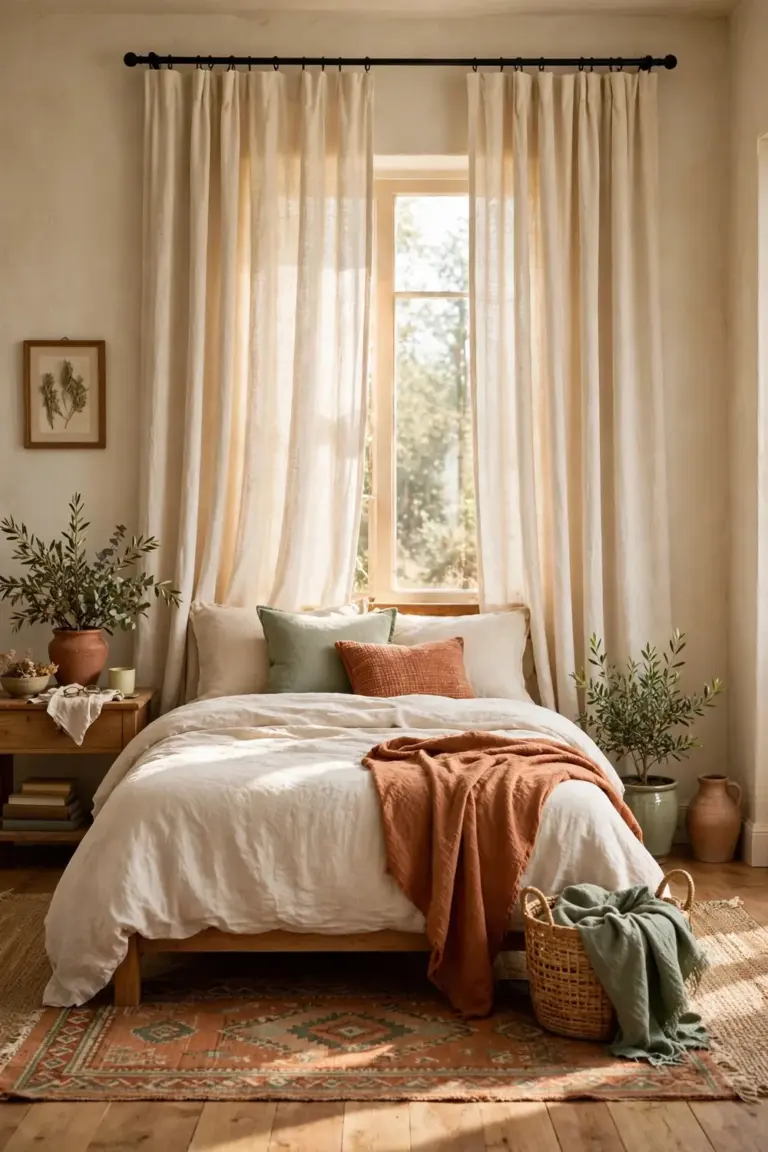
A guest bed that looks like an afterthought feels like one. Make it the way you would want it made for you: fresh white cotton sheets, a real pillowcase, and a folded throw at the foot.
The detail that changes everything is a small sprig of greenery on top of the folded bedding, or a single stem in a glass on the bedside table. It takes thirty seconds, and it tells a guest that the room was prepared for them, not just cleared for them. Change the sheets between guests, every time. Keep a second set washed and folded in the closet, ready to go, so the switch never waits on laundry day.

5. Light the desk for work and the bed for rest
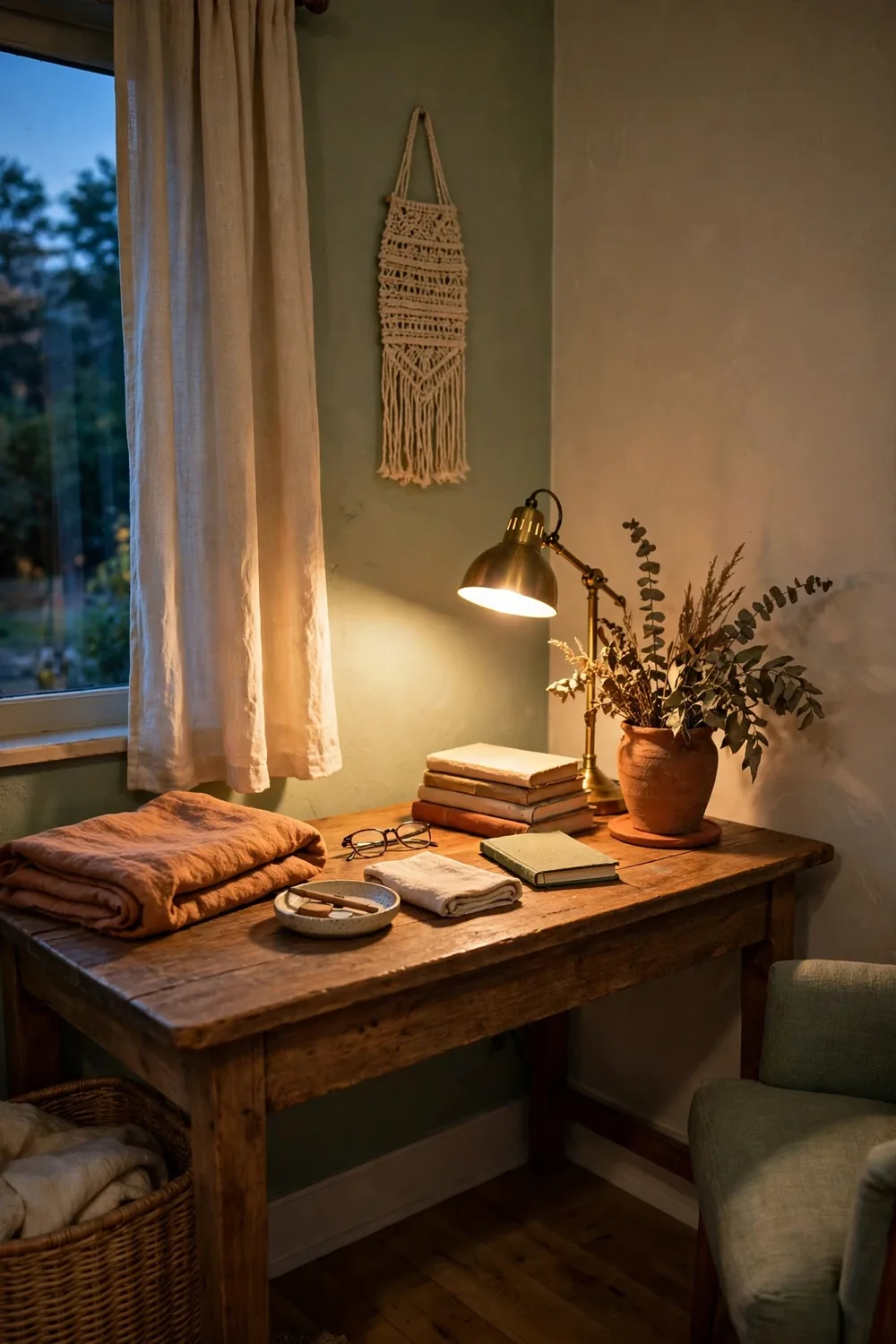
One room, two jobs, means two kinds of light. The desk needs a warm task lamp with a bulb around 2700K, aimed at the keyboard without glaring into the bed. An adjustable arm works best, pointing at work by day and folding away at night.
The bed needs a soft light of its own, so a guest can read without switching on the ceiling light and flooding the whole room. A small lamp on the bedside table does this job. Keep the two lamps on separate switches, so one zone can be lit while the other stays dark. Use warm white bulbs under a simple linen shade. Cool white light makes a small room feel like an office after dark, and no guest wants to fall asleep under office lighting.
6. Divide the room with a screen, not a wall
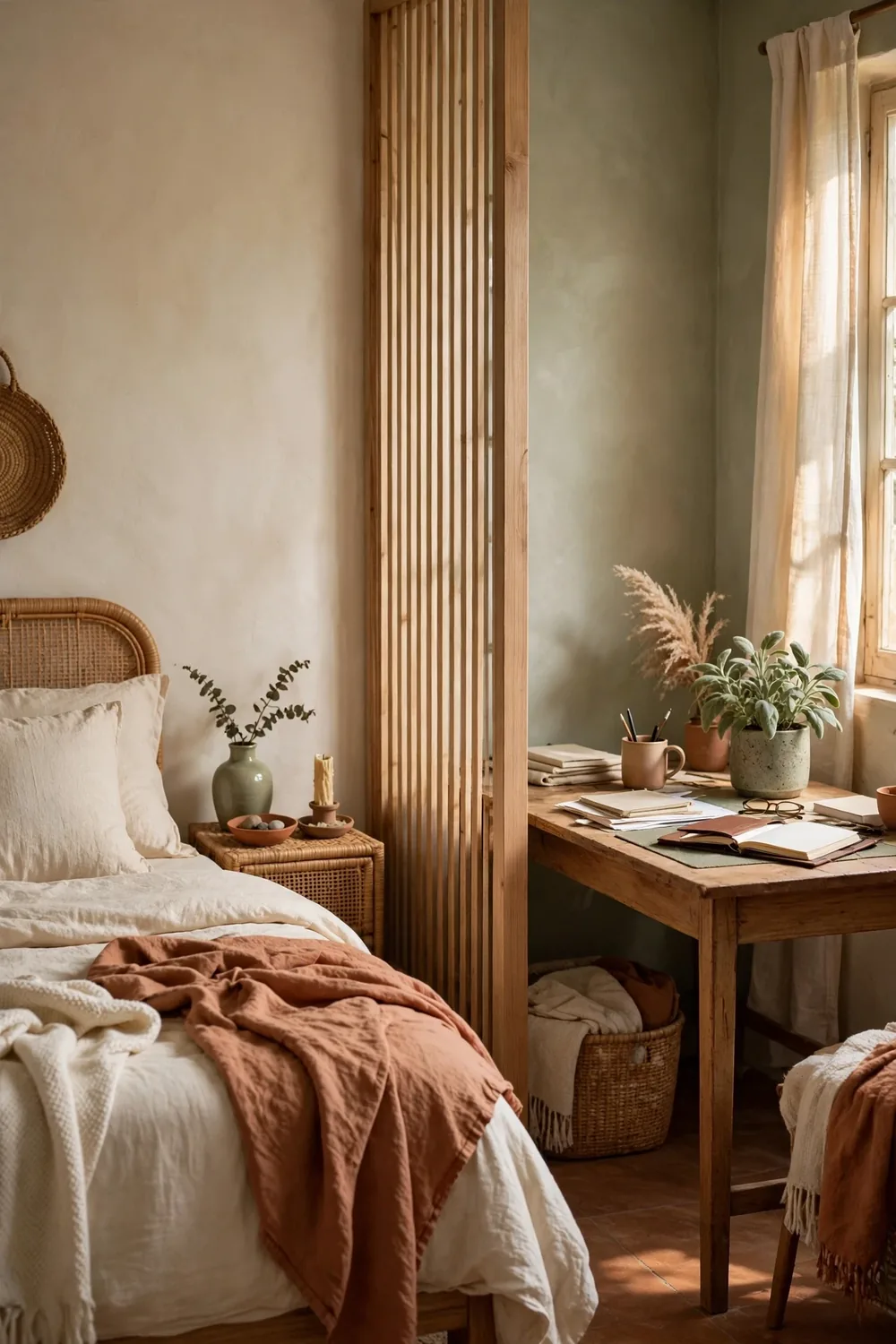
A slim wood divider screen is the cheapest wall you will ever buy, and it does a job no piece of furniture can do alone. It tells the eye where the bed zone ends and the desk zone begins, even in a room with no walls to help. Choose a screen about 6 feet tall and 4 feet wide, in warm wood with cream fabric panels, light enough to fold flat against the wall.
Set the screen at an angle between the bed and the desk, not straight across the middle of the room. A straight screen cuts the room in half and makes both sides feel cramped. An angled screen gives the bed a little privacy. Fold the screen away when guests leave, because a divider that stays up all week turns the office into a corridor. Put it up on Friday, fold it away on Monday.
7. Set a welcome tray, and clear the desk completely
The last zone is the smallest one, and it is the one guests remember. Before a guest arrives, clear the desk completely into the closet baskets. A desk with work still on it tells a guest they are sleeping in your office. A clear desk tells them the room is theirs.
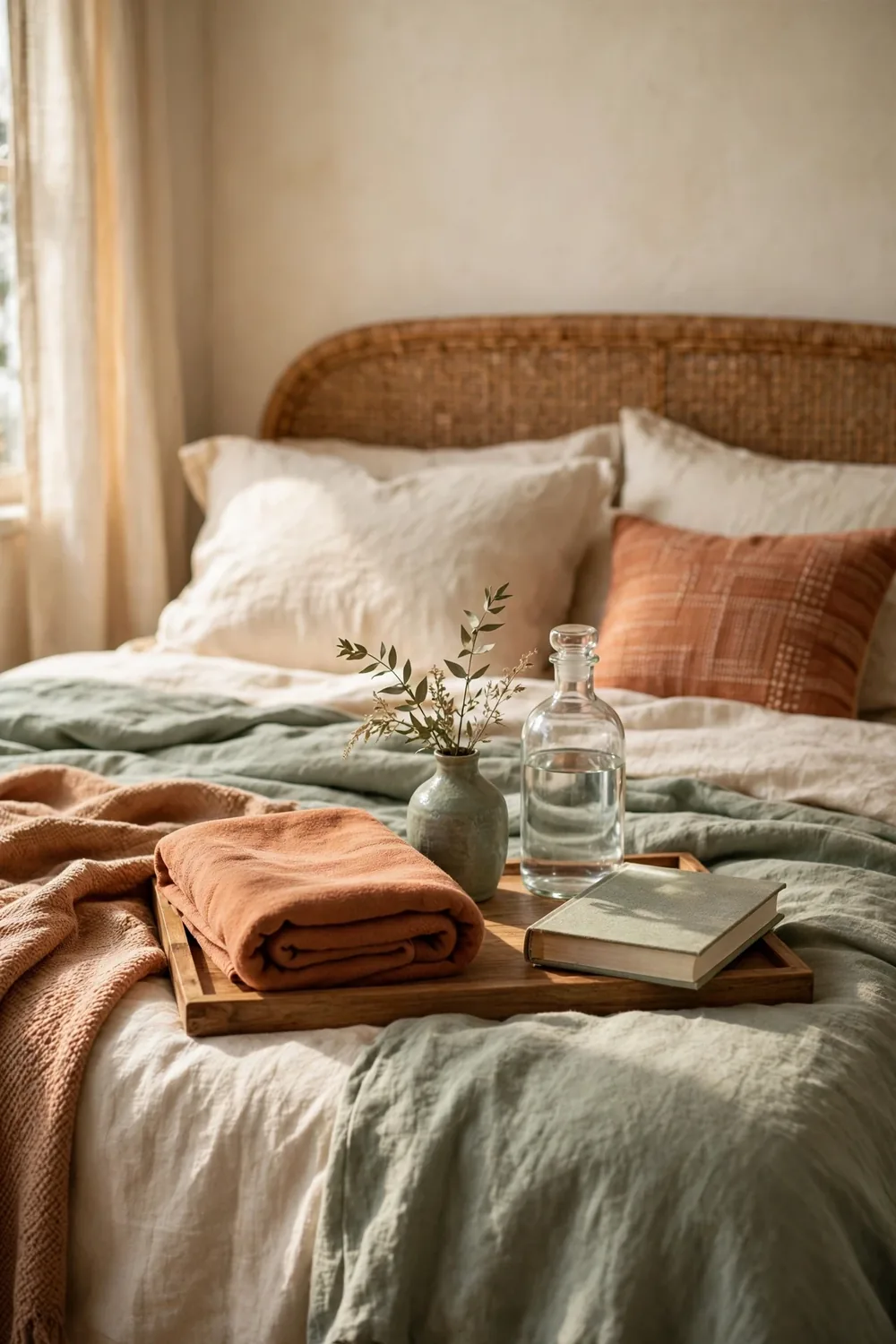
Then set a welcome tray on the made bed: a folded hand towel, a small vase with a green stem, a water carafe and a glass, and a book you have actually read and liked. The tray takes two minutes, and it does more than any furniture to make the room feel like a guest room. If you want a shortcut for the rest of the room, our guide to free decorating shows how to restyle a room with what you already own, and the same eye applies here: move what you have, clear what you do not need, and let the room do one job at a time.
What went wrong the first time I set up a guest room office?
I bought the desk first. It was beautiful, a wide oak desk with room for two monitors, and it was six inches too deep for its corner. Every time a guest stayed over, the desk chair blocked the path to the bed. Within a month, the desk had collected a printer, magazines, and cables, and the room was an office that happened to contain a mattress.
Measure the corner first, then buy a desk that fits it. A desk needs about 48 inches of width and 24 inches of depth in a room this size, and a chair that tucks fully underneath matters more than a second monitor. A dual-purpose room rewards patience more than shopping. Buy the bed, live with the layout for a week, then buy the desk that fits the space that is left.
A guest room that doubles as an office is not a room with two jobs at once. It is a room that changes jobs in ten minutes, because the bed has a wall, the desk has a corner, and everything else has a basket in the closet.
FAQ
How small can a guest room office be? A 10 by 12 feet room is a comfortable size, and the layout works in a room as small as 9 by 10 feet if the desk is 48 inches wide and the bed is a fold-out sofa bed.
What kind of bed works best in a dual-purpose room? A fold-out sofa bed with a mattress at least 5 inches thick, or a daybed with a trundle. Both switch the room in about 10 minutes. Avoid an air mattress for regular guests, because it deflates and squeaks.
Where should the desk go in a guest room? In the corner by the window, facing the wall or the window, never facing the bed. Keep about 36 inches of clear floor in front of the bed, and keep the desk chair tucked fully under the desk when work ends.
How do I hide office clutter when guests arrive? Use closed baskets in the closet, one for paper, one for cables, one for everything that lives on the desk. Clear the desk completely before a guest arrives. If the closet is full, the room is full.
Can a room divider really make a guest room feel private? Yes, if it is angled between the bed and the desk rather than straight across the room. A slim wood screen about 6 feet tall gives the bed zone privacy without blocking the window light, and it folds flat against the wall when the room goes back to being an office.