Small Bedroom Ideas for Couples With Different Needs
Short answer: A small bedroom works for two people when the bed gives both of them real room. A king bed is 76 inches wide, sixteen inches wider than a queen at 60 inches, and that extra width is the single measurement that stops the nightly elbow war. Add two different nightstands, split lighting, and a wardrobe divided in half, and one small room can hold two different sleepers.
| Time | One weekend, about 5 hours of hands-on work |
| Difficulty | Beginner; a tape measure and a screwdriver are the only tools |
| Space | Works in a bedroom as small as 10 by 12 feet |
It is 10:40 at night. One of you is wide awake with a book, the lamp glowing warm on your side of the bed. The other is lying in the dark with a pillow over their head, waiting for sleep that will not come while the light is on. Neither of you is wrong. You just need different things from the same small room at the same hour.
We lived that standoff for months. I am the reader. My husband needs dark and quiet by 10:30, and our bedroom is 10 by 12 feet, with no spare corner to escape to. Most nights one of us lost.
The honest judgment is this: a shared small bedroom fails when it is decorated for one imaginary sleeper. It works when every choice is made twice, once for each person, inside the same room. The seven ideas below ended our nightly standoff, and none of them needed a bigger room.
Why does one small bedroom feel like two different rooms?
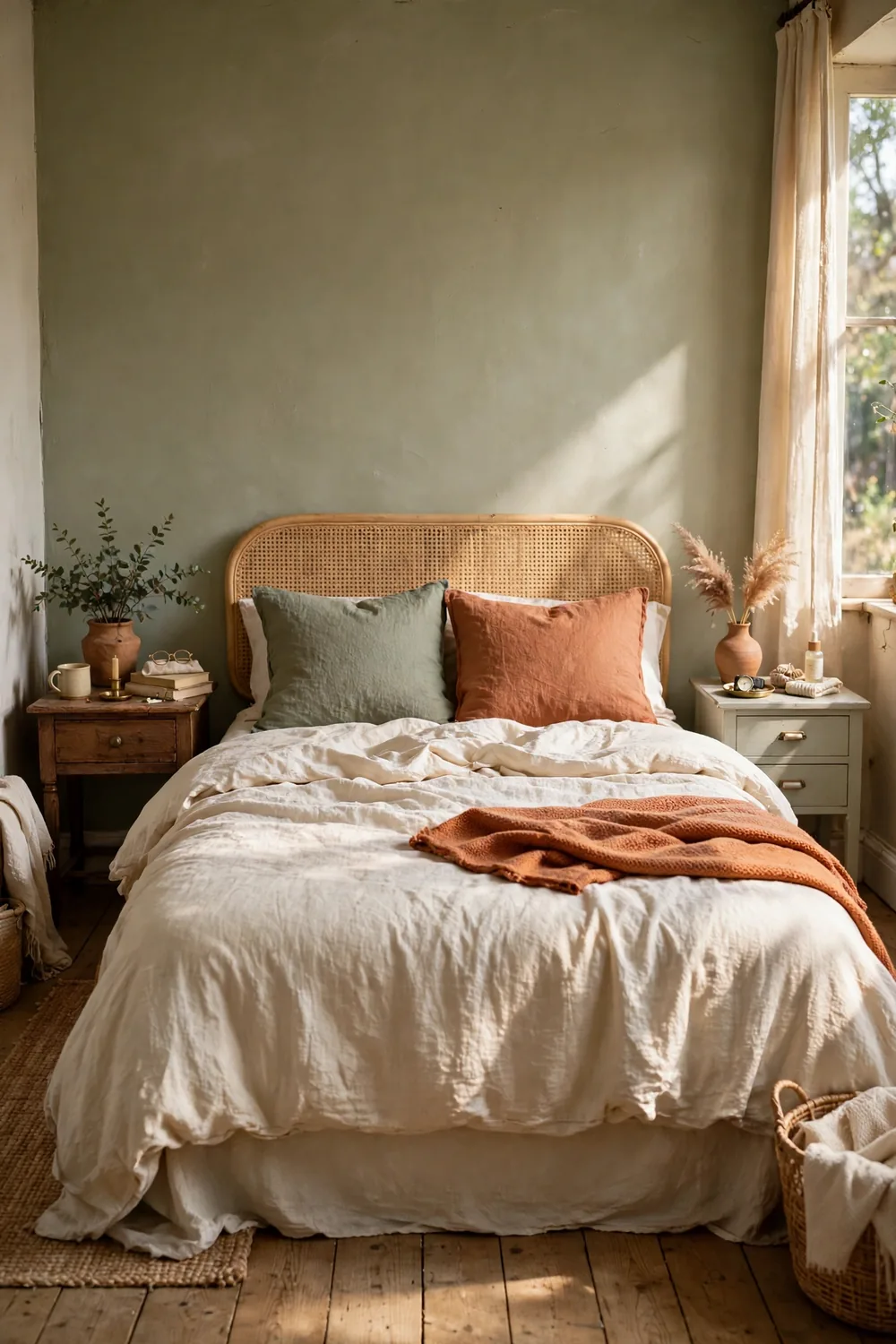
Because it is two different rooms, at least at night. One side of the bed is a reading corner that wants warm light, a book, and a glass of water. The other side is a sleep cave that wants darkness, cool air, and silence. A bedroom that only serves one of those needs will always feel wrong to the other person.
Start by naming the two needs out loud. Ours were simple: I need thirty minutes of reading light after 10:30, and he needs the room dark by 10:45 and quiet by 11:00. Once we wrote those down, the fixes stopped being guesses.
Our guide to studio apartment layouts shows how the same zone thinking separates sleep, work, and lounge in one open room, and a shared bedroom follows the same rule: give each need its own small zone.
What are the 7 solutions that let two people share one small bedroom?
Seven solutions, in the order I would do them.
1. Give each person their own nightstand
Two people sharing one bedroom need two nightstands, and they do not need to match. Matching nightstands look tidy in a photo, but they force two different people to store the same things in the same way. One of you needs a book, reading glasses, and a glass of water. The other needs a phone charger, earplugs, and nothing else.
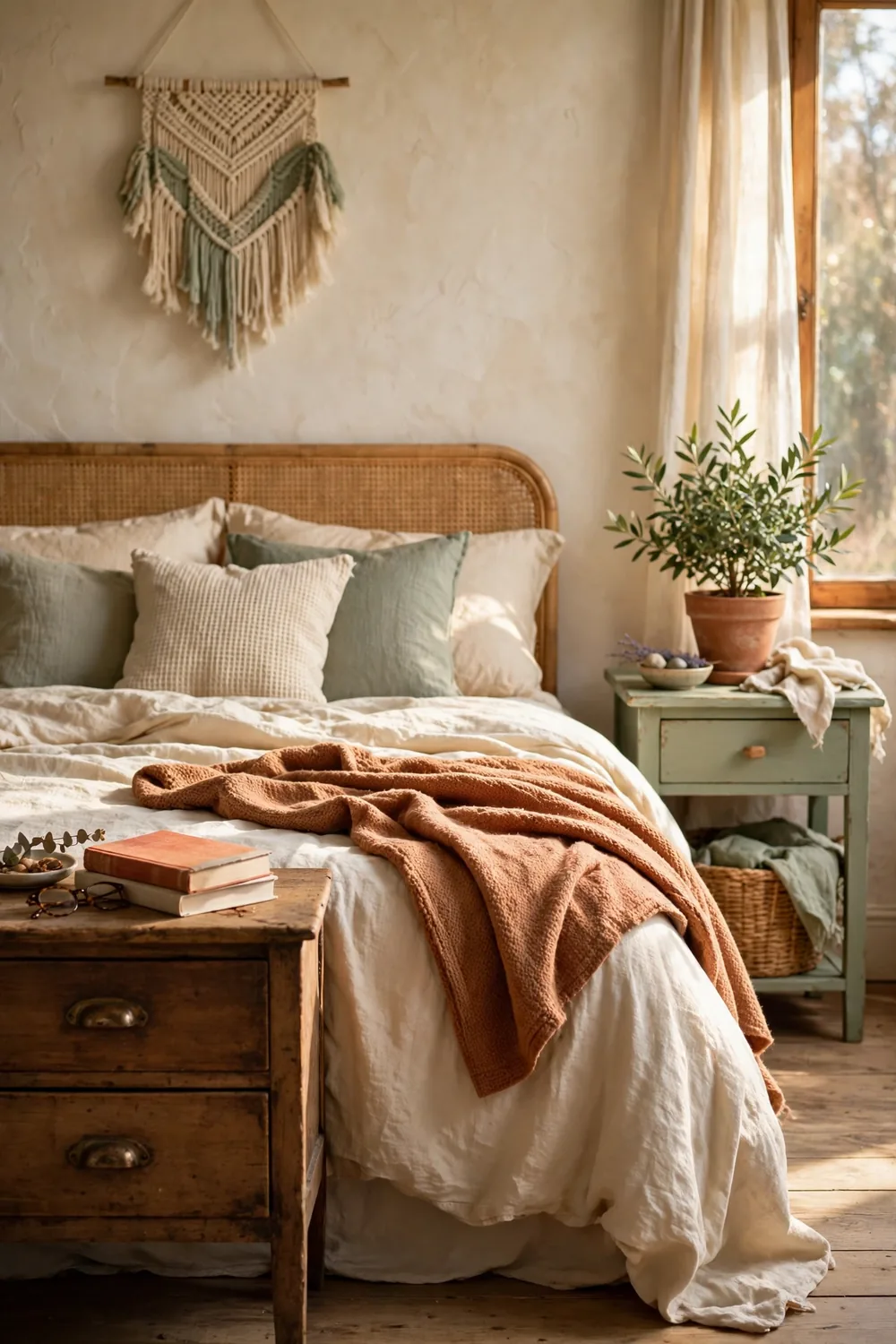
Choose a nightstand about 18 inches wide and 24 inches tall for each side, in whatever wood tone suits the person who uses it. Mine is warm oak with a drawer for books. His is painted sage green with an open shelf for his phone. The bedding ties them together, so the room looks collected rather than mismatched.
Keep each top to three things: a lamp, one book or one phone, and a glass of water. Anything more becomes clutter that one of you will knock over in the dark.
2. Split the lighting so one side can glow and the other can rest
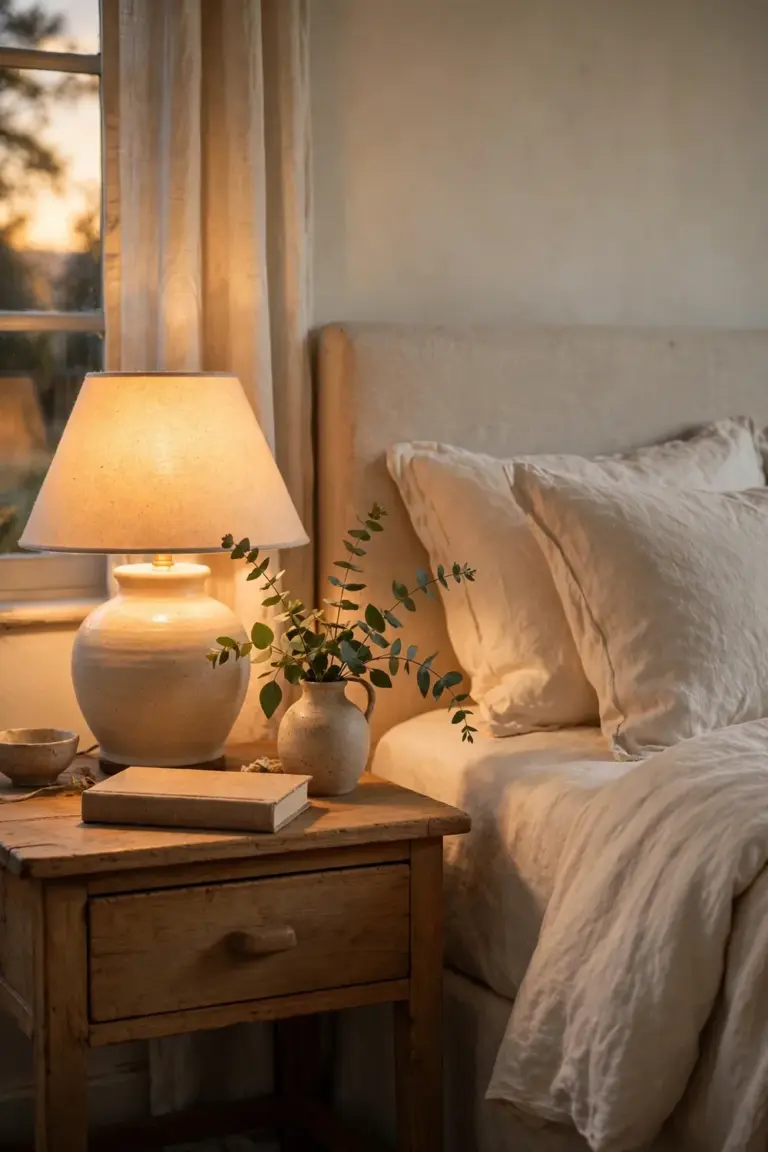
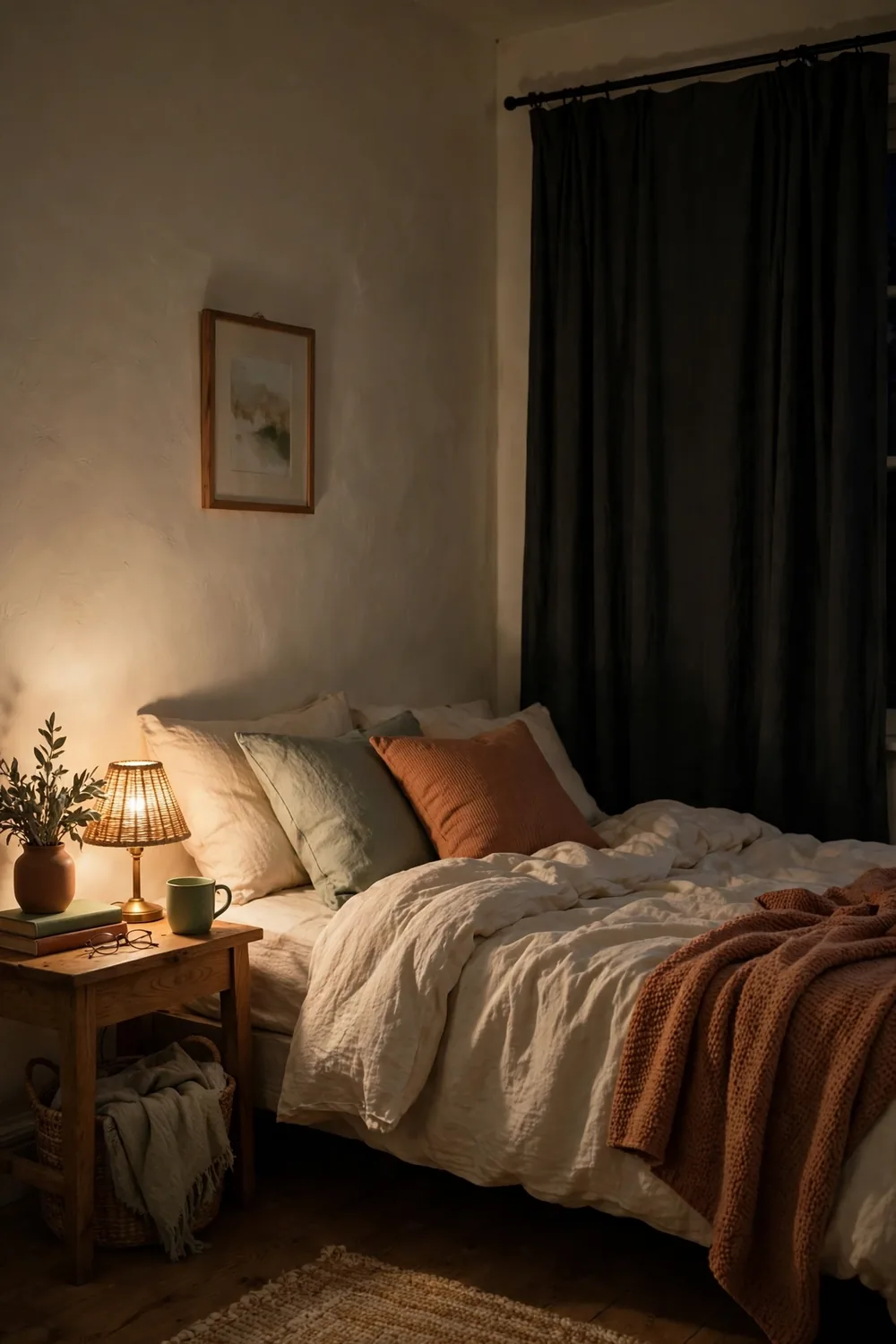
Split lighting is the fix that ended our nightly standoff. One warm lamp on the reader’s side, aimed down at the book, and darkness on the sleeper’s side. The trick is a lamp that throws light in one direction only.
Use a small shaded lamp with a warm white bulb around 2700K on the reader’s side, and no overhead light at all after 10:00 at night. A clip-on reading light keeps the glow even tighter. The sleeper gets darkness and the reader gets thirty honest minutes.
Test it: one person reads for ten minutes while the other lies down with eyes closed. If the sleeper can see light through closed eyelids, move the lamp six inches toward the wall. Six inches is often the whole difference between a shared room and a standoff.
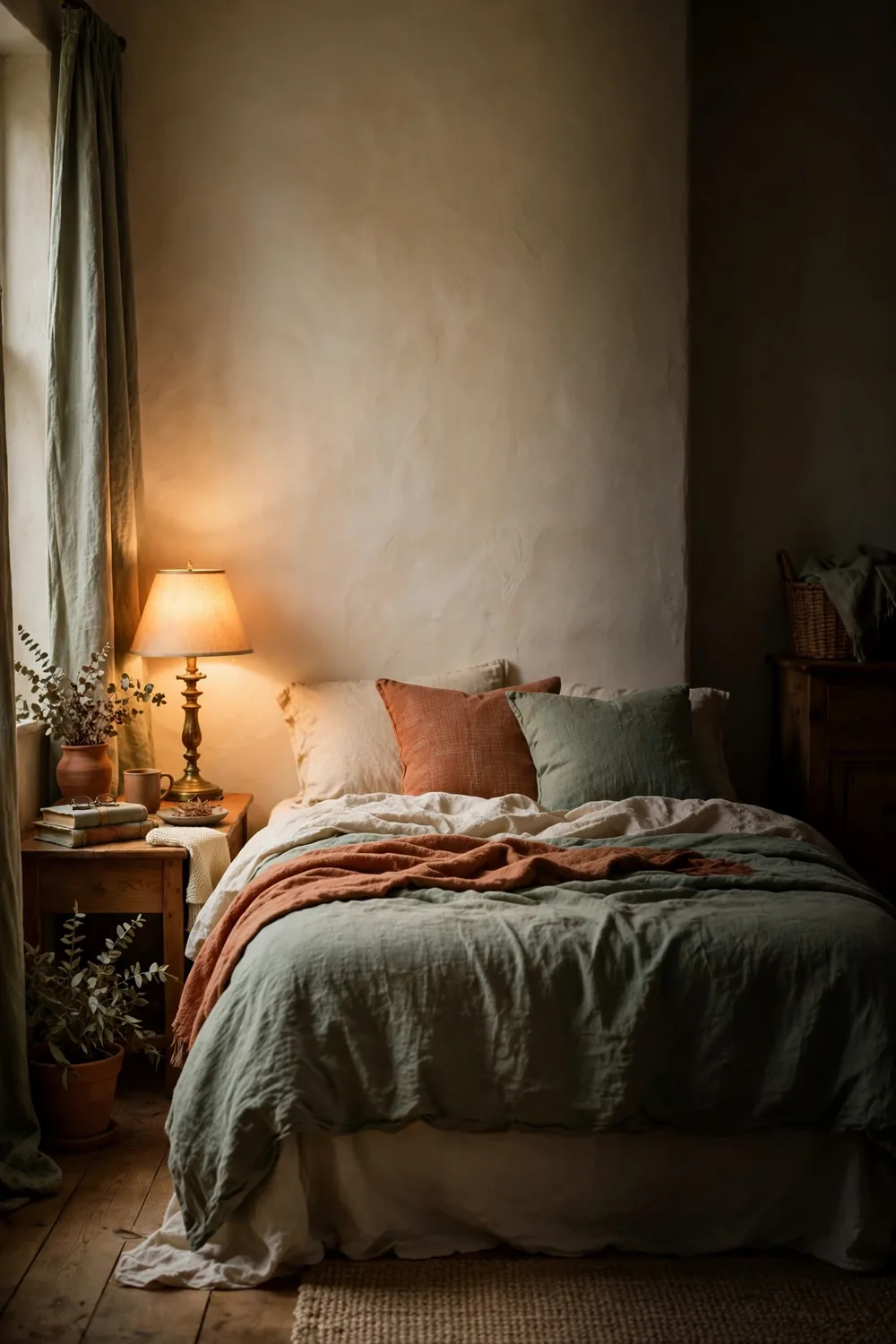
3. Size the bed for two sleepers, not one
A king bed is 76 inches wide, and in a small bedroom that number matters more than any other. A queen is 60 inches wide, which gives each sleeper 30 inches, about the width of a crib. A king gives each sleeper 38 inches, enough to turn over without waking the person beside you. Sixteen inches sounds small on paper.
Measure the room before you commit. A king needs about 76 inches of width plus 24 inches of walkway on at least one side, so the room should be at least 10 feet wide. Our room is 10 by 12 feet, and the king fits with a narrow path on my side and a wider one on his.
If a king truly cannot fit, choose a queen with two separate twin duvets instead of one shared cover. Two duvets end the nightly tug of war over the blanket and cost nothing in floor space.
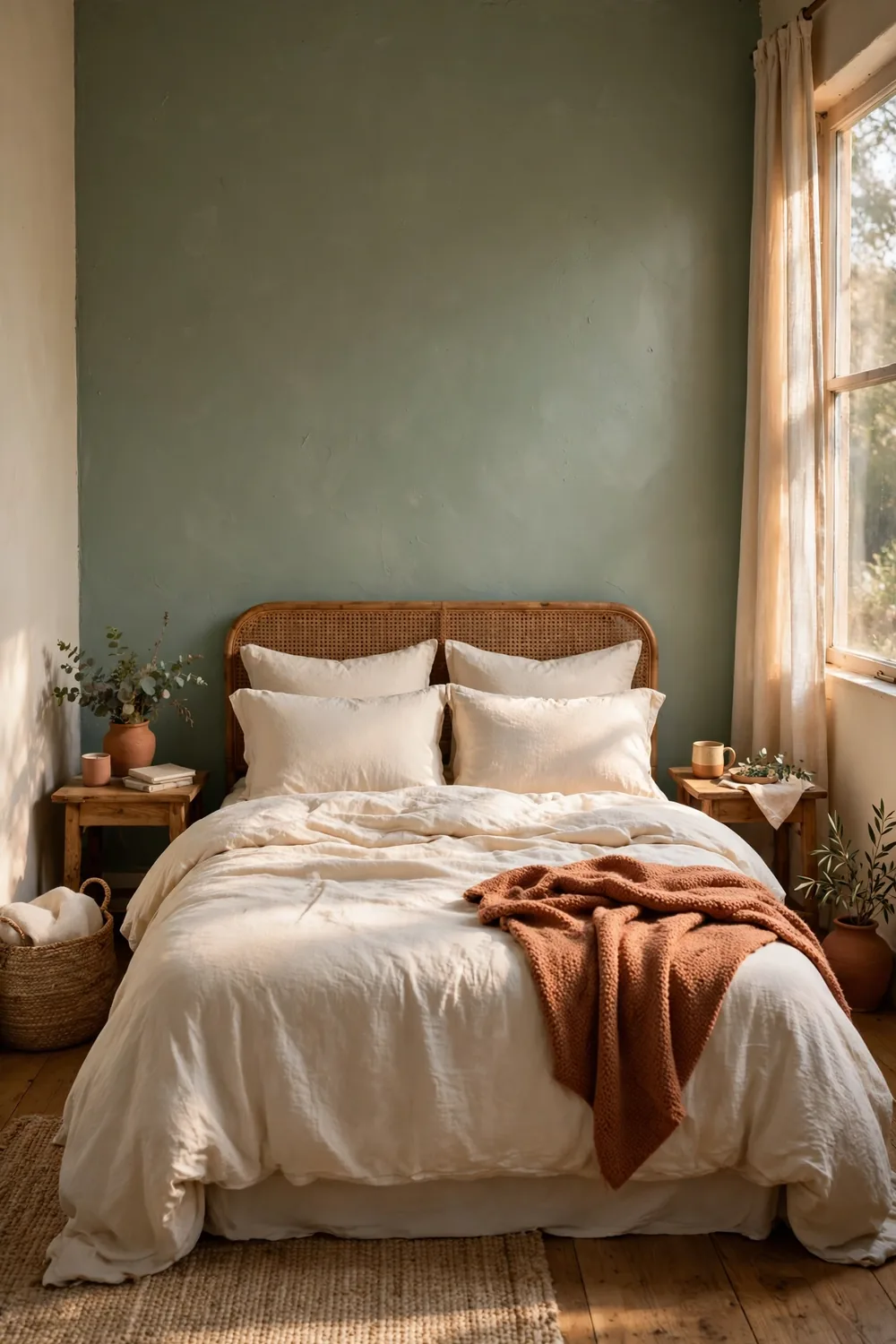
4. Divide the wardrobe in half and label nothing
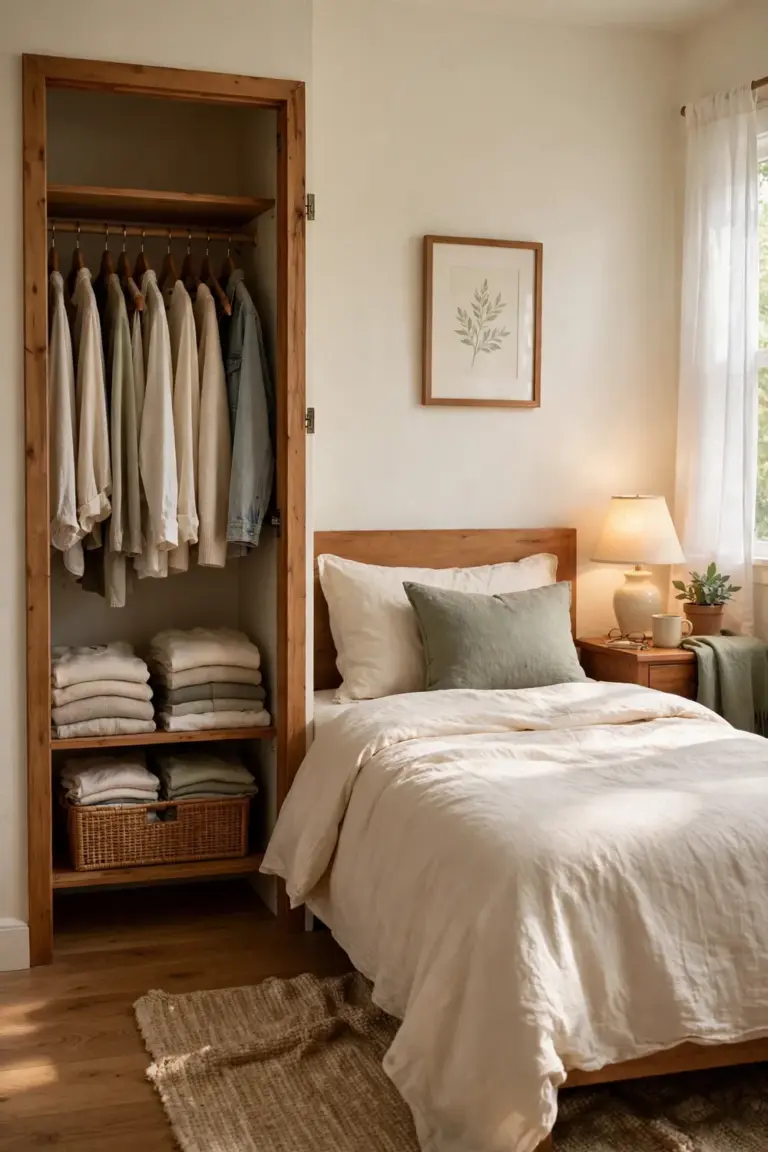
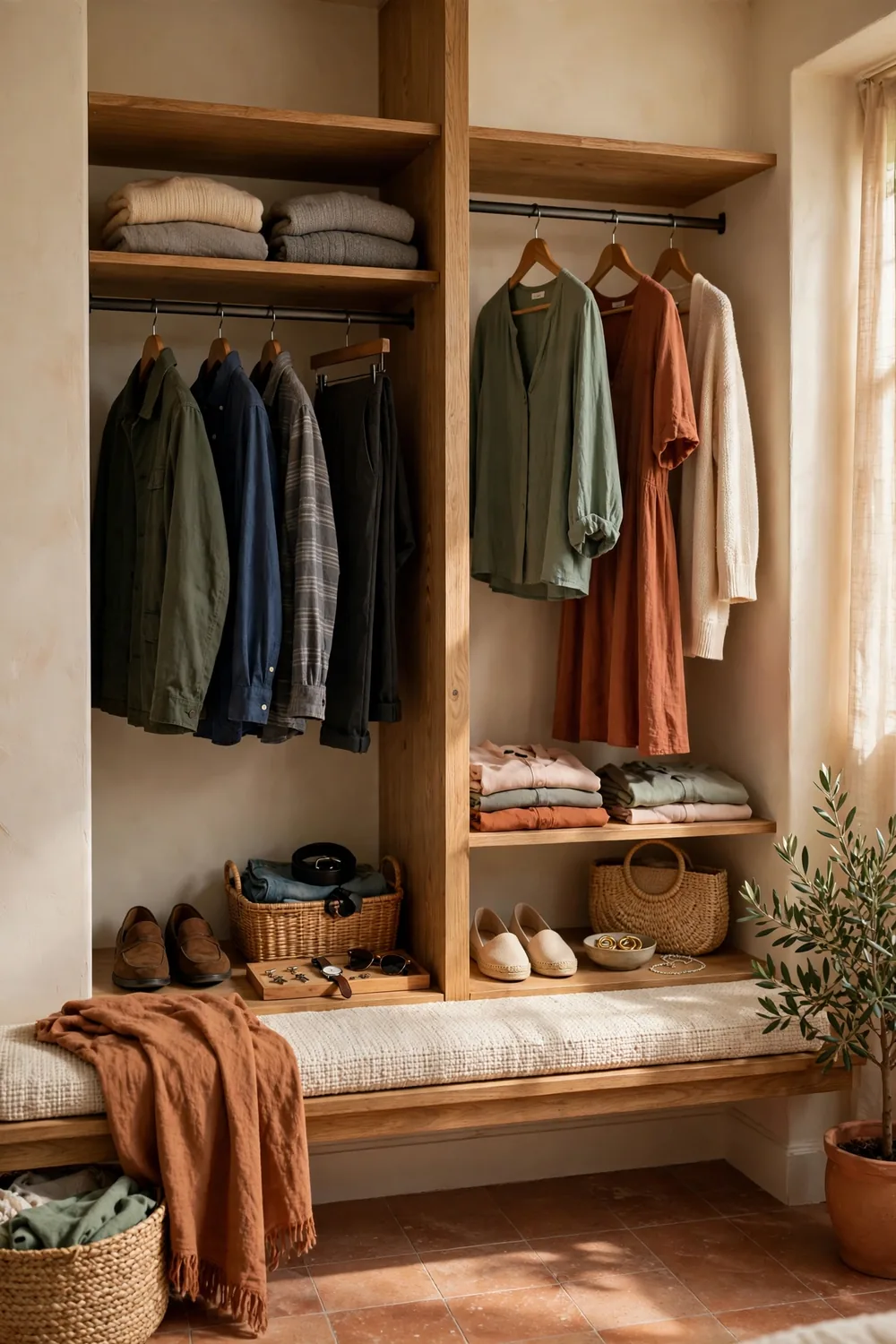
A shared wardrobe works when the divide is visible and fair. Split the hanging rail exactly in half, give each person one half of the shelf space, and stop there. The moment one person’s clothes creep past the middle, the other person feels crowded out of their own room.
Use matching slim velvet hangers in cream so the two halves read as one tidy wardrobe instead of two competing closets. Add one small basket per person on the top shelf for scarves, belts, and spare chargers.
Our furniture scale rules explain why pieces this size work in a small room, and the wardrobe follows the same logic: measure the rail, divide it in half, and let the measurement settle the argument.
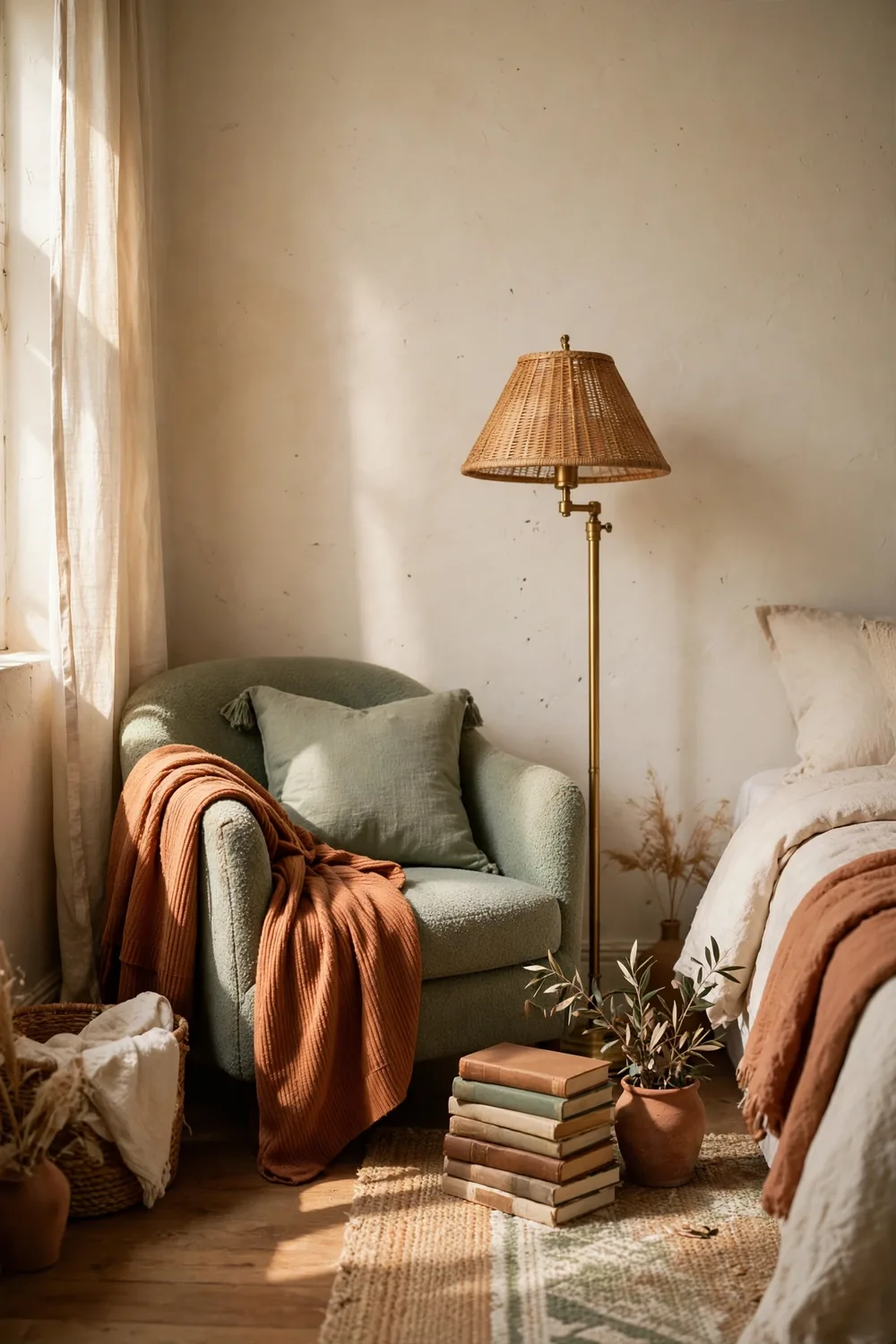
5. Build one small reading nook in the corner
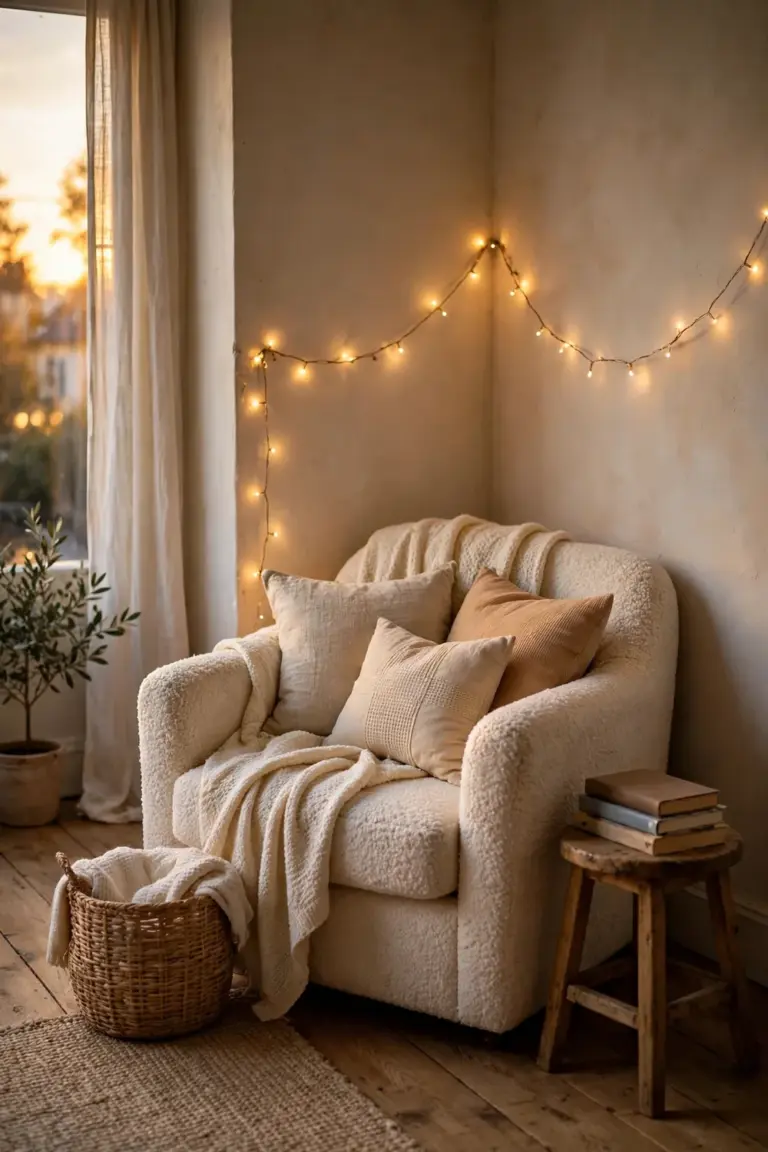
A reading nook sounds like a luxury in a 10 by 12 foot bedroom, but it only needs a corner about 3 feet square. One small armchair, one floor lamp, and a stack of books turn the dead corner by the window into the place where the reader goes.
Choose an armless slipper chair about 24 inches wide in cream bouclé or warm linen, with a floor lamp behind it that throws light down at the seat. Keep a stack of three books on the floor beside the chair and nothing else.
This solution surprised me most. The nook made the whole room feel bigger, because the bed stopped being the only seat in the room. On nights when I read past 11:00, I move to the chair, and the sleeper gets the dark room back.
6. Make the room quiet and dark on the sleeper’s terms
Sleep needs darkness and quiet, and a small bedroom can deliver both with two simple pieces. Blackout curtains on the window, hung from a rod that extends at least 6 inches past the frame on each side, block the streetlight that sneaks in around the edges. A white noise machine on the sleeper’s nightstand, set low, covers the sounds a small home makes.
Hang the curtains to the floor and close them fully every night. A gap of two inches at the side lets in enough light to wake a light sleeper at dawn, which happened to us until we moved the rod wider. The fix took ten minutes.
Agree on one quiet hour. Ours starts at 11:00. After that, phones go face down, the television stays off, and the only sound is the white noise machine. A rule you both chose holds on the nights when one of you is tired and the other is restless.
7. Design the morning routine so nobody waits for the bathroom
Mornings are the second standoff in a shared small bedroom, and they are easier to fix than nights. The problem is never the room. It is two people trying to do the same three things in the same ten minutes.
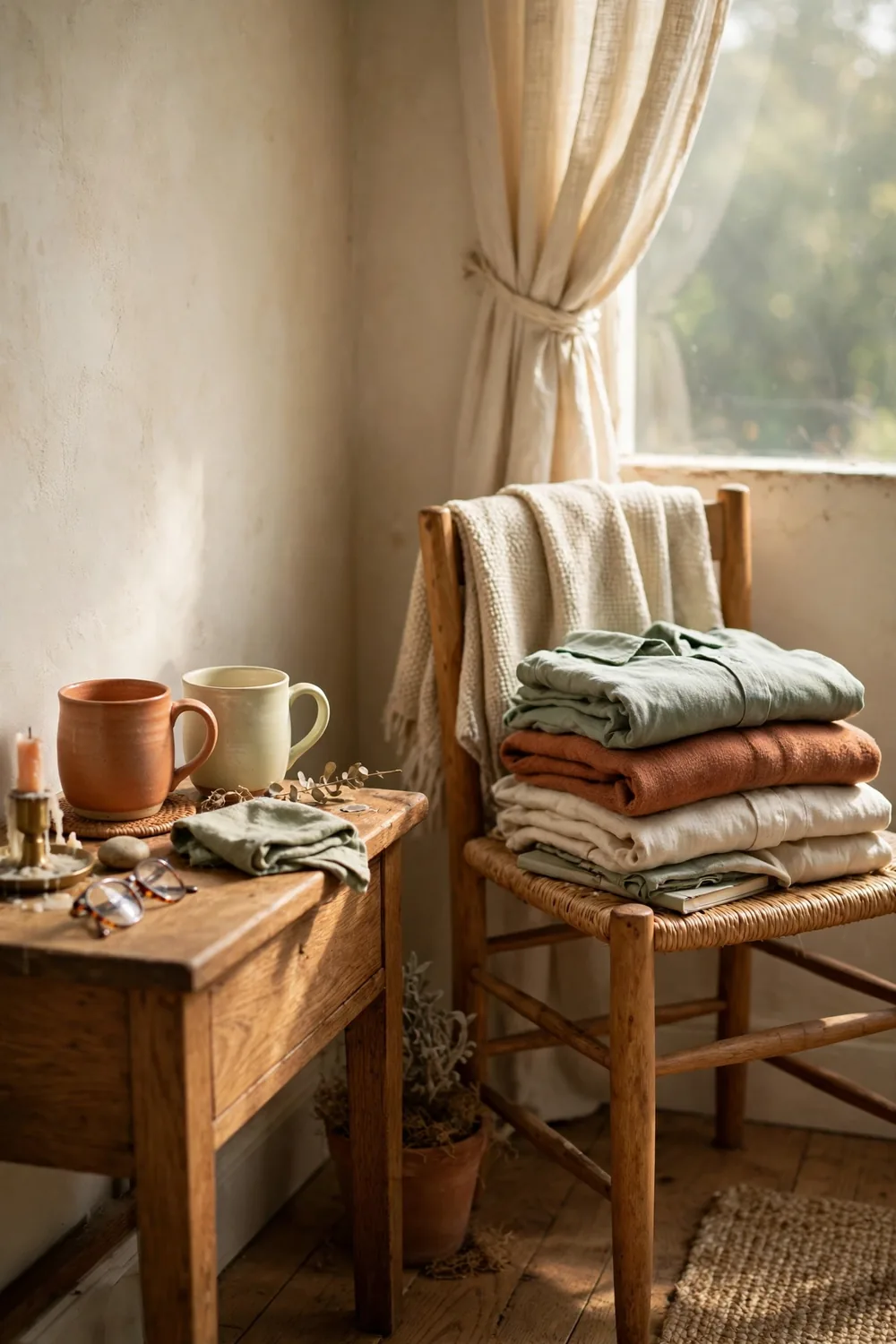
Lay out clothes the night before on the chair in the reading nook, one outfit per person, folded in a stack. Put two mugs and a small carafe of water on the nightstand, so the early riser can have water without opening the bedroom door and waking the sleeper. Keep shoes by the bedroom door, not under the bed.
Set the alarm for the earlier riser only, with the phone on their nightstand. The sleeper gets twenty more minutes of quiet, and the room earns its keep twice a day instead of once.
What went wrong the first time we tried to share one small bedroom?
I bought matching everything. Matching nightstands, matching lamps, matching pillows, matching hangers, all in the same cream and oak palette, because I thought a shared room should look like one person’s taste doubled. Within a month, the room looked perfect in photos and felt wrong to live in. He could not find his charger because it was buried in a drawer sized for my books.
The mistake was treating sameness as fairness. Fairness in a shared bedroom is not two identical sides. It is two sides that each work for the person who sleeps there. We sold one nightstand and bought a second one that actually fit his things. The room looked less matched and worked twice as well.
Measure each person’s real habits before you buy anything matching. A reader needs a lamp and a book. A sleeper needs darkness and a charger.
A shared bedroom is not one room decorated twice. It is two small zones, one bed 76 inches wide, and a lamp that knows which side it belongs to.
FAQ
How wide should a bed be for two people in a small bedroom? A king at 76 inches wide gives each sleeper 38 inches, enough to turn over without waking the other person. A queen at 60 inches gives each sleeper only 30 inches. If a king cannot fit, use a queen with two separate twin duvets.
Can two different nightstands look good together? Yes, if the bedding ties them together. Choose nightstands about 18 inches wide and 24 inches tall in different wood tones, one per person, and keep each top to three things.
How do I read in bed without waking my partner? Use a small shaded lamp with a warm white bulb around 2700K on your side only, aimed down at the book, with no overhead light after 10:00 at night. A clip-on reading light keeps the glow even tighter.
What size room fits a king bed? A room at least 10 feet wide works, since a 76 inch king needs about 24 inches of walkway on at least one side. A 10 by 12 foot bedroom fits a king with a narrow path on one side and a wider one on the other.
How do I divide a shared wardrobe fairly? Split the hanging rail exactly in half and give each person one half of the shelf space, with matching slim hangers in one color. Add one small basket per person on the top shelf for things that never hang.