Nightstand Styling: The 3-Object Rule and When to Break It
Short answer: Style a nightstand with exactly three objects: a lamp, one thing you reach for every night, and one thing that is only there to look good. The whole job takes about 10 minutes, and the rule works because three objects fill the surface without crowding it. The seven steps below show how to place each one, plus the three times breaking the rule actually makes the nightstand better.
| Time | About 10 minutes to style, plus a week to live with it |
| Difficulty | Beginner; no tools, no shopping, just editing |
| Space | Works on any nightstand, from a small floating shelf to a wide three drawer chest |
Our nightstand used to hold eleven things. I counted once, on a Sunday morning, because I could not find my glasses among them. There was a lamp, two books, a phone charger, a glass of water, a candle, a framed photo, a small clock, hand cream, a hair tie, and a receipt I had been meaning to throw away for a week. The nightstand was not dirty. It was just full, and a full nightstand makes the whole bedroom feel busy, even when the bed is made and the floor is clean.
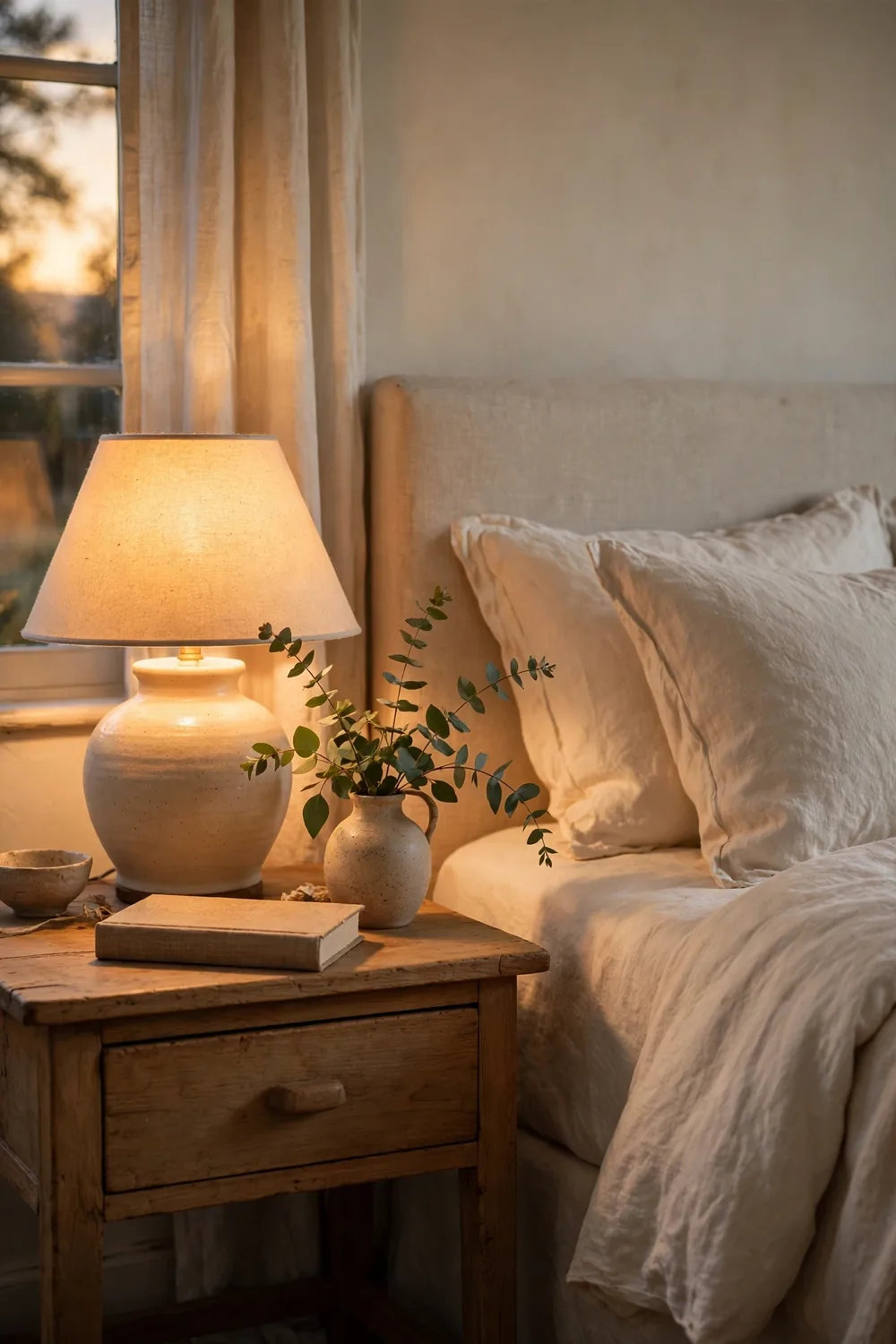
Then I took everything off, put back three things, and the room went quiet. The lamp glowed, the book waited, and the little vase of eucalyptus finally had room to be noticed. Nothing about the bedroom changed except that one surface, and yet the whole room felt calmer, like someone had turned the volume down.
The honest judgment is this: most nightstand problems are editing problems, not shopping problems. People buy a prettier tray or a nicer lamp when the real fault is too many objects competing for one small surface. Fix the count first, and even an ordinary nightstand looks intentional.
Why do nightstands collect clutter so fast?
A nightstand sits at arm’s reach, so it becomes the landing pad for everything the day leaves behind. Glasses come off here, the phone charges here, the book waits here, and the water glass stays here because getting up to take it to the kitchen feels like too much at 11 at night. Each object arrives with a good reason, and none of them ever leaves.
The surface is also small, usually 16 to 20 inches wide, so four or five objects already fill it. Add one more and the nightstand stops looking styled and starts looking stored. The eye has nowhere to rest, and the bedroom, which should be the calmest room in the house, starts the night already busy.
The rule below gives every object a job, and anything without a job goes somewhere else. Our cozy bedroom ideas guide uses the same logic at room scale: fewer things, each one chosen, makes a small bedroom feel bigger and slower.
What are the 7 steps to a calm nightstand?
Seven steps, in the order I would follow them on any nightstand, old or new.
1. Empty the surface completely
Start here, because you cannot edit what you cannot see. Take everything off the nightstand, every last object, and put it on the bed. Wipe the surface with a damp cloth. Now you have a blank rectangle, and the blankness is the point. A nightstand that starts empty gets styled on purpose. A nightstand that starts half full just gets rearranged.
Look at what came off. Most of it will not go back. The receipt, the hair tie, the dead pen, and the charger you never use can leave the bedroom entirely. Keep only the objects you can name a reason for, and put the rest in a drawer, a basket, or the trash.
2. Put the lamp on first
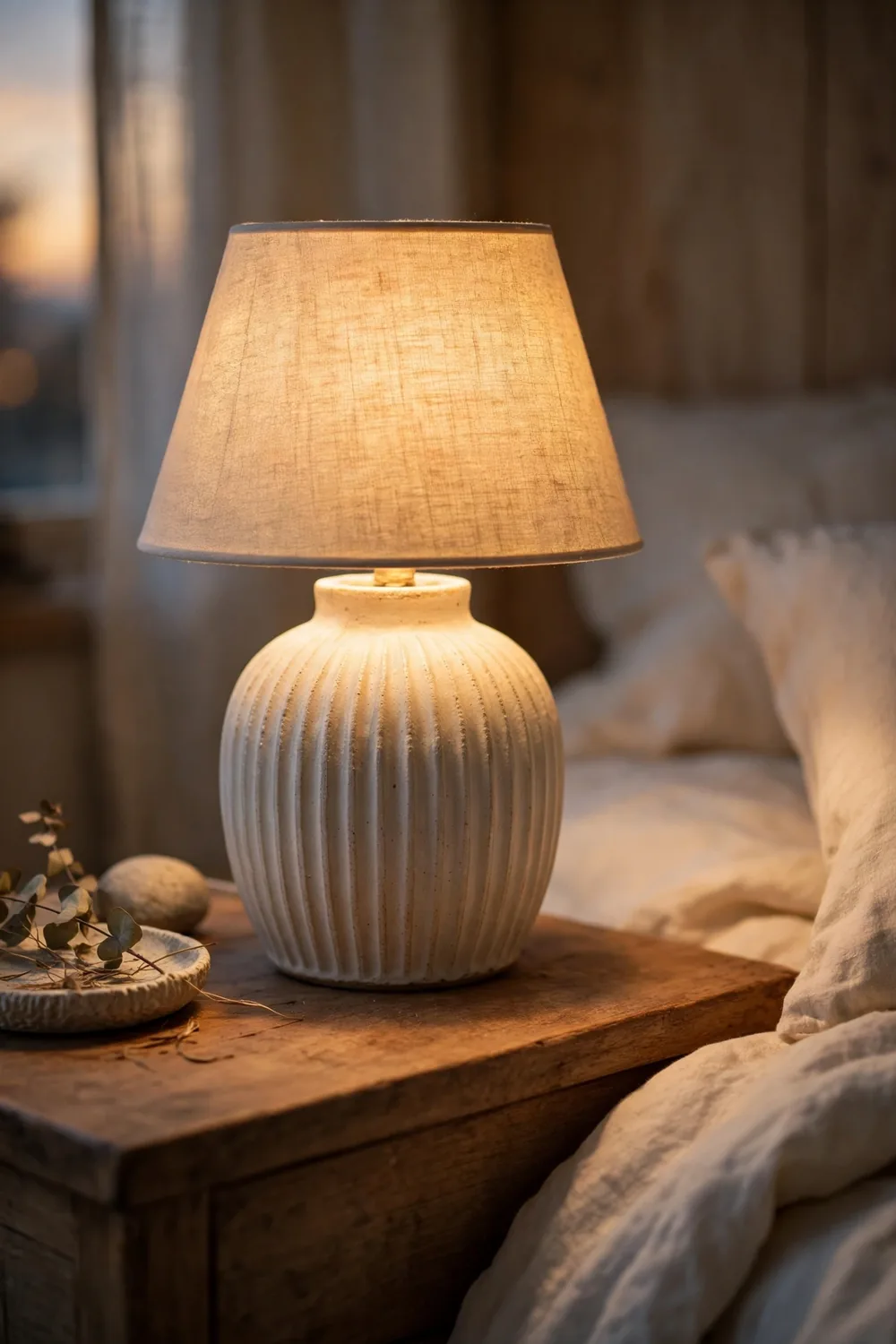
The lamp is the anchor, so it goes on before anything else. Place it on the side of the nightstand farthest from the bed, toward the wall or the outer edge, so the light falls across the bed instead of straight into your eyes. On a standard nightstand, that leaves the front half of the surface free for the other two objects.
Size matters more than style here. A lamp 24 to 30 inches tall suits most nightstands, with the bottom of the shade roughly at eye level when you sit up in bed. A lamp that is too short hides behind the pillow. A lamp that is too tall turns the nightstand into a lighthouse. If the lamp you own is the wrong height, stack two books under it before you buy a new one. That is a test, not a solution, and it will tell you the right height in one evening.
3. Add one thing you reach for at night
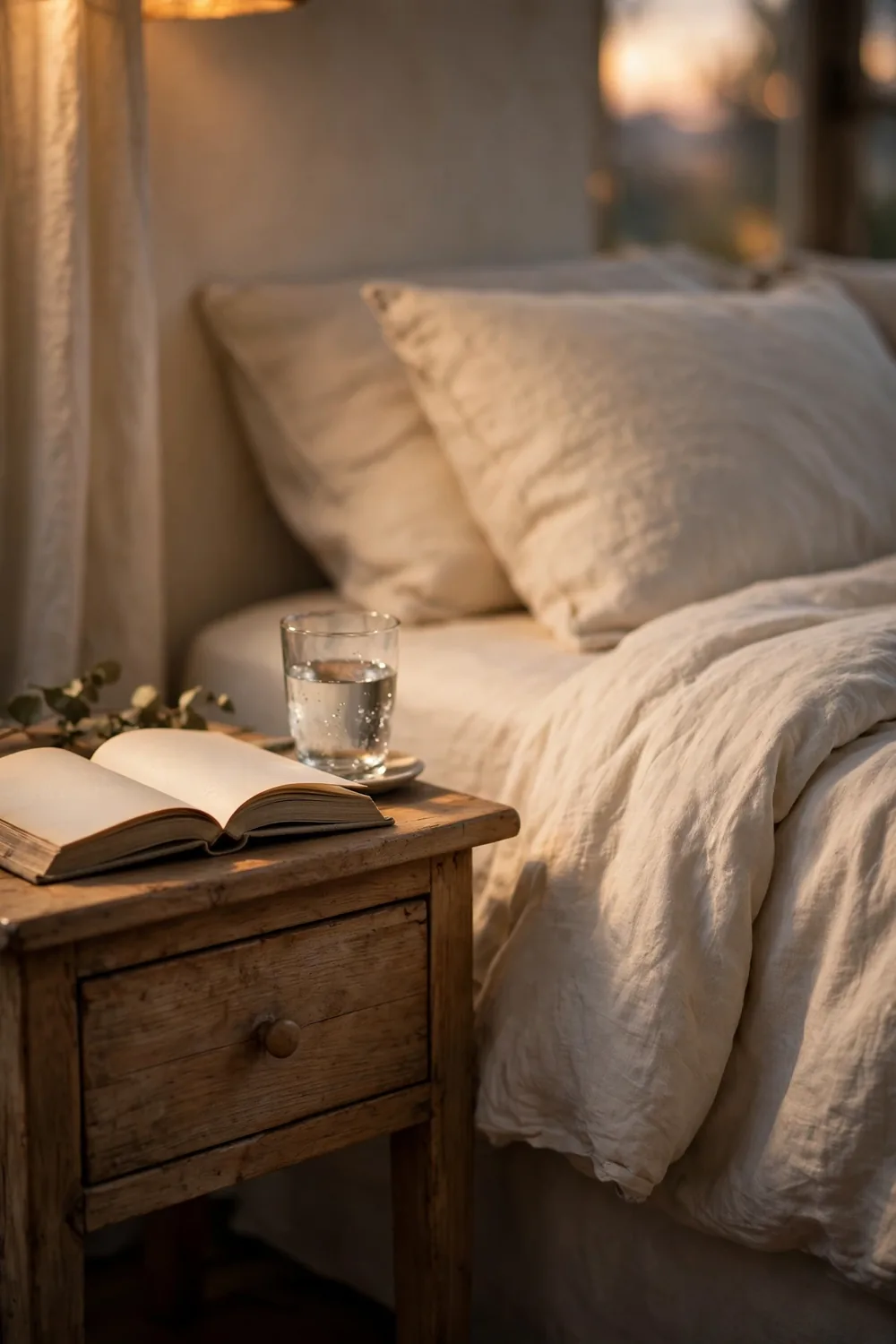
This is the practical object, the one that earns its place by being used. For most people it is a book, a glass of water, or a phone on a charger. Pick one, not all three, because the charger can live in the drawer with a short cable, and the water glass can sit on a coaster on the other side of the bed if you have two nightstands.
A book works best for most bedrooms. One book, lying flat or standing against the lamp base, reads as intentional. A stack of three books reads as a pile waiting to be shelved. Our bedding layering guide makes the same point about the bed itself: one layer done well beats three layers fighting each other, and the nightstand follows the same rule.
Choose the object you actually reach for, not the one that looks good in a photo. If you never read in bed, a book is decoration, not a tool, and it belongs in step 4 instead.
4. Add one thing that is only beautiful
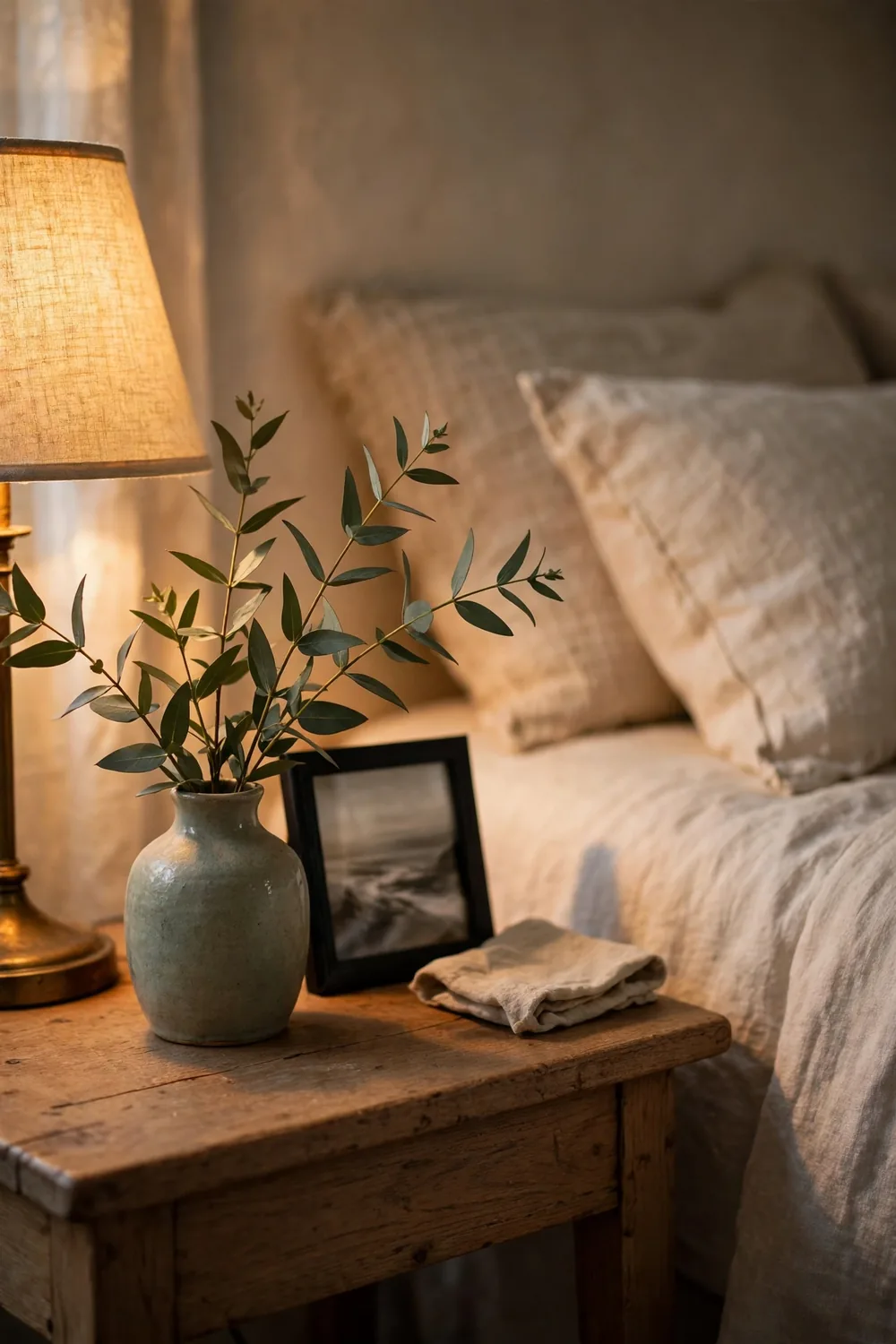
Now the third object, and the only one with no job except to look good. A small vase with two or three stems of eucalyptus, a framed photo, a ceramic dish, or a candle all work. The test is simple: if you took it away, would the nightstand still work? If the answer is yes, it is the beautiful object, and it belongs here.
Keep it small and low. The beautiful object should sit lower than the lamp and smaller than the practical object, so the lamp stays the tallest thing on the surface and the eye reads the arrangement as a little hill, not a flat line. A photo frame about 5 inches tall, a vase about 6 inches tall, or a candle in a short glass all fit the scale. Anything taller starts competing with the lamp.
This is also where the nightstand gets its personality. The lamp and the book could belong to anyone. The photo, the vase, or the little dish from a trip is the part that belongs to you.
5. Keep the tall things at the back
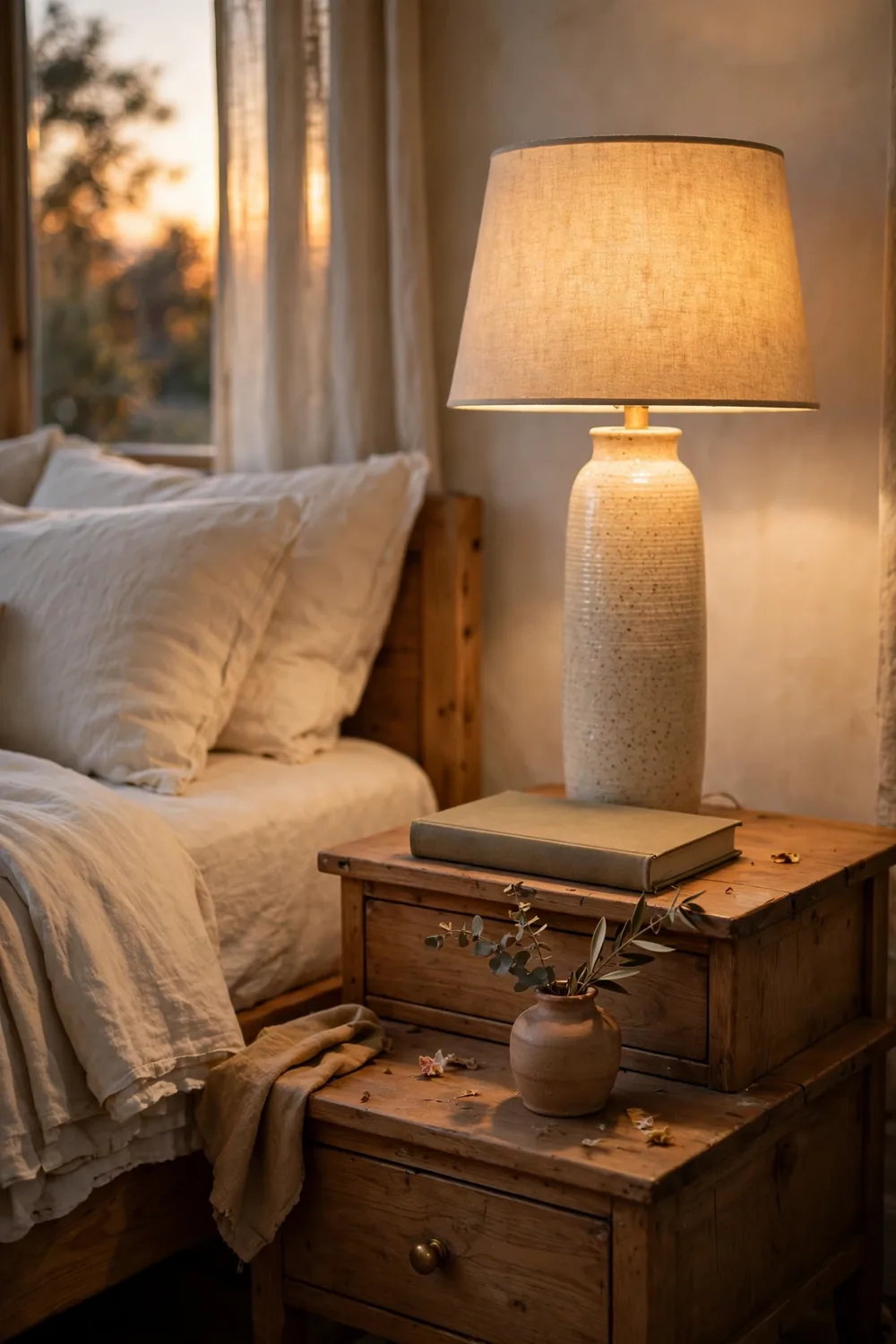
Height order is what makes three objects look styled instead of scattered. Put the tallest object at the back of the nightstand, against the wall, and the lowest object at the front edge. The lamp goes at the back, the book lies flat in the middle, and the small vase or photo sits at the front, where you can see it from the bed.
Think of it as a staircase from the front edge to the wall. Each step up is a little taller than the last, and the eye climbs it without thinking. When the tall object sits at the front instead, it blocks everything behind it, and the nightstand looks like a wall with a lamp in front of it.
Check the arrangement from the bed, not from standing in the doorway. You see the nightstand from the pillow every night, so sit on the bed, look over, and adjust until the three objects read as one small scene instead of three separate things.
6. Corral the small stuff on a tray
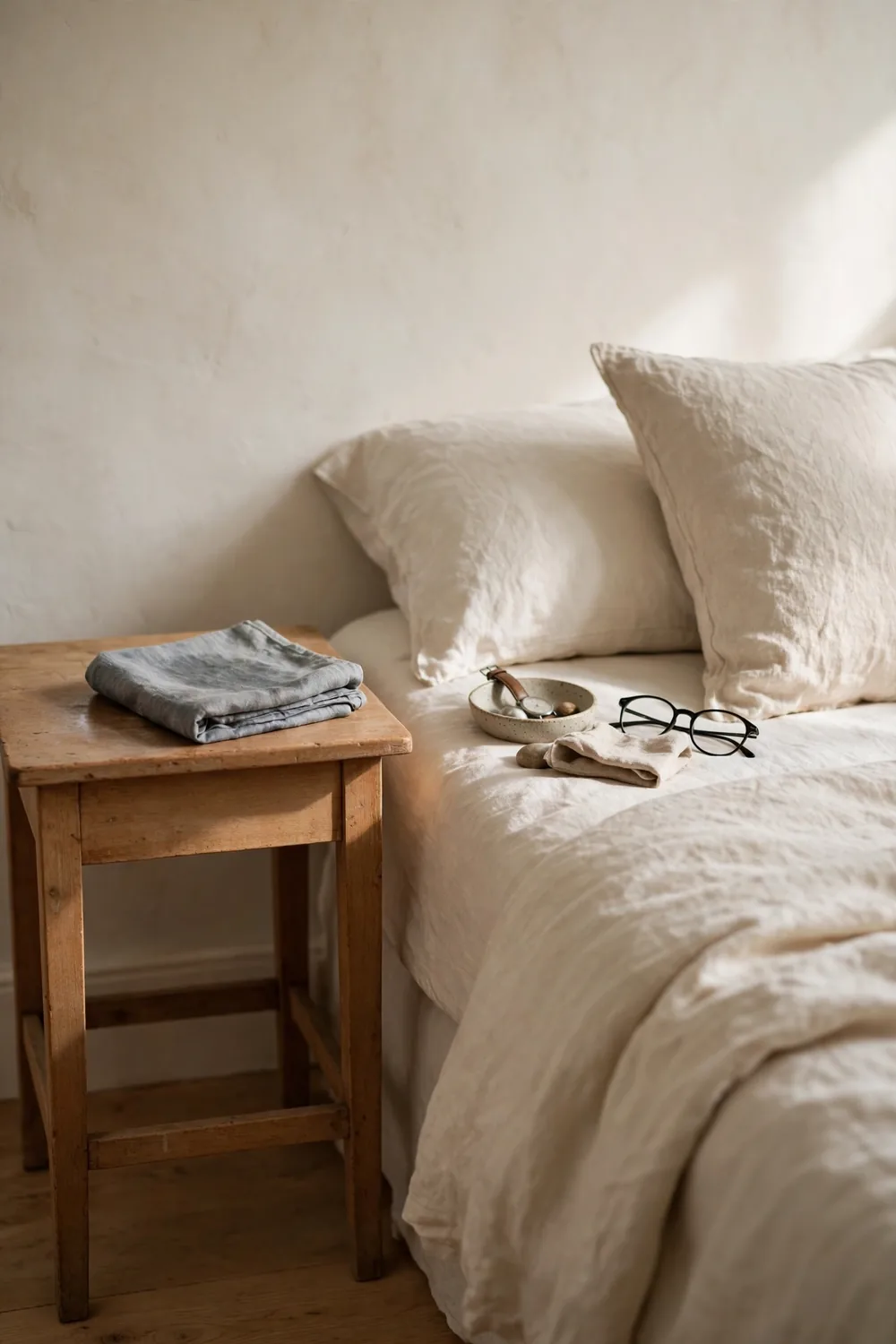
Some small things genuinely need to stay out, like glasses, lip balm, or hand cream. The fix is a tray, not a rule exception. A tray about 10 inches across turns four small objects into one object, at least to the eye, because the tray gives them a shared edge and a shared boundary.
Put the tray on the side of the nightstand nearest the bed, so the small things stay within reach and off the main surface. Keep the tray shallow, an inch deep at most, so the objects inside it stay visible and easy to grab in the dark. A wooden tray, a ceramic dish, or a woven coaster all work, as long as the tray itself is calm and plain. A busy tray on a small surface just adds a fourth pattern to the scene.
If the tray fills up, the rule still applies. Empty the tray once a week, keep only what you used that week, and let the rest go back to the drawer.
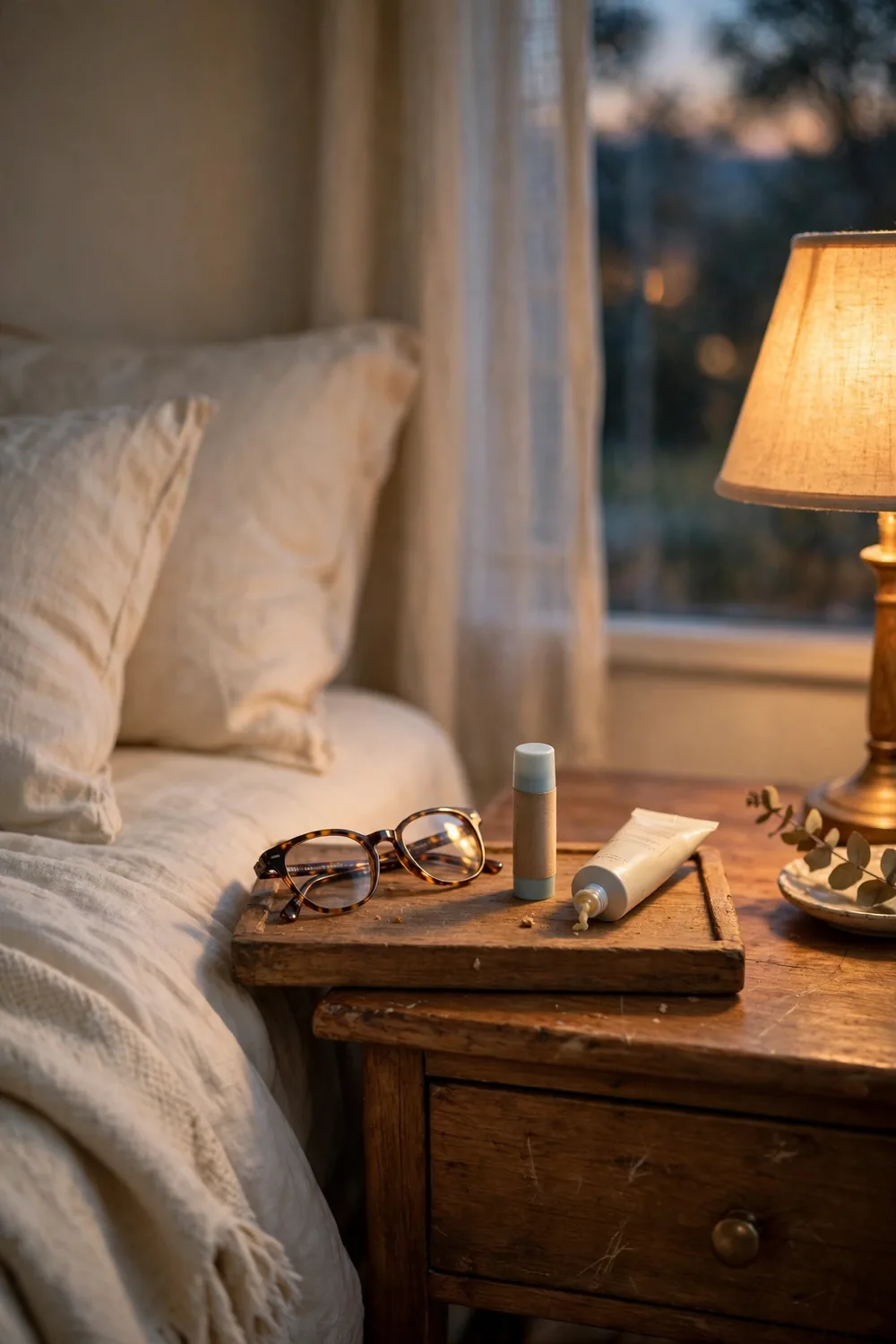
7. Break the rule on purpose, but only once
Here is the honest part: three objects is a starting point, not a law. There are three times breaking it makes the nightstand better. First, if you read every night, a second book is fine, because a reading pile is a real habit and the nightstand should serve it. Second, if the nightstand is wide, wider than 24 inches, a small plant at the far end fills the empty half without crowding the three main objects. Third, if two people share one nightstand, each person gets one practical object, so the count becomes four, and that is still calm because each object has a clear owner.
Break the rule in only one of these ways at a time. A reading pile plus a plant plus a second charger is not breaking the rule, it is abandoning it, and the nightstand will look full again within a week. Pick the one exception that fits your life, name it out loud, and let everything else follow the rule.
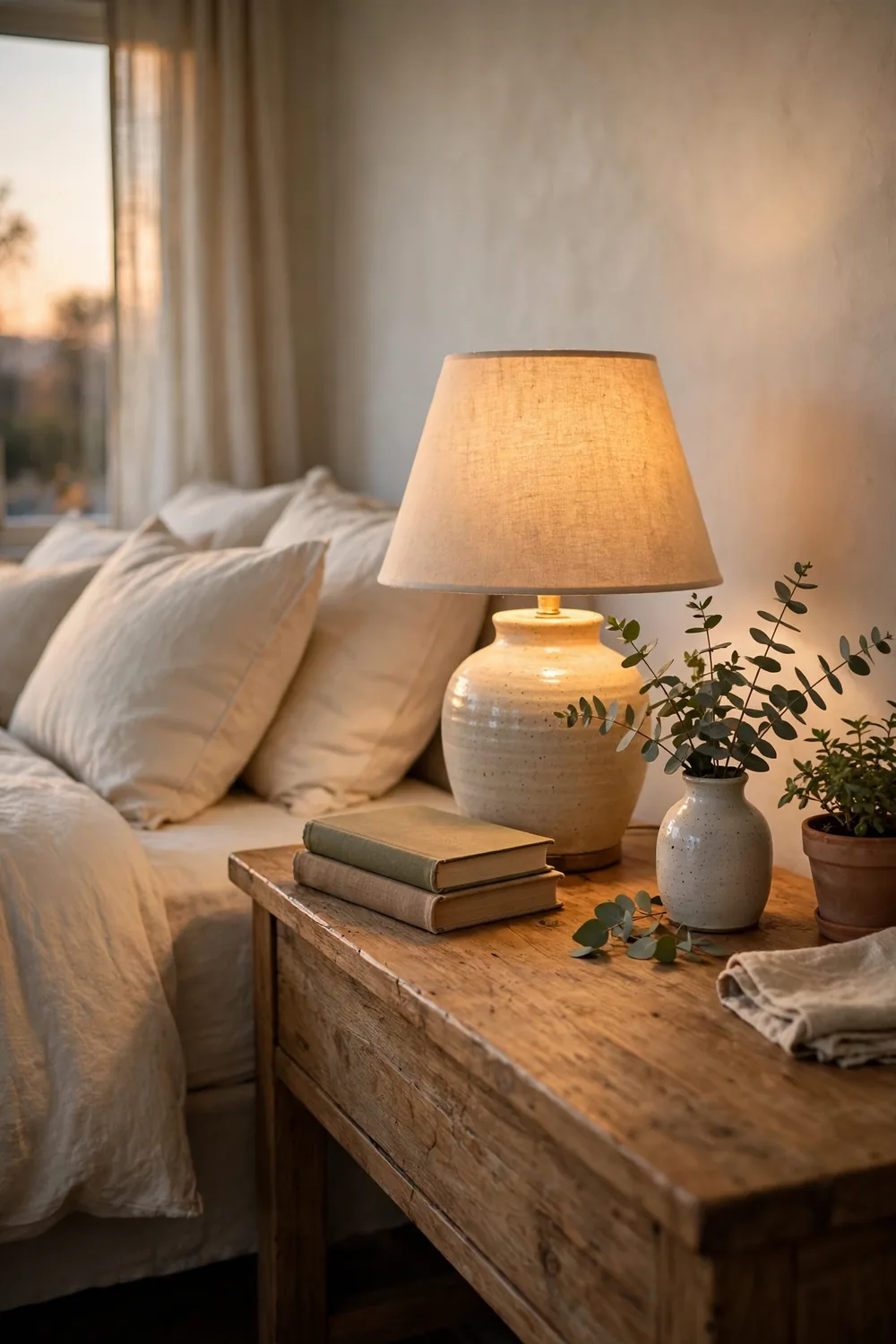
What went wrong the first time I styled ours?
I styled our nightstand the way magazines do it, with five objects, because five looked fuller in the photo. I had the lamp, a stack of three books, a vase, a candle, and a framed photo, and from the doorway it looked lovely. From the bed, it was a problem. Every night I knocked the candle reaching for my glasses, and the vase wobbled every time I set the water glass down.
I lived with it for two weeks before I admitted the photo had lied to me. The fix took 10 minutes: the candle moved to the dresser, two books went back to the shelf, and the glasses got a small tray. Three objects stayed, and the nightstand finally worked as well as it looked.
Three objects is not about having less. It is about giving the few things you keep enough room to be noticed, and enough room for your hand to find them in the dark.
FAQ
How many things should be on a nightstand? Three is the number that works on most nightstands: a lamp, one thing you use every night, and one thing that is only beautiful. A wide nightstand over 24 inches can hold a fourth object, like a small plant, without looking crowded.
Where should the lamp go on a nightstand? Put the lamp on the side farthest from the bed, toward the wall or the outer edge, with the bottom of the shade roughly at eye level when you sit up in bed. A lamp 24 to 30 inches tall suits most nightstands.
What should I put on my nightstand if I do not read in bed? Keep the lamp, then add the one thing you actually reach for, like a glass of water or your phone, plus one beautiful object like a small vase or a photo. Do not use a book as decoration if you never open it.
How do I keep a nightstand from getting cluttered again? Give the small things a tray about 10 inches across, and empty the tray once a week. Anything you did not use that week goes back in the drawer. The weekly reset takes two minutes and keeps the three object rule working.
Can a nightstand have more than three objects? Yes, if you break the rule in one clear way: a second book for a nightly reader, a small plant on a wide nightstand, or one practical object per person when two people share. Break it once, not three times at once.