Reading Corner Ideas: Chair Light and Storage That Fit Together
Short answer: A reading corner works when the chair, the light, and a small bit of storage sit within arm’s reach of each other. Plan on a corner about 36 inches wide, pick a chair with a seat you can sink into, and set the light so it falls over your shoulder onto the page. The seven steps below show how to arrange each piece.
| Time | About 2 hours to arrange, plus a week to live with it |
| Difficulty | Beginner; no tools, just moving furniture |
| Space | A corner about 36 to 48 inches wide |
A reading corner is the smallest room in the house, and it only needs three things to work: a chair that invites sitting, a light that falls on the page, and a place for the book when you set it down. When those three sit close together, the corner gets used every day. When one of them is missing, or sits across the room, the corner becomes a place where books pile up and nobody sits.
The mistake most people make is starting with the chair. Start with the fit instead: the chair, the light, and the storage have to work as one small arrangement, each within reach of the seated reader.
Why do reading corners end up unused?
A corner fails for one of three reasons, and all three are easy to spot. The chair is too upright, so sitting in it feels like waiting, not resting. The light sits behind the chair or across the room, so the page stays dim while the rest of the room glows. Or there is nowhere to put the book down, so the book ends up on the floor or a stack on the windowsill, and the corner slowly turns into storage.
The fix is not a bigger corner or a better chair. It is the distance between the pieces. Sit in the chair, reach out, and check: can you touch the lamp switch, the shelf, and the side table without standing up? If the answer is yes for all three, the corner will get used. Our cozy bedroom ideas guide uses the same logic at room scale: fewer pieces, each one placed where the body actually needs it, makes a small space feel calm instead of crowded.
What are the 7 steps to a reading corner that fits together?
Seven steps, in the order we suggest for any corner, new or rearranged. Each step adds one piece, and each piece earns its place by being within reach of the chair.
1. Choose a chair you can sit in for a whole chapter
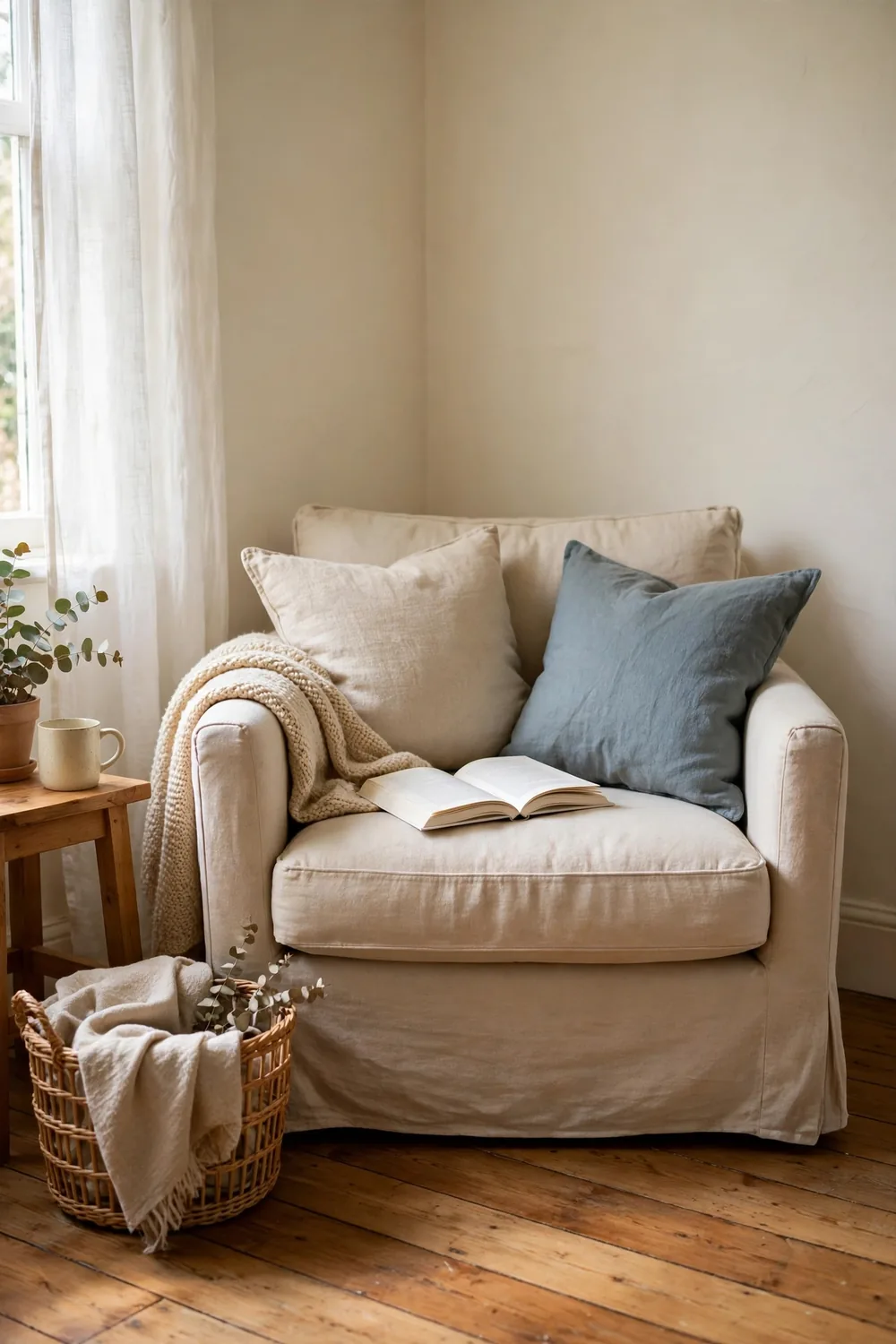
The chair decides whether you stay or get up after ten minutes. Look for a seat depth of about 20 to 22 inches, which lets most adults sit back without the front edge pressing behind the knees, and a seat height of about 17 to 19 inches, which lets feet rest flat on the floor or on a small footstool. Test the chair the way you will actually use it. Sit with a book open for five minutes, not five seconds. If you have to keep adjusting, the chair is the wrong shape for reading, however good it looks from the doorway. Leave about 3 inches between the chair back and the wall so the fabric can breathe and the wall stays clean.
2. Put the light over your shoulder
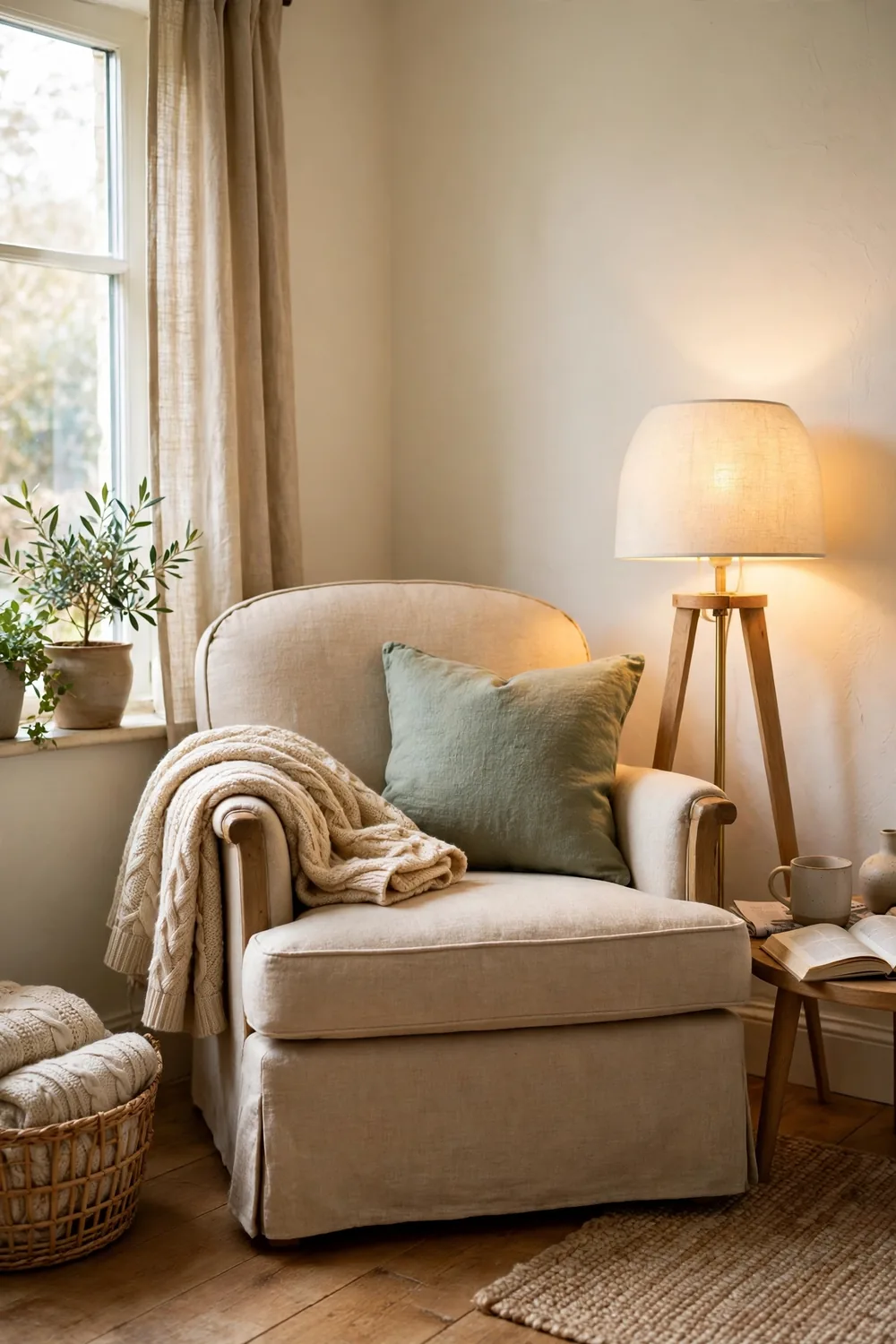
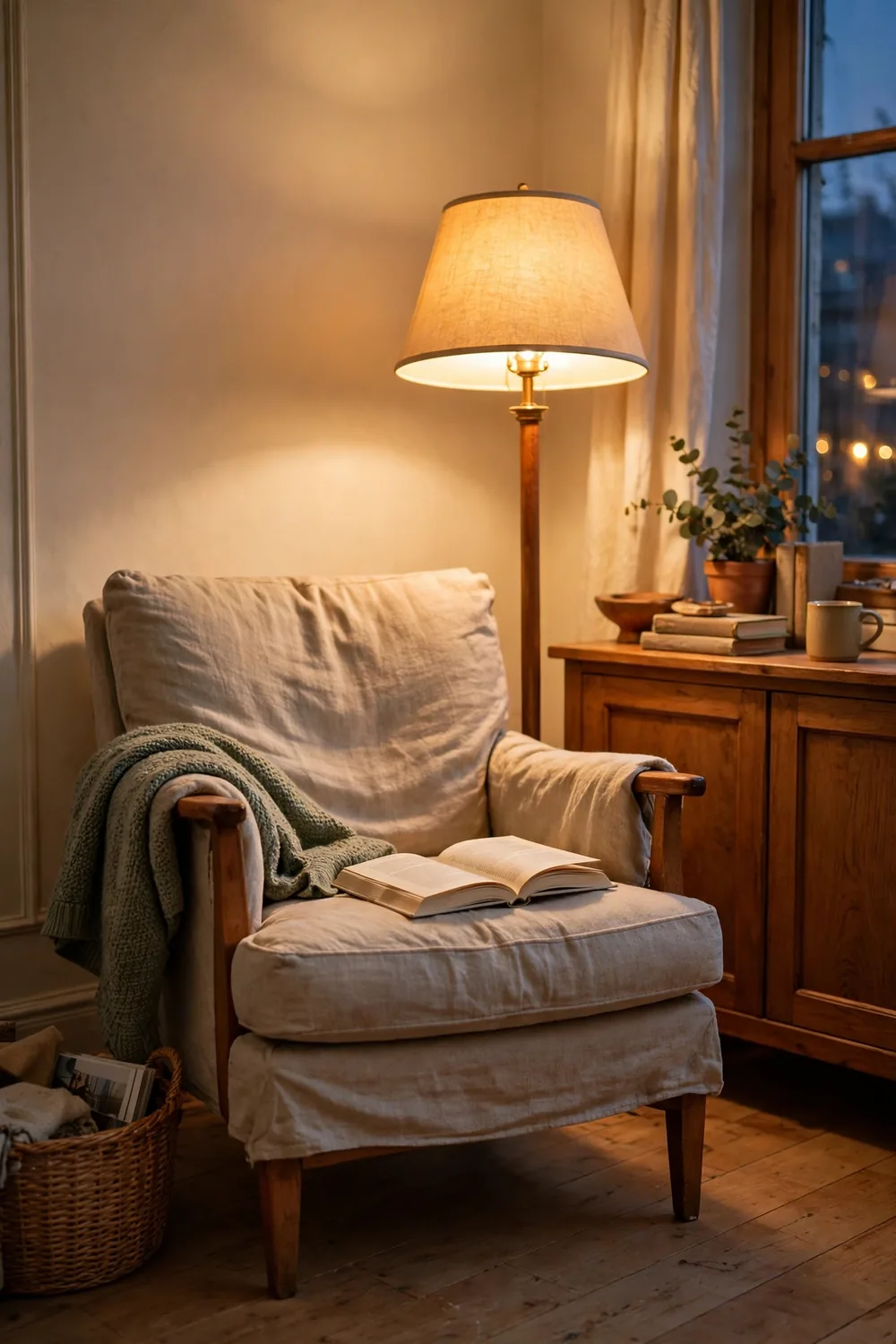
Light decides whether the corner is for reading or just for looking at. The best position is over the shoulder you read from, usually the shoulder on the side of your dominant hand, so the light falls forward onto the page and your own head never blocks it. A floor lamp about 58 to 64 inches tall suits most reading chairs, with the shade sitting just above eye level when you are seated.
Warm light suits a reading corner better than cool light. A bulb around 2700K gives the page a soft glow that feels like evening. Check the light from the chair, not from standing. Sit down, open a book, and look at the page. If the page is evenly lit and the shade never shines straight into your eyes, the position is right.
3. Add a small shelf within reach
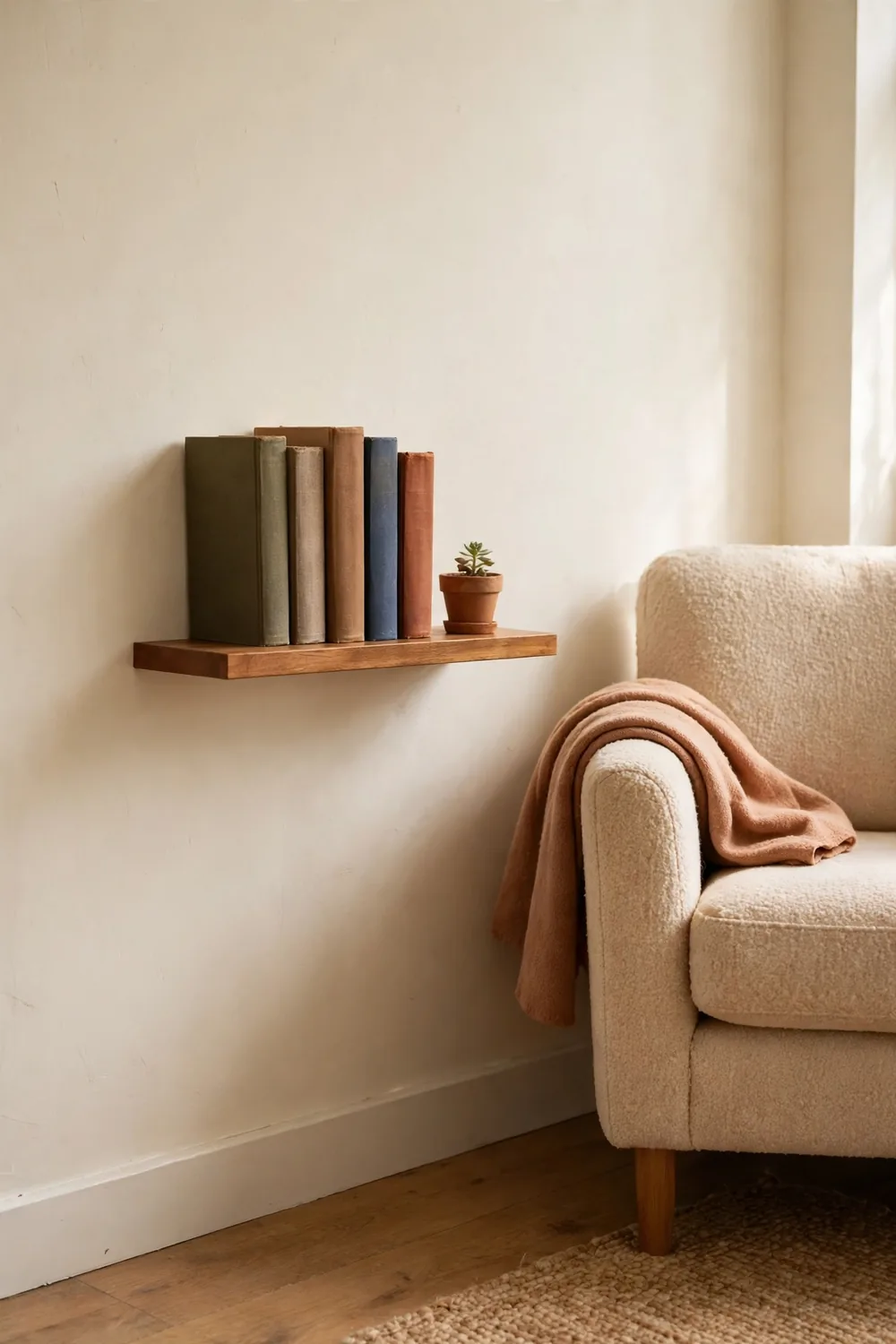
A reading corner needs a home for the books you are reading now, not the whole library. A small floating shelf, a narrow bookcase, or a wall ledge beside the chair holds the current book, the next one, and a small notebook. Keep it within arm’s reach of the seated reader, about 18 to 24 inches from the chair, so putting a book back is easier than leaving it on the floor.
Five or six books is plenty for one shelf, with a little empty space so the shelf reads as part of the room, not a warehouse.
4. Layer a throw blanket for warmth and texture
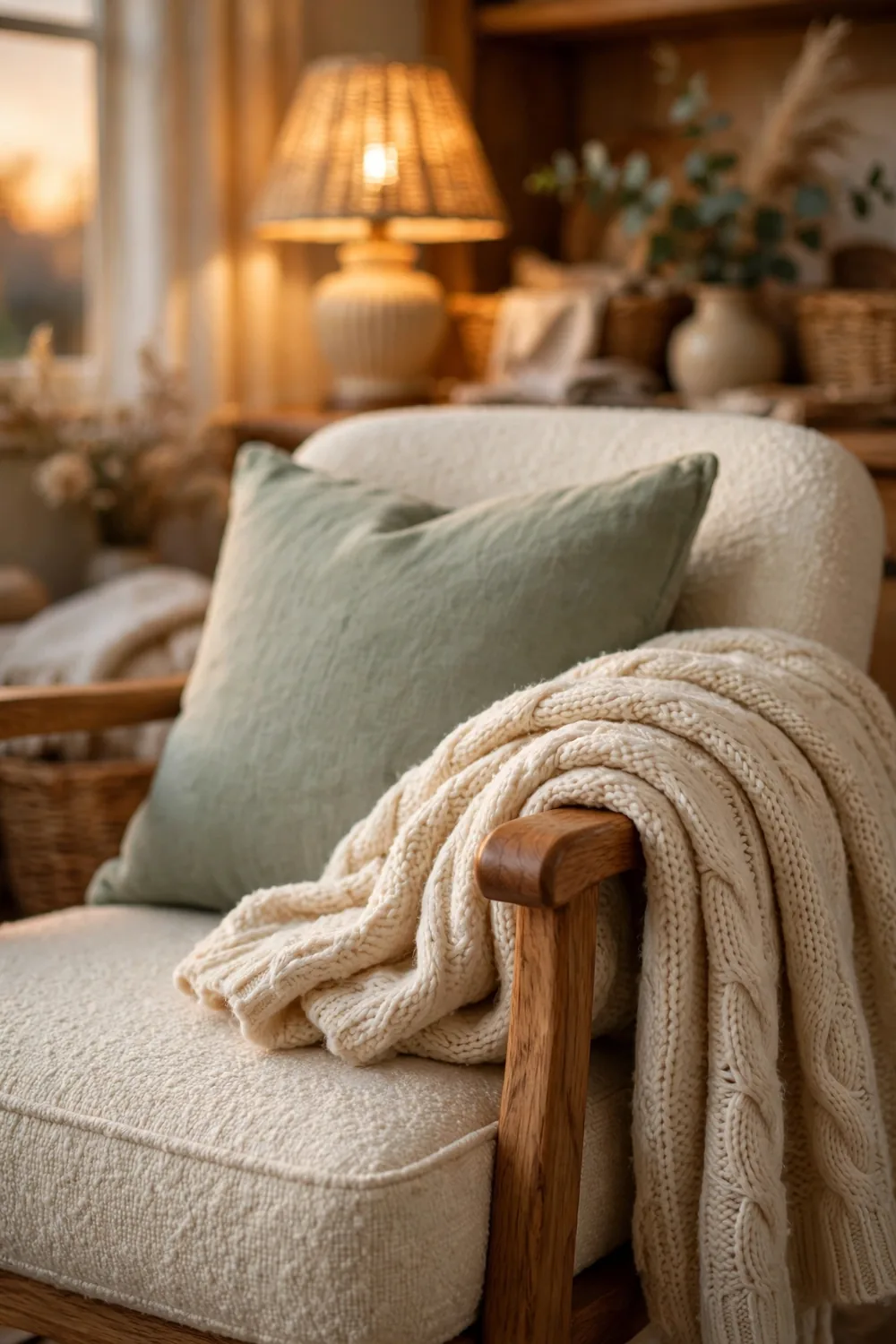
A throw blanket is the piece that makes a chair feel like a reading chair. Fold it over one arm of the chair or drape it across the back, where it is easy to pull over your knees without standing up. A throw about 50 by 60 inches covers the lap and shoulders of most adults, and a soft knit, wool blend, or brushed cotton suits a corner that gets used every evening.
Texture matters more than pattern here. A blanket with a visible weave or a soft nap adds warmth to the corner even when it is folded and untouched, and it stops the chair from looking flat and staged. Keep the blanket washable, so putting the corner back together after use takes five seconds.
5. Give the corner a side table
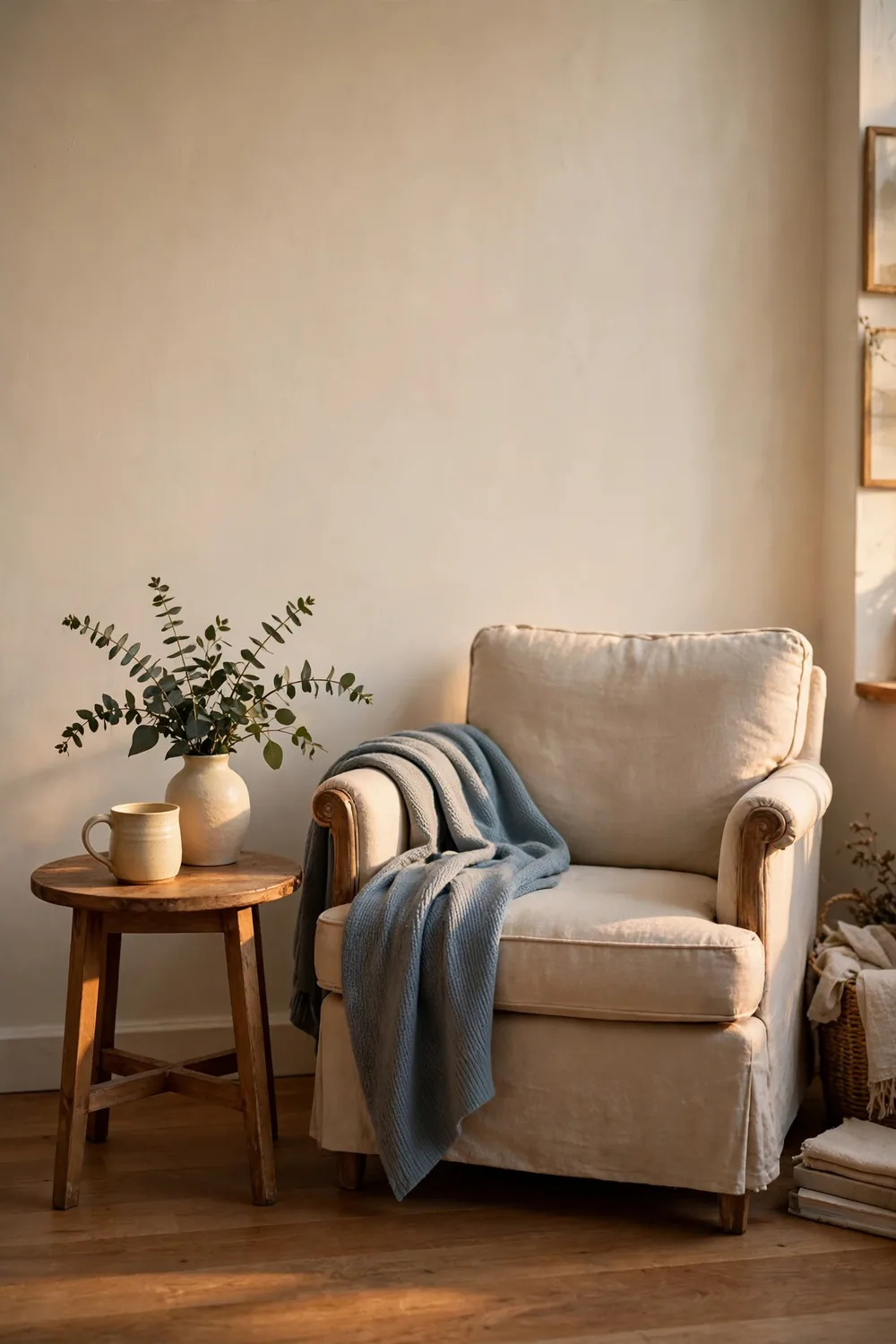
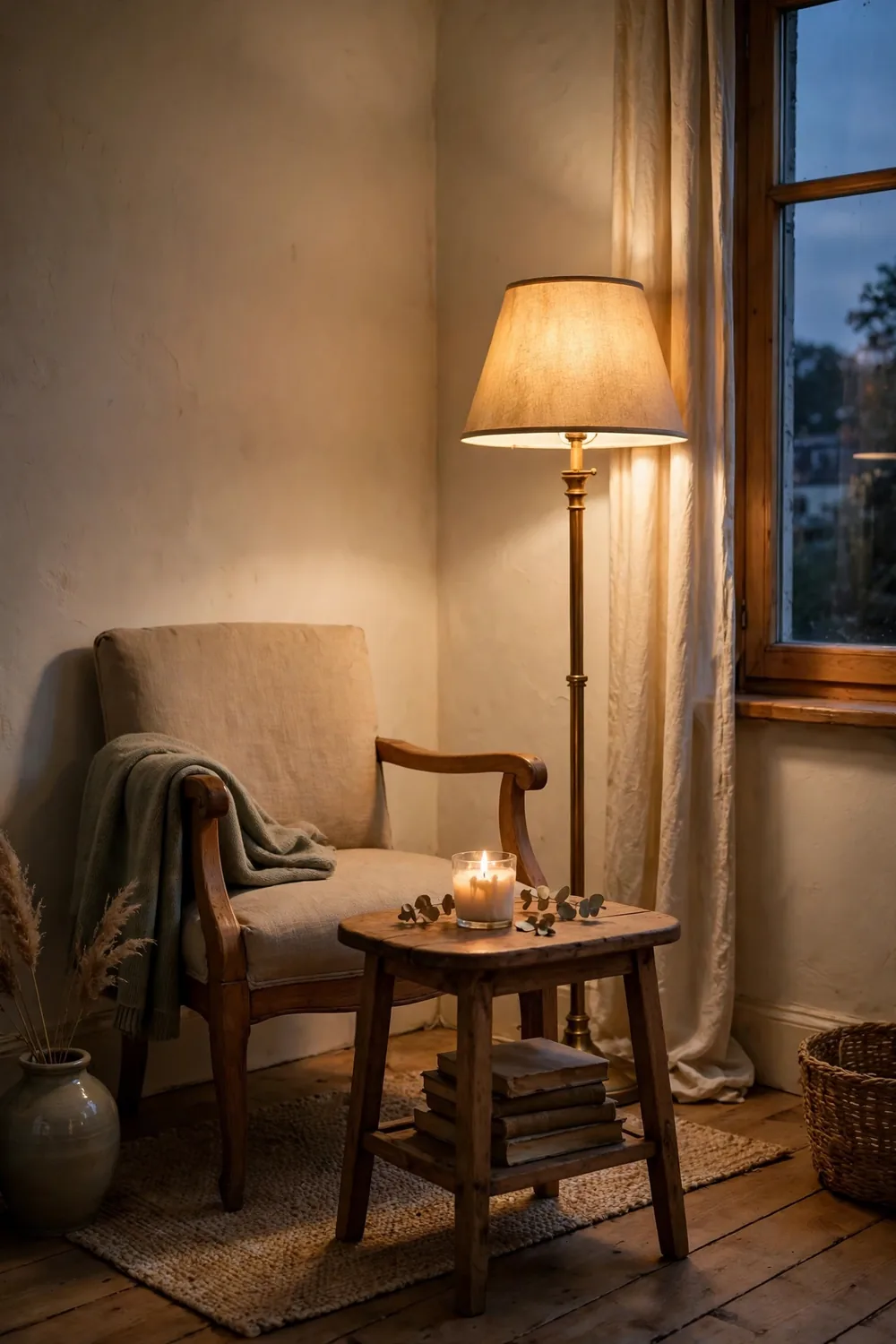
A side table is the landing pad for everything the hands hold while reading: a mug, a pair of glasses, a phone, a pencil. Without one, all of those things end up on the floor or balanced on the arm of the chair, and the corner starts to look cluttered even when it is tidy. A small round table about 16 to 18 inches across fits most corners, and a table with a lower shelf holds the book you just finished.
Place the table on the side of the chair opposite the lamp, so the light and the table balance each other and both stay within reach. A side table follows the same logic as our nightstand styling guide: one useful object, one beautiful object, and nothing extra.
6. Anchor the corner with a rug
A rug tells the eye where the corner begins and the rest of the room ends. Without one, the chair floats in the room and the corner never quite feels like a place. With one, even a chair in an open room reads as a destination. A rug about 3 by 5 feet suits a single chair with a small table, and a 4 by 6 foot rug suits a chair with a footstool or a small shelf beside it.
Place the rug so the front legs of the chair sit on it, with about 6 inches of rug showing in front of the chair. That overlap is what anchors the arrangement. Keep the rug quiet: a low pile in a warm neutral, with a subtle pattern if any, keeps the focus on the chair and the light.
7. Set the evening glow
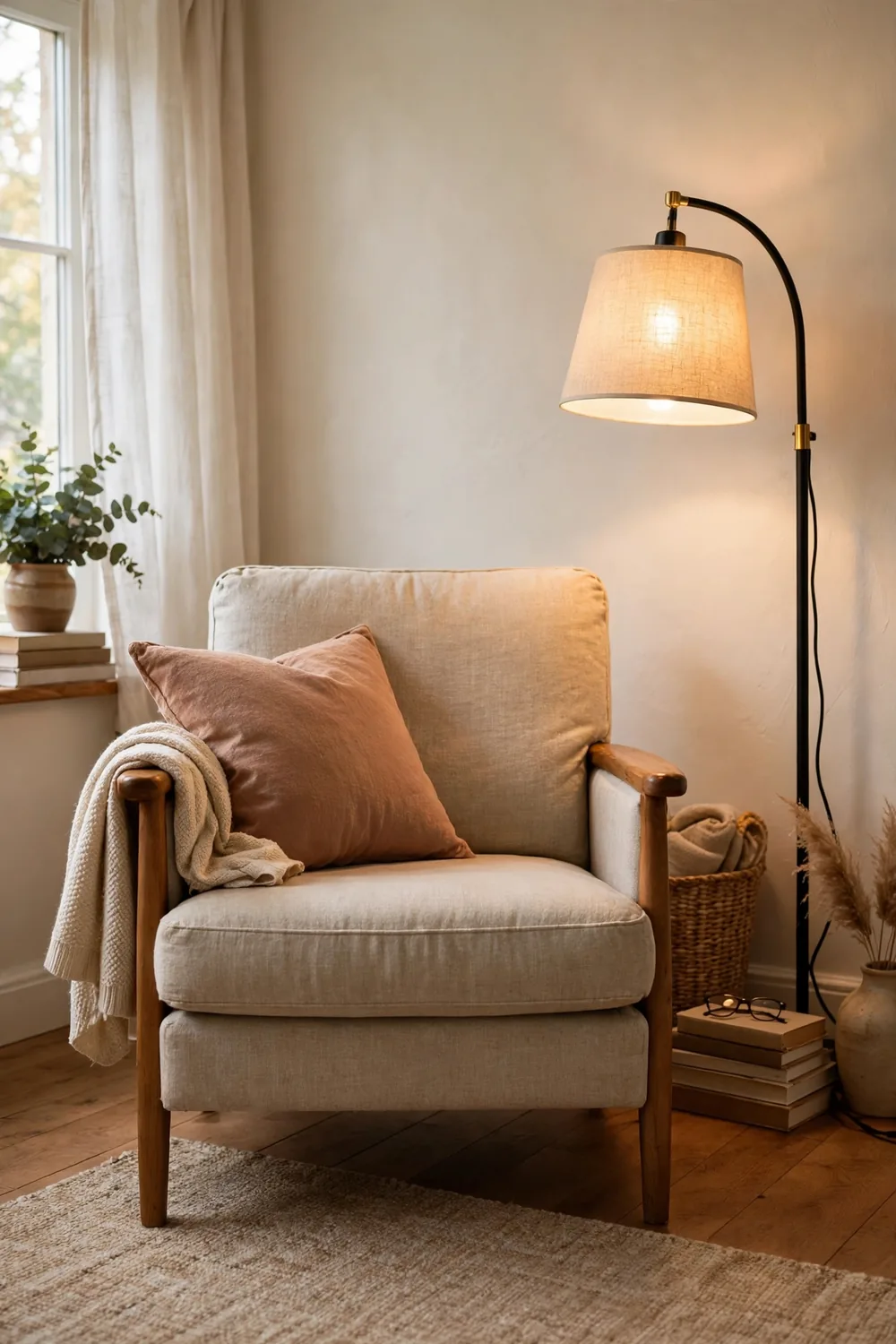
The last step turns a daytime corner into an evening habit. As daylight fades, the corner needs a second, lower light: a small candle on the side table, a tiny lamp on the shelf, or the floor lamp turned down to its lowest setting. The goal is a pool of warm light around the chair while the rest of the room goes dim, so the corner feels like a small room inside the room.
A dimmer on the floor lamp does this job best, because it lets the same lamp serve both jobs: bright for reading, low for winding down. Try the corner at night before calling it done. Sit down at the hour you usually read, turn on the evening light, and look around. If the chair glows and the rest of the room fades, the corner is finished.
Common mistakes
Three patterns show up in almost every reading corner that never gets used, and each one has a simple fix.
The chair faces the room, not the light. A chair turned toward the television or the doorway puts the light behind the reader, so the page stays in shadow. Fix it by turning the chair about 45 degrees toward the lamp, so the light falls over the shoulder and the page stays bright.
There is nowhere to put the book down. A corner with a chair and a lamp but no table or shelf forces the book onto the floor, and a book on the floor means the corner is already messy. Fix it by adding the smallest table that fits, even a stool, so the current book always has a home.
The corner collects clutter because storage is too far. When the shelf sits across the room, books, mugs, and chargers pile up on the chair instead. Fix it by moving the shelf within arm’s reach of the chair, about 18 to 24 inches away, and keeping only the current books on it.
Editor’s pick
If we had to start a reading corner from nothing, we would buy the chair and the lamp first and add the rest over a month. The chair decides whether you stay, the lamp decides whether you can see, and everything else, the shelf, the table, the rug, the throw, only makes a corner you already use feel better. Start with those two, live with them for a week, and let the corner tell you what it still needs.
A reading corner does not need to be big. It needs to be close: chair, light, and book all within one reach, so sitting down is easier than walking past.
FAQ
How much space does a reading corner need? A corner about 36 to 48 inches wide fits a chair, a floor lamp, and a small side table. A rug about 3 by 5 feet anchors the arrangement.
What kind of chair works best for reading? An armchair with a seat depth of about 20 to 22 inches, a seat height of about 17 to 19 inches, and arms to rest your elbows on. Test it with a book open for five minutes before deciding.
Where should the light go in a reading corner? Over the shoulder you read from, so the light falls forward onto the page. A floor lamp about 58 to 64 inches tall, or a wall sconce at the same height, keeps the shade just above eye level when seated.
How can a reading corner stay tidy? Give every object a home within reach: a shelf for the current books, a side table for the mug and glasses, and a folded throw on the chair arm. Clear the table back to two or three objects each evening.
Can a reading corner work in a bedroom? Yes, a bedroom is one of the best places for it, since the corner is already quiet and private. Place it near the window for daylight reading and keep the lamp warm for evenings.
Related guides
- Cozy Bedroom Ideas for Better Sleep and Slower Mornings
- Nightstand Styling: The 3-Object Rule and When to Break It
- Bedding Layering Guide: How Hotels Make a Bed Look Inviting
- Small Living Room Ideas That Actually Make the Room Feel Bigger