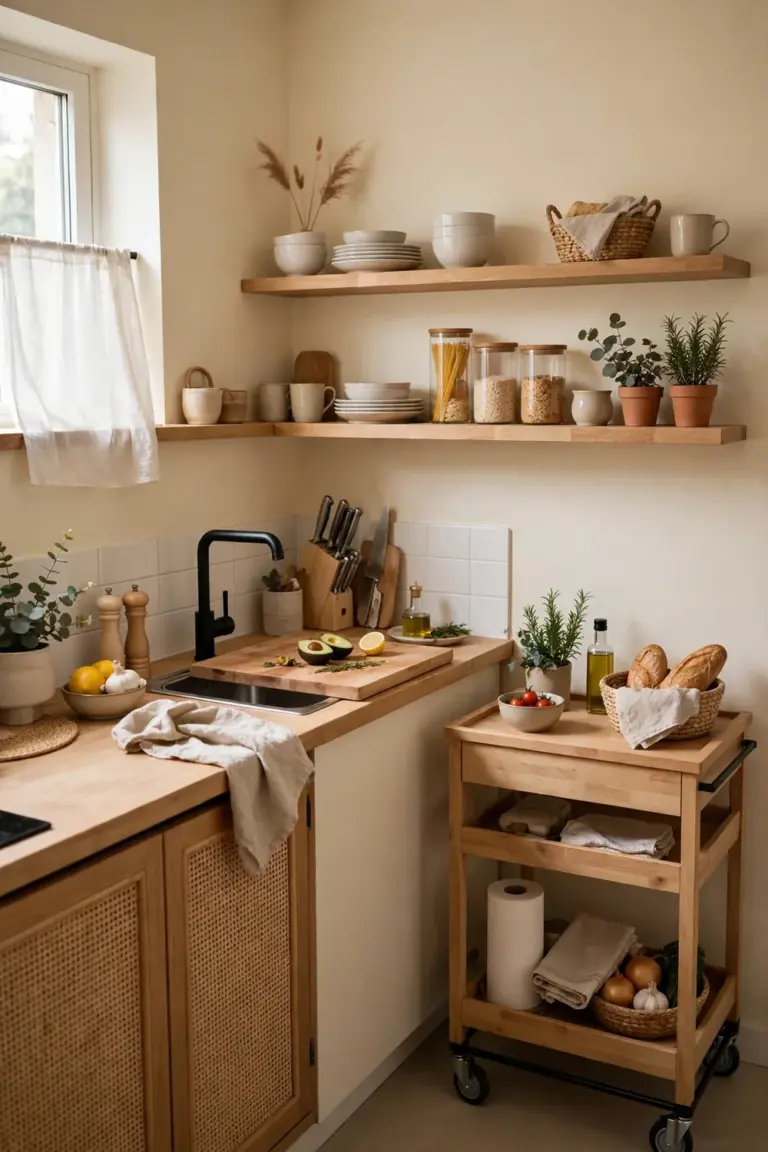
Mirror Placement Rules: Where Mirrors Help and Where They Hurt
A mirror in the wrong spot makes a room feel restless before anyone can name the reason. The fix is simple: center most mirrors 57 to 60 inches from the floor, the same eye level galleries use, and let the reflection earn its place. The seven rules below show where mirrors help, where they hurt, and how to hang one in about 20 minutes with a level and a pencil.
Mirrors are the only decor that shows a room back to itself. That is why placement matters more than the frame, the shape, or the size. A mirror across from a window doubles the daylight in a room. The same mirror across from a cluttered shelf doubles the clutter, and a mirror hung too high reflects the ceiling instead of the room.
Think of a mirror as a window you get to aim. Point it at something worth seeing twice and the room feels larger, brighter, and calmer. Point it at a blank wall or a ceiling fan and it adds nothing.
Why does mirror placement matter more than the mirror itself?
A mirror adds no light of its own. It borrows light from a window or a lamp and sends it somewhere new, which means the position decides everything. A well placed mirror can make a dark hallway feel open and a plain wall feel intentional. A badly placed mirror does the opposite: it shows the messiest corner twice.
Three habits cause most of the trouble: hanging too high, facing the wrong view, and choosing a size that fights the furniture below it. A mirror hung at standing eye level looks fine when you walk past it and wrong when you sit down, where you actually spend time in the room. A mirror facing a blank wall wastes the best trick mirrors have. A tiny mirror over a wide console looks lost, while a huge mirror over a narrow table overwhelms everything around it. The fix for all three is the same: decide what the mirror should reflect first, then choose the height and the size to match.
What are the 7 mirror placement rules that work in almost any room?
Seven rules, from the height rule to the grouping rule.
1. Hang it at eye level
The center of the mirror should sit about 57 to 60 inches from the floor, the same height galleries use for art. That height puts the reflection at standing eye level and keeps it useful from a chair, where the center of the mirror still lands near the middle of the view. Measure from the floor to the center of the mirror, not to the top of the frame, and mark the spot with a pencil before drilling anything.
The rule bends in two cases. Over a sofa or a console, the mirror can sit a little lower, about 6 to 8 inches above the furniture, because the furniture sets the sightline. In a bathroom, the center should match the eye level of the people who use it every day. Time note: measuring and marking takes about 5 minutes, and hanging takes about 10 more.
2. Put it across from a window
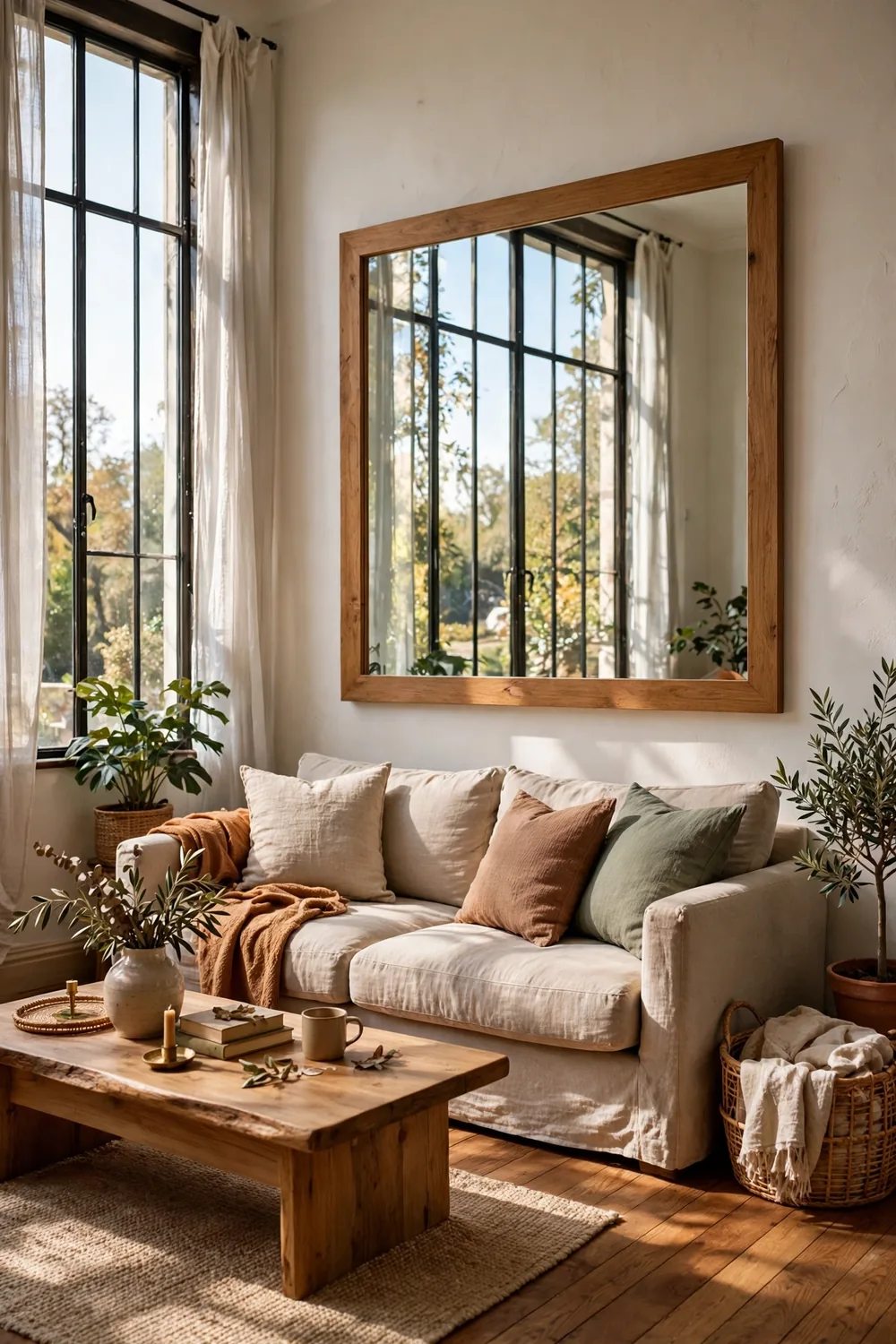
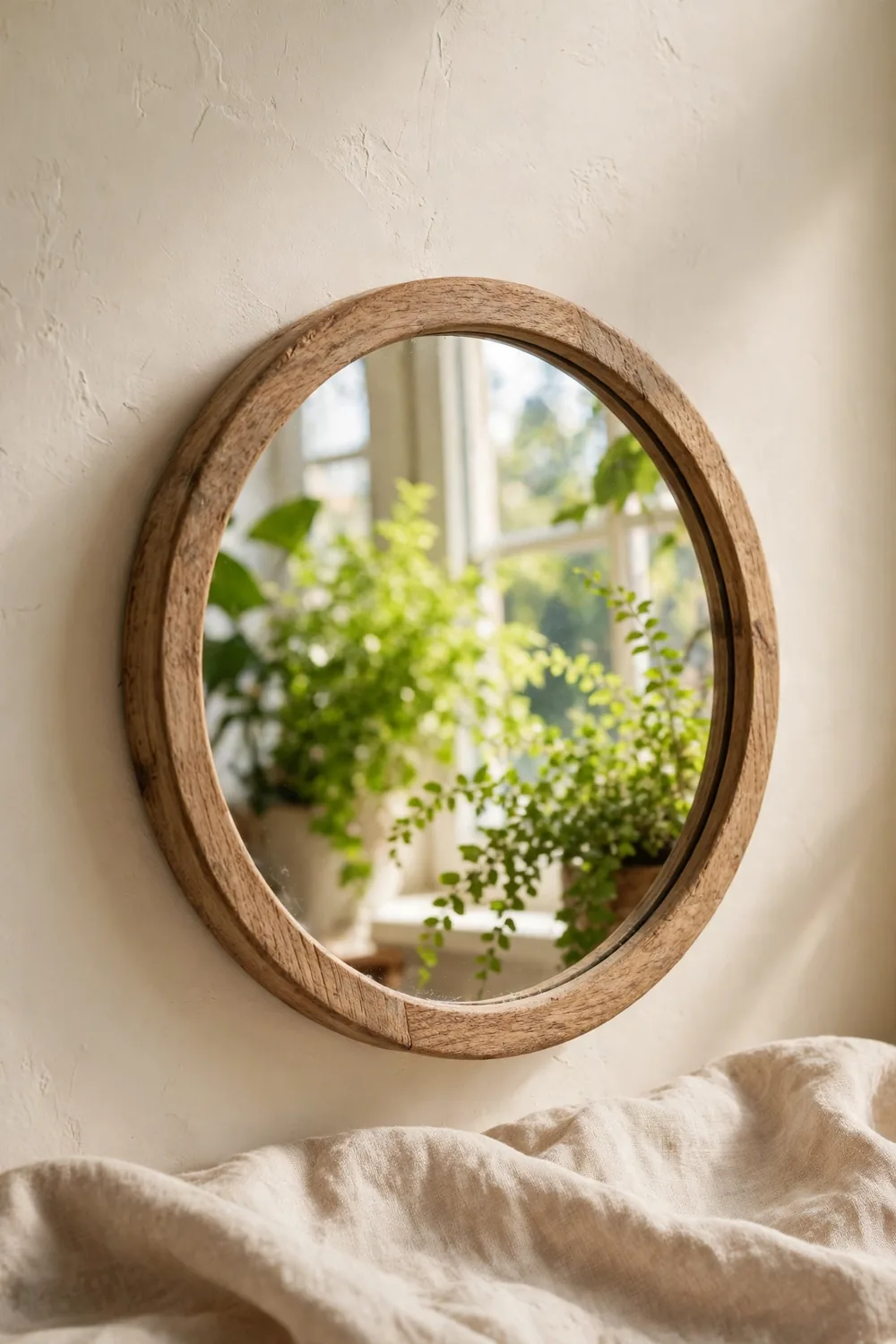
The single most useful mirror position in any home is directly across from a window. The mirror catches the daylight and sends it deeper into the room, so a dark corner near the back wall gets a share of the light. It also doubles the view, which matters most in a small room where the window is the best thing on the wall.
Stand where the mirror will hang and look at what it will face. If the view is sky, trees, or a garden, the mirror earns its place. If the view is a brick wall or a parked car, shift the mirror a few feet to one side until it catches the open sky instead. A mirror beside a window works too, angled slightly toward the glass. Time note: about 10 minutes to test positions with a helper holding the mirror.
3. Anchor it over furniture
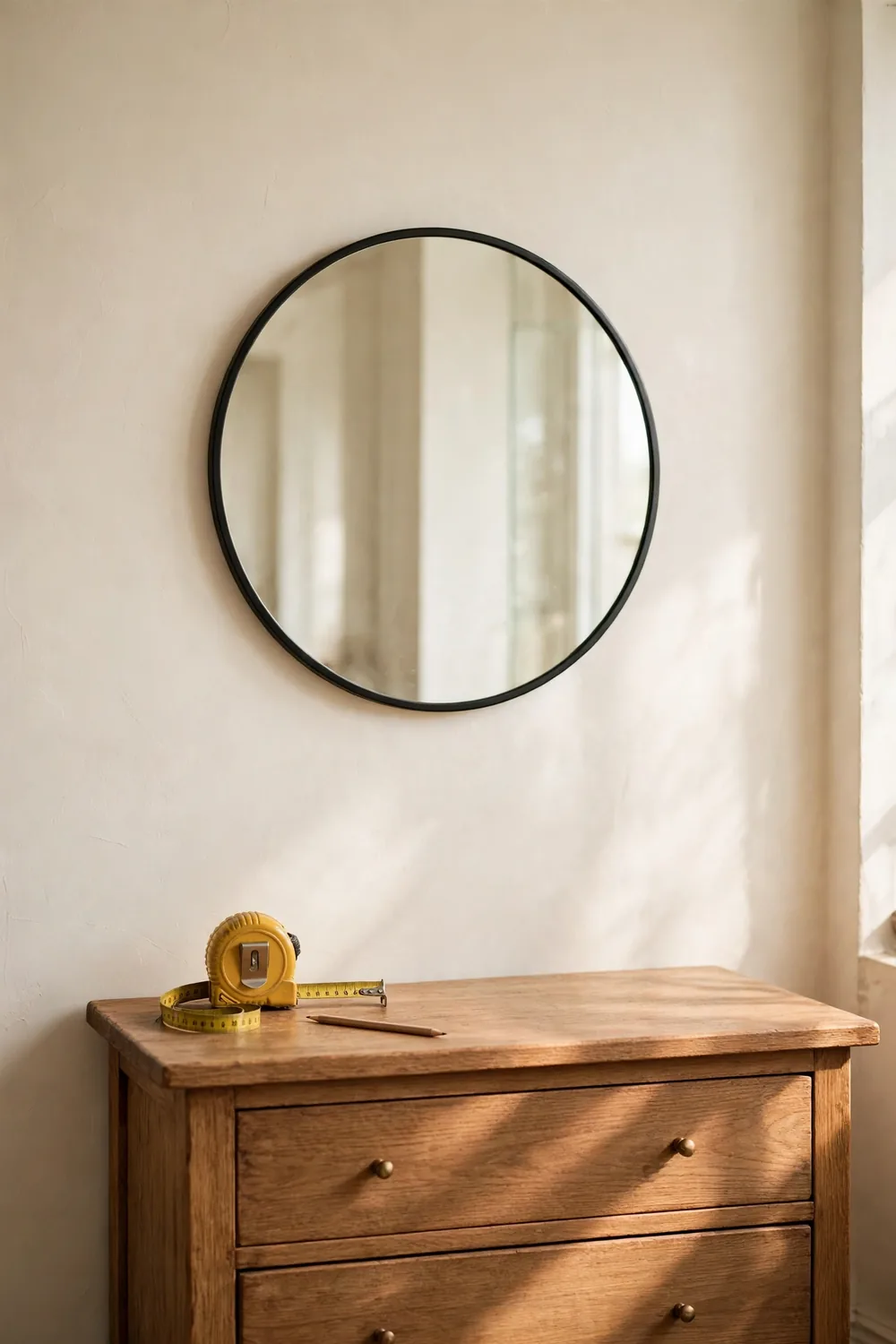
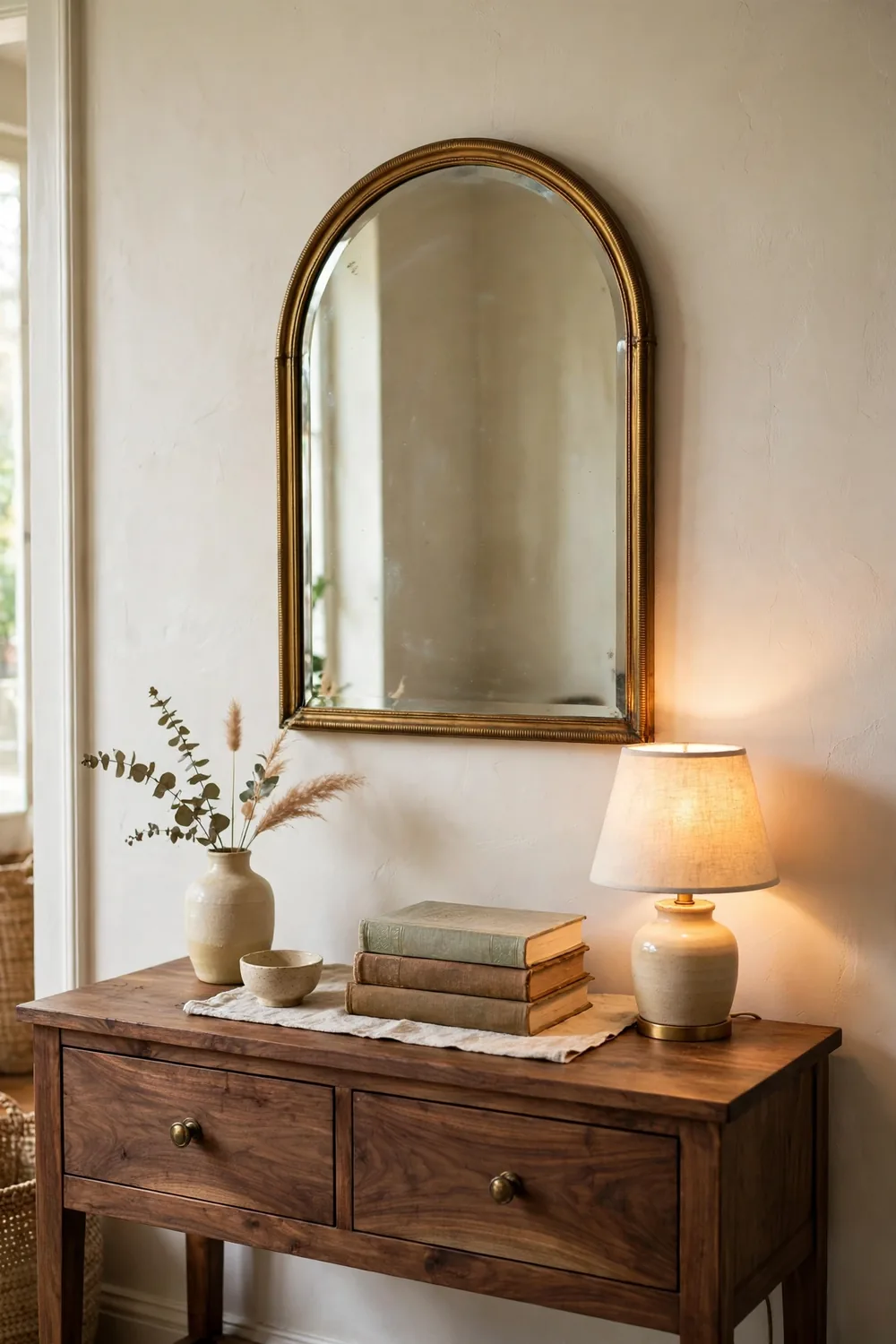
A mirror needs an anchor, a piece of furniture below it that gives it a reason to be there. A console table, a dresser, a sideboard, or a mantel all work. The mirror should be narrower than the furniture, about two thirds of its width, so the pair reads as one composition instead of two competing objects.
Leave 6 to 8 inches between the top of the furniture and the bottom of the frame. That gap is small enough to keep the pair connected and large enough to leave room for a lamp, a vase, or a stack of books on the surface. The same logic behind good curtain length rules applies here: one clear relationship between two elements beats three competing ones. Time note: about 15 minutes to measure, mark, and hang.
4. Lean a floor mirror instead of hanging it
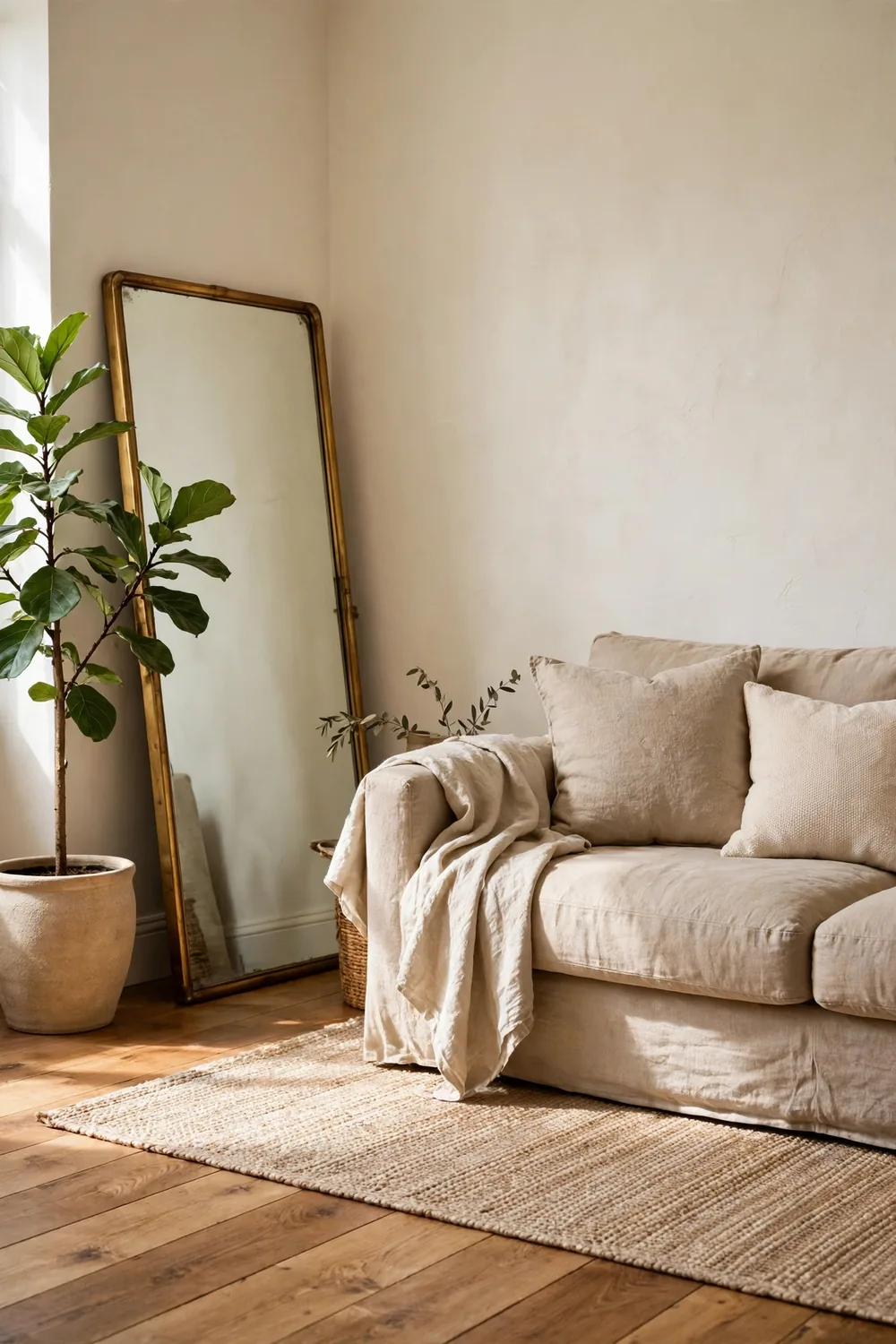
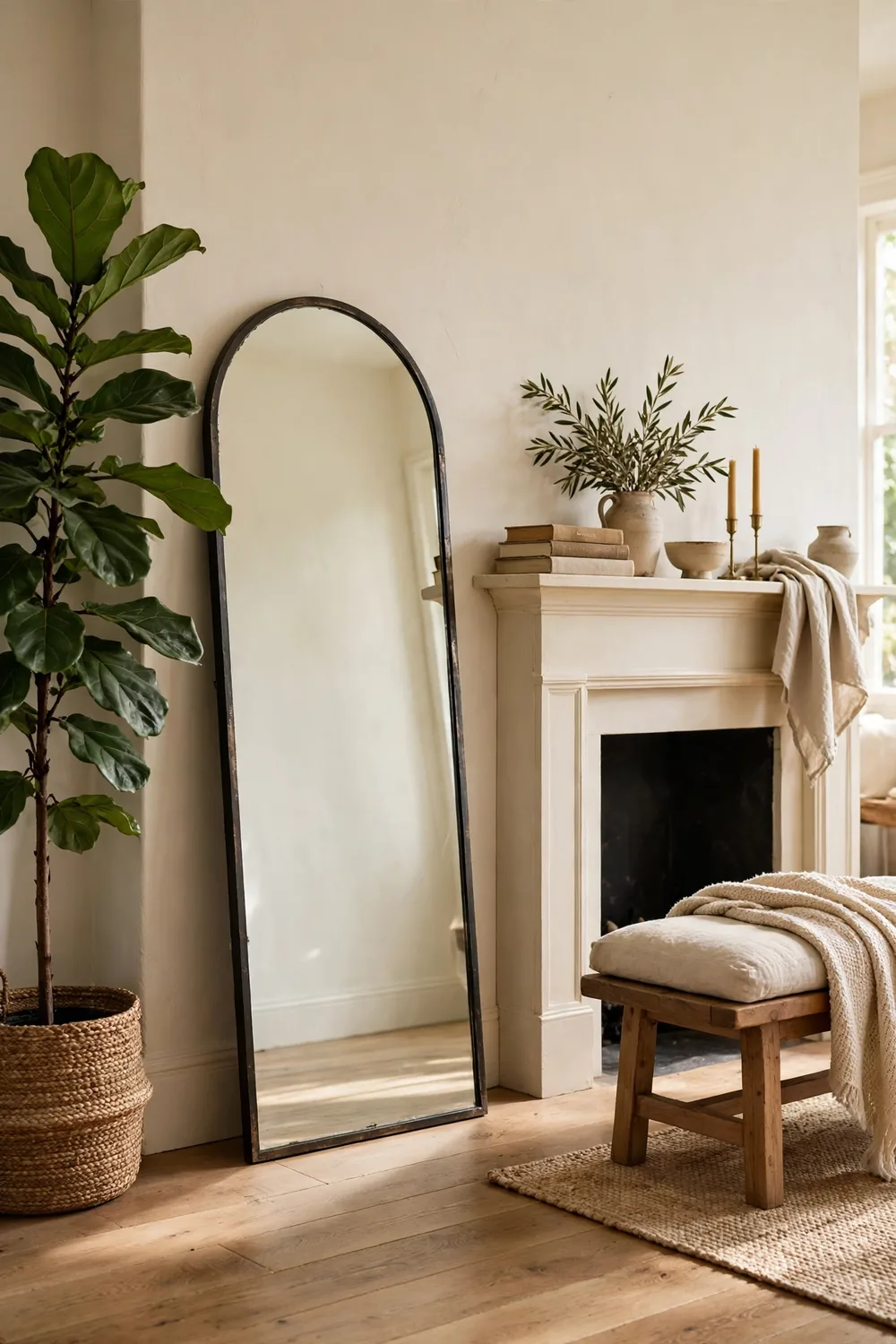
A tall floor mirror leaned against the wall at a slight angle is the easiest mirror project there is. It needs no drilling, no anchors, and no measuring, which makes it the best choice for renters and for anyone who changes a room often. The lean also tilts the reflection slightly downward, so the mirror shows the room instead of the ceiling.
Lean it near a mantel or a sofa, with a tall plant on one side and a low console nearby, so the mirror reads as part of a group rather than a single object standing alone. Keep the base at least a few inches from the wall so the angle stays gentle, and secure the top with a small wall anchor if the house has children or pets. Time note: about 10 minutes to position and style.
5. Use mirrors to widen a narrow room
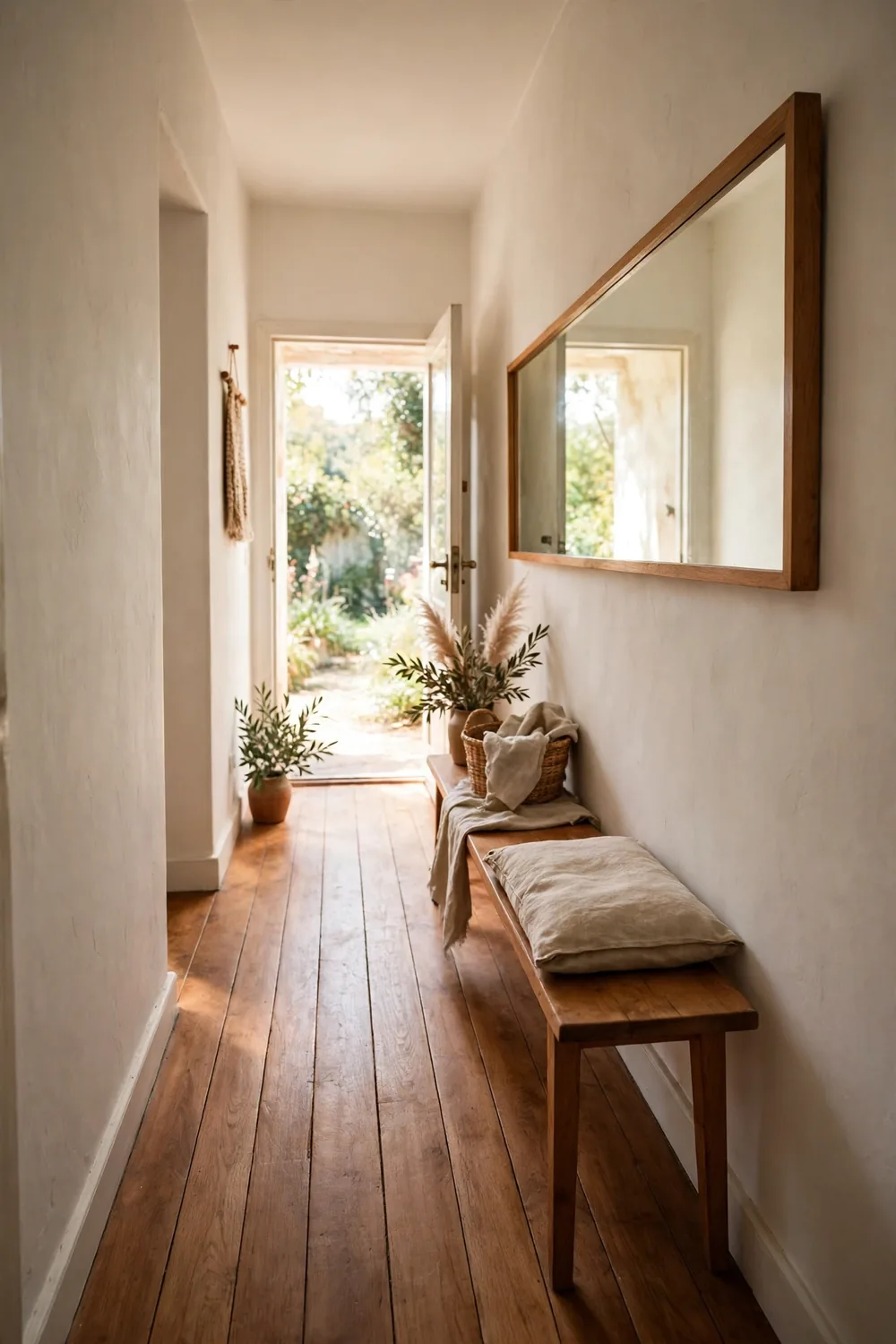
A narrow hallway or a small dining room is where mirrors do their best work. A long horizontal mirror on the longest wall makes the room feel wider, because the eye reads the reflection as extra space. In a hallway, one wide mirror beats three small ones, since the wall is viewed up close and a single calm reflection reads as a window.
Hang the mirror at the same 57 to 60 inch center height, and keep the frame slim so the mirror itself does the work. Pair it with a narrow console below, and leave the first foot beside a door frame empty so the mirror does not crowd the opening. Time note: about 20 minutes to hang and style.
6. Keep bad reflections out of the frame
Before hanging any mirror, stand in front of the spot and look at what the mirror will show. Walk the room and check the view from the sofa, the dining chairs, and the doorway, since a mirror reflects differently from every seat. If the reflection includes a cluttered shelf, a television screen, or a pile of laundry, move the mirror or move the clutter.
The television deserves special care. A mirror across from a screen catches the glare and throws it back across the room. The same goes for a mirror facing a bed: many people find a large reflection beside the bed distracting at night. When in doubt, angle the mirror a few degrees toward the nearest window and away from the screen. Time note: about 5 minutes to check the reflection from every seat.
7. Group small mirrors like one piece
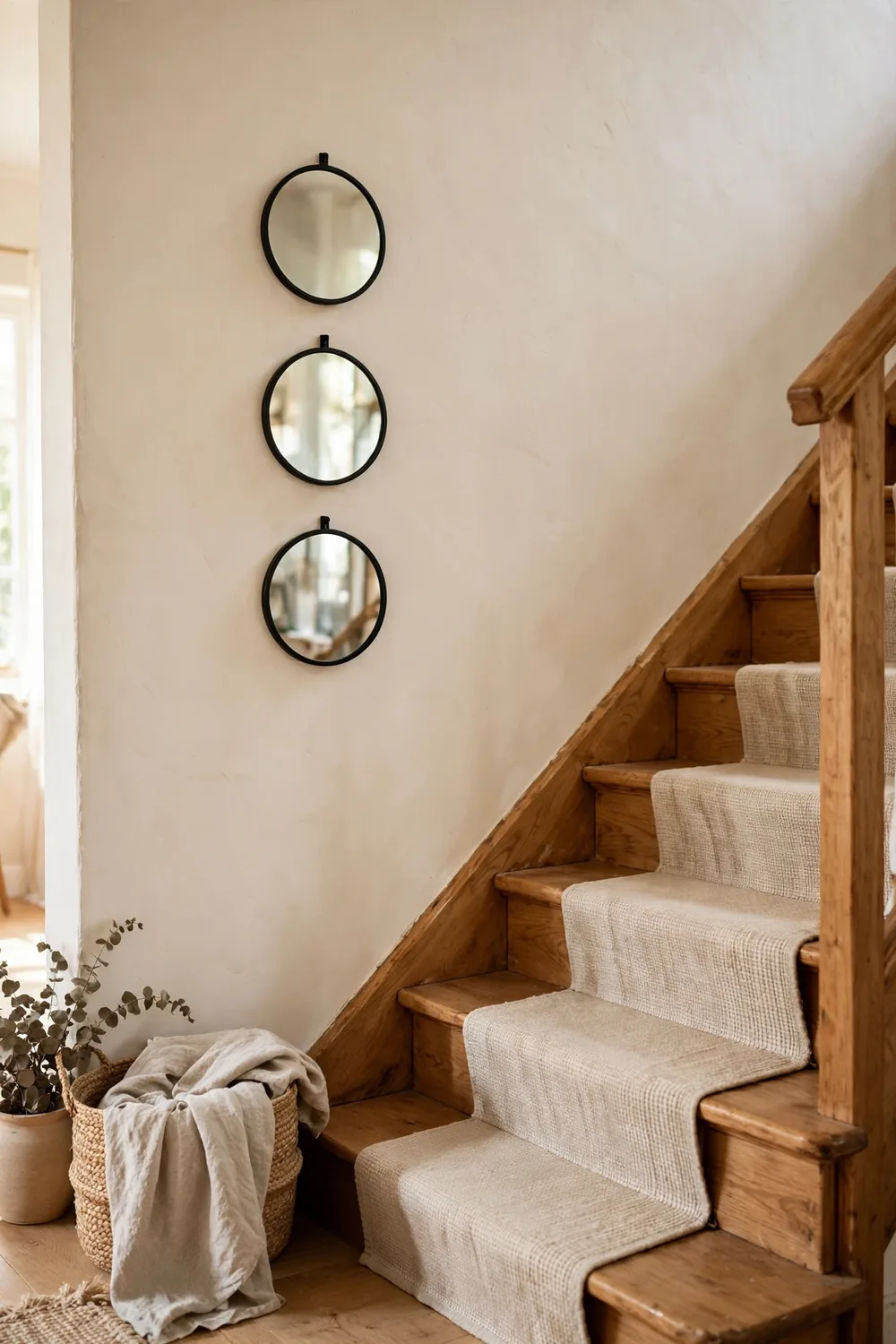
Small mirrors work best as a group, treated as a single arrangement rather than scattered singles. Three or five small mirrors in matching frames, hung close together with even gaps of 2 to 3 inches, read as one deliberate piece on the wall. Mixed shapes can work too, as long as one thing stays consistent, the same frame finish or the same spacing.
Plan the group on the floor first. Lay the mirrors out, leave the gaps even, and mark the outer shape with painter’s tape on the wall before hanging anything. The same plan-first thinking behind gallery wall layouts applies here: decide the outer shape first, then hang the center piece, then work outward in pairs. A group of small mirrors suits a hallway, a stair wall, or the short wall beside a door, places where one large mirror would feel heavy. Time note: about 25 minutes to plan and hang a group of three.
Common mistakes
Three patterns show up in almost every disappointing mirror placement, and each one has a simple fix.
The first is hanging too high. The center ends up near the ceiling because each mirror was hung at standing eye level without measuring, and the reflection shows the ceiling fan instead of the room. The fix is to set the center at 57 to 60 inches from the floor before hanging anything, and to check the view from a seated position.
The second is facing the wrong view. The mirror reflects a blank wall, a cluttered corner, or a television screen, so it doubles the one thing the room would rather hide. The fix is to stand at the hanging spot and look at what the mirror will face, then shift it until the reflection is a window, a plant, or a finished corner.
The third is a mirror that is too small for the furniture below it. A small round mirror over a wide console looks lost, no matter how good the frame is. The fix is to size the mirror to the furniture: about two thirds of the width of the piece below it. Add a larger mirror or pair the small one with a second mirror to give the arrangement more presence.
Editor’s pick
For a first mirror project, we would choose one large mirror hung across from a window, centered 57 to 60 inches from the floor. It is the placement with the biggest payoff for the least effort: more daylight, a doubled view, and a room that feels larger, all from a single mirror and about 20 minutes of work.
A mirror is finished when the reflection looks like a second window. If the reflection shows clutter, move the mirror, not the room.
FAQ
How high should a mirror hang on a wall? Center most mirrors 57 to 60 inches from the floor, measured to the middle of the mirror. Over furniture, the bottom of the frame can sit 6 to 8 inches above the surface instead.
Where is the best place to hang a mirror in a living room? Across from a window, or over a console, sideboard, or mantel. The window position doubles the daylight, and the furniture below gives the mirror an anchor so it reads as part of the room.
Can a mirror face a window directly? Yes, and that is usually the best position. The mirror catches daylight and sends it deeper into the room. Just check that the reflection shows sky or greenery, not a brick wall or a parked car.
Should a mirror face a bed? Many people prefer not to, because a large reflection beside the bed doubles the visual noise of bedding and can feel distracting at night. If the mirror must go in a bedroom, angle it toward a window or place it over a dresser instead.
What size mirror goes over a console table? About two thirds of the width of the console. That proportion keeps the mirror and the furniture reading as one composition, with room on the surface for a lamp or a vase.
Related guides
For the wall around the mirror, the curtain length and placement rules guide uses the same eye level thinking at window scale, and the gallery wall ideas guide shows how even spacing turns separate frames into one finished wall.