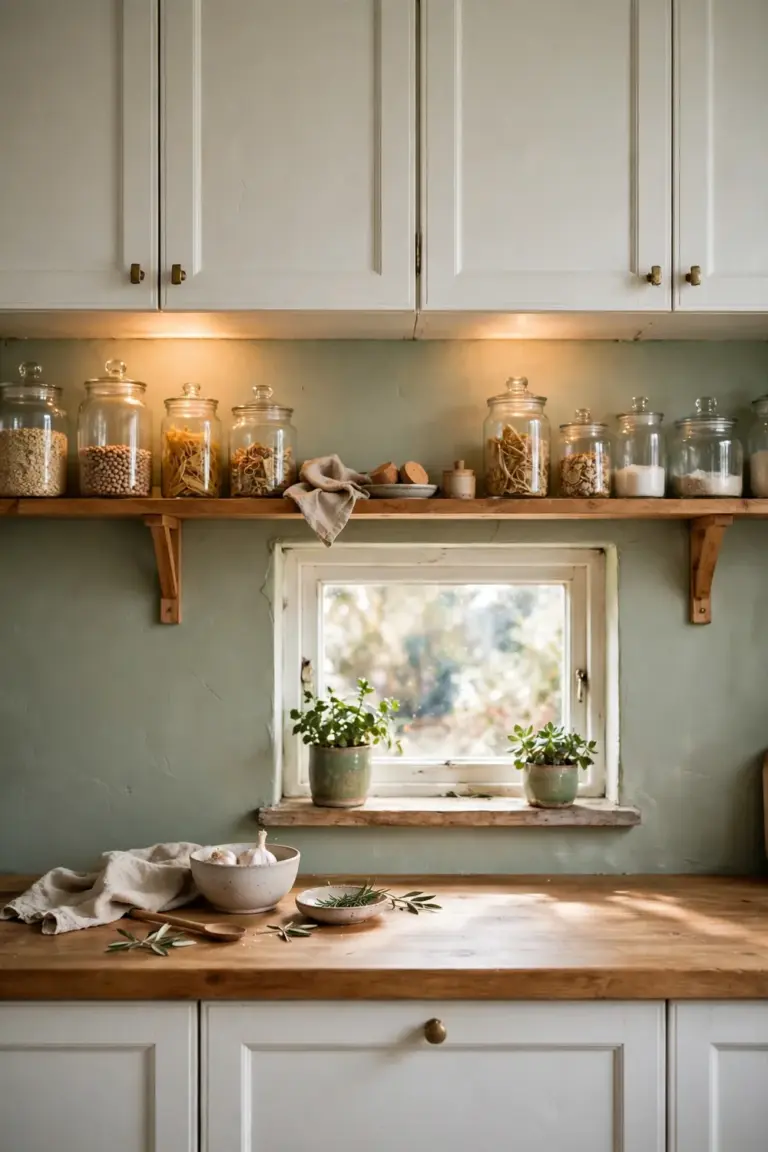
Herb Windowsill Gardens: A Decor-Forward Setup Guide
Short answer: You can grow a row of fresh herbs on a sunny windowsill and have it look like decor rather than a science project, with regular snipping keeping every plant bushy. A sill of 24 inches holds a full row of small pots in matching terracotta, each with a label, and the row sits beside the stove so snipping basil for pasta takes moments rather than a trip to the store.
| Time | One afternoon to set up, about 10 minutes of care a week |
| Difficulty | Beginner; no tools and no drilling needed |
| Space | One sunny windowsill, about 24 inches wide and 6 inches deep |
I killed my first windowsill basil in a jam jar. It looked charming for a week, then the stems went leggy, the leaves turned pale, and the jar tipped over into the sink during a rushed dinner. The problem was not the plant. I had treated it like a decoration that happened to be alive, instead of a small garden that happened to look good.
The fix was simple. I moved the herbs to the sunniest sill in the kitchen, gave each plant its own pot with drainage, and chose pots I actually liked looking at. Now I snip basil while the pasta water boils, and the row of green pots is the prettiest thing in the room.
Where should a windowsill herb garden go?
Pick the sunniest windowsill in the kitchen, even if it is not the prettiest one. Herbs need direct sun for part of the day to stay compact and flavorful, and a bright sill beats a shady one that photographs better. South facing glass is ideal in most homes, east facing glass works well for morning sun, and west facing glass suits herbs that like heat. North facing glass is the hardest spot, and it suits only mint and parsley, which tolerate lower light.
Measure the sill before you buy pots. A standard kitchen sill is about 24 inches wide and 6 inches deep, which fits a row of small pots if each pot is about 4 inches across. Leave a finger width of space between pots so air can move and leaves can dry after watering. If the sill is narrower than the pots, use a tiered stand to lift the back row above the front row instead of crowding the pots in a single line.
Check the sill for drafts and heat. A sill above a radiator dries soil fast, and a sill beside a door that opens onto a cold porch chills tender basil overnight.
Think about water before you think about style. The sill should sit near the sink or near a spot where a small watering can lives without a trek across the room. If your kitchen needs more counter space around the sink first, our small apartment kitchen ideas guide covers rolling carts and fold-down tables that add square feet instead of organizing them.
What are the 7 steps to set it up?
Seven steps, in the order I would do them.
1. Choose three herbs you actually cook with
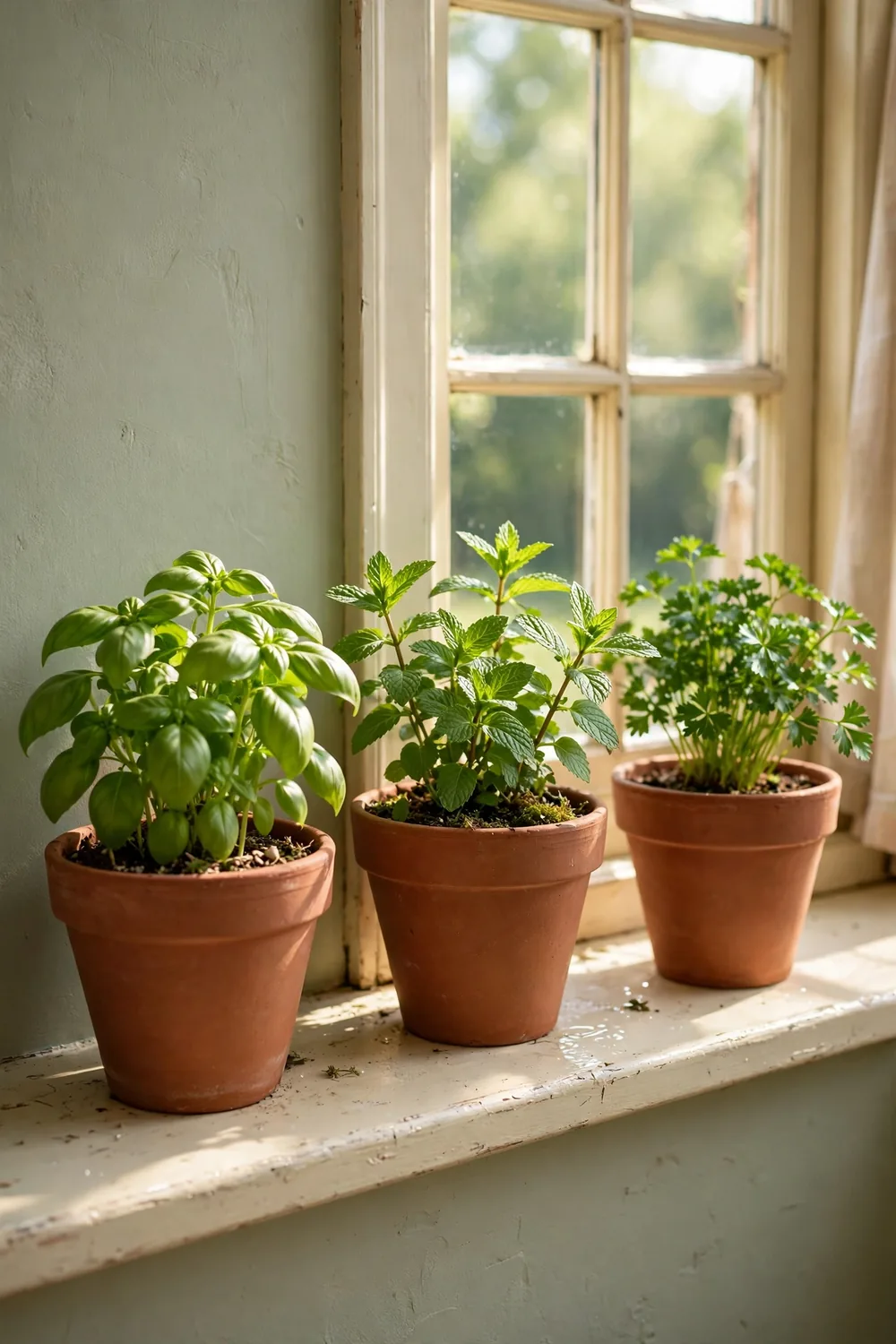
Start with herbs you reach for every week, not herbs that look good in a photo. Basil, mint, and parsley cover most weeknight cooking, and they grow at a similar pace on a sunny sill. Basil goes into pasta, tomatoes, and eggs. Mint goes into tea, salads, and desserts. Parsley goes into almost everything else, and it forgives a missed watering better than basil does.
Buy small starter plants rather than seeds for your first garden. A starter plant gives you leaves to snip within days. Look for compact plants with deep green leaves and no yellowing at the base. Avoid plants that are already tall and leggy, because they have spent too long in low light and will keep stretching toward the window.
2. Pick matching pots with drainage
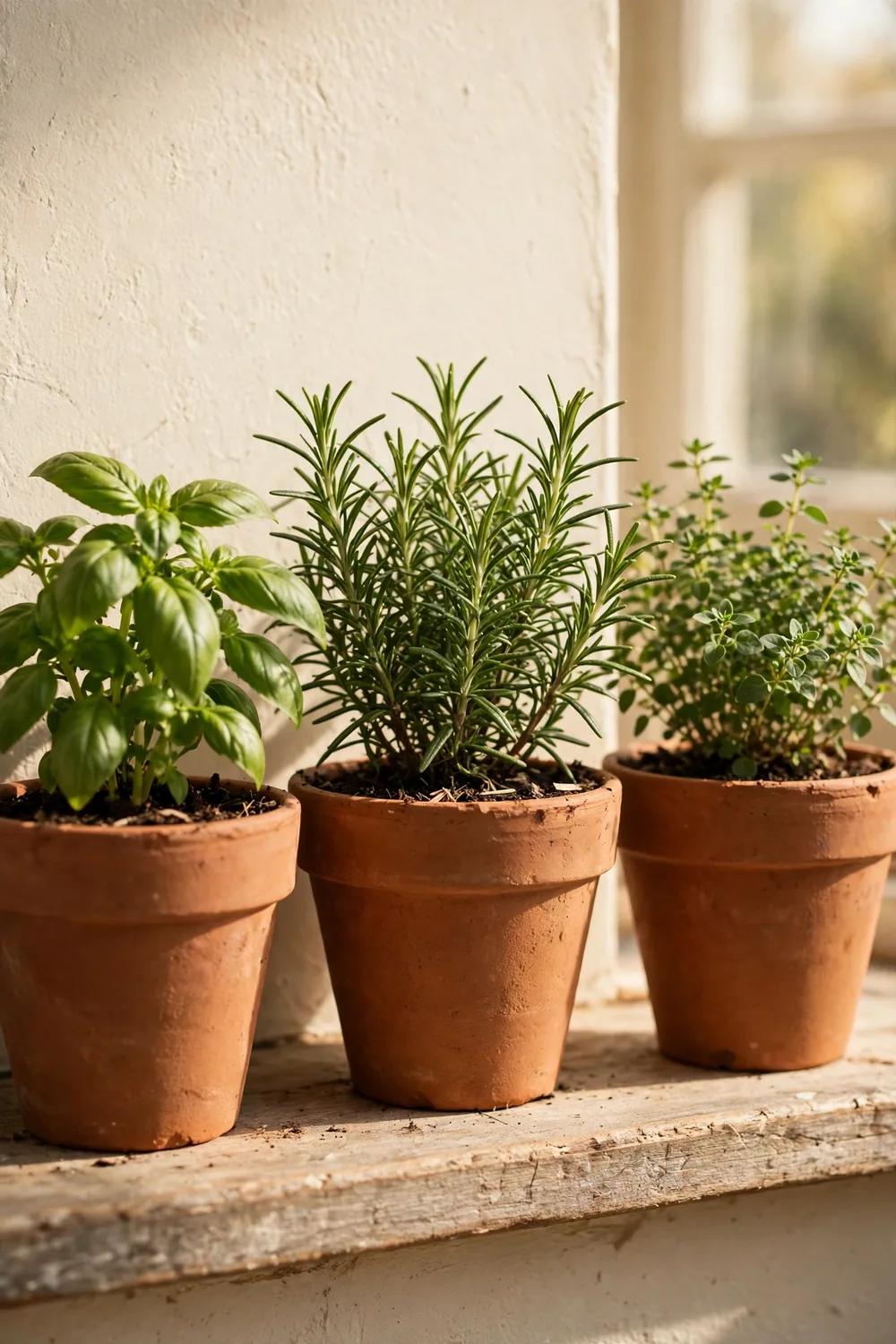
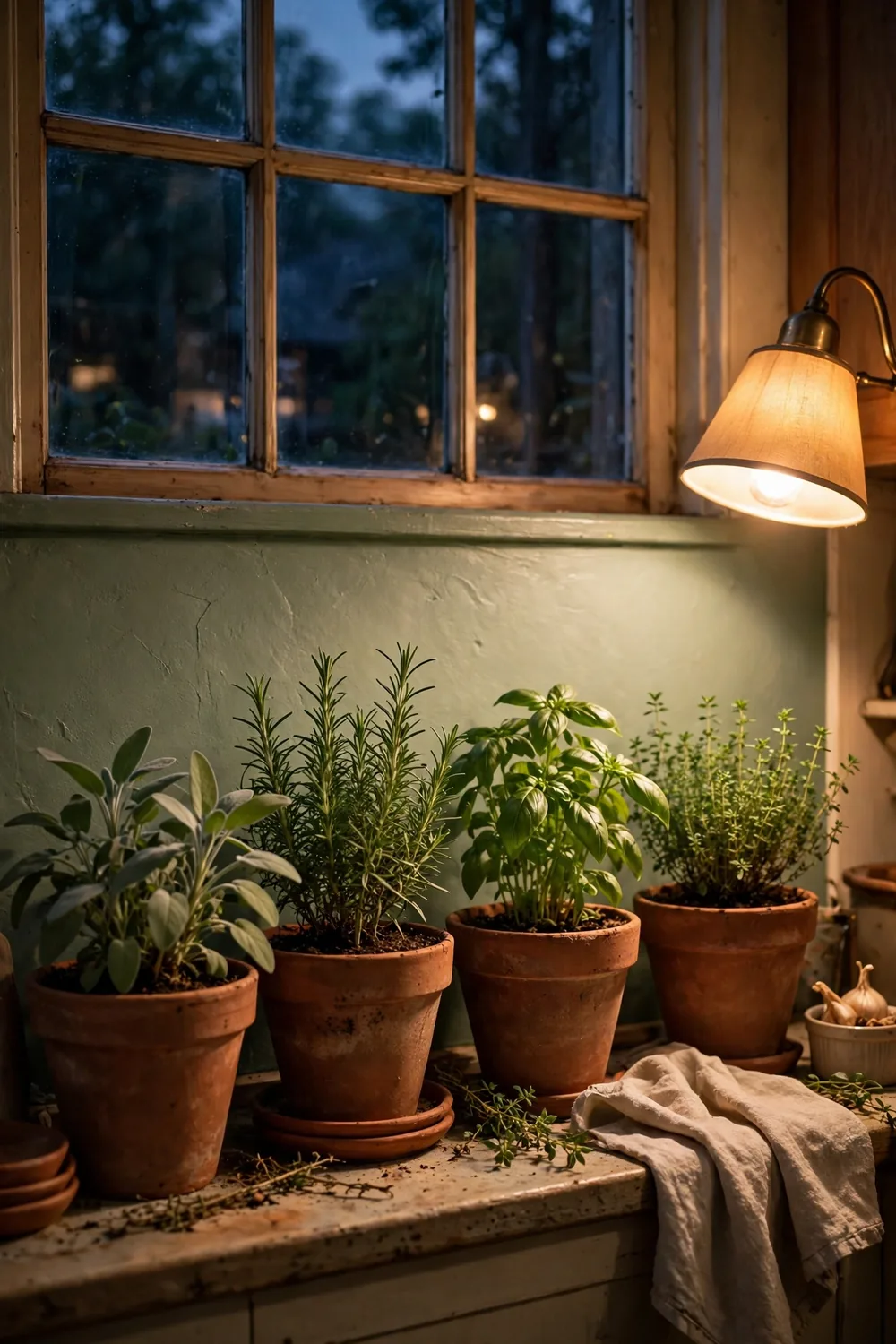
Matching pots are what make a row of plants look like decor instead of a collection of leftovers. Choose one material and one color for every pot, and let the plants provide the variation. Terracotta is my pick because it breathes, it warms up in sun, and its color sits well against cream walls and sage paint.
Every pot needs a drainage hole and a saucer. Herbs hate wet feet, and a pot without drainage turns soil sour within days. Set a saucer under each pot to catch drips, and empty the saucer after watering so the roots never sit in standing water. A pot about 4 inches across suits a starter herb for its first season.
3. Raise the back row on a tiered stand
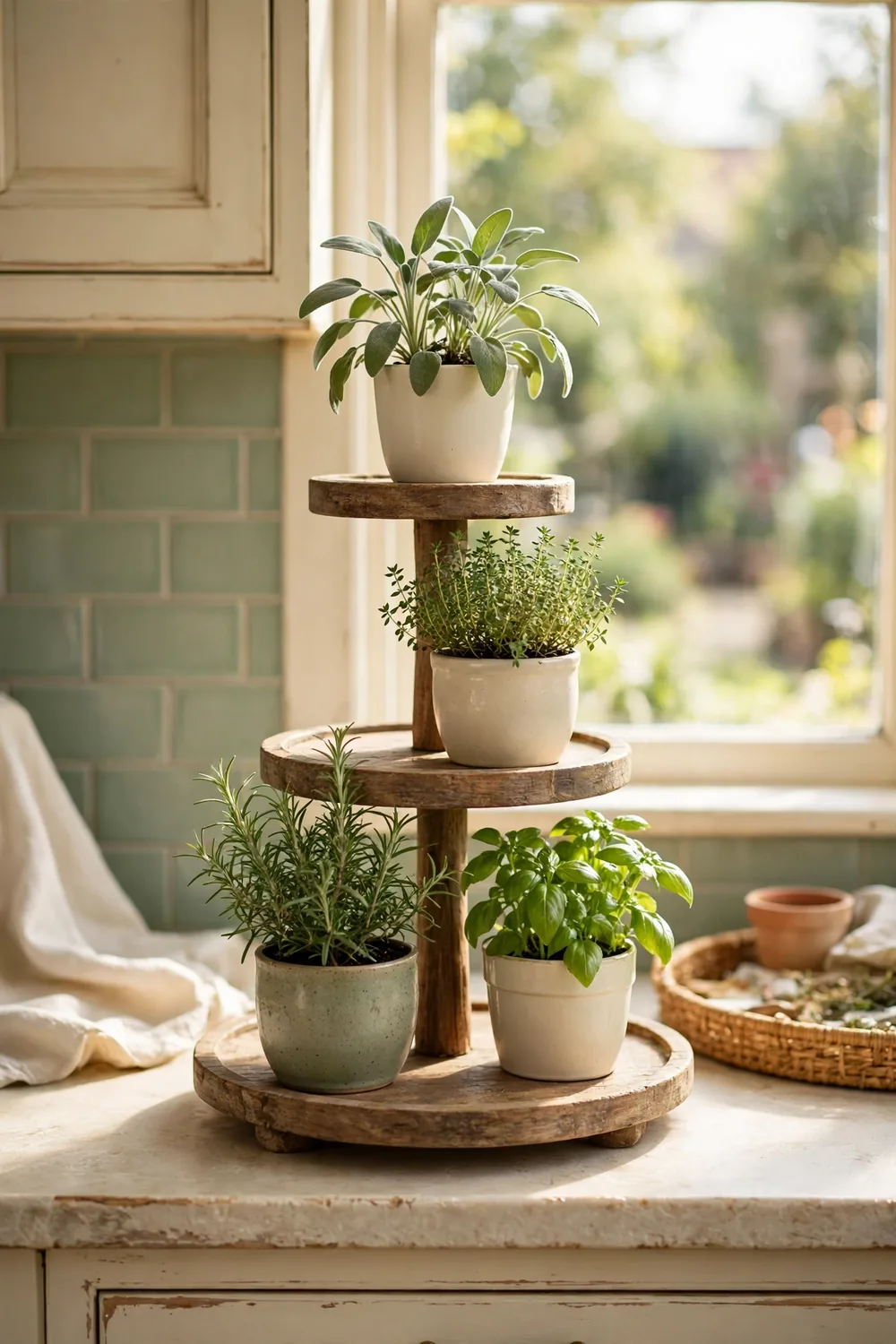
A tiered stand solves the oldest windowsill problem, which is that the back row hides behind the front row and stretches toward the light. A small two tier stand lifts the back pots by a few inches, so every plant gets sun and you can see every label from the counter.
Measure the height of the stand against the height of the window. The stand plus the tallest plant should still leave a gap under the top of the window frame, or the leaves will press against the glass and scorch on hot days. Place the tallest herb at the back and the shortest at the front. Mint grows fast and tall, so it belongs at the back.
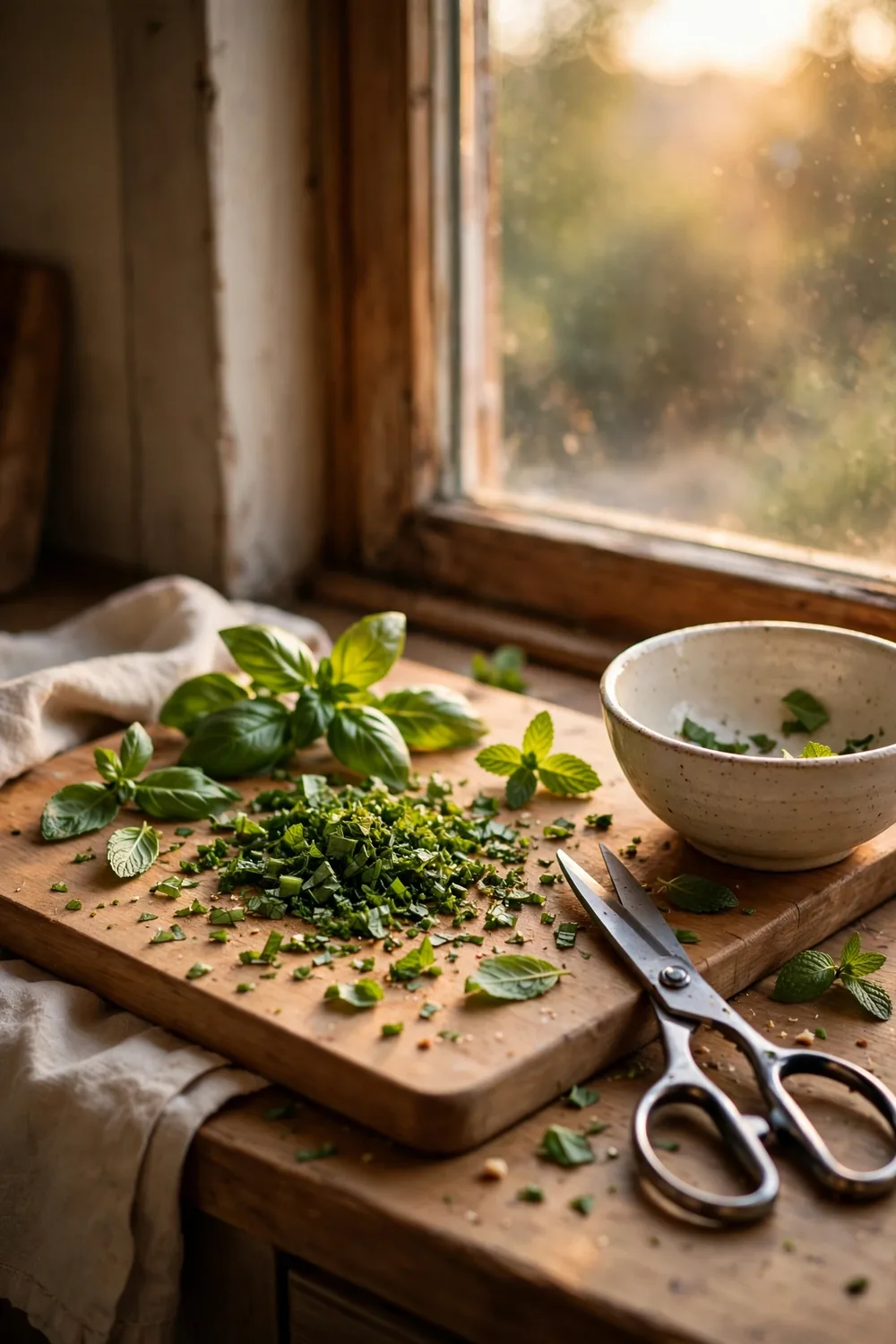
4. Set up a small cutting station beside the sill
A cutting station is a board, a pair of scissors, and a small bowl, kept within arm’s reach of the pots. When snipping herbs is easy, you snip often, and frequent snipping is what keeps herbs bushy instead of leggy. When snipping means hunting for scissors in a drawer, you skip it, and the plants grow tall and sparse.
Keep a small wooden board on the counter beside the sill for trimming stems and stripping leaves. Add a small ceramic bowl for the cut leaves, so you can carry them to the stove in one trip instead of dropping leaves across the counter.
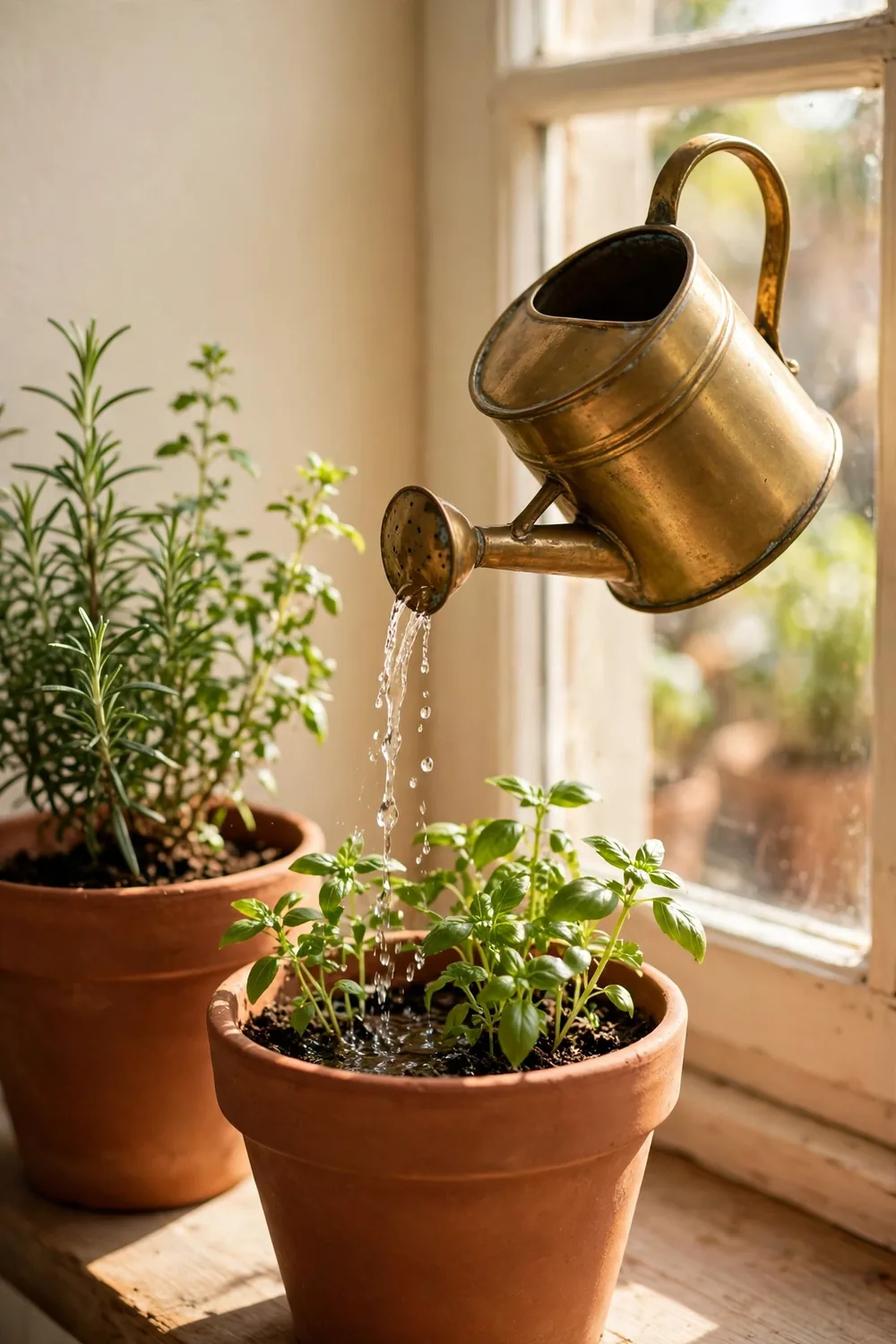
5. Water little and often, from the base
Most windowsill herbs die from too much water, not too little. Water only when the top inch of soil feels dry to your fingertip, and water in the morning so leaves dry before night. A small watering can with a narrow spout gives you control, and it looks better sitting on the sill than a plastic jug does.
Water at the base of the plant, not over the leaves. Wet leaves in a cool kitchen invite mildew. Pour slowly until a little water runs into the saucer, then stop and empty the saucer after a few minutes.
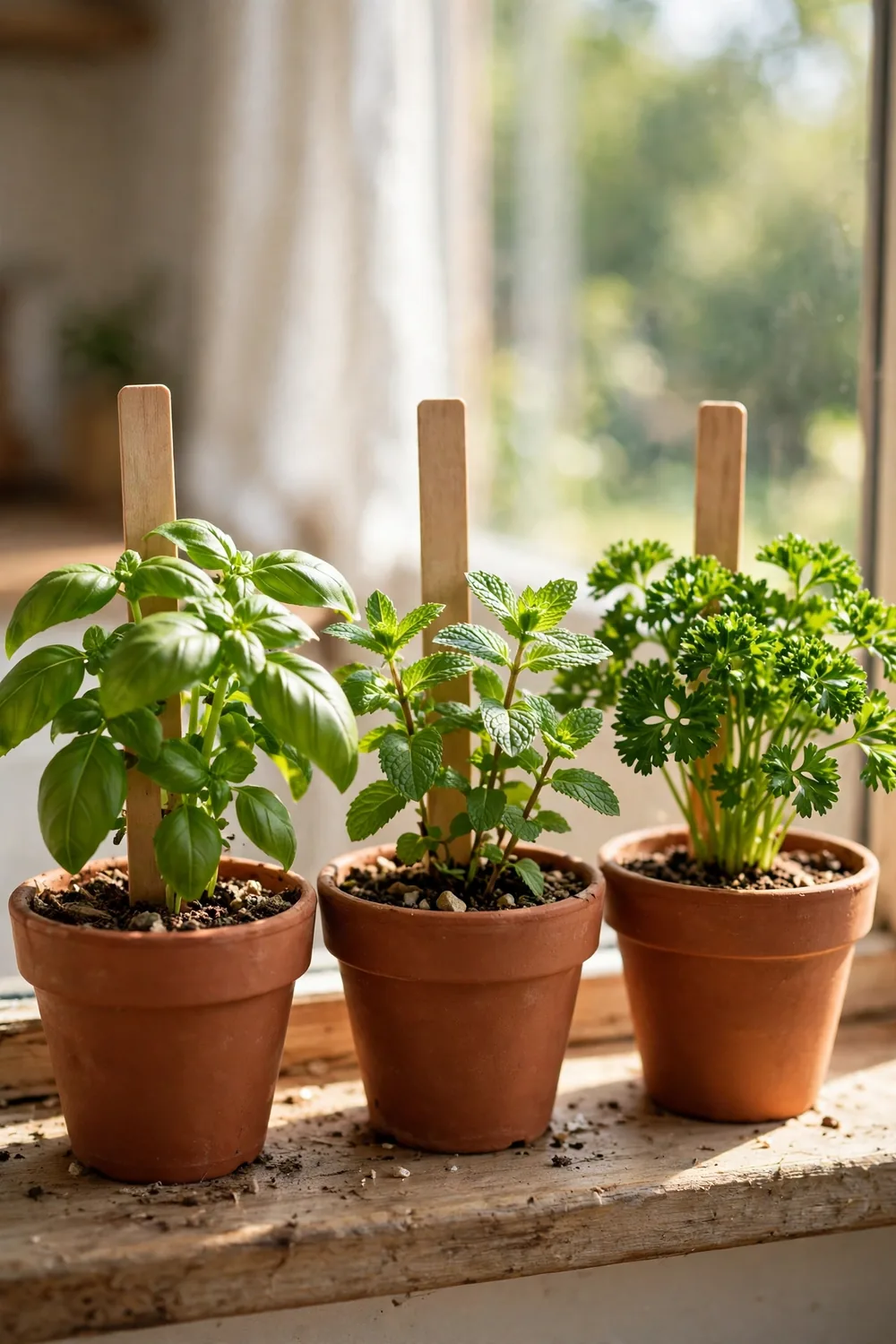
6. Label every pot so guests can snip too
Labels turn a row of green leaves into a garden you can actually use. Basil, mint, and parsley look alike when they are young, and a guest who wants mint for tea should not have to guess. Small wooden labels on sticks suit terracotta pots, and they slide into the soil without taking space from the plant.
Place labels at the front of each pot, facing the room, so you can read them from the counter. A garden with clear labels invites people to use it, and a garden people use stays pruned and healthy.
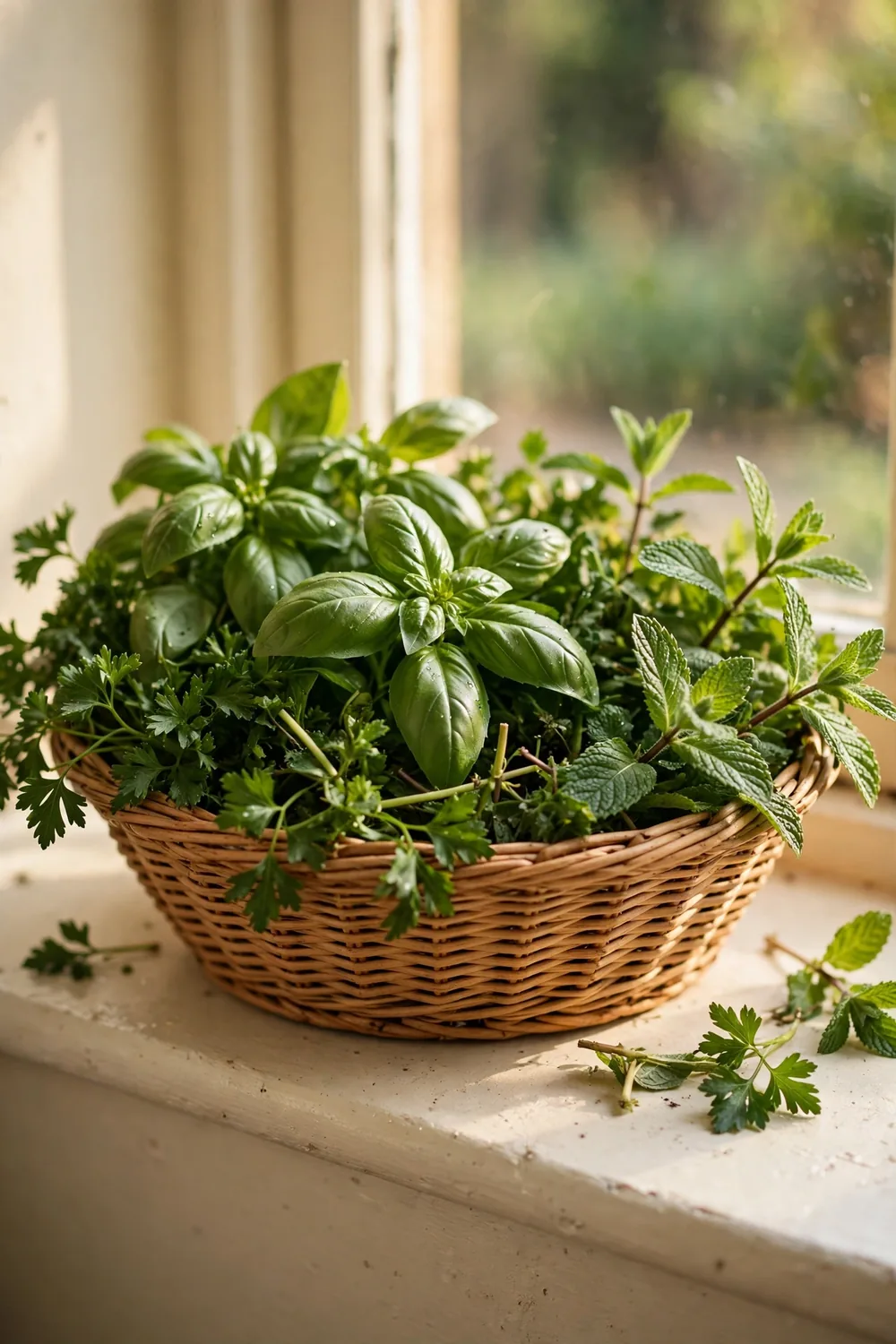
7. Harvest often and style the sill for evening
Harvest is not the end of the garden, it is the care that keeps it going. Snip from the top of each stem, just above a pair of leaves, and the plant will branch out below the cut. Never strip a plant bare. Take no more than a third of its leaves at once, and let it recover for a few days before you snip again.
Style the sill once the plants are settled. A folded linen cloth under the pots catches drips and softens the row, and a small candle or a warm lamp nearby makes the green glow in the evening. A basket on the counter below holds the harvest while you finish cooking.
How do you keep herbs alive through winter?
Winter is the hardest season for a windowsill garden, because light drops and indoor air dries out. Move the pots to the brightest sill you have, even if that means moving them out of the kitchen for a few months. A sunny sill in another room beats a dark kitchen sill every time.
Water less in winter, because plants grow slower and soil stays damp longer. Check the soil with your finger before every watering, and skip a watering if the top inch still feels damp. Keep pots away from radiators and from cold drafts, and wipe dust off leaves once a month so they can catch what light there is.
The one mistake that wastes the season
I planted basil in a pot with no drainage hole because the pot was beautiful. The plant looked fine for two weeks, then the lower leaves yellowed, the soil smelled sour, and the stem went soft at the base. I had drowned a plant I loved, in a pot I loved, because I chose looks over drainage.
Check the bottom of every pot before you buy it, and do not trust a pot that claims to be self watering unless you understand how it works. Five minutes of checking saves a season of herbs.
The honest version is that a windowsill garden will not fix a kitchen with no sun at all. If every window faces north and the light is weak, grow mint and parsley, or move the garden to a brighter room. If the rest of the kitchen also needs order before the garden feels settled, our small kitchen organization guide shows 7 ideas that free up real counter space.
A windowsill garden is not a project you finish. It is a row of living things you tend while you cook, and the tending is what keeps it beautiful.
FAQ
How much sun do windowsill herbs need? Most herbs need direct sun for part of the day, about 4 to 6 hours, to stay compact and flavorful. A south or east facing sill suits most herbs, while a north facing sill suits only mint and parsley.
Which herbs are easiest for a first windowsill garden? Basil, mint, and parsley are the easiest starters. They cover most weeknight cooking and forgive small watering mistakes.
How often should I water windowsill herbs? Water only when the top inch of soil feels dry, and water in the morning at the base of the plant. A sunny sill in summer may need water every other day, while the same sill in winter may need water only once a week.
Why is my basil leggy and pale? Leggy basil usually means too little light or too little snipping. Move the pot to the brightest sill you have, and snip from the top of each stem to encourage branching below the cut.
Can I grow herbs on a windowsill in winter? Yes, with less water and the brightest sill you have. Move pots away from radiators and cold drafts, and wipe dust off leaves so they catch light.
Do herb pots need drainage holes? Yes. Every pot needs a drainage hole and a saucer, because herbs hate wet roots. Empty the saucer after watering so roots never sit in standing water.