Corner Nook Ideas: 8 Forgotten Corners 8 New Functions
Short answer: Every home has corners that do nothing: the dead space beside the sofa, the empty angle by the window, the blind spot behind the door. A corner nook gives one of those spots a single job, and one job is enough. Pick the function you actually miss, a place to read, a desk, a coffee spot, and build only for that. Most of the ideas below cost under 75 dollars and take an afternoon or less.
Why corners get wasted
Corners fail because they are awkward to furnish. A standard sofa is too wide, a bookshelf is too deep, and a table leaves a triangle of dead floor behind it. So the corner collects the things with no home: the drying rack, the spare chair, the bag of cables.
The fix is to stop treating the corner as leftover space and start treating it as a small room with two walls. Two walls are an advantage: they hold shelves, hooks, and lights without any floor space at all. A corner needs three things to work: one anchor piece that fits the angle, one light source, and a reason to go there. Miss any of the three and it drifts back into a dumping ground.
Measure before you buy anything. A typical empty corner gives you about 3 by 3 feet of floor, sometimes less. Furniture deeper than 20 inches will crowd it. And check the outlet: a reading nook without a lamp socket nearby, or a desk without a plug, will not get used.
A corner does not need more furniture. It needs one job, one light, and one reason to sit there.
8 corner nook ideas
1. A reading nook with fairy lights
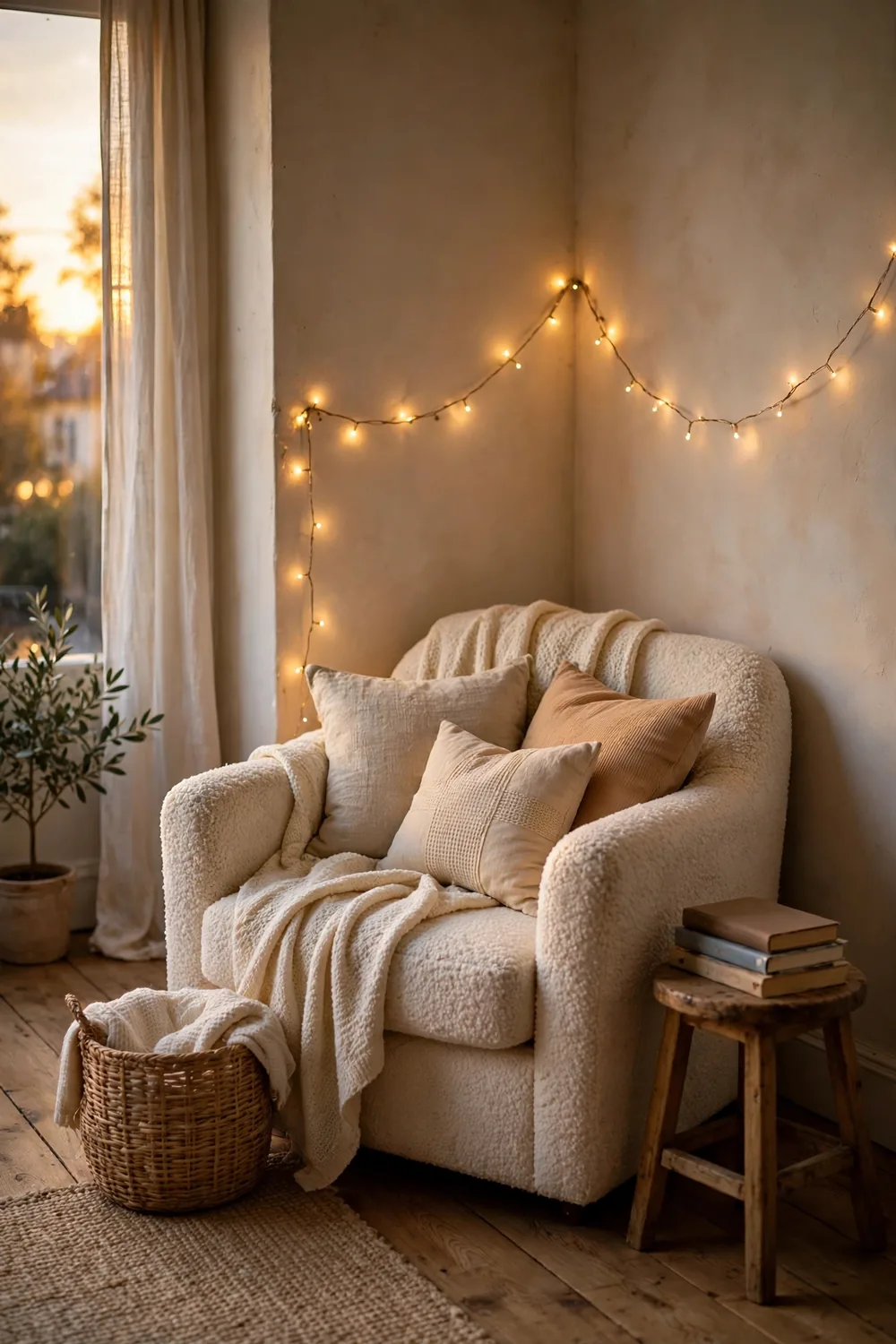
The most-saved corner idea on Pinterest is also the simplest: a comfortable chair, warm fairy lights, books, and soft textures. Two reading nook pins in our own research passed 1,500 saves each with exactly this formula, and Pinterest shows 11,000 people searched for “cozy nook”. Cost is about 40 to 60 dollars: a secondhand armchair or a floor cushion, a 15-dollar string of warm white fairy lights, and a small side stool for the book stack. Hang the lights along the two walls where they meet, not across the room, so the glow wraps the corner. The trade-off is that fairy lights are decoration, not reading light: add a small clip lamp if you read after dark.
2. A mini home office in the corner
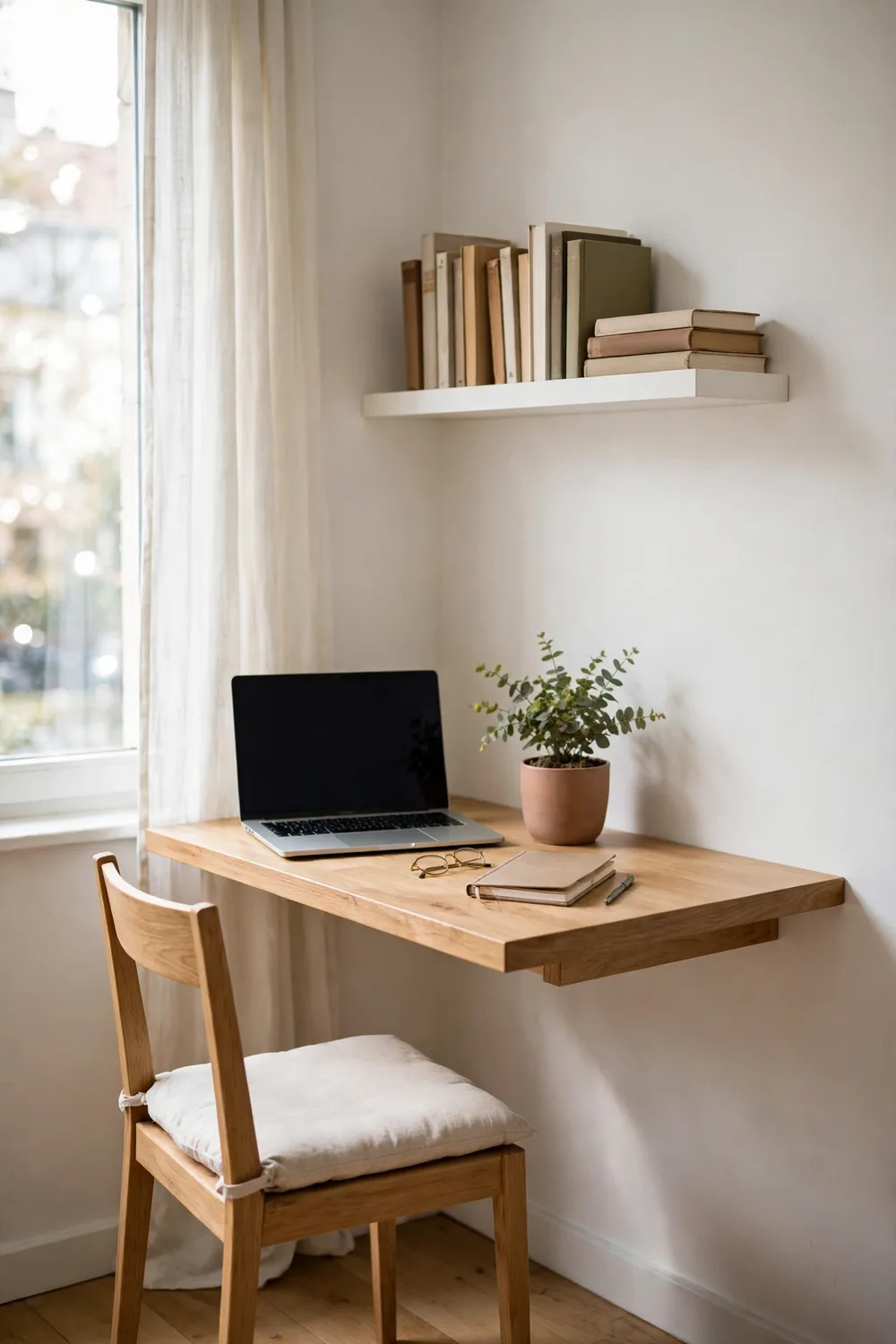
A corner desk turns the least useful angle in the room into a work spot. A floating desk 36 inches wide and 16 inches deep costs about 50 to 80 dollars and leaves the floor clear, which matters in a small room. Mount a shelf above it for books and a small plant, and keep the monitor or laptop at the angle where the two walls meet so the screen never faces a window glare. A chair that slides fully under the desk is essential: a chair left sticking out eats the walking path. Time to install is about one hour, plus patching two screw holes when you move out.
3. A coffee corner on a bar cart
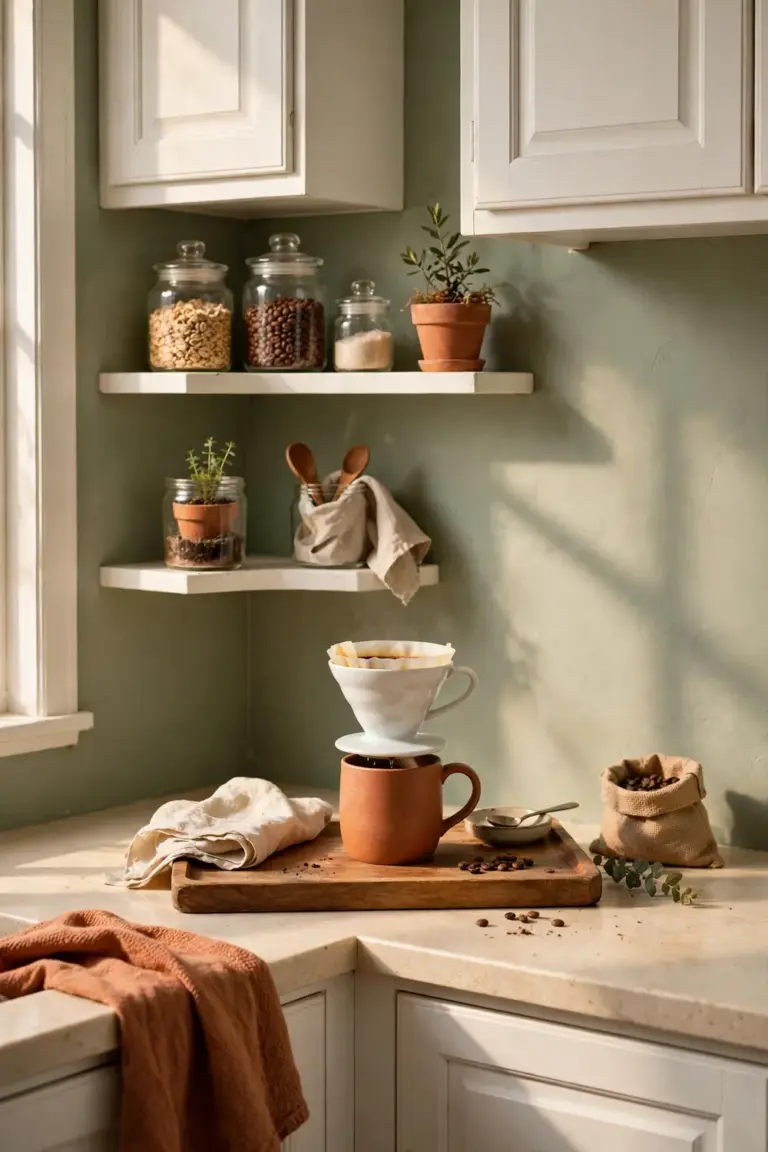
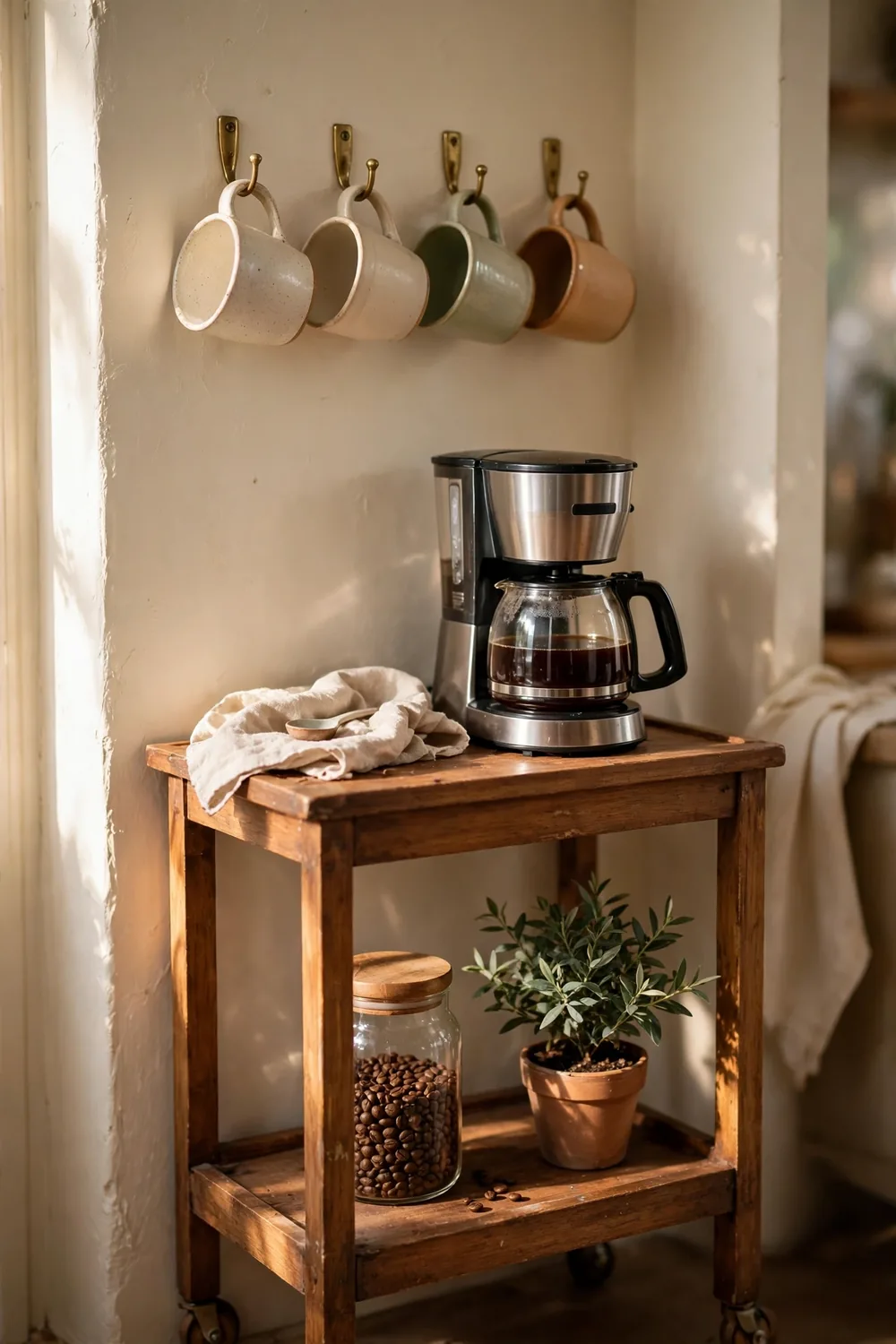
A small bar cart in a kitchen corner becomes the morning coffee station. A two-tier cart costs about 30 to 60 dollars; put the coffee maker on top, mugs on wall hooks above, and beans, filters, and a small plant on the lower shelf. The whole station takes about 2 square feet. The honest trade-off is that a cart with wheels drifts: lock the wheels or push it firmly into the angle so it stays put. If the corner is near the sink, keep the coffee maker at least a foot from the tap to avoid splashes on the electrics.
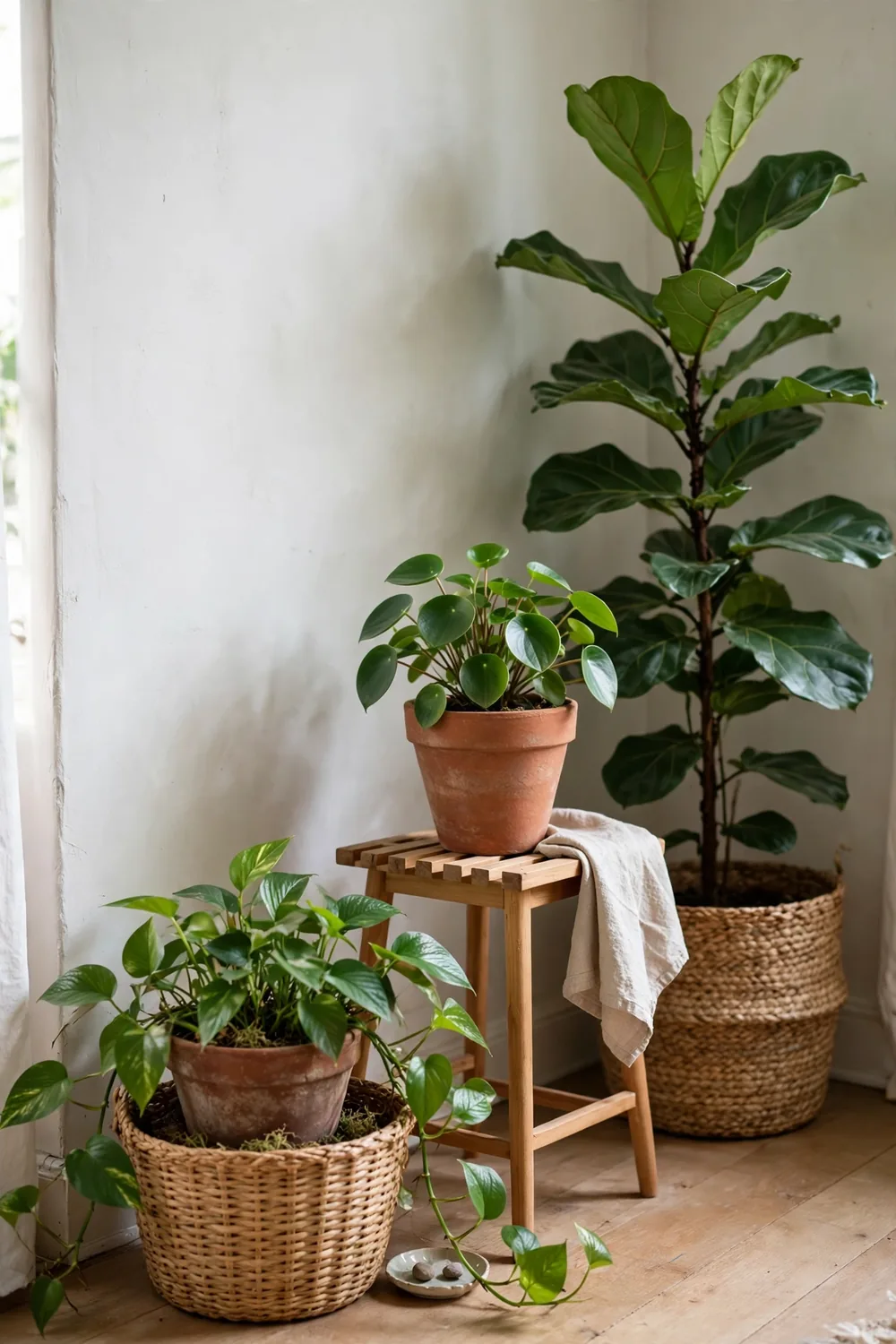
4. A plant corner at different heights
A plant corner works when the plants sit at three heights: tall in the back, medium in the middle, low in front. A tall fiddle leaf or olive tree in the corner itself, a medium plant on a wooden stand, and small pots on the floor create depth without a single piece of furniture. Cost is about 30 to 50 dollars for pots and a stand if you already own the plants. Terracotta and woven baskets keep the palette warm, and one watering can hung on a wall hook makes the corner feel tended rather than abandoned. Water with saucers under every pot: a corner is the hardest place in the room to mop.
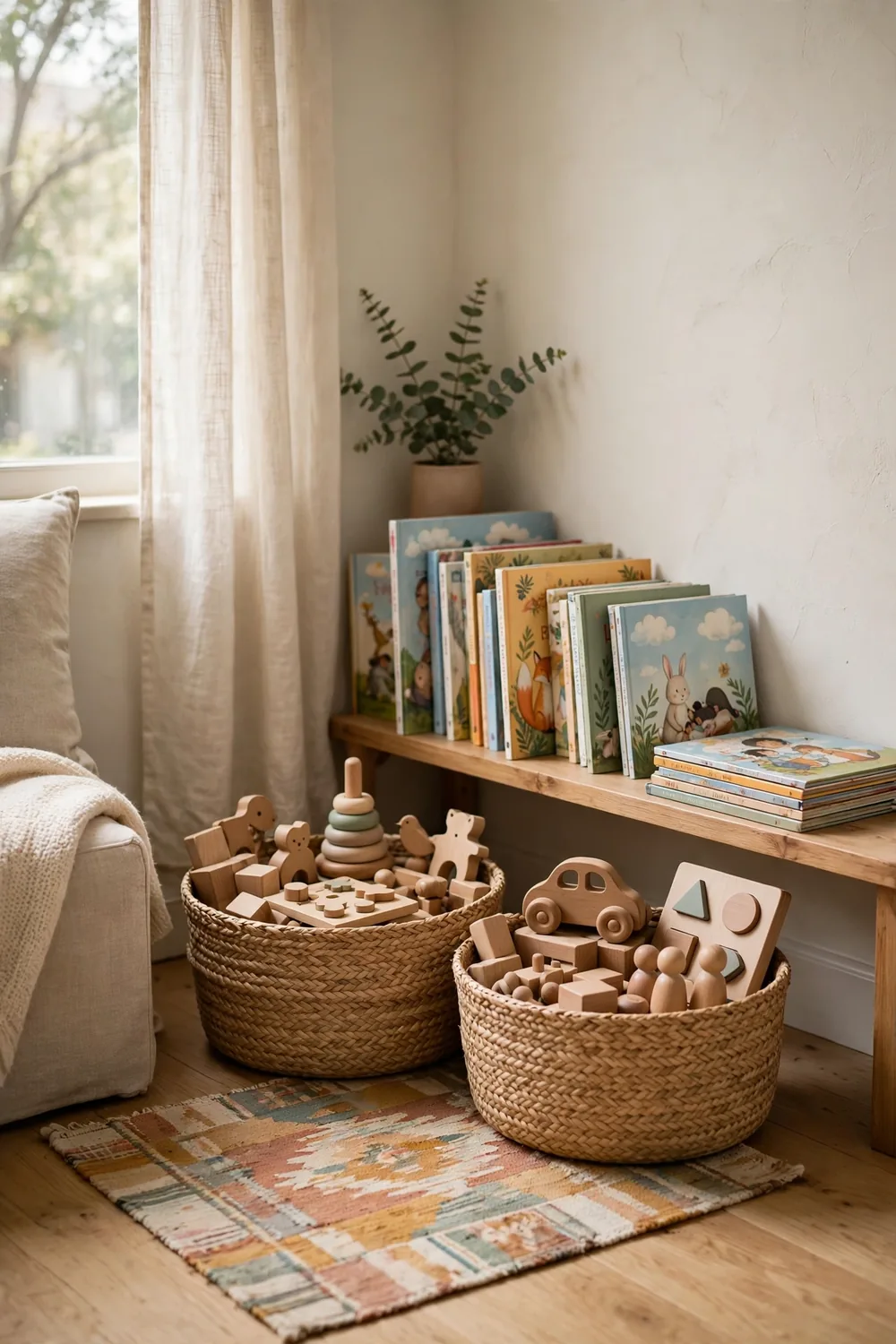
5. A kids’ corner with baskets
A corner with low baskets is a play zone that cleans itself up. Two or three woven baskets at floor level, each with one kind of toy, plus a small rug, give a child a defined place to play and a visible place to put things back. Cost is about 25 to 40 dollars. Keep the baskets low enough for the child to reach without climbing, and skip lids: an open basket gets used, a lidded one gets ignored. The rule that makes it last is one basket in, one basket out: when a new toy arrives, an old one leaves the corner.
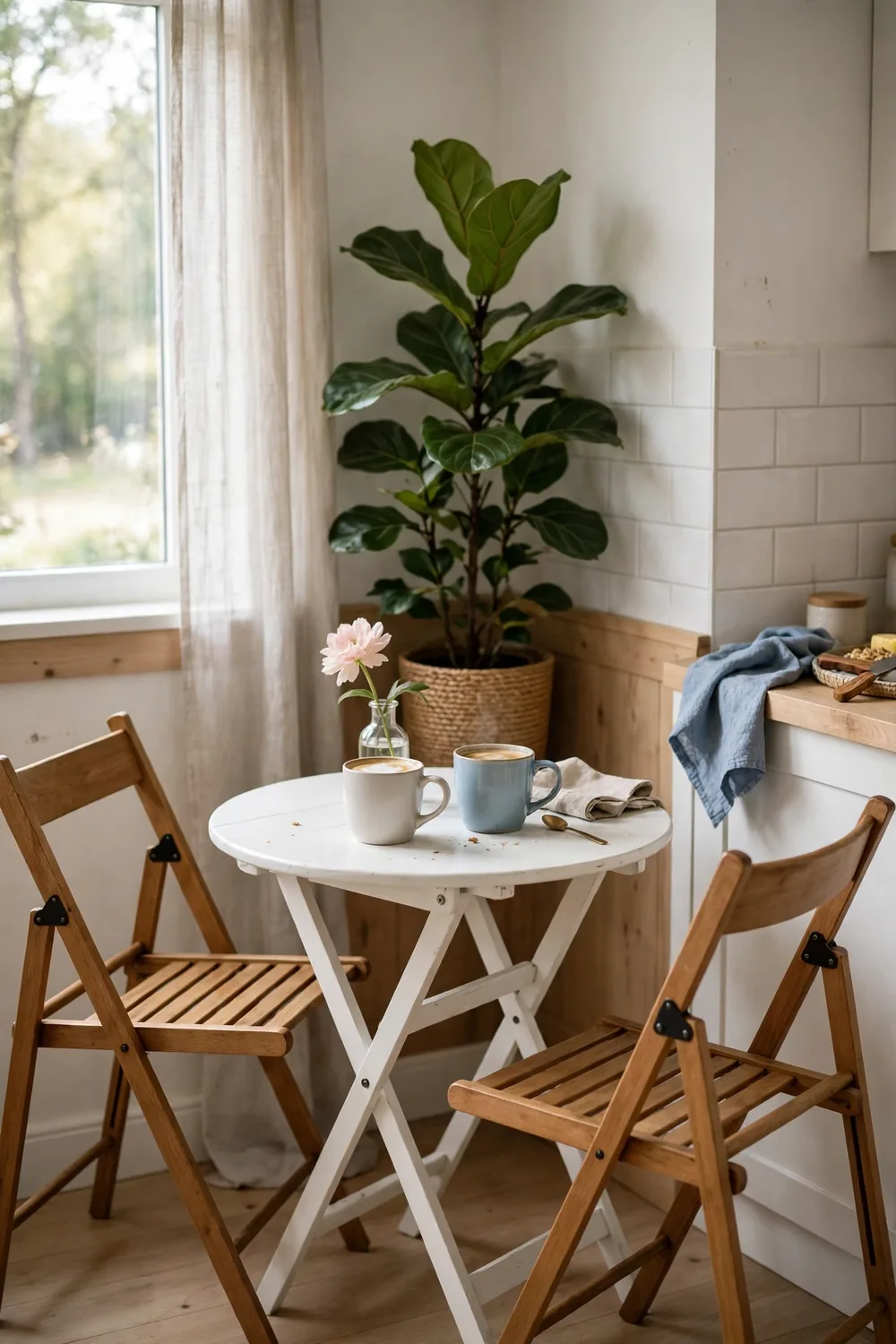
6. A breakfast nook for two
A tiny round table pushed into a corner seats two for breakfast and takes about 3 square feet. A 24-inch round table with two folding chairs costs about 40 to 80 dollars, and the chairs fold flat against the wall when the table is not in use. Put a small vase or a single candle on the table so it reads as a place, not a surface. The trade-off is that a round table in a corner wastes the triangle behind it: use that triangle for a tall plant or a narrow shelf, and the dead space disappears.
7. A calm corner for slow mornings
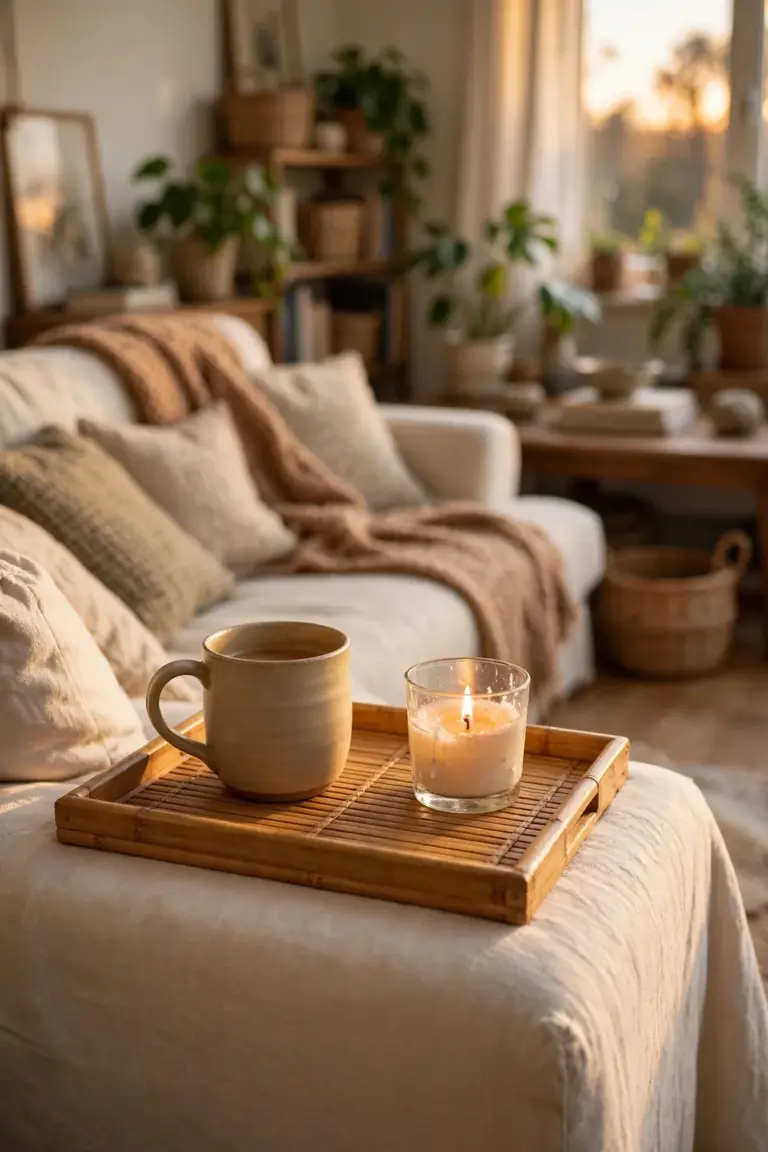
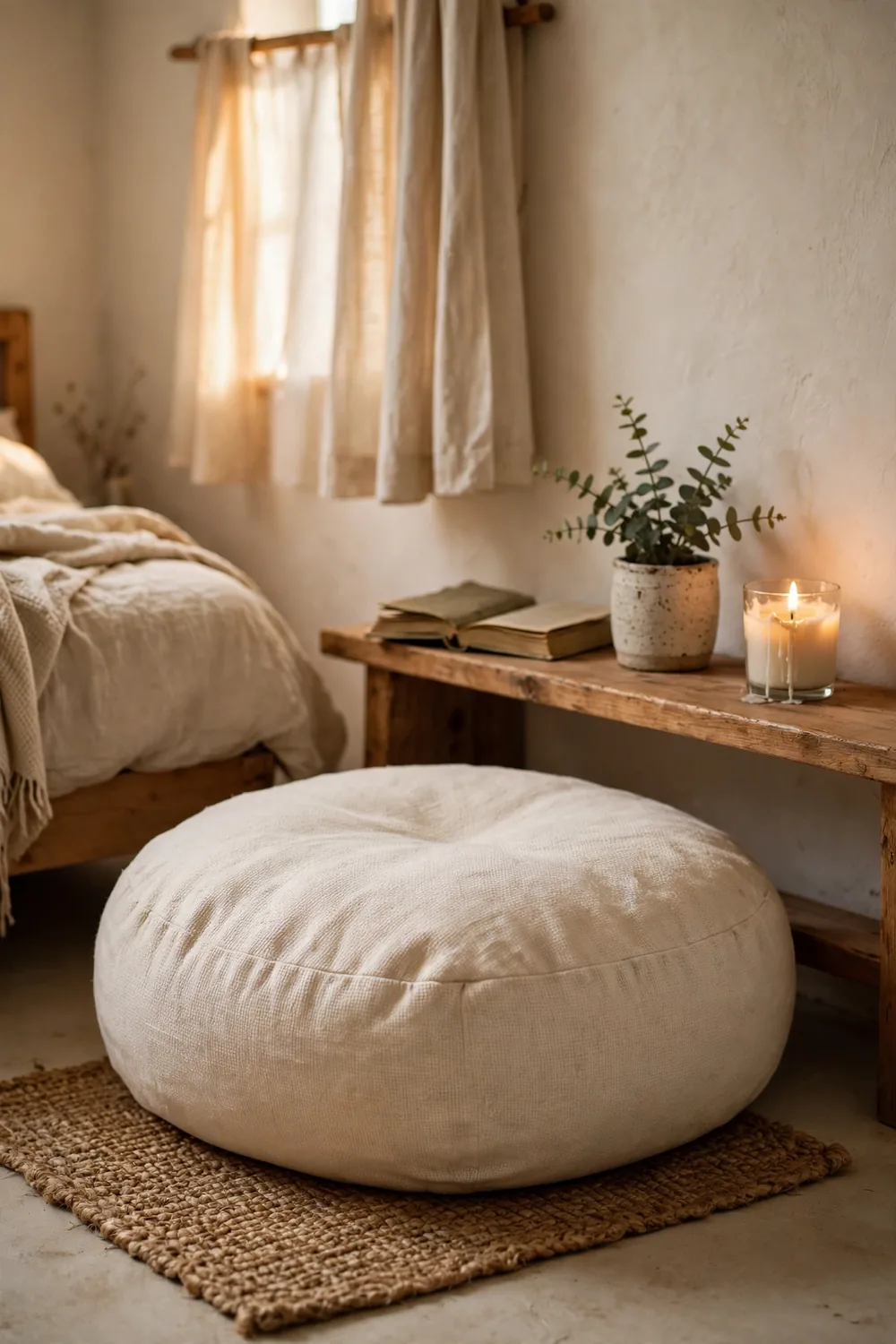
A calm corner is a floor cushion, a low shelf, and a candle, nothing more. A large floor cushion costs about 20 to 35 dollars, a low wooden shelf holds a book and a small plant, and a candle gives the corner its evening glow. This is the cheapest idea on the list and the easiest to get wrong: without the shelf, the cushion is just a pillow on the floor, and without a defined edge, like a small rug, the corner never reads as a place. A 3 by 5 foot rug marks the boundary. Use it for morning coffee, stretching, or ten quiet minutes before the day starts.
8. An entryway drop zone in the corner
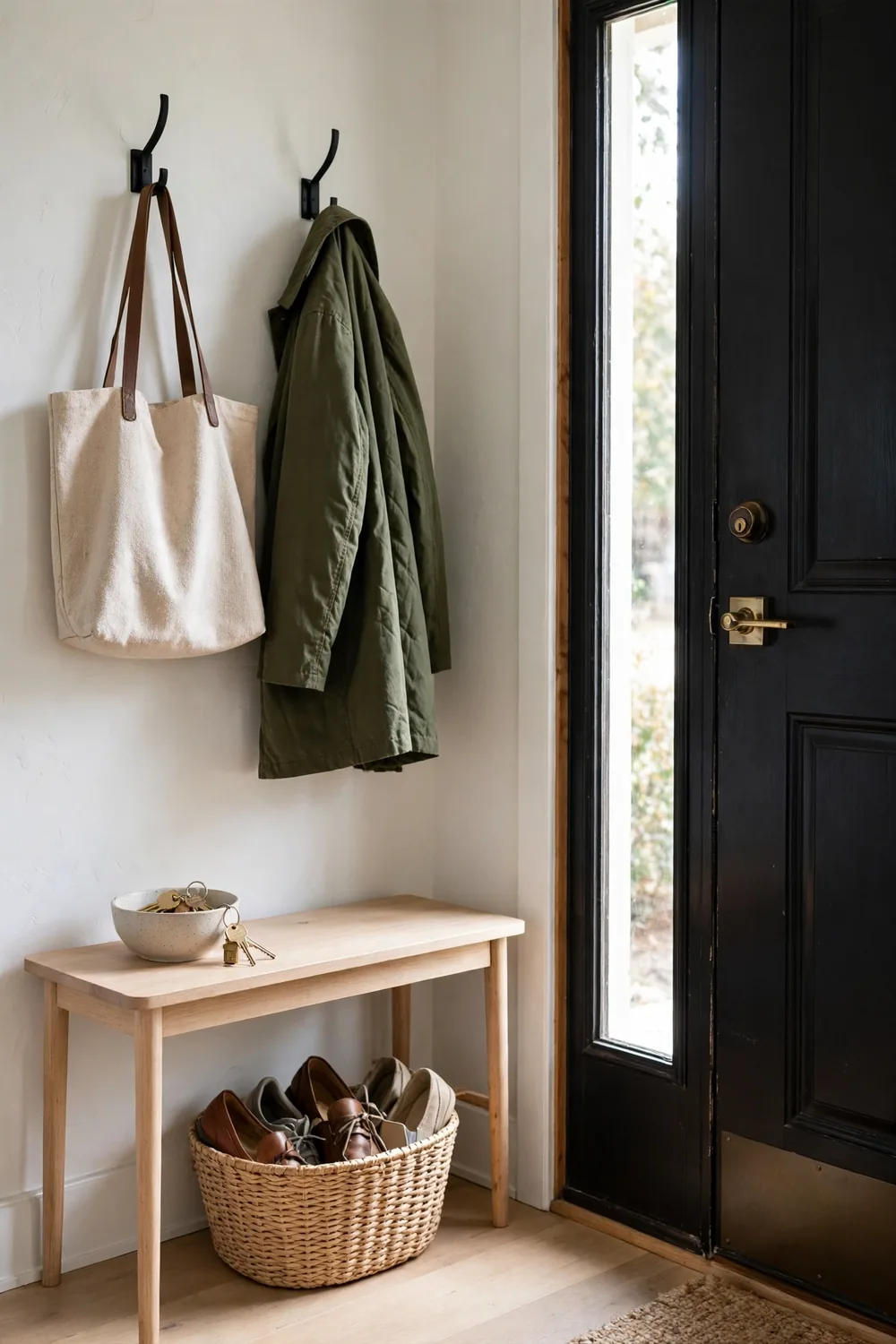
The corner beside the front door is the best drop zone in the house, and the most ignored. A slim bench 14 inches deep, two wall hooks above it, and one basket underneath hold shoes, bags, and keys for about 40 to 60 dollars. The bench gives you somewhere to sit while you put shoes on, the hooks keep bags off the floor, and the basket hides the shoes. Mount the hooks at two heights, one for adults and one low enough for a child or a dog lead. The trade-off is that a drop zone only works if it is the first thing you reach when you walk in: if the corner is behind the door swing, pick a different corner.
What to measure before you start
Measure the corner floor, both walls, and the door swing. A nook fails most often because the chair blocks the door or the desk is too deep to sit at. Write down three numbers: the floor depth from the corner to the nearest walkway, the width along each wall, and the distance to the nearest outlet. Then buy furniture that fits the smallest of those numbers, not the largest. And photograph the empty corner first: the photo shows you the light, the outlets, and the dead space more honestly than standing in the room does.
What to skip
Skip the corner sectional unless the corner is at least 6 feet on each side: a sectional built for a big room swallows a small one. Skip the tall corner cabinet that blocks the window light, and skip buying the furniture before you have lived with the empty corner for a week. The week tells you what you actually miss: a place to read, a place to work, or a place to put your bag down. Build for that one thing first.
FAQ
What is the cheapest corner nook idea? The calm corner: a floor cushion, a small rug, and a candle, about 20 to 35 dollars. The reading nook is next at about 40 to 60 dollars if the chair is secondhand.
How much floor space does a corner nook need? About 3 by 3 feet for most ideas. A reading nook or a calm corner fits in that. A desk or a breakfast table needs closer to 4 by 4 feet to leave a walking path.
How do I light a corner with no outlet nearby? Battery fairy lights or a rechargeable clip lamp for reading, and a candle or LED lantern for glow. A floor lamp with a long cord works if the cord can run along the skirting board without crossing a walkway.
Can a corner nook work in a rental? Yes, if everything is freestanding or hung with adhesive hooks and picture strips. Floating desks and wall shelves need screws, so check the lease first or choose a leaning shelf that needs no fixing at all.
What is the most popular corner nook on Pinterest? The reading nook: fairy lights plus books plus soft textures. Two pins in our research passed 1,500 saves each, and Pinterest shows 11,000 people searched for “cozy nook”.