Room Makeover on a Budget: The $100, $300 and $500 Plans
Short answer: A room makeover does not need a renovation budget. With $100 you can repaint one room, change the textiles, and fix the light in a single weekend. With $300 you can add a rug, real curtains, and one secondhand furniture piece. With $500 you can change the furniture, the walls, and the lighting, and the room will read as new. The rule behind all three plans is the same: spend on paint, light, and one anchor piece, and skip the small decor that eats a budget without changing anything.
How do the three plans work?
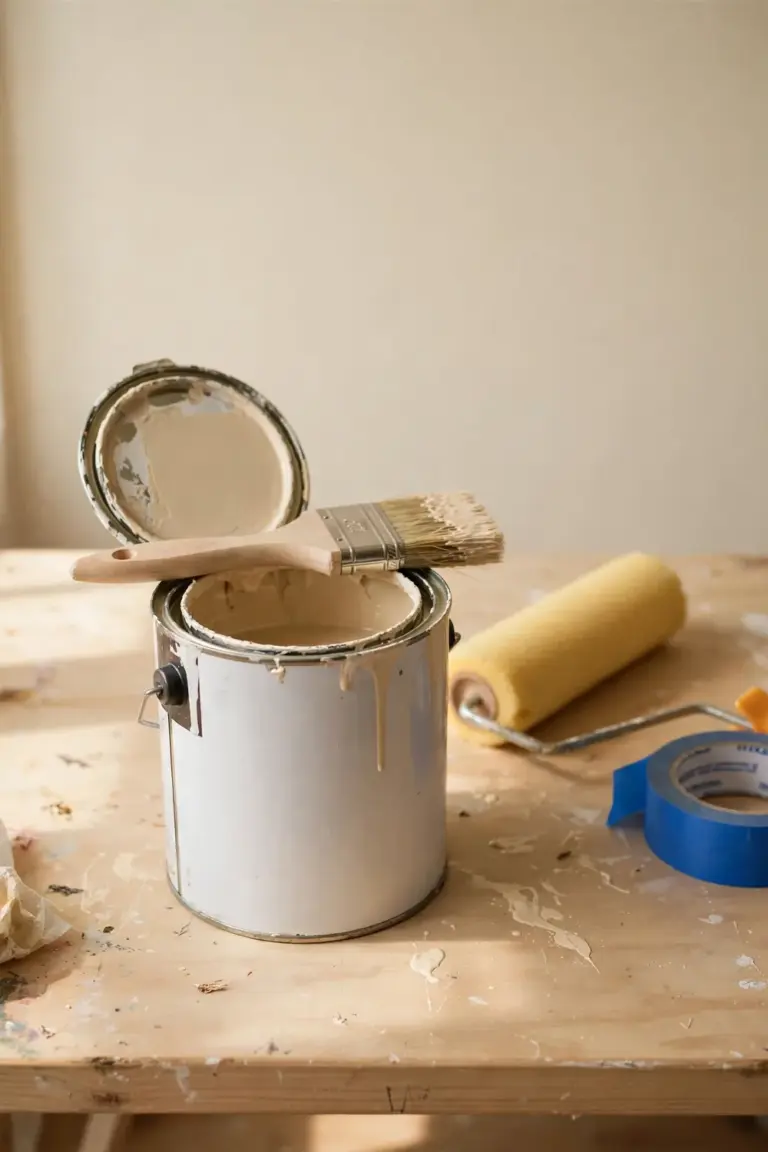
Every plan below follows three rules, and the rules matter more than the shopping lists. First, paint goes first. Paint is the highest-leverage change in our Pinterest research for this cluster: a nine-second stencil video from Royal Design Studio passed 44,400 saves, and a cabinet repaint with no sanding from Heirloom Traditions passed 19,600 saves. One colour change beats a shopping list, every time. Second, keep the shell. Do not replace what works; change its surface. The rental kitchen refresh in our research kept its 1960s cabinets and still looked new for about $600. Third, buy one anchor and fix one light. One big piece plus one light change is what makes a room read as finished. Ten small decor items never do.
I split each budget the same way: about half on the biggest visible change, a quarter on the anchor piece, and a quarter on light and textiles. I would rather spend $40 on a gallon of paint than $40 on four small cushions, because the paint changes the whole room and the cushions change one corner of the sofa. Measure before you buy anything, and buy secondhand where it matters most, which is furniture. Pinterest’s own trend figures show searches for “thrift decor” up 488 percent, and the best flips in our research started on Facebook Marketplace: a pair of nightstands bought for $15, a $100 furniture set flipped for $800. The money math only works if the furniture comes secondhand.
A makeover is not a shopping list. It is one paint colour, one light, and one piece that fits.
What can you change with $100?
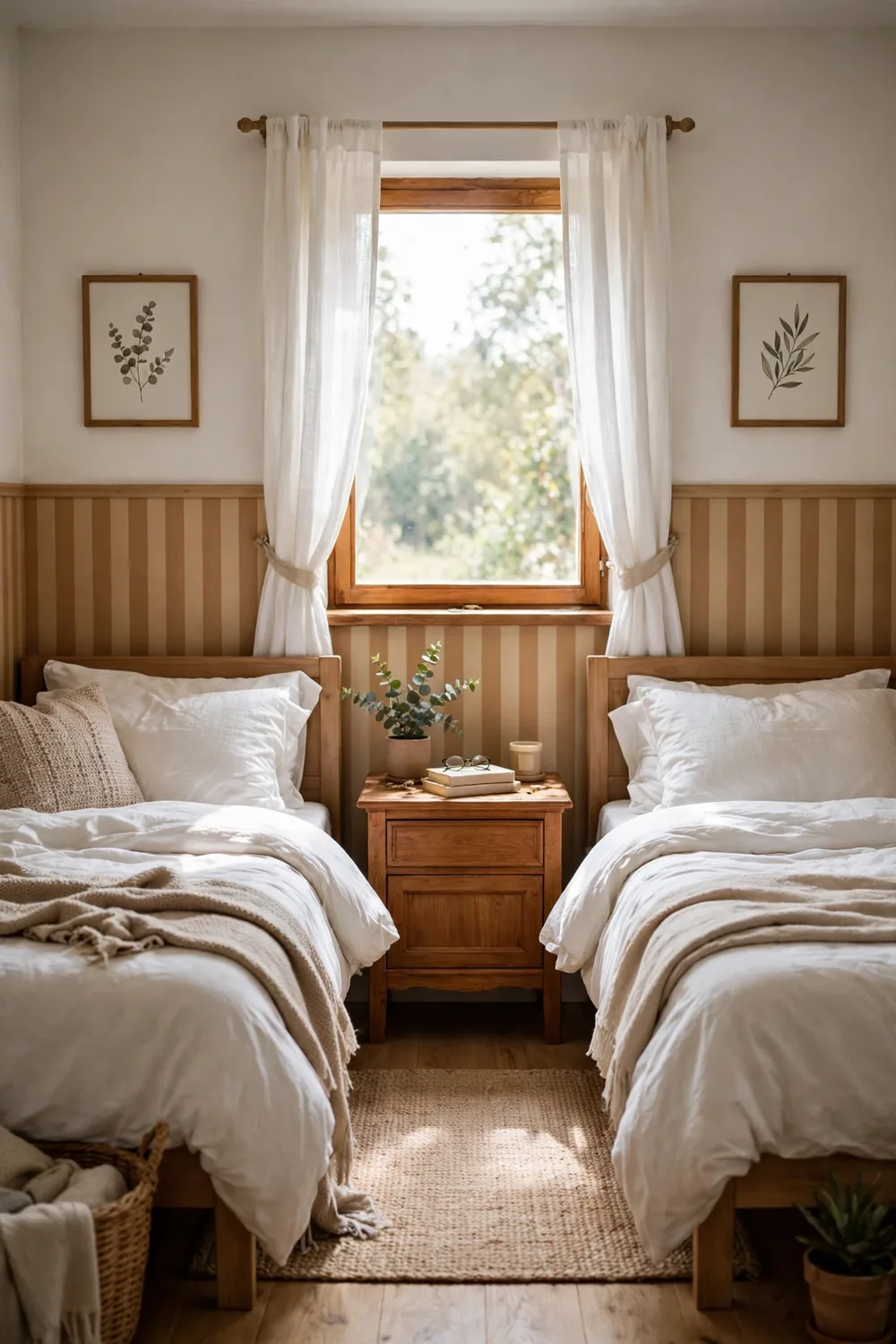
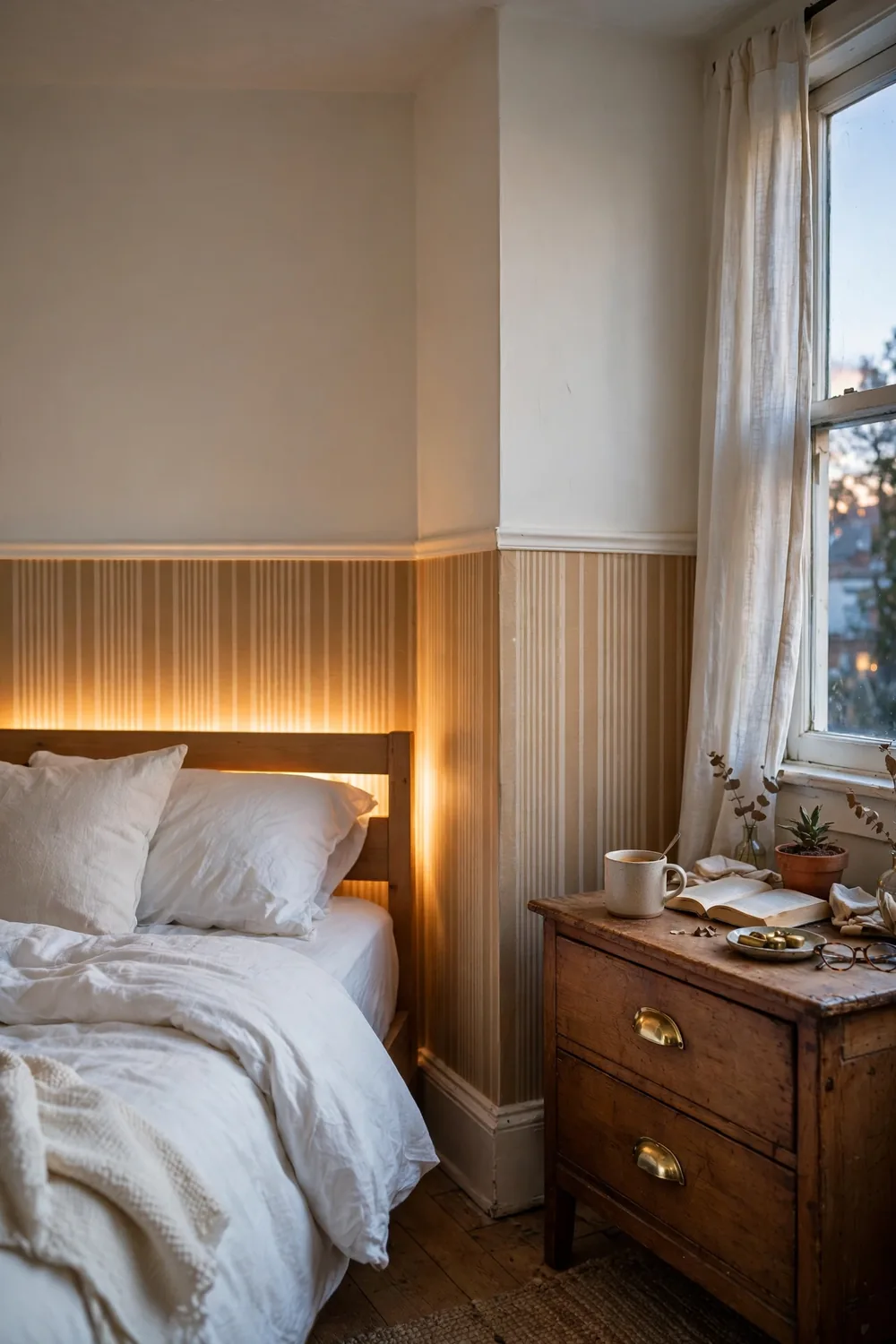
The $100 plan fits one room, and a bedroom is the easiest place to start. Apartment Therapy proved the math in January 2026, when a guest bedroom got a retro 1970s look for about $100: a half-height stripe painted with leftover Benjamin Moore Gladstone Tan, IKEA UTAKERS bed frames found on Facebook Marketplace, and a dresser painted to match. The stripe cost almost nothing because the paint was already open, and the stripe looked more deliberate than a full accent wall.
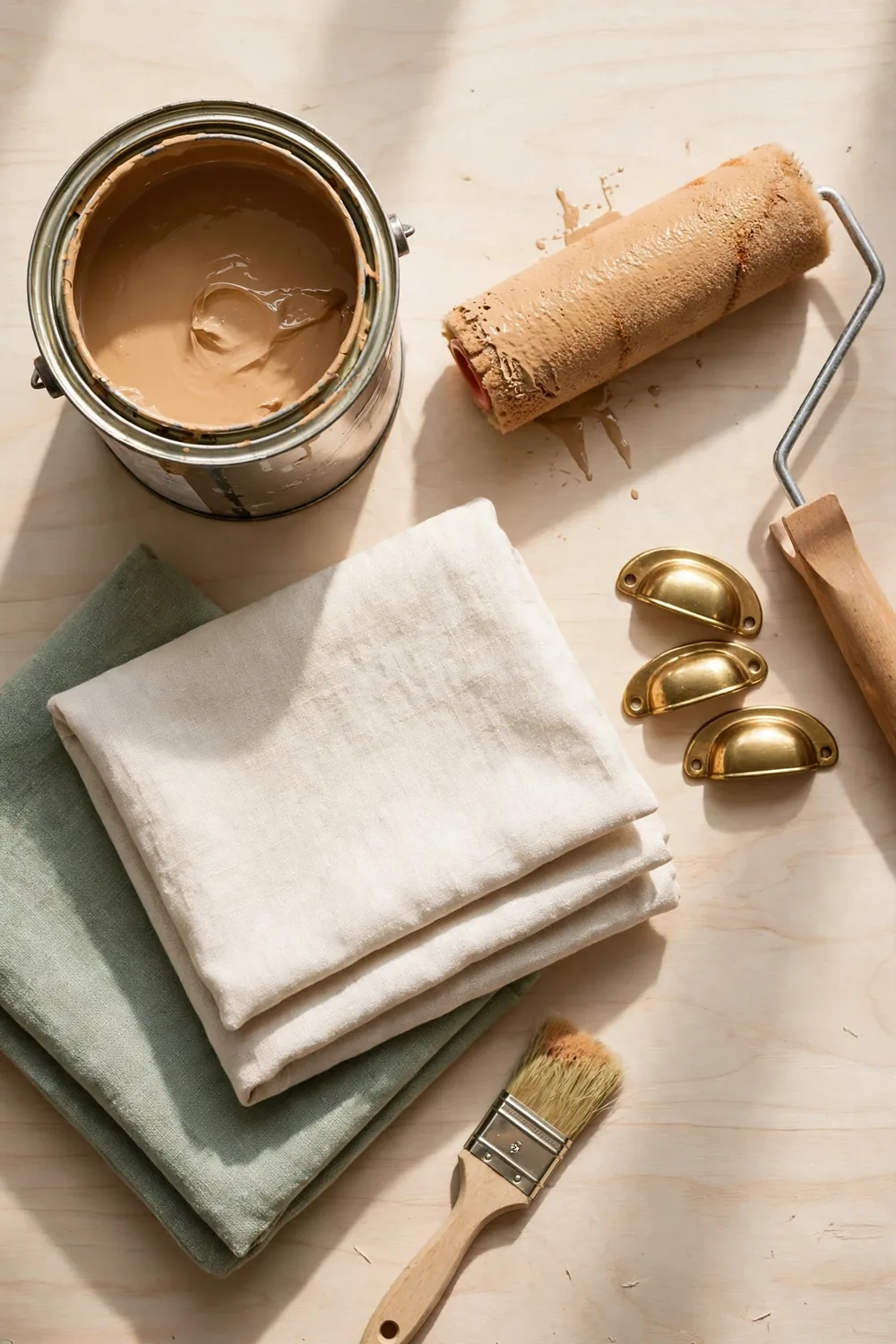
Here is a $100 basket that works without leftover paint. One gallon of good wall paint, $38. A roller, tray, brush, and tape, $16. A secondhand nightstand from Facebook Marketplace, $20. Two brass pulls, $12. Two pillow covers, $14. I keep the inserts and change only the covers, because a cover costs a third of a new pillow and does the same job. Total: $100. Time: one weekend, about 6 to 8 hours. Paint on Saturday, let it dry overnight, and style on Sunday morning.
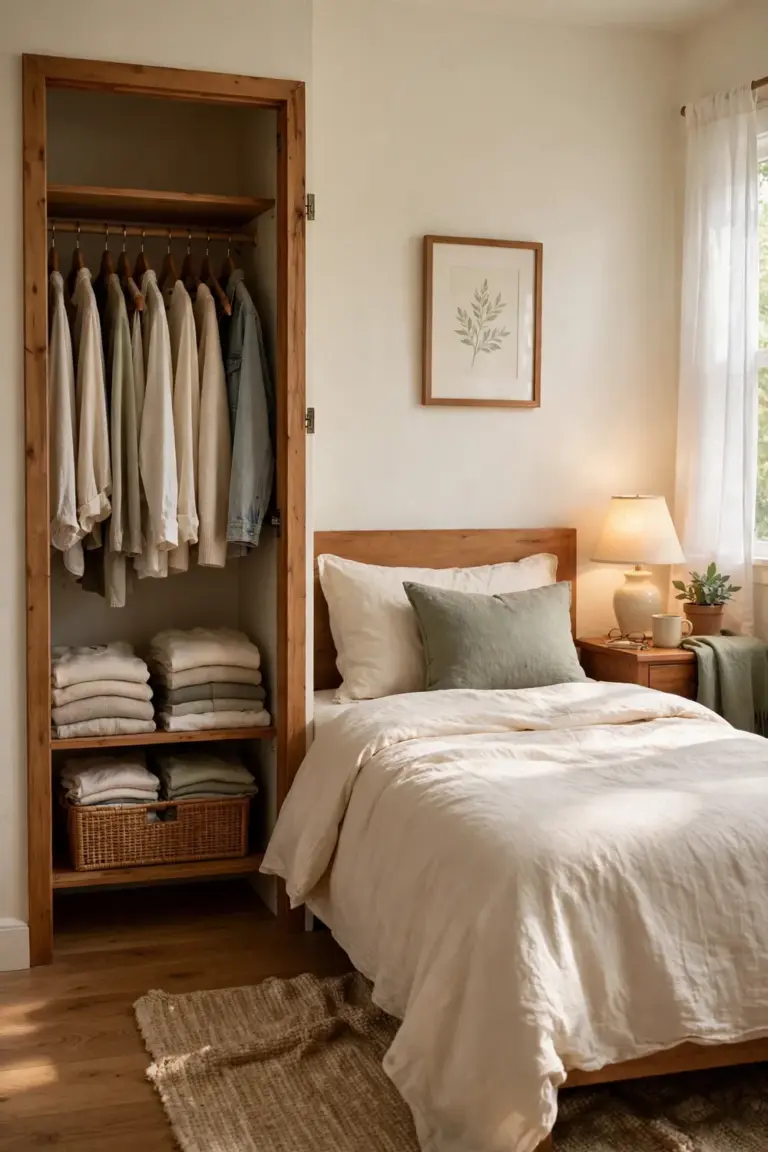
Spend the paint where the eye lands first: the wall behind the bed. A half-height stripe costs less paint than a full wall and photographs as a design choice, not a shortcut. The nightstand is the anchor: clean it, paint it the same colour as the stripe or leave the wood top bare, and swap the pulls for brass. Brass hardware is the cheapest luxe cue in our research, and it repeats across nearly every top pin in this cluster. The pillow covers are the textile change: two covers in one solid colour beat four small cushions in four patterns.
The honest trade-off is that $100 buys surface change, not new furniture. The bed, the dresser, and the layout all stay. What changes is the colour, the light, and the one piece your eye touches first. If the walls are already a colour you like, skip the paint and put the $38 toward a 5 by 7 foot rug instead. But for most rooms, paint is the better first $38.
What changes with $300?
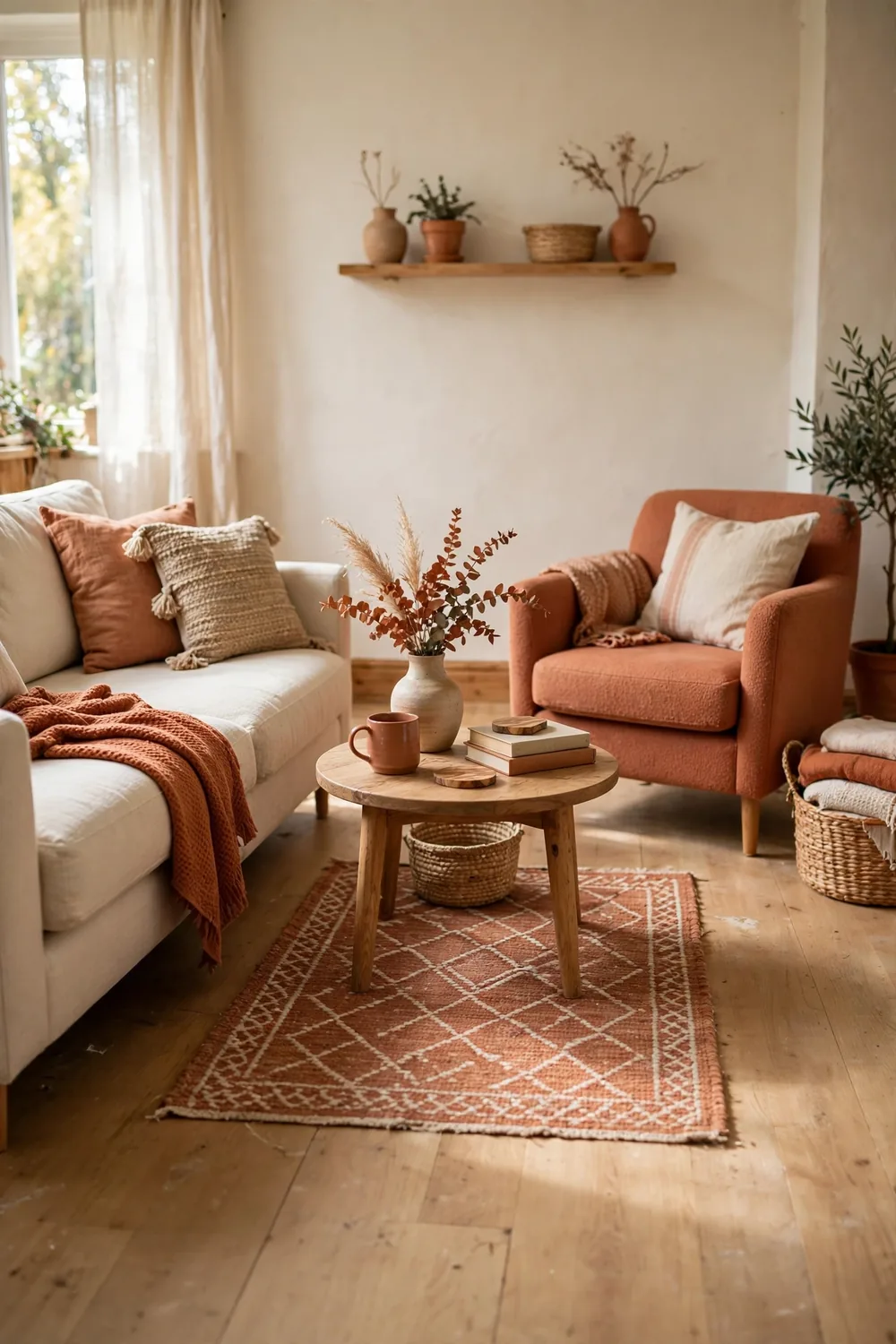
The $300 plan starts with everything in the $100 plan, then adds the three things that make a room feel finished: a rug, real curtains, and one flipped furniture piece. The paint, pulls, and pillow covers come to about $100. The rug is next: a 5 by 7 foot rug costs $50 to $80 at IKEA or Target, and the size rule is simple. The front legs of the bed or sofa sit on the rug. A rug that floats in the middle of the floor with nothing on it is the most common sizing mistake in small rooms, and it makes the room look smaller, not bigger.
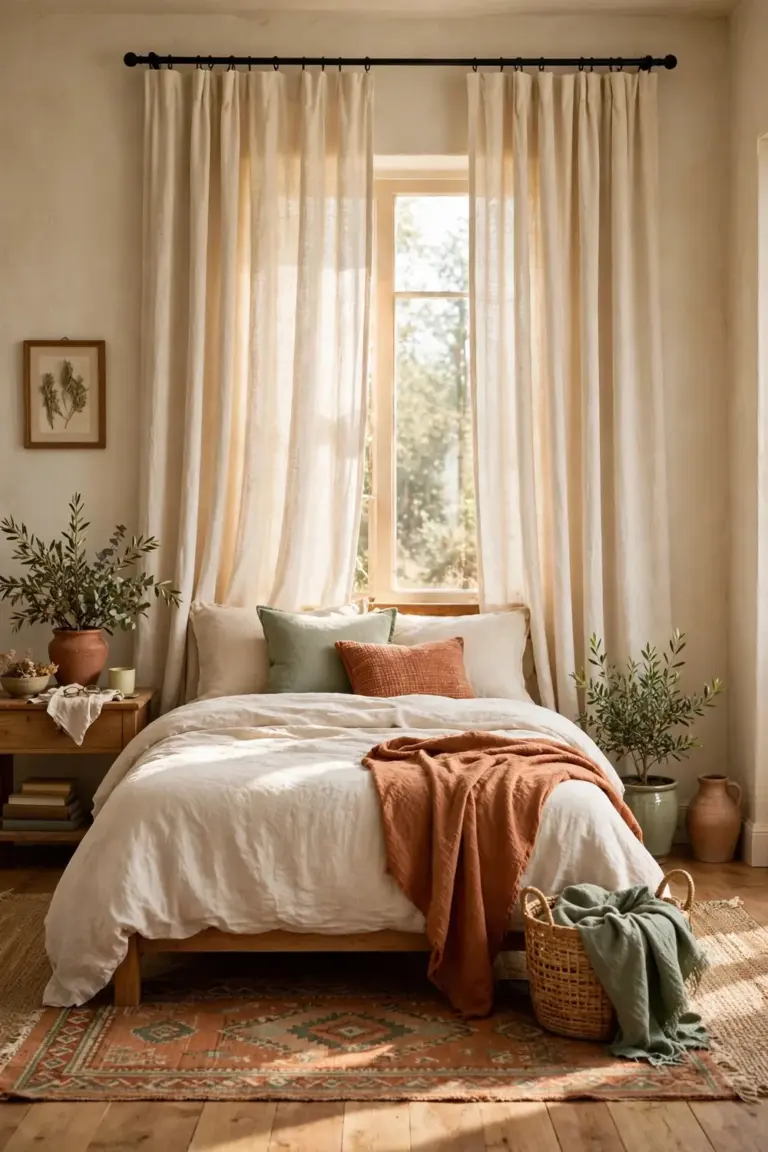
Curtains come after the rug. A rod costs about $10 and two panels cost $25 to $40. I hang the rod 4 to 6 inches above the window frame and 3 to 6 inches wider on each side, so the window reads bigger than it is. Floor-length panels in one solid colour, cream or warm white, do more than any patterned short curtain. Time to hang: about 30 minutes, including finding the studs.
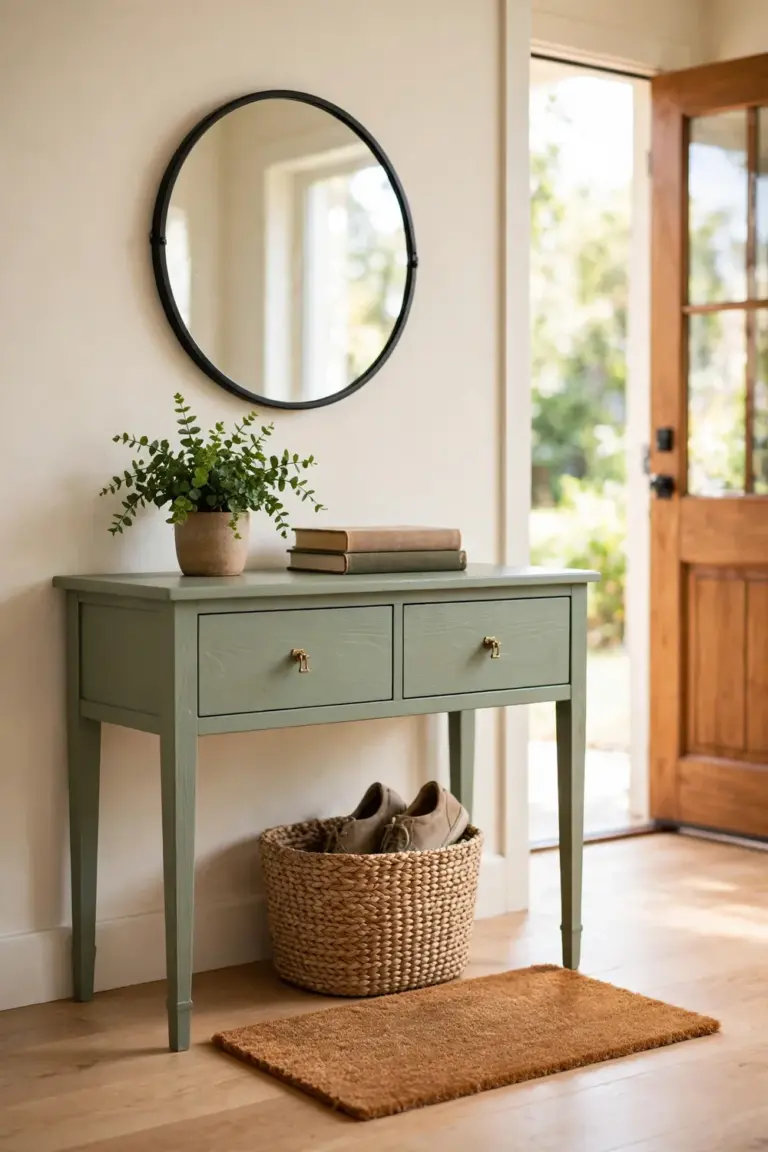
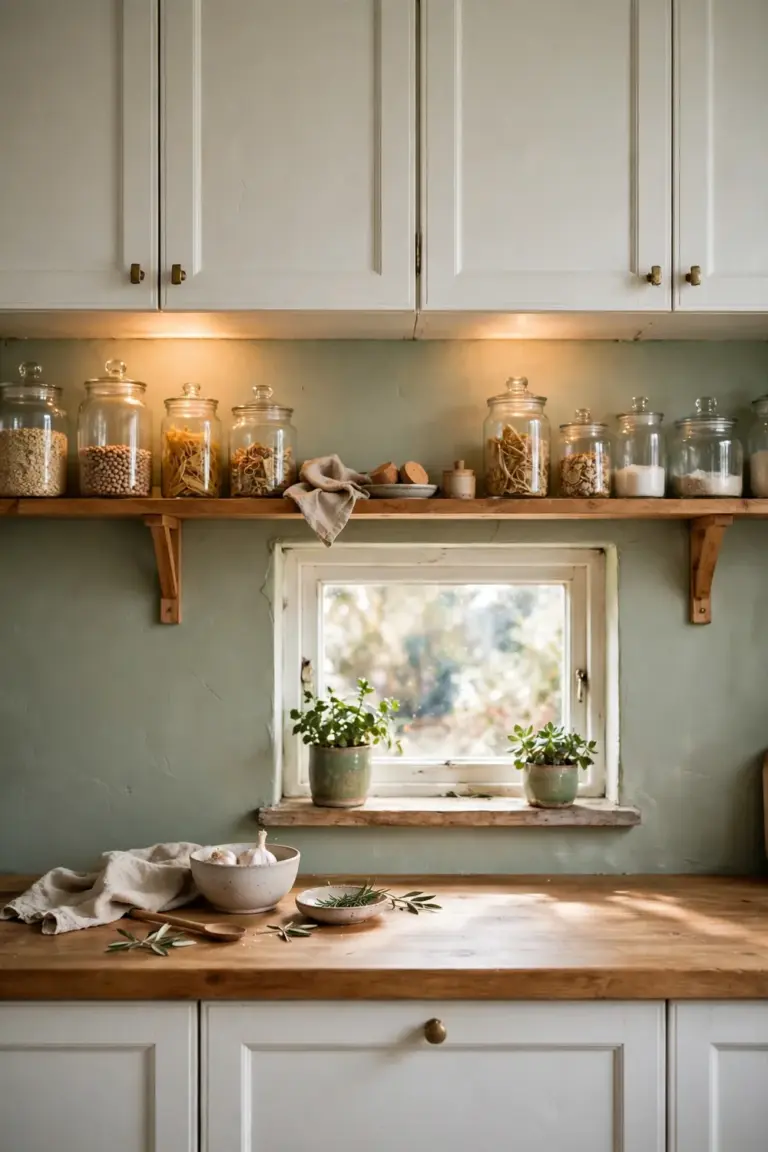
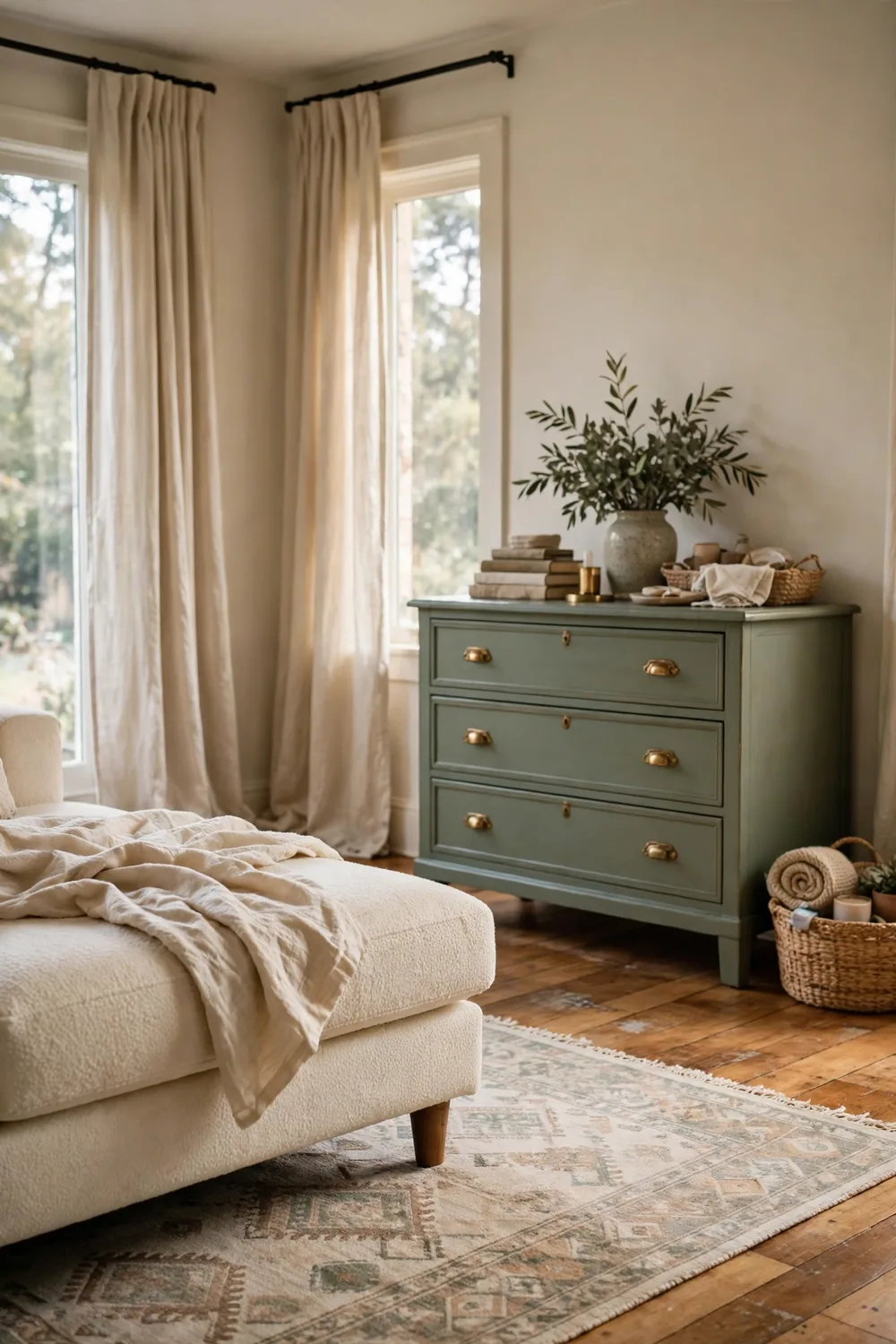
The furniture flip is the anchor. A secondhand dresser costs $30 to $60 on Facebook Marketplace. One can of furniture paint costs about $35: Fusion Mineral Paint in Bellwood, a soft sage green, is the safe luxe colour in our research, and a sage dresser with brass pulls reads expensive in any room. Or use Heirloom Traditions ALL-IN-ONE Paint in Iron Gate, the truest black in their range, which needs no sanding and no sealing according to the maker, and whose cabinet video passed 19,600 saves. Paint the dresser in an afternoon and let it dry a full day before you load the drawers.
If the room has a kitchen corner or a bare entry wall, add peel-and-stick. Smart Tiles backsplash sheets cost $8 to $15 each, need no grout, are waterproof, and come off without damage, which is why they recur across the rental kitchen pins in our research. Four sheets cover a small backsplash for about $40. Total for the plan: $100 base, $70 rug, $35 curtains, $65 dresser flip, $30 peel-and-stick. That is $300. Time: one weekend plus one evening, about 10 to 12 hours in total.
What does $500 get you?
The $500 plan starts with the whole $300 plan, then adds the two moves that make a room read as new rather than refreshed: a second furniture piece and a lighting change. Keep the $300 base at $300. The furniture piece is a secondhand sofa or bed frame, $100 to $150 on Facebook Marketplace. Check three things before you pay: the drawers slide, the frame does not wobble, and it does not smell of smoke. A pair of matching nightstands for $15 to $40 is the cheaper version of the same move, and the research shows a $15 pair flipped and sold for $300, so the value is real even before you paint them.
The lighting change is a fixture swap or a large floor lamp, $40 to $80. A secondhand pendant or a budget drum shade changes the whole evening look of the room. If you rent, keep the old fixture in a box and reinstall it when you move out, or skip the wiring entirely and use a plug-in pendant or a tall floor lamp. If the wiring worries you, a handyman charges about $50 to swap a fixture, and that is money well spent. Time to swap a fixture: about 30 minutes once the breaker is off.
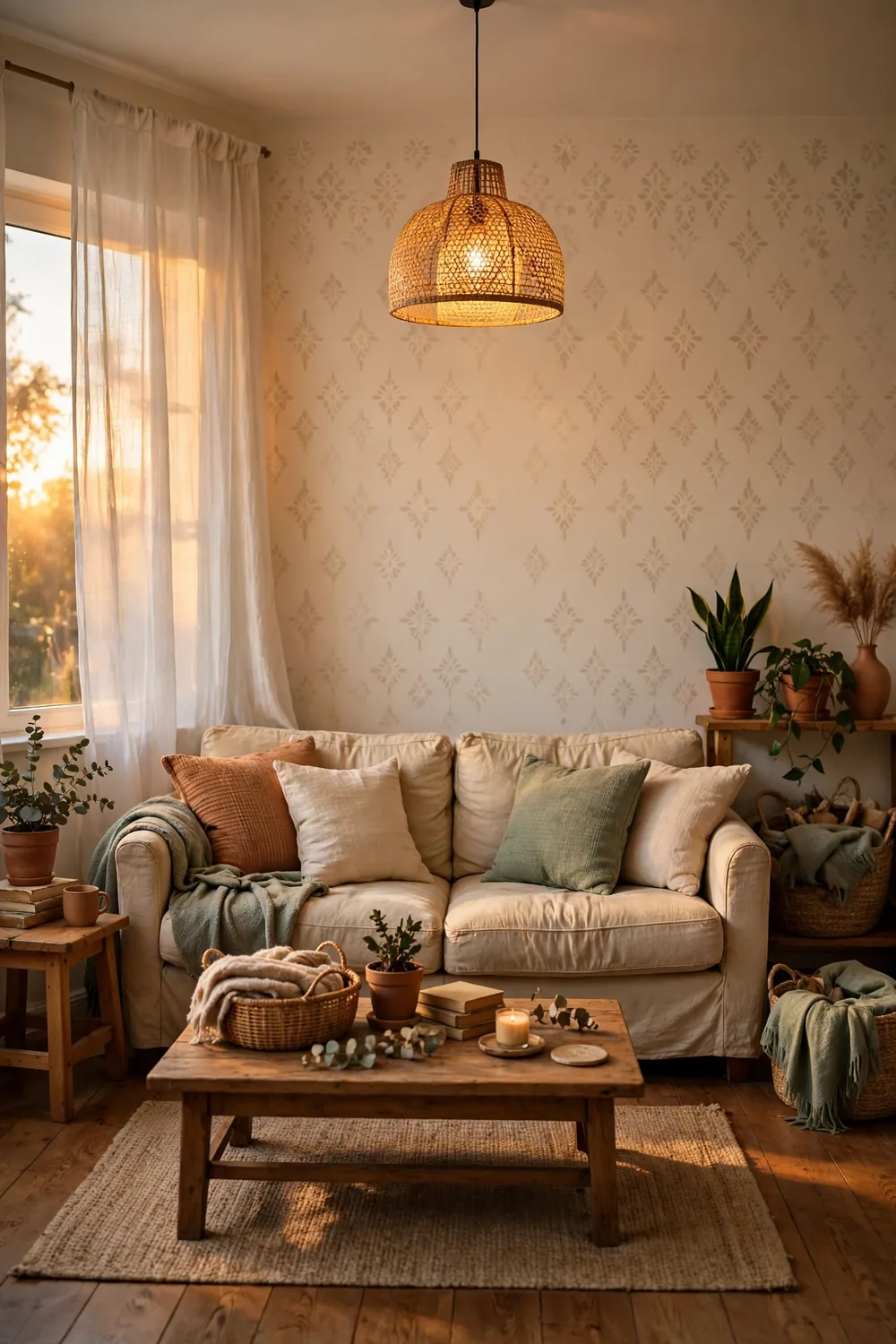
The last $20 goes to an accent wall, and the cheapest high-impact version is a stencil. The Royal Design Studio stencil pin, 44,400 saves, is a nine-second video of a brush, a stencil, and a wall, and the whole job takes one can of paint. A stencilled accent wall behind the bed or the sofa costs about $20 in paint and one afternoon. Total for the plan: $300 base, $120 furniture, $60 lighting, $20 accent wall. That is $500. Time: two weekends, about 14 to 16 hours in total.
The honest trade-off is that $500 still does not buy new furniture. It buys good secondhand furniture plus new surfaces. A new sofa alone costs $500 or more, and it would eat the whole budget without changing the walls, the rug, or the light. The $500 plan works because it spreads the money across the room instead of spending it on one piece.
What should you measure before you spend?
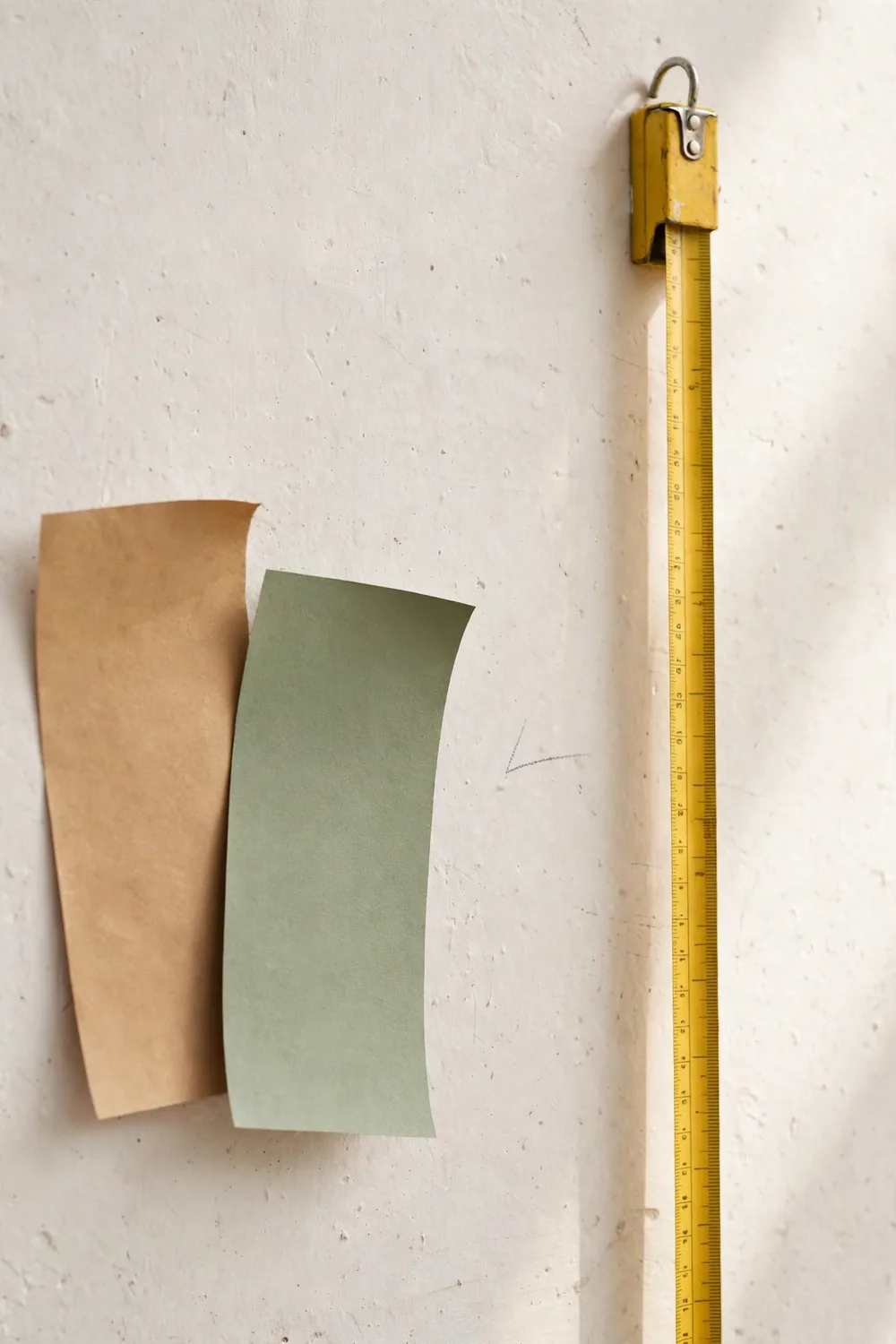
Measure three things before you buy anything: the room, the rug zone, and the window. Write down the length and width of the room, the width of the wall the bed or sofa sits against, and the height of the ceiling. One gallon of paint covers about 350 square feet, which is roughly one standard bedroom, so a second gallon is only needed for a large living room or a second coat over a dark colour.
For the rug, measure the seating or sleeping zone, not the room. A 5 by 7 foot rug fits a small living room or a bedroom; an 8 by 10 foot rug fits a larger living room. For the curtains, measure the window plus 3 to 6 inches on each side for the rod, and measure from the rod to the floor for the panel length. For furniture, measure the doorways it has to pass through: a secondhand sofa that does not fit through a 30-inch door is a $120 mistake you carry back down the stairs.
Check the light too. Stand in the room at the time of day you actually use it and look at where the sun falls. A reading corner needs an outlet within reach of the lamp, and a desk needs one for the charger. A corner with no outlet is a corner that will not get used, no matter how good it looks in a photo.
What should you skip?
Skip buying decor before you paint. Small vases, candles, and trays are the fastest way to spend $100 without changing the room. My rule is simple: if it does not change the colour, the light, or the size of the room, it waits until the paint is dry. Skip the matching furniture set from one store: it looks like a showroom and costs more than a mixed secondhand set that you paint to match. Skip the rug that is too small. If only the coffee table fits on it, the rug is too small, and the room will look like the furniture is floating.
Skip peel-and-stick on textured walls. It will not hold, and it will peel within weeks. Skip the accent wall in the darkest corner of the room: paint needs light to read, and a dark corner eats the colour. And skip buying the furniture before you have measured the doorways, the wall, and the walking path. A tape measure costs $5 and saves more money than any coupon.
FAQ
Can I really make over a room for $100? Yes, if the money goes to paint, one secondhand piece, and textiles. Apartment Therapy’s $100 bedroom used leftover paint and Marketplace bed frames, and the total came to about $100. The $100 plan fails only when the money goes to small decor instead of paint.
How long does each plan take? The $100 plan takes one weekend, about 6 to 8 hours. The $300 plan takes one weekend plus one evening, about 10 to 12 hours. The $500 plan takes two weekends, about 14 to 16 hours. Drying time is not included: give painted furniture a full day before you use it.
Can I do these plans in a rental? Yes, if you pick reversible moves. Peel-and-stick tiles and wallpaper come off, Command strips hold light frames, and freestanding furniture needs no fixing at all. Painting needs the landlord’s permission in most leases, so ask first or use a removable stencil panel on one wall.
Where do I find cheap furniture that is actually good? Facebook Marketplace first, then thrift stores. Check the drawers, the joints, and the smell before you pay. Solid wood with a scratched finish is a good buy because paint fixes the finish. Particle board with swollen edges is not, because no paint fixes swollen board.
What is the single best $50 spend? A gallon of paint, $35 to $50, if the walls need it. If the walls are already fine, a 5 by 7 foot rug for $50 to $80. Paint changes the colour of the room; a rug changes the size of it.