How to Flip Furniture from Facebook Marketplace: A Beginner’s Guide
Short answer: Buy a solid wood piece for $15 to $60, spend about $30 on furniture paint and $20 on a topcoat, and give it one weekend. The flip takes about 8 hours of hands-on work plus drying time, needs no power tools, and the finished piece reads as a $300 piece. Sell it locally and you keep every dollar, because a local pickup sale on Facebook Marketplace costs nothing.
| Piece | Solid wood dresser or nightstand pair, $15 to $60 |
| Paint | Fusion Mineral Paint 500 ml, about $30, covers about 75 sq ft |
| Total cost | About $100 to $150 all in |
| Time | One weekend, about 8 to 10 hours hands-on plus drying |
| Difficulty | Beginner, no power tools |
| Tools | Brush, sandpaper, screwdriver, drop cloth |
| Sell it | Local pickup: no fee; shipped: 10% fee, $0.80 minimum |
The best furniture deal in your town is sitting on Facebook Marketplace right now, listed for $40, photographed badly, and ignored by everyone scrolling past it. A good piece of furniture does not stop being good because the photo is bad. It stops being good when the wood is wrong, and that is the only thing you need to learn to check.
One piece, one weekend, one can of paint. No workshop, no sprayer, no experience.

What should a beginner flip first?
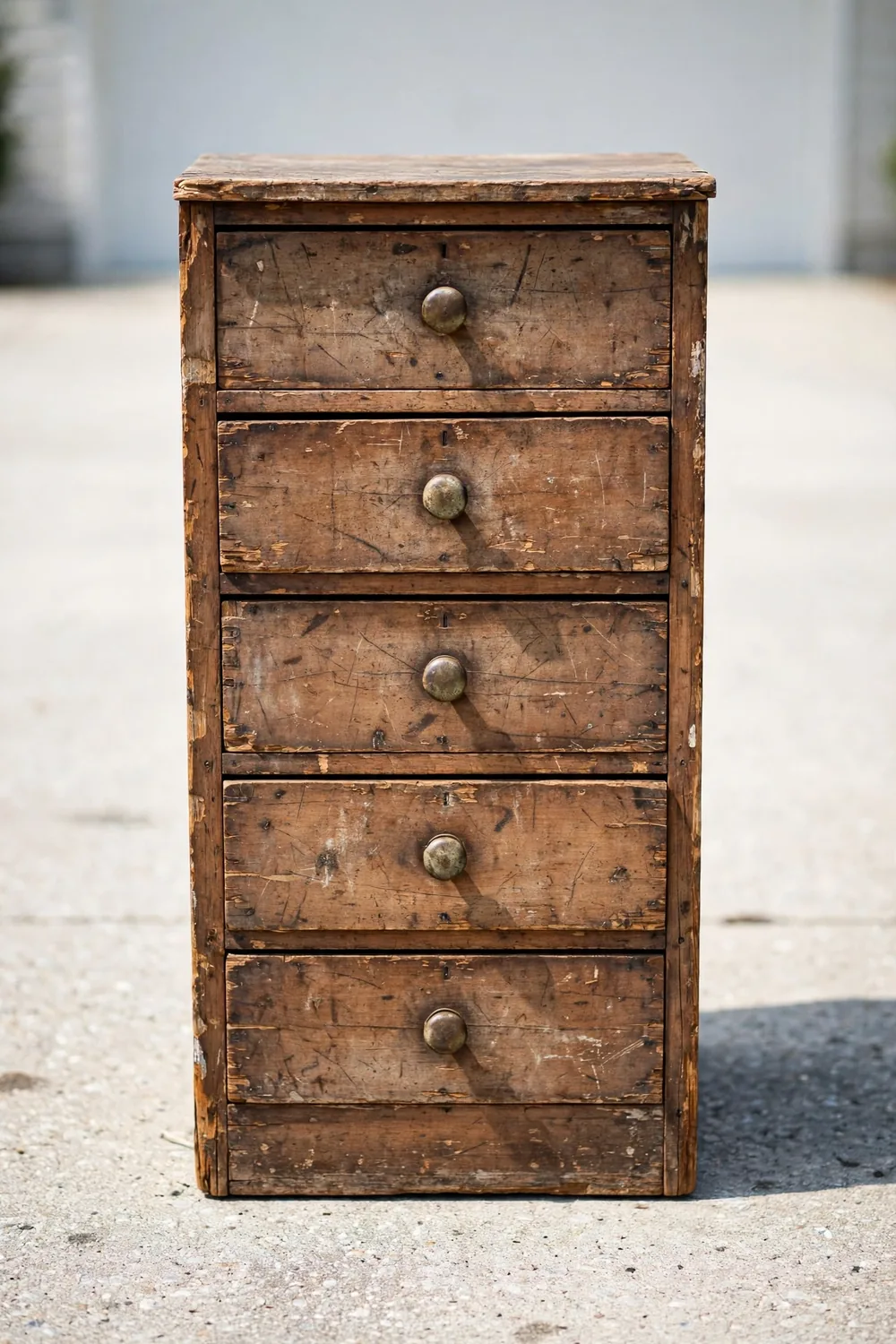
Start small and start solid. The best first pieces are a nightstand, a small dresser, or a side table. They have one flat top, drawers you can take out, and a size that fits in a car. A bed frame or a wardrobe is a second flip, not a first.
Check three things before you pay, and check them in person. First, the drawers. Pull every drawer out and push it back in. It should slide without catching or dropping at the front. A sticking drawer usually needs only wax on the runners; a broken runner is a repair job, not a paint job. Second, the joints. Put one hand on the top and push gently side to side. A solid piece barely moves. Third, the smell. Put your nose near the inside of a drawer. Smoke and pet urine are the two smells that do not leave, no matter how much you clean or seal. Walk away from both on a first flip.
The wood matters more than the finish. Solid wood with a scratched finish is a good buy, because paint fixes the finish. A dresser in Shackteau Deep Sea Blue milk paint passed 2.9k saves in our research with one straight-on shot, and the wood underneath was old and scratched. Particle board with swollen edges is not a good buy, because no paint fixes swollen board. Peeling veneer is the same: if the thin skin is lifting, the paint will lift with it.
The money math is the reason this works. A pair of nightstands bought for $15 and flipped for $300 is the most-pinned flip in our research, and a $100 set flipped for $800 passed 871 saves. Your first flip is for your own home.
How do you find a good piece on Facebook Marketplace?
Search like a flipper, not like a shopper. The words that find solid wood are “solid wood dresser”, “wood nightstand”, “vintage dresser”, and “real wood”. Set the distance to what you will actually drive, usually 10 to 15 miles, and set a price cap of $60. The best pieces are the ones with bad photos and short descriptions, because fewer people message about them.
Read the listing the way you would read a used car ad. A seller who writes “solid wood, drawers work, smoke-free home” has already answered your three questions. A listing with stock photos, no measurements, and no mention of the material has answered nothing. Message the seller with three questions of your own: is it solid wood or veneer, do all the drawers slide, and is there any smoke or pet damage.
Watch for red flags. “Must go today” is pressure, not a bargain. A seller who will not let you open the drawers before you pay is hiding something. Never pay in advance. You pay when the piece is in your car, after you have checked it in person. Meet safely: go in daylight, in a public place if the seller will meet you there, or bring a friend. Tell someone where you are going. Measure your car and your doorways before you leave: a dresser that does not fit through a 30-inch door is a $40 mistake you carry back down the stairs.
Listing on Marketplace is free, and a local pickup sale costs nothing. Facebook only takes a fee on shipped orders paid through its checkout: 10% of the order total, with a $0.80 minimum, a rate in place since April 2024.
How do you flip it, step by step?
Seven steps, one weekend. Saturday is the dirty work, Sunday is the finish. Nothing here needs a power tool.
1. Find the piece and check it before you pay
The flip starts in the seller’s driveway, not at home. Open every drawer, push the piece side to side, and smell the inside of a drawer. Bring a tape measure and check it against the spot it will live in, and against your car. If it passes, pay and load it. At home, take the drawers out and photograph the piece now, in the same spot and light where you will photograph the after. You cannot take the before photo later.
2. Clean it, then sand only what needs sanding
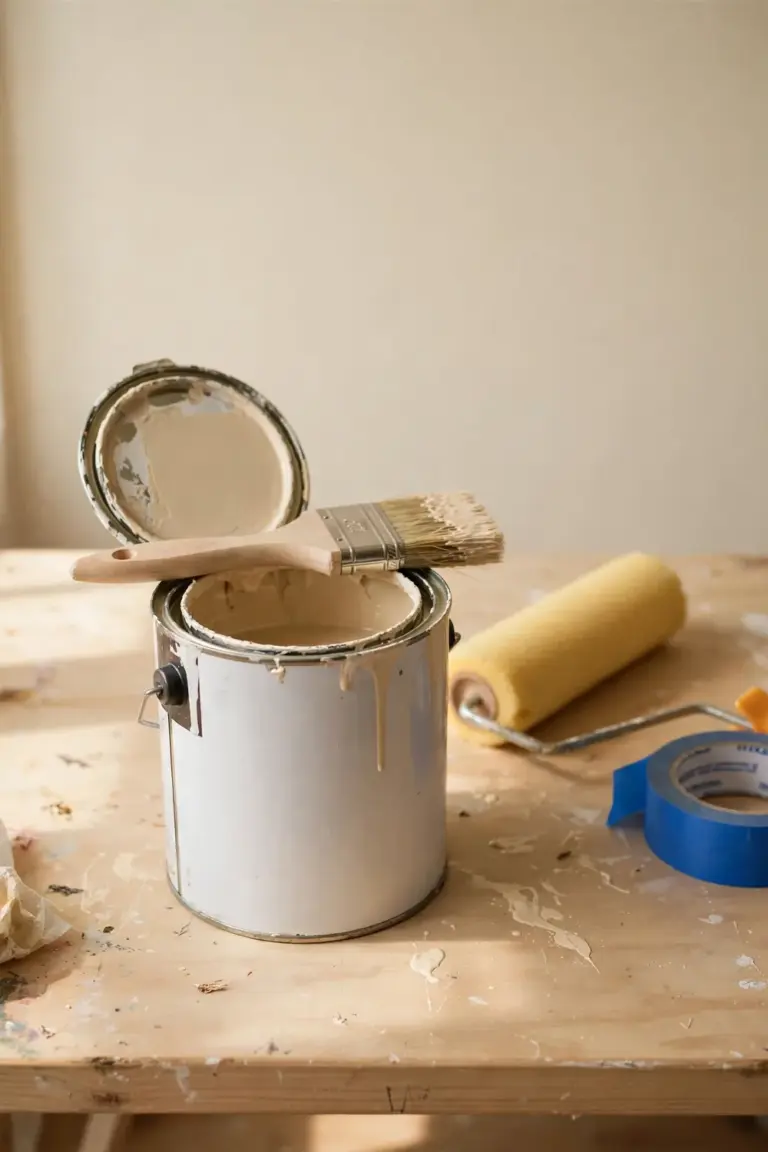
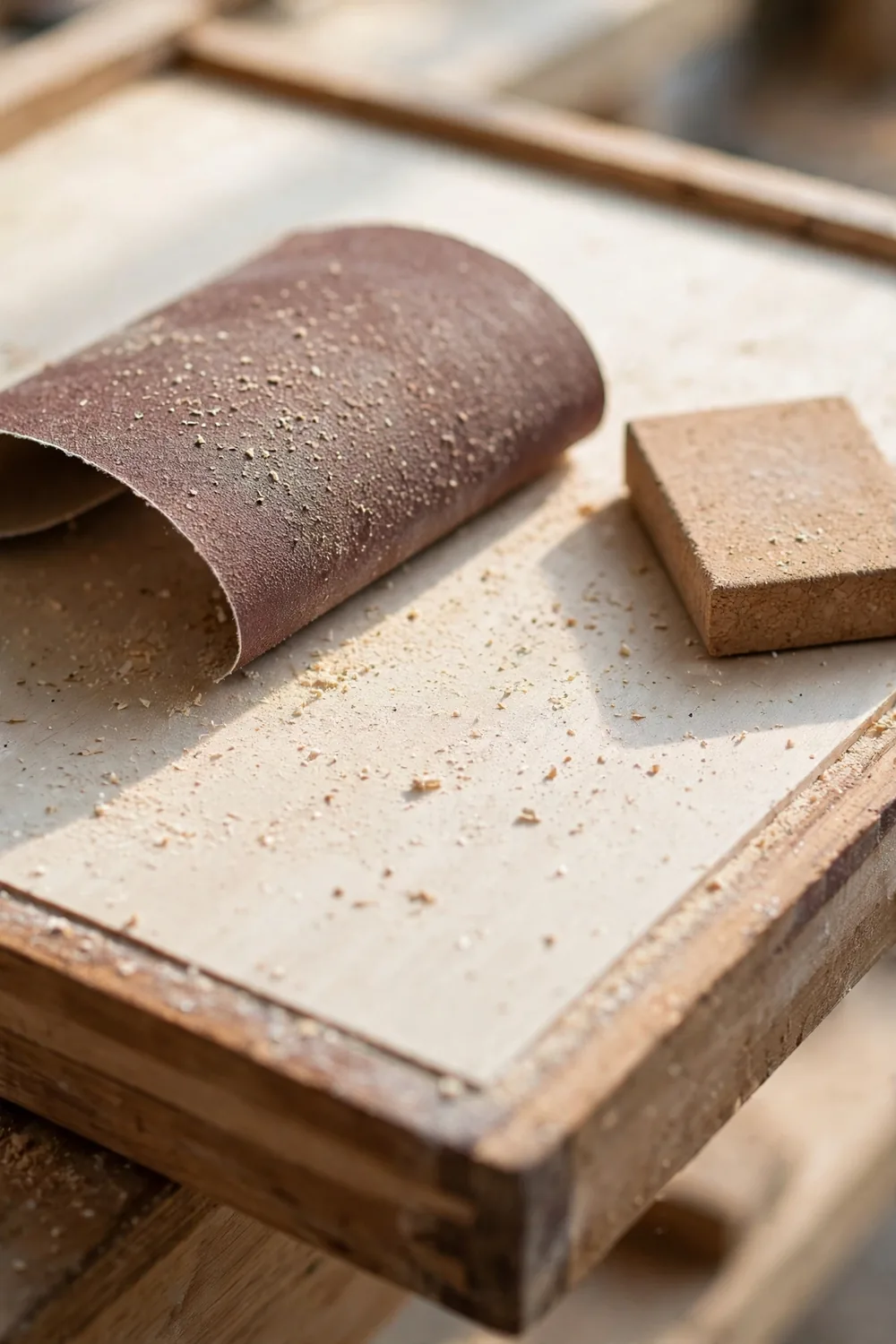
Wash the whole piece first with warm water, dish soap, and a rag, and let it dry fully. Wet dust clogs sandpaper and smears. Sand with 120-grit to scuff the old finish, then 220-grit to smooth it. You are not stripping it to bare wood, just giving the paint something to grip. Wipe the dust off with a damp cloth, then a dry one. If you use Heirloom Traditions ALL-IN-ONE Paint, the maker says no sanding is needed, because the primer is built in. With any other furniture paint, sand. It takes 20 minutes and it is the difference between paint that stays and paint that peels.
3. Prime the spots that will bleed through
Most of the piece needs no primer. The spots that do are the ones that bleed: knots in pine, dark stain under light paint, and old water marks. Those show through two coats of paint like a bruise, and the only fix is a shellac-based primer on the spot before you paint. A small can of Zinsser BIN covers the knots and dries in about 45 minutes. Prime only the spots, not the whole piece, unless the whole piece is dark stain and your paint is white. Let the primer dry fully.
4. Paint two thin coats, not one thick one
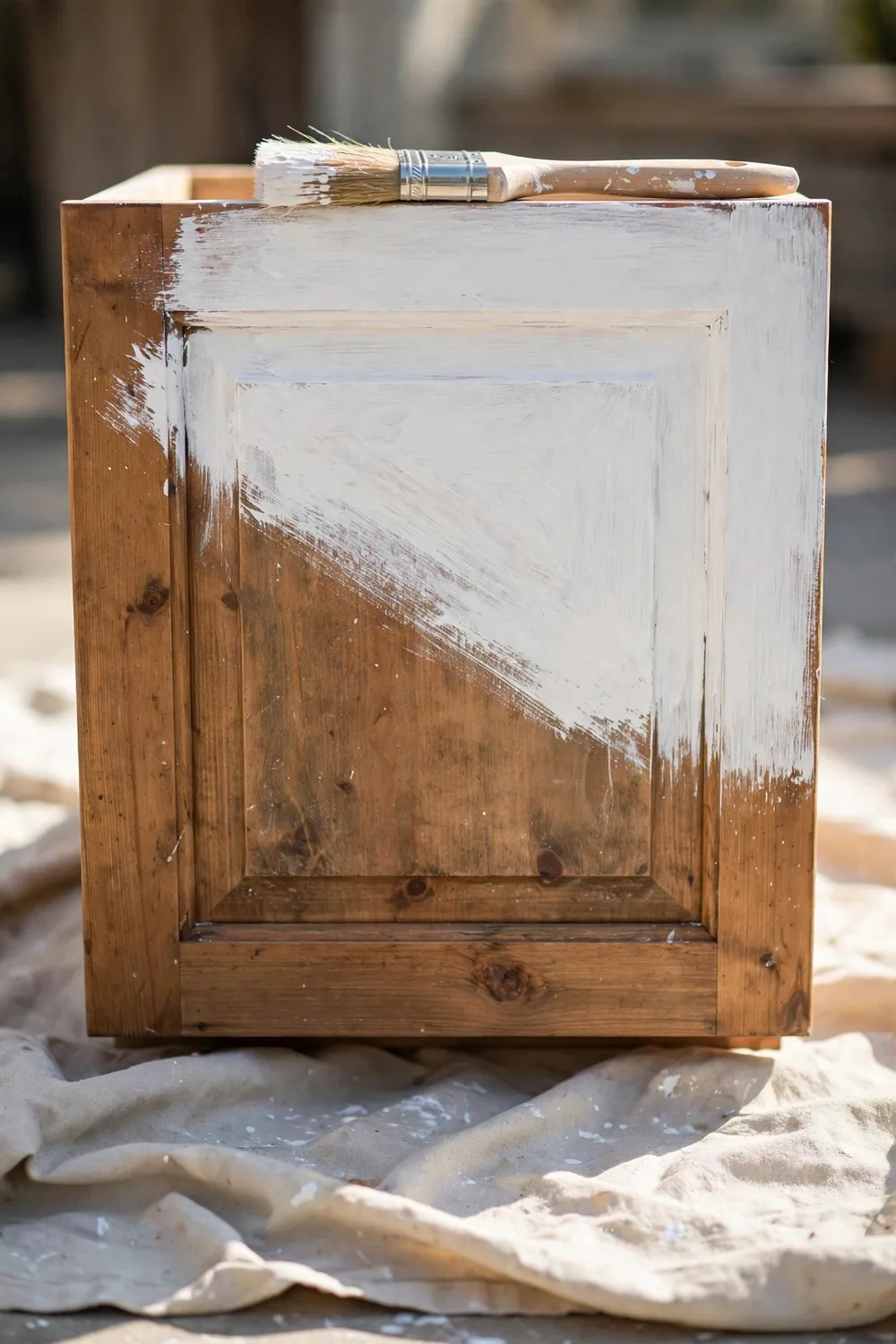
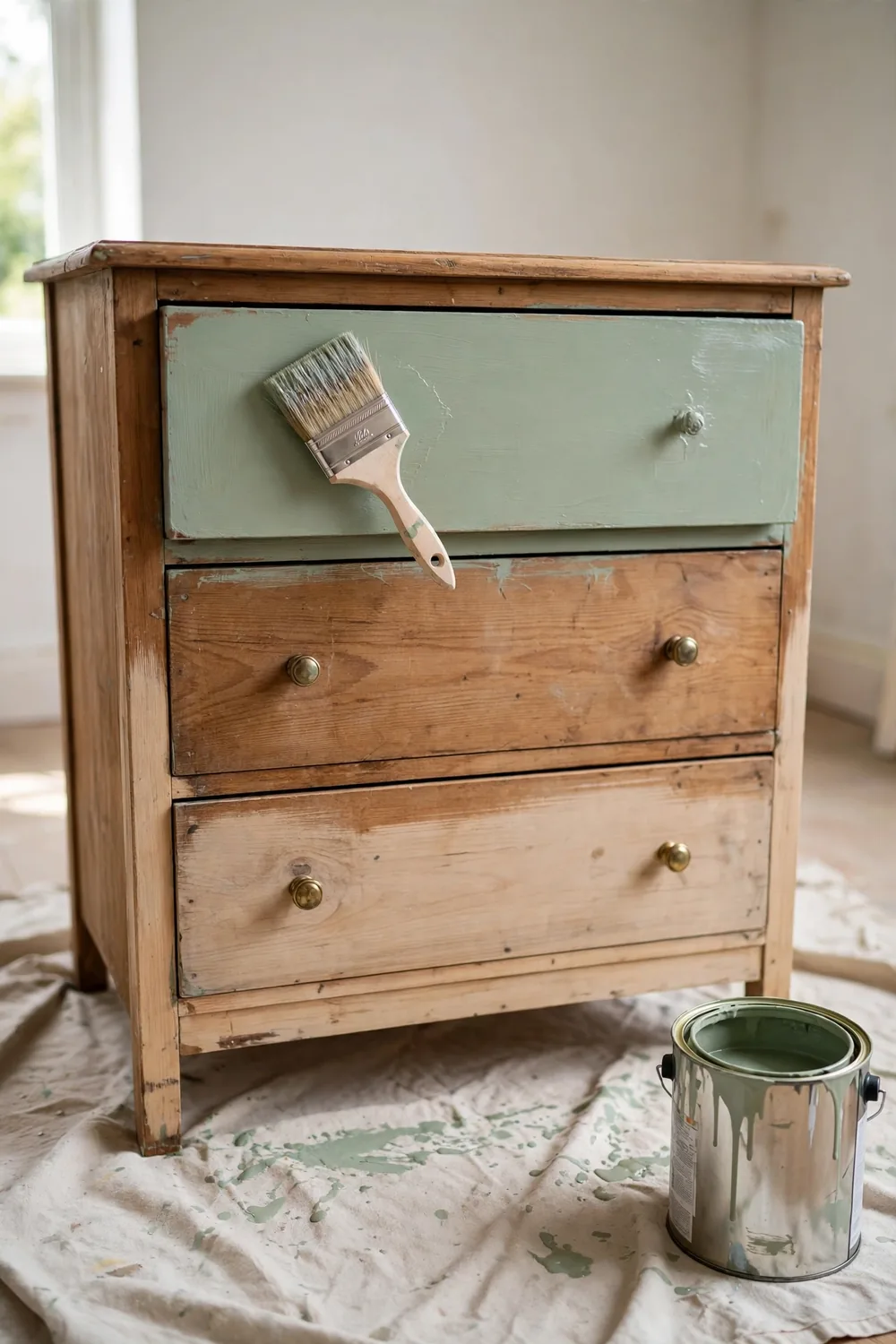
This is the step where first flips go wrong, and it went wrong on mine. I loaded the brush and laid on one thick coat to save time. It dried with brush marks, a drip down the front of a drawer, and a soft spot that stayed tacky for a day. A thick coat does not save time. Two thin coats are the whole secret: thin enough that you can see the wood grain through the first one, and the second one does the covering. Paint the drawer fronts flat on the drop cloth, so the paint cannot drip. Fusion Mineral Paint in Bellwood, a soft sage green, is the safe colour in our research: a sideboard flipped in Bellwood passed 708 saves. One 500 ml jar covers about 75 square feet, enough for a dresser and a nightstand together. Let the first coat dry about 2 hours, then the second.
5. Seal the top so it survives daily use
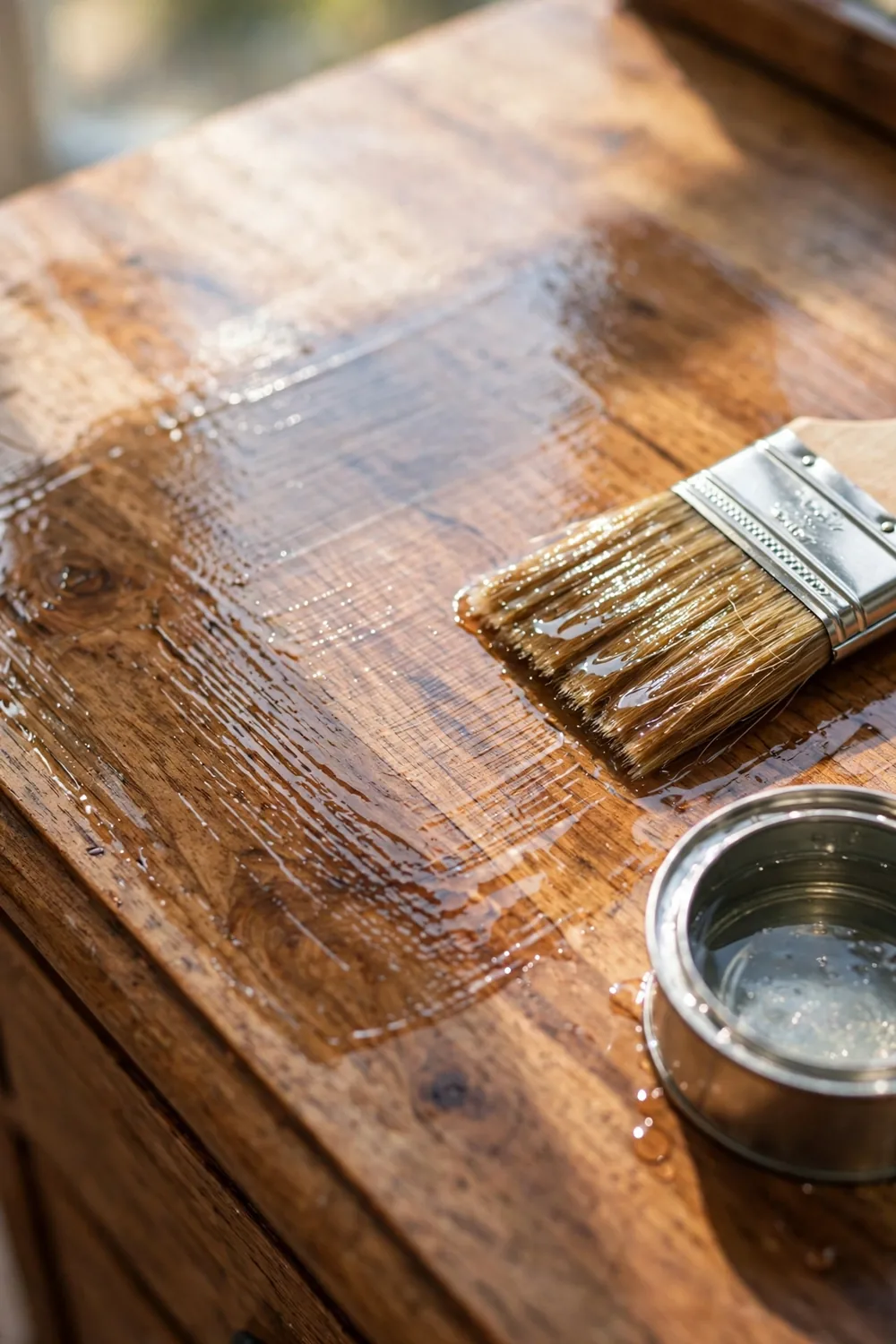
The top is the only surface that gets daily abuse: mugs, books, keys, a lamp dragged across it. Paint alone does not survive that. A clear topcoat does. Minwax Polycrylic in satin, about $20 a quart, dries crystal clear. Brush two or three thin coats on the top only, with about 2 hours between coats. Wall paint on furniture chips within months without a topcoat, because wall paint is not built for touch.
6. Swap the hardware, the cheapest luxe cue
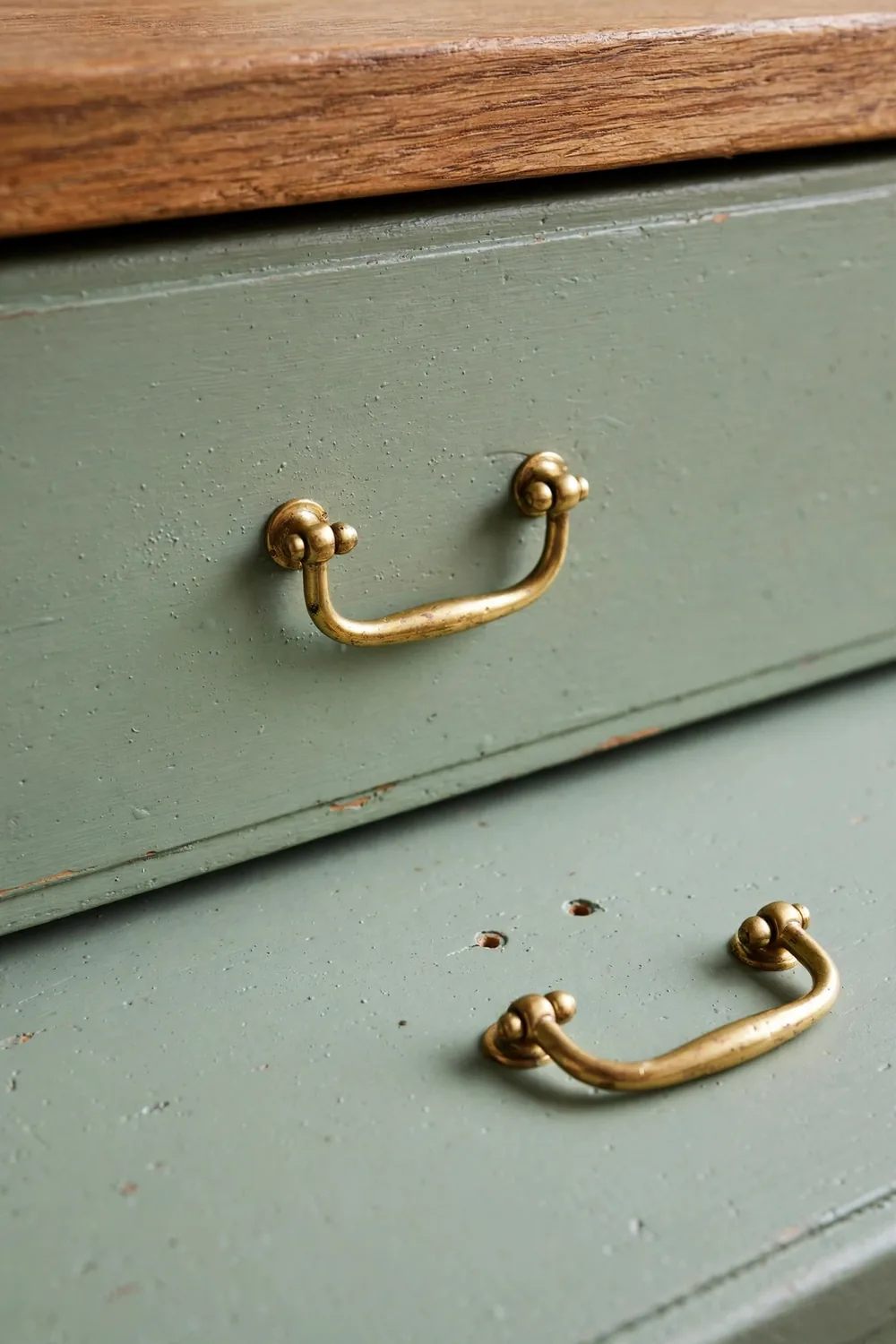
New hardware is the smallest spend with the biggest visual return. Two brass pulls cost about $12, and they change the whole front of the piece. Brass works on sage, black, navy, and white alike. Measure the screw-hole spacing before you order: most dresser pulls are 3 or 3.75 inches apart. Fill old holes with wood filler, sand smooth, and touch up the paint. Screw the new pulls in from inside the drawer, snug but not forced: overtightening cracks the paint around the hole.
7. Style it and photograph the after
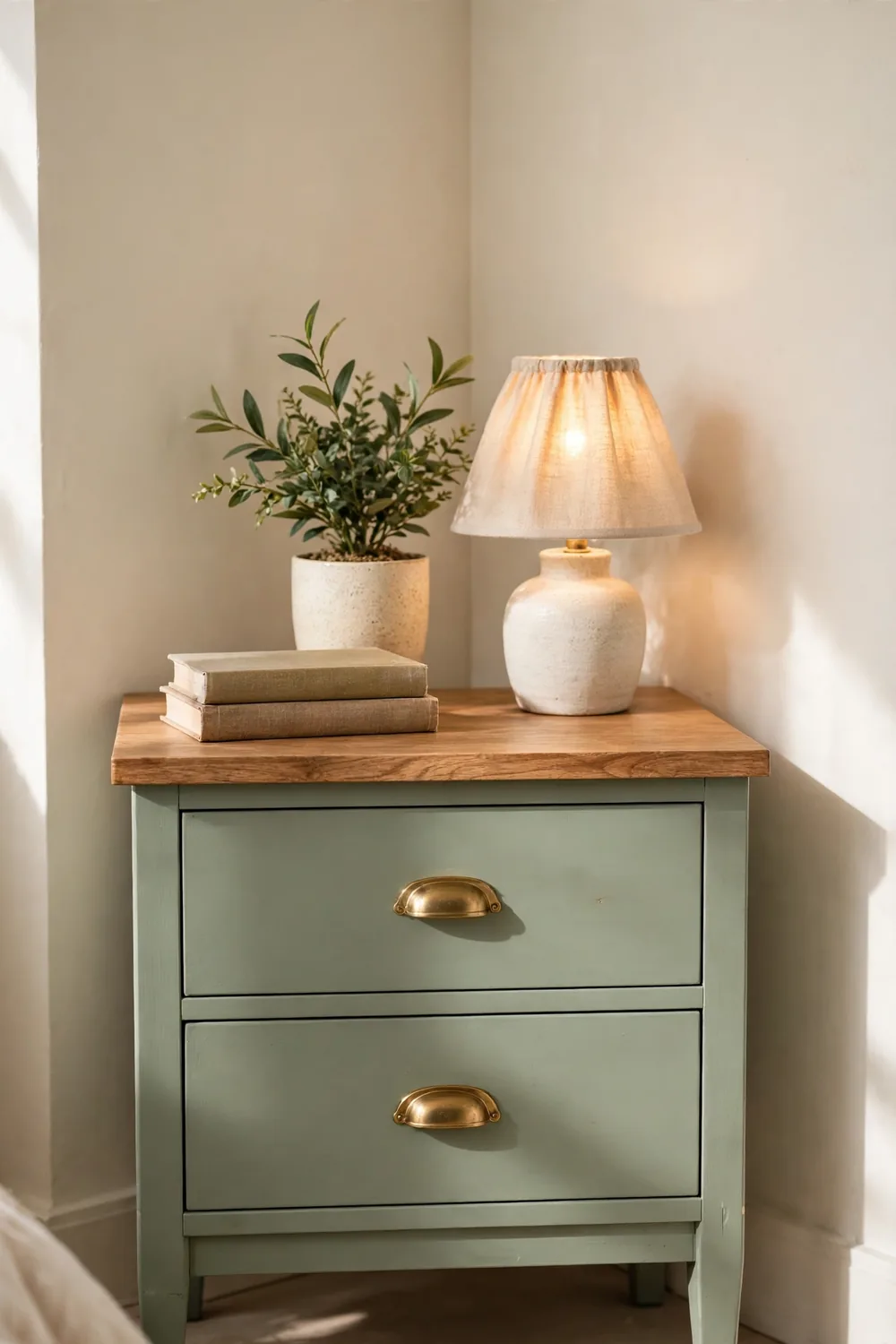
Ten minutes of styling makes a finished flip read as finished. On a nightstand, the formula is a lamp, a small plant or greenery, and a stack of two books or a tray. On a dresser, a lamp on one side and a vase or books on the other, with the middle left empty. Photograph it straight-on at eye level, in daylight, against a plain light wall. Take one photo of the whole piece and one close-up of the hardware.
What does the first flip cost?
The first flip costs more than the second, because you buy the tools once.
| Item | Cost |
|---|---|
| Secondhand dresser or nightstand pair | $15 to $60 |
| Fusion Mineral Paint 500 ml, Bellwood | About $30 |
| Minwax Polycrylic quart, satin | About $20 |
| Sandpaper multi-grit pack | About $8 |
| Brush and small roller | About $12 |
| Two brass pulls | About $12 |
| Drop cloth and tape | About $10 |
| Total, first flip | About $107 to $152 |
The cheapest version skips the topcoat and the pulls and uses Heirloom Traditions ALL-IN-ONE Paint, a 32 oz quart at $39.99 that covers about 140 square feet with primer and top coat built in: about $85 to $110 all in.
Should you sell it, and for how much?
Price it from the costs, not from the feeling. A simple rule is three times the materials: a $100 flip lists for about $300, which is exactly where the nightstand pair landed. Check what similar finished pieces sell for in your area first. Price a little above what you will accept, because buyers on Marketplace almost always offer less.
Sell it locally and you keep the full price: a local pickup sale has no platform fee, so a $300 sale puts $300 in your hand. If you ship it, Facebook takes 10% of the order total, with a $0.80 minimum. The $15 to $300 and $100 to $800 flips are real, and they are also the best cases. The flip is worth doing even if the piece stays in your home. Once the piece is done, it slots straight into a room makeover on a budget, where paint and one anchor piece do most of the work.
What would I do differently next time?
Two things. First, photograph the before in the same spot and light as the after: my first before photo was taken in a dark garage, so the pair looks like two different pieces. Second, buy the paint before the piece. I bought a dresser first, then spent a week choosing a colour while it gathered dust. Now I keep one jar of Bellwood on the shelf.
A flip is not a new piece of furniture. It is a good piece that someone else gave up on, finished properly.
FAQ
Do I need to sand before painting? Not always. If you use Heirloom Traditions ALL-IN-ONE Paint, the maker says no sanding is needed. With any other furniture paint, a light 120-grit scuff takes 20 minutes. Cleaning is never optional: paint does not stick to grease.
How much paint do I need for a dresser? One 500 ml jar of Fusion Mineral Paint covers about 75 square feet, enough for a dresser and a nightstand. One 32 oz quart of Heirloom Traditions ALL-IN-ONE Paint covers about 140 square feet. Buy one jar, not two, for a first flip.
Can I flip furniture I plan to keep in a rental? Yes. The furniture is yours, so no landlord permission is needed. If you like the hunt, our thrift store finds guide covers what is worth buying secondhand and what to skip.
Is it safe to meet a stranger from Facebook Marketplace? Meet in daylight, in a public place if the seller agrees, or bring a friend. Tell someone where you are going, and never pay in advance. You pay when the piece is in your car.
What if the piece smells of smoke? Walk away on a first flip. Smoke is the hardest smell to remove from wood.
How long before I can use the piece? Dry to the touch in about 2 hours, and wait a full day before you load the drawers. The maker says full cure takes about 21 days, so use coasters and treat the top gently for a few weeks.