Open Shelving in the Kitchen: Rules for Making It Work
Short answer: Open shelving works when each shelf is 10 inches deep, brackets sit every 16 inches into studs, and only everyday dishes live on it. That setup holds a full stack of dinner plates, keeps glasses within easy reach, and leaves the counter clear. Follow the seven rules below and the shelves stay useful instead of turning into a dusty display.
| Time | One weekend, about 4 hours hands on |
| Difficulty | Beginner to intermediate; a drill and a stud finder help |
| Shelf size | 10 inches deep, brackets every 16 inches into studs |
| Best kitchen | Small kitchens with one clear wall above the counter |
| Renter-friendly | Yes, with a picture ledge or adhesive brackets |
I took the doors off one cabinet three years ago because the hinges squeaked. The open shelf that replaced it looked wonderful for about a week, then the plates slid, the glasses dusted over, and the top shelf became a graveyard for unused mugs. I put the door back on.
Two years later I tried again, with measurements instead of enthusiasm. The difference was not taste. It was depth, bracket spacing, and a hard rule about what earns a place on the shelf. The shelves from that second try are still up and still used every day.
How deep should open kitchen shelves be?
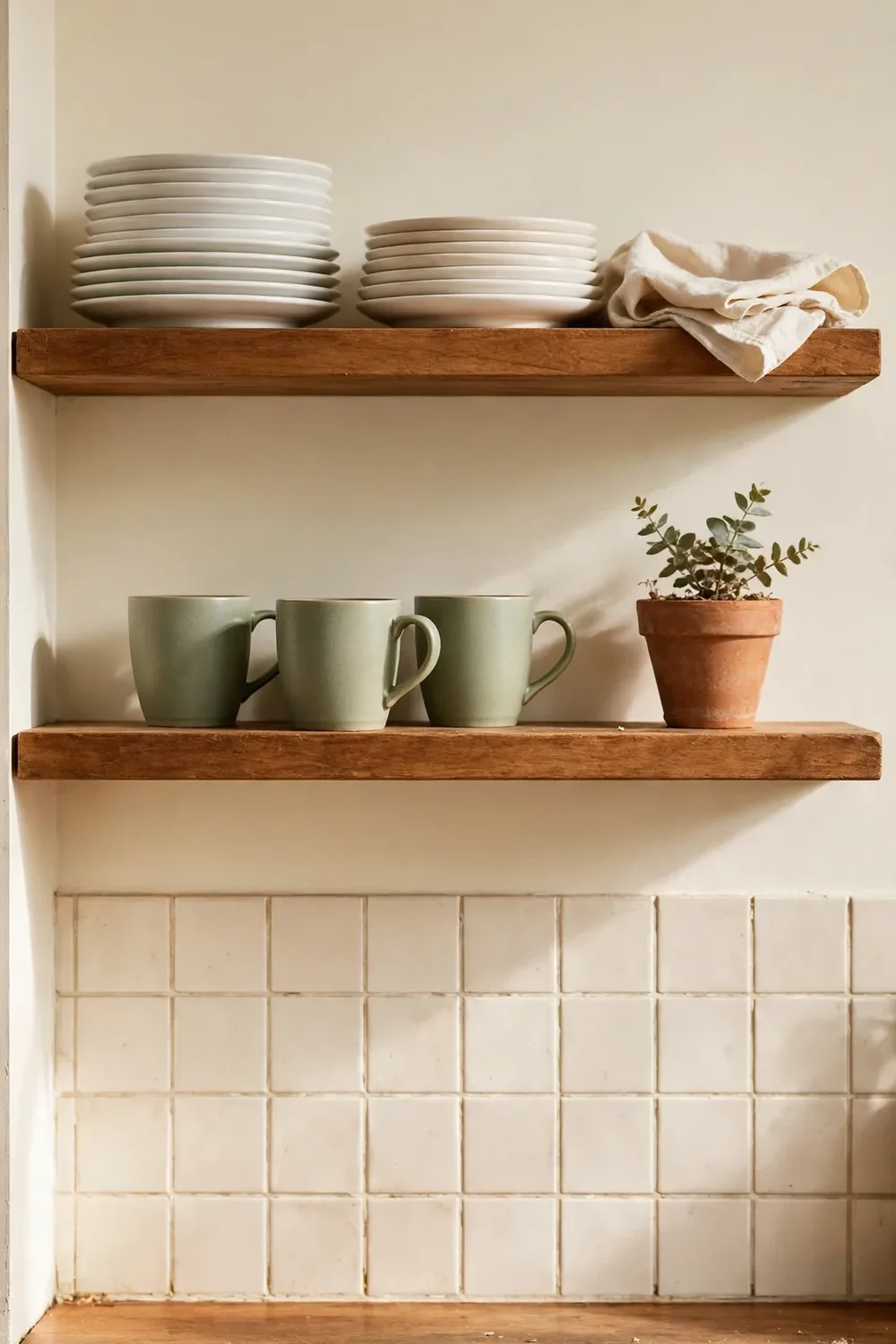
Ten inches deep, and not much more. A standard dinner plate is about 10 to 11 inches across, so a 10 inch shelf holds a plate stack with the rim just at the edge, easy to grab and easy to see. Go deeper and things slide to the back where you cannot reach them. Go shallower and plates overhang the edge, which invites chips.
Depth also decides how the shelf feels in the room. A standard countertop is 25 inches deep, so a 10 inch shelf above it leaves 15 inches of open air between the shelf edge and the counter edge. I measured my own shelves on 10 November 2026: the 10 inch shelf sits 18 inches above the counter, and nothing on it has ever been knocked off while I chop vegetables below.
Why do open shelves fail in so many kitchens?
Most open shelves fail for one of three reasons, and none of them is the shelf itself. The first is overload: the shelf holds everything the cabinets used to hold, until it sags and looks like a storage unit. The second is dust: dishes that sit unused for weeks gather a film, so every meal starts with a rinse. The third is visual noise: too many colors and heights, so the eye has nowhere to rest.
All three have the same fix. Open shelves are not extra cabinets. They are a display for the dozen or so things you touch every day, and everything else belongs behind a door. If the whole kitchen needs more working room first, our small apartment kitchen ideas guide covers carts and fold-down tables that add counter space before you touch the walls.
Which 7 rules make open shelving work?
Seven rules, in the order that matters. The first two are about the shelf itself, the next three are about what goes on it, and the last two keep it looking good week after week.
1. Put a bracket every 16 inches, into a stud
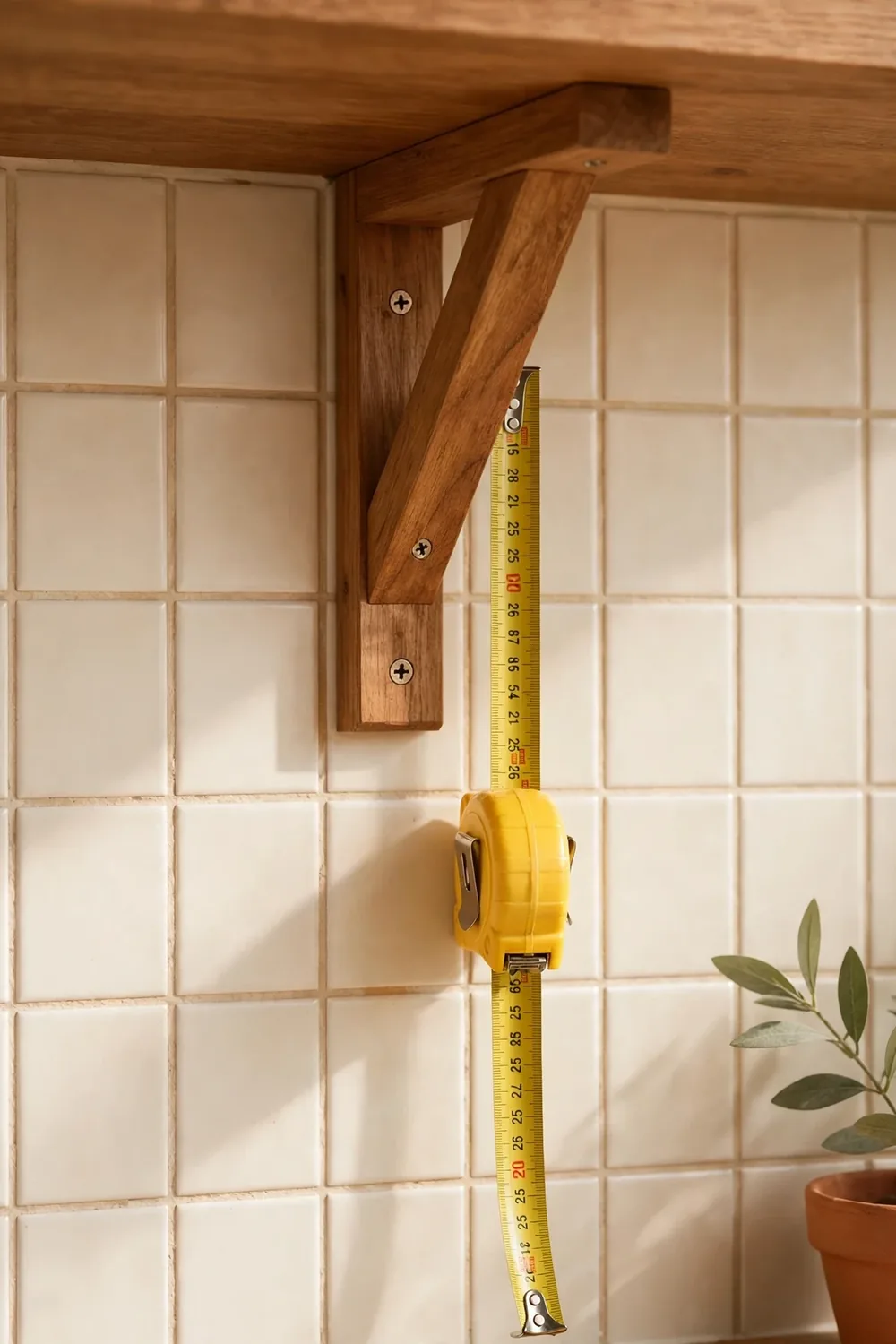
Wall studs in most US homes sit 16 inches apart on center, so a bracket every 16 inches lands each bracket in solid wood instead of hollow drywall. That spacing holds a shelf full of plates without sagging. Mark the studs with a stud finder and the bracket spots with painter’s tape before you drill.
Use brackets rated for at least 25 pounds each, and use two screws per bracket into the stud. A shelf 48 inches long needs four brackets: one near each end and two in the middle, each 16 inches from the next. Skip the middle brackets and the shelf bows within a month under a stack of plates. I know because my first shelf had two brackets and a visible dip by spring.
2. Stack plates flat, never lean them
Plates belong in a flat stack, six to eight high, with the largest plate at the bottom. A flat stack is stable, easy to lift from, and uses the shelf depth well: a 10 inch plate on a 10 inch shelf sits flush with the edge. Lean plates against the wall and they slide, chip, and take up twice the width for half the plates.
Keep the stack to eight plates or fewer, or taller stacks wobble when you pull the bottom plate out. If the household owns more than eight dinner plates, store the extras in a cabinet and keep the daily eight on the shelf. Bowls stack the same way, four to six high, with the smallest on top.
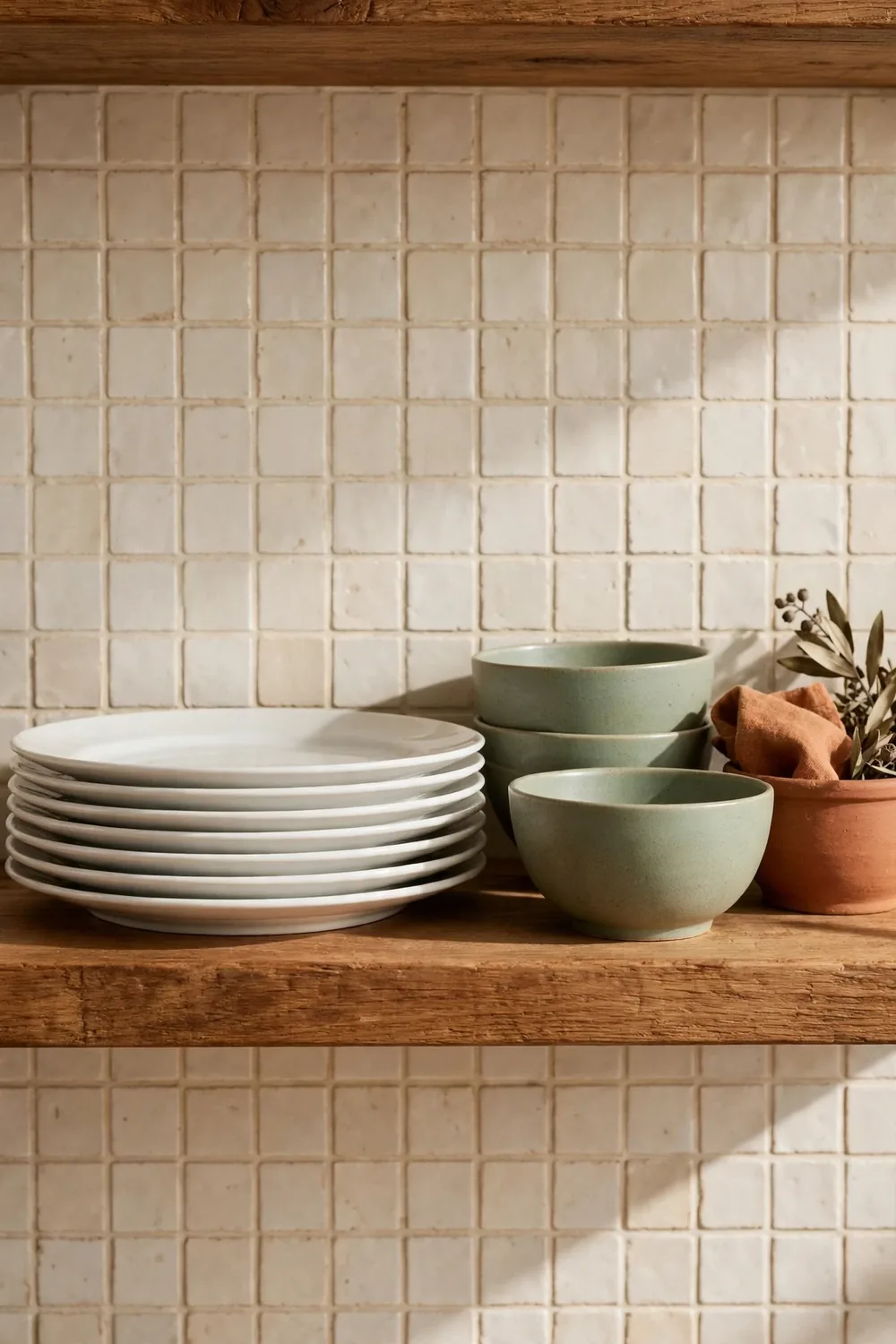
3. Store only what you use every day
Open shelves work when everything on them gets touched at least once a week. That means dinner plates, bowls, glasses, and mugs, and almost nothing else. The moment a shelf holds something you use once a month, that thing gathers dust, and the dust spreads to everything beside it.
Count what you actually used yesterday. Most households land on about a dozen items: four plates, four bowls, four glasses, four mugs. That is one shelf, or two short ones. Everything else, the serving platters, the vases, the fondue pot, stays in a cabinet where dust does not matter.
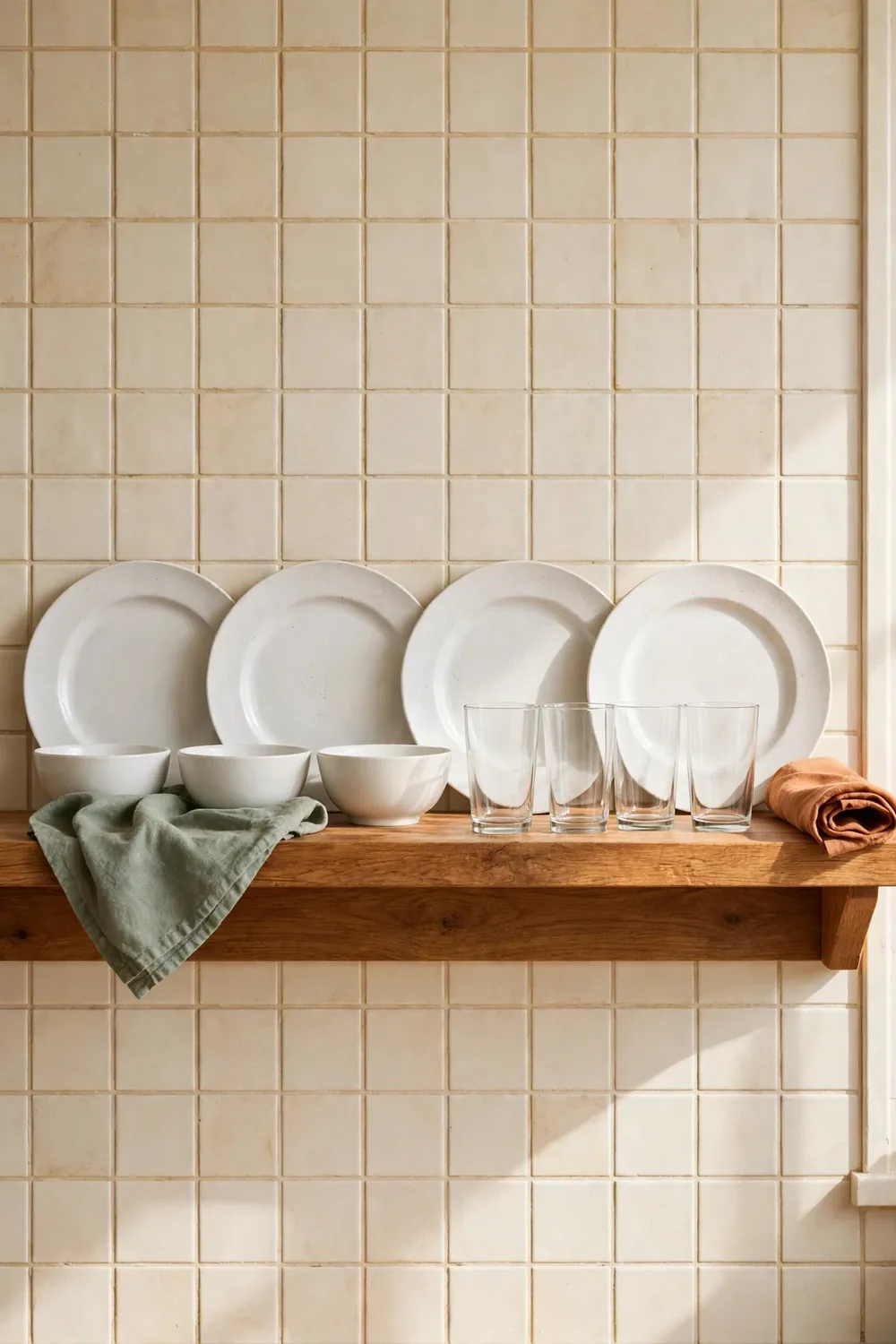
4. Style the top shelf, then stop
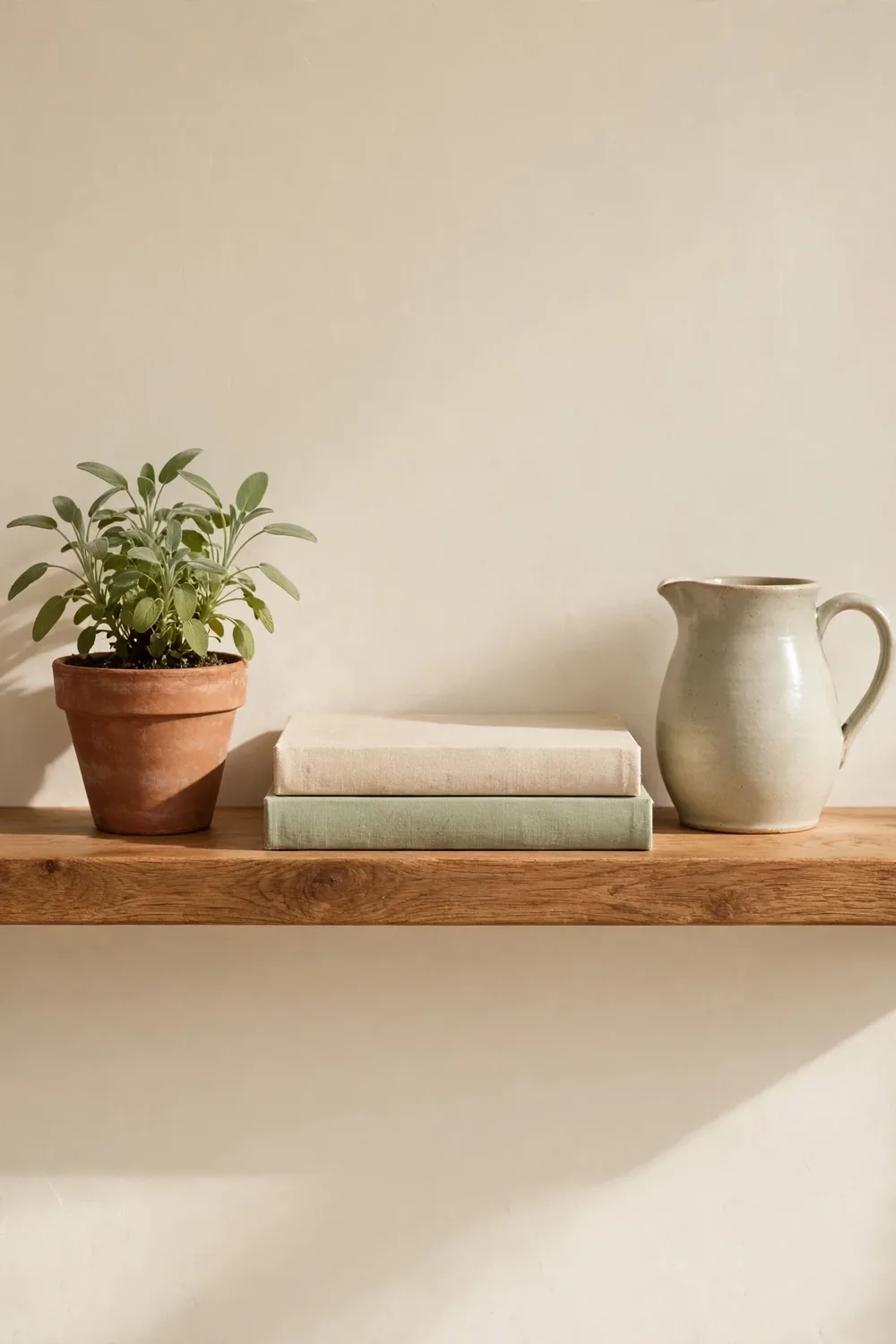
The top shelf sits above eye level, so it is the shelf people notice first and use least. Give it one job: look good. A small plant in a terracotta pot, a stack of two cookbooks, and one ceramic pitcher fill a 36 inch top shelf without crowding it. Three objects, three heights, one color repeated.
Resist the urge to fill the gaps. Empty space on the top shelf is what makes the lower shelves look calm, because the eye needs somewhere to rest. If the top shelf holds more than five objects, take two away and see how the whole wall changes.
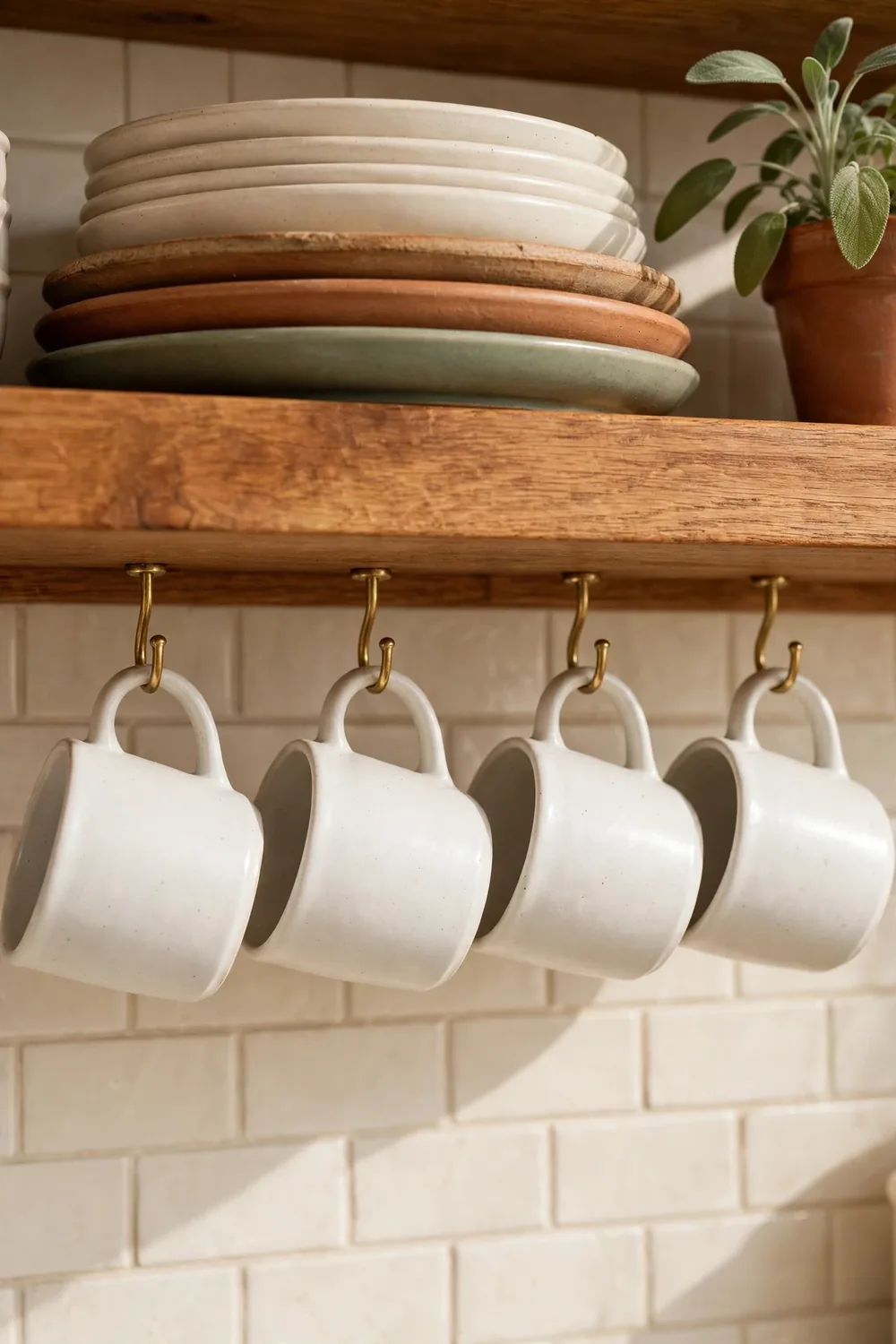
5. Hang mugs under the shelf, not on it
Mugs eat shelf space fast. Four mugs standing on a shelf take about 16 inches of width, the same as a stack of eight plates. Hang them from hooks under the shelf instead, and the same four mugs take zero shelf space. Screw-in cup hooks install in minutes and hold a standard 12 ounce mug without bending.
Space the hooks about 4 inches apart so handles do not knock, and set them about 2 inches back from the shelf edge. Hang the four mugs you use most, and no more. A row of eight mugs looks like a shop display, and the ones at the ends are the ones you never reach for.
6. Repeat one color on every shelf
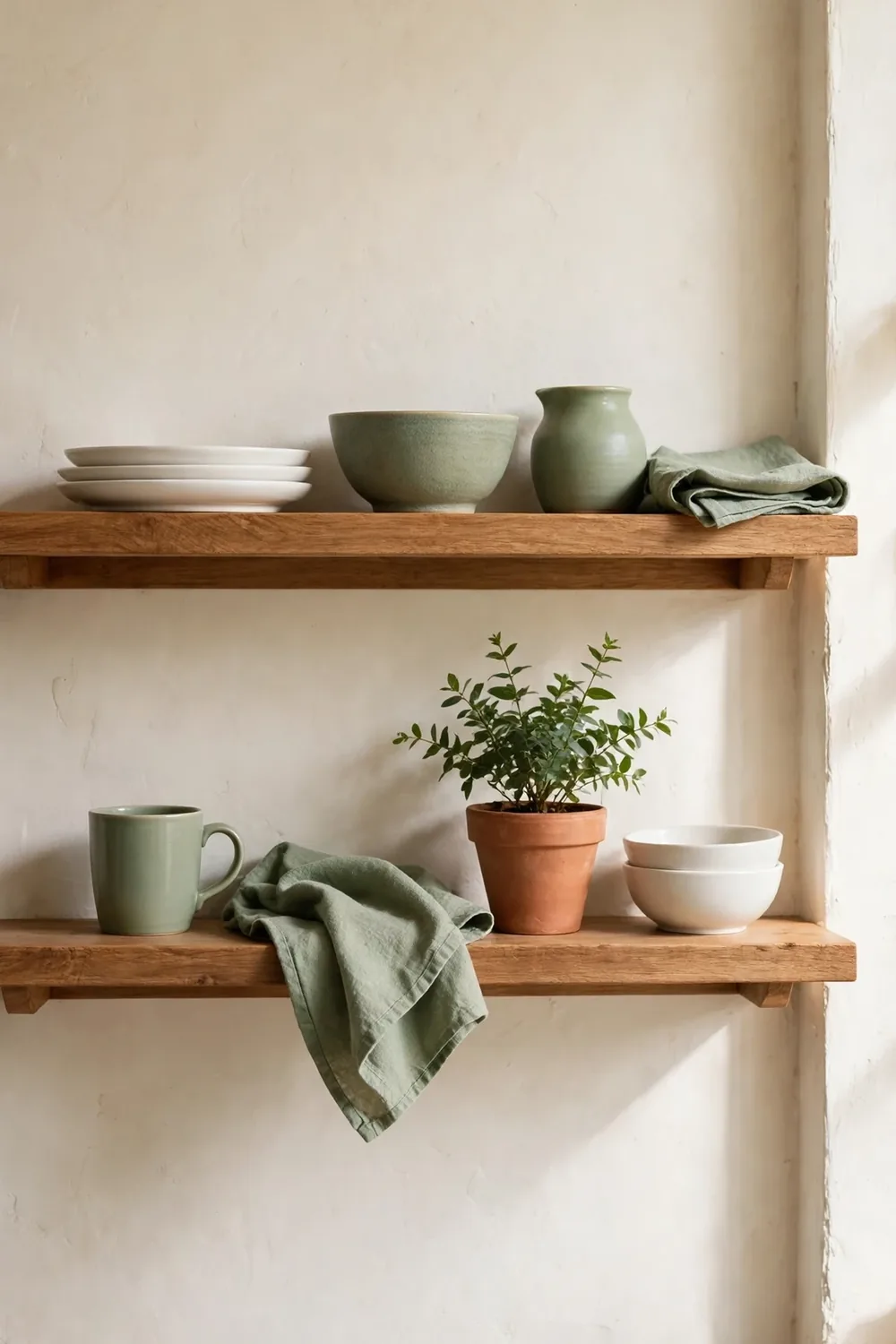
An open shelf looks calm when one color repeats on every level. Pick the color from something already in the kitchen and let it appear once or twice per shelf. The repeat ties the shelves together, so the wall reads as one design instead of three separate piles of dishes. My shelves hold white plates on every level, with sage green showing up as a mug, a small plant, and a folded linen towel. Three touches of green, and the wall feels planned.
7. Wipe the shelves once a week
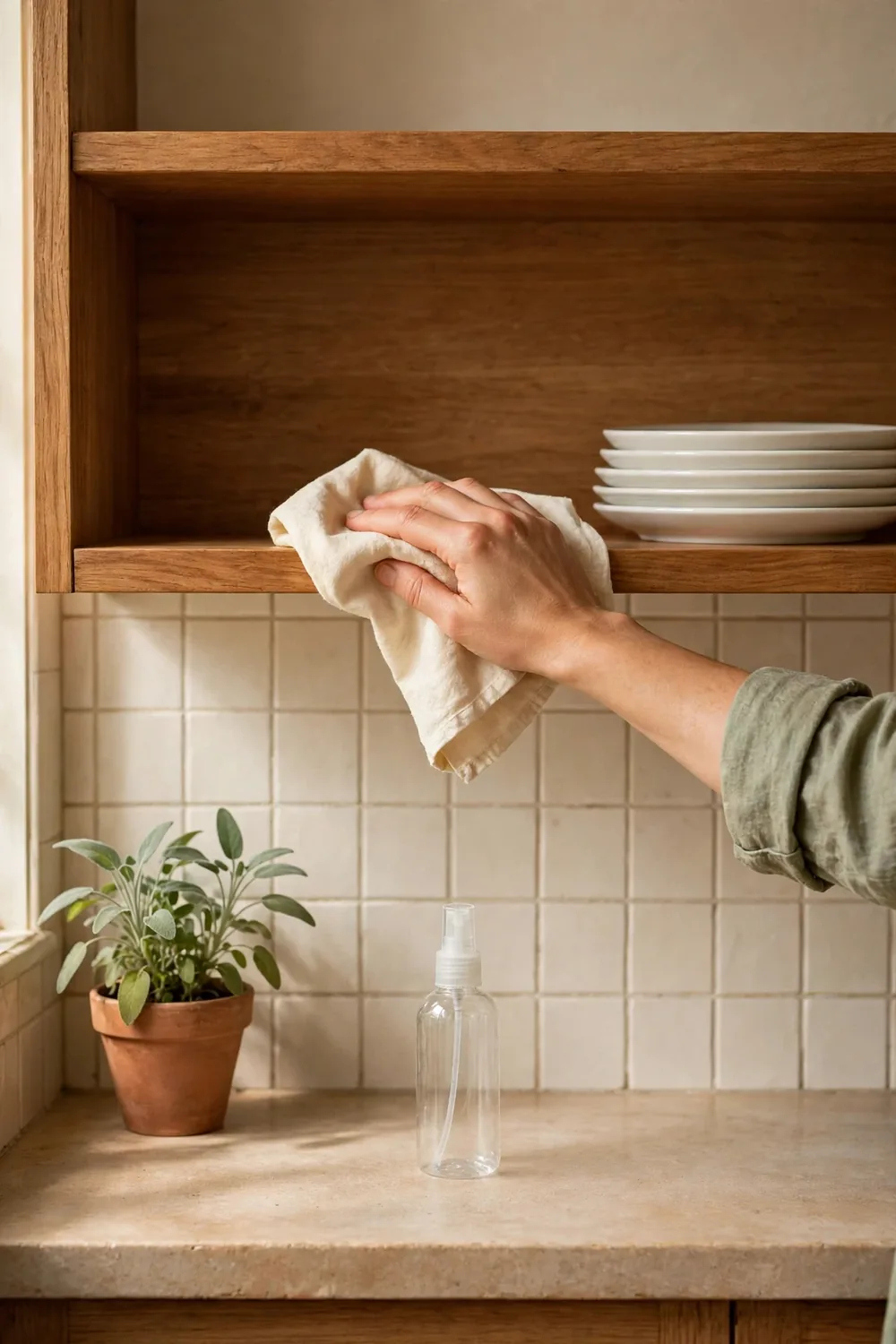
A five minute wipe once a week keeps open shelves clean, and skipping it is how dust becomes a reason to take the shelves down. Wipe the shelf surface and the rims of the glasses with a damp cloth, then dry with a second cloth so water spots do not form on the wood. Do it on the same day you wipe the counters, so it becomes part of a routine instead of a separate chore.
Set a reminder for the first month. After four weeks the wipe takes less than five minutes, because there is never a full week of dust to remove.
How long does each rule take?
Most of the work is the first two rules. The rest is deciding what goes where, which costs no tools and no drilling.
| Rule | Time | Size to remember |
|---|---|---|
| Brackets every 16 inches | About 90 minutes | 16 inches apart, into studs |
| Stack plates flat | About 15 minutes | 6 to 8 plates per stack |
| Keep only daily dishes | About 30 minutes | About 12 items total |
| Style the top shelf | About 20 minutes | 3 objects, 3 heights |
| Hang mugs underneath | About 30 minutes | Hooks 4 inches apart |
| Repeat one color | About 15 minutes | 1 color, 3 touches |
| Weekly wipe | About 5 minutes a week | Once a week, damp cloth |
| Total setup | About 4 hours | Shelf 10 inches deep |
Start Saturday morning and the shelves are loaded by lunch. If the shelves already exist and only the styling is wrong, rules 3 through 7 take about an hour total. If the tile behind the shelves bothers you while you are at it, peel-and-stick upgrades can refresh the backsplash in the same weekend.
The one mistake that ruins open shelving
The mistake is loading the shelf the day it goes up, before deciding what belongs on it. I did this on my first try: every plate, bowl, and mug I owned went up in one excited hour, and the shelf sagged, dusted over, and looked like a cupboard with the door missing. The fix took longer than the install.
Load the shelf in two passes. First pass, the daily dishes only, and live with it for a week. Second pass, one item at a time, and only if the shelf still has open space and the item gets used weekly. Anything that does not pass the week test goes back in the cabinet.
An open shelf earns its keep by holding less, not more. Twelve dishes you use every day beat forty you have to dust.
FAQ
How much weight can open kitchen shelves hold? It depends on the brackets and the wall. Brackets screwed into studs every 16 inches, rated for 25 pounds each, hold a full shelf of plates and bowls. A 48 inch shelf with four brackets holds about 100 pounds that way. Brackets in drywall alone hold far less, so find the studs first.
Will open shelves make my kitchen dusty? Only if they hold things you never use. Dishes touched daily stay clean because they cycle through washing, while display items sitting for weeks gather dust. Keep the shelf to daily dishes and wipe it once a week.
Can I put open shelves in a rental kitchen? Yes. A picture ledge like the IKEA MOSSLANDA, 45 1/4 inches long and 4 3/4 inches deep, hangs from two screws, holds small plates and spice jars, and comes off with a dab of filler when you move out. For heavier dishes, ask the landlord before drilling into studs.
What should go on the top shelf? Light things you rarely need: a small plant, two cookbooks, one pitcher. Keep it to three or four objects under about 10 pounds total. Heavy stacks belong at eye level or below, where you can lift them safely.
How do I keep open shelves from looking messy? Repeat one color, stack plates flat, and leave empty space on every shelf. A shelf that is about two thirds full looks styled. A shelf packed edge to edge looks like storage.