Kitchen Lighting Ideas Beyond the Ceiling Light
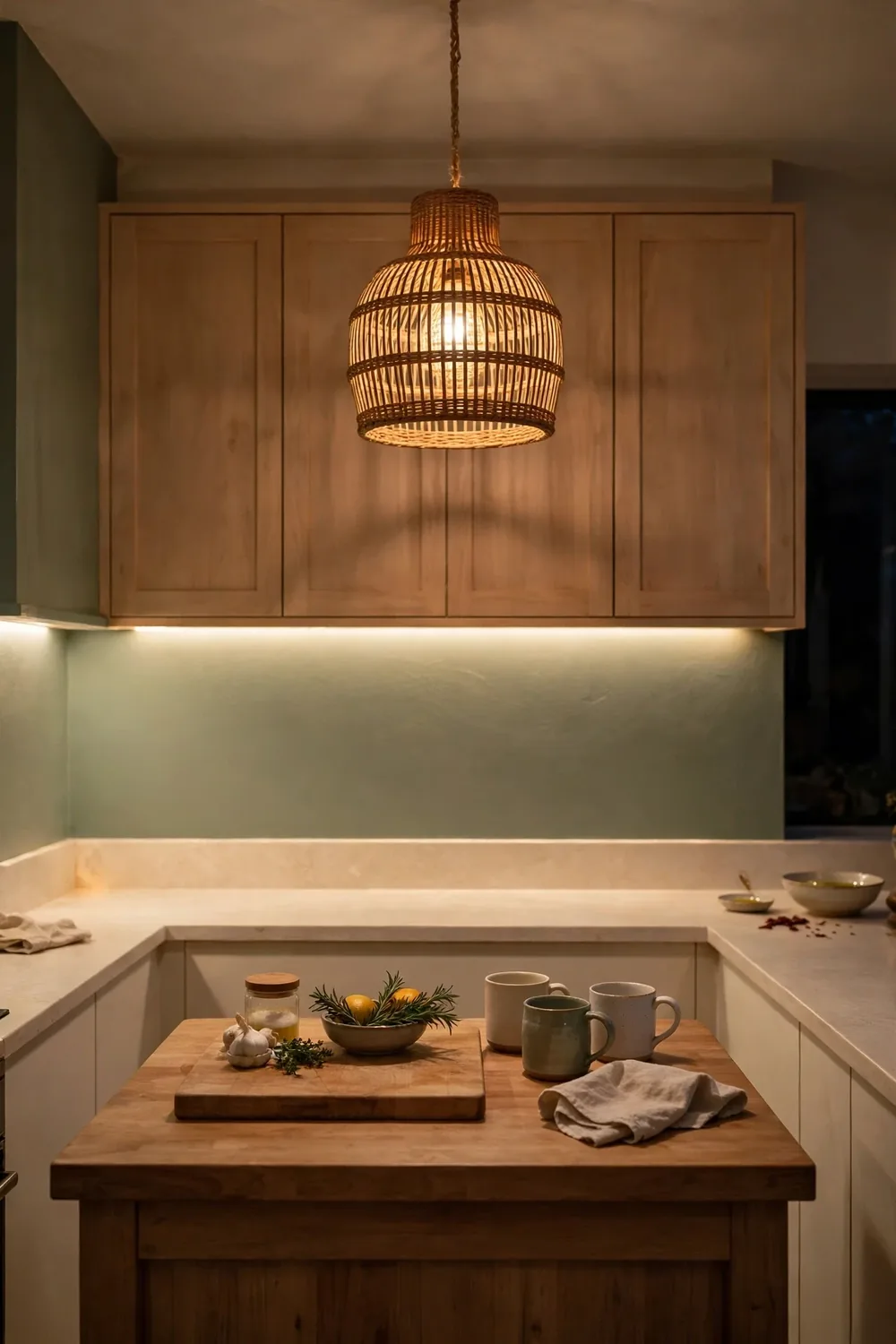
Short answer: Your kitchen does not need a bigger ceiling light. It needs three layers of light working together: a pendant over the island or table, warm under-cabinet light where you chop, and a dimmer that lets the whole room drop to a soft evening glow. Set every bulb to 2700K warm white and the layers will feel like one calm room instead of three separate fixtures.
| Time | One weekend, about 3 hours hands on |
| Difficulty | Beginner; most steps need no electrician |
| Space | Works in any kitchen, best over an island or table |
For two years I cooked under a single ceiling fixture and blamed everything else for why my kitchen felt cold, so I repainted the walls and bought a plant that promptly died. Nothing helped, because the problem was the light falling straight down from one bare bulb, flattening every surface and throwing hard shadows across the counter where I chopped onions at six in the evening.
The change came on a Tuesday, as a small fix that snowballed. I stuck a battery LED strip under the cabinet above my cutting board, and suddenly I could see what I was doing. That ten minute fix taught me the rule this guide runs on: light where the work happens, light where people gather, and a way to turn both down when dinner is over.
Why does one ceiling light make a kitchen feel flat?
A single ceiling light does three unkind things at once. First, it hangs behind you when you stand at the counter, so your own body blocks it and you chop in your own shadow. Second, it lights the floor and the middle of the room evenly, while the counters, the sink, and the stove all sit at the edges, exactly where the light is weakest. Third, it has one brightness, so the room looks the same at seven in the morning and at eight at night.
Layered light fixes all three: a pendant brings light down over the island or table, under-cabinet light puts brightness on the work surface instead of on your back, and a dimmer lets the same room be bright for cooking and soft for eating. None of these steps needs a remodel, and most need no electrician, just a drill, a strip of LEDs, or a new bulb. If your kitchen is short on counter space as well as light, our small apartment kitchen ideas guide covers rolling carts and fold-down tables that add square feet before you light them.
What are the 7 layers that replace one ceiling light?
Seven layers, in the order I would add them, starting with the one that changes the most for the least effort.
1. Hang pendants at the right height
A pendant over the island or table is the single biggest change you can make, because it moves light from the middle of the ceiling to the place where people gather. Hang it so the bottom of the shade sits 30 to 36 inches above the counter or table. Lower than 30 inches and it blocks the view across the room and glares in your eyes when you sit down. Higher than 36 inches and the light spreads too thin.
One pendant suits a small table, and two suit a long island, spaced about 30 inches apart. Measure from the counter up, not from the ceiling down, because the counter is where the light needs to land. If you rent, a plug-in pendant with a long cord and a ceiling hook gives you the same shape with no wiring at all.
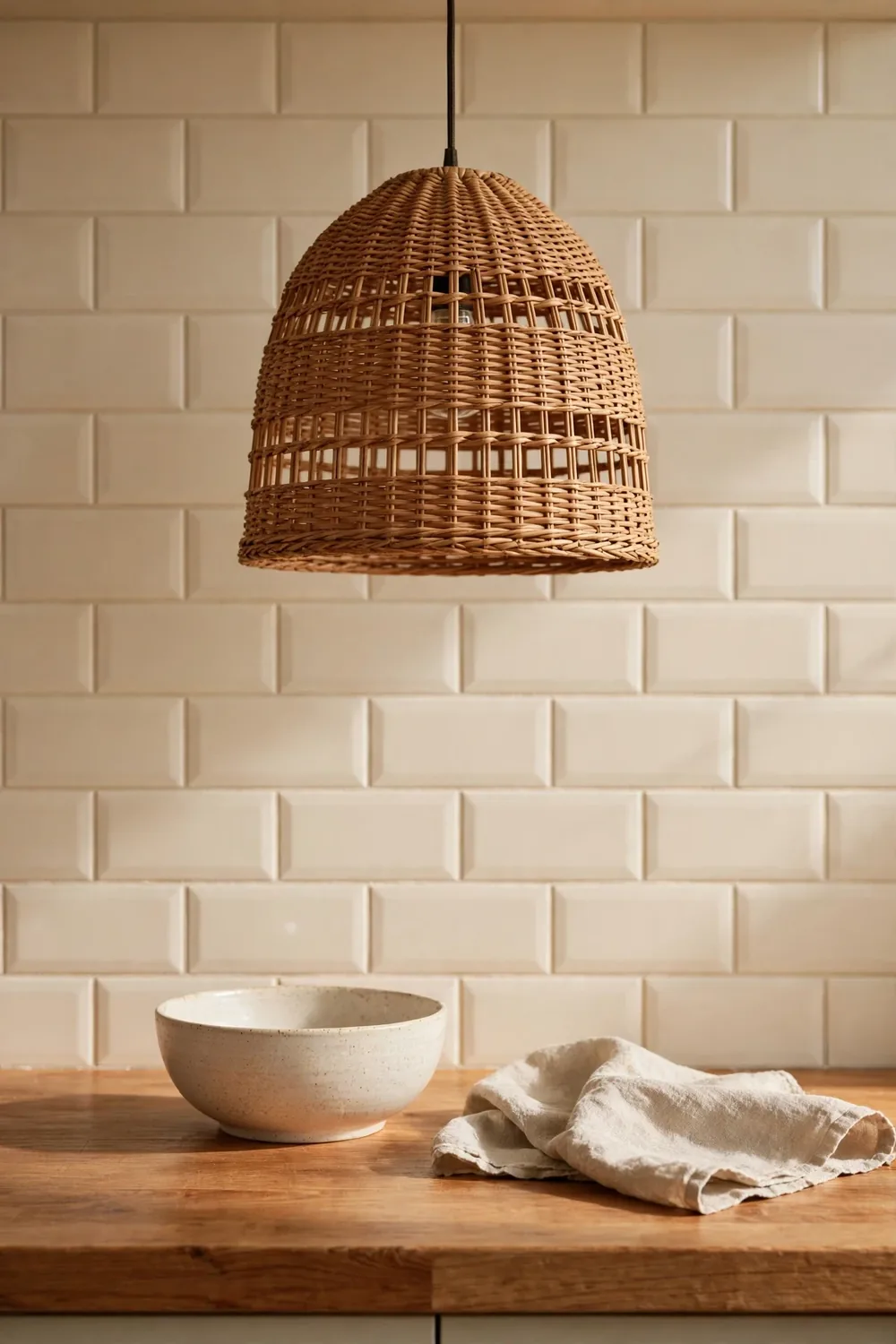
2. Add under-cabinet light where you chop
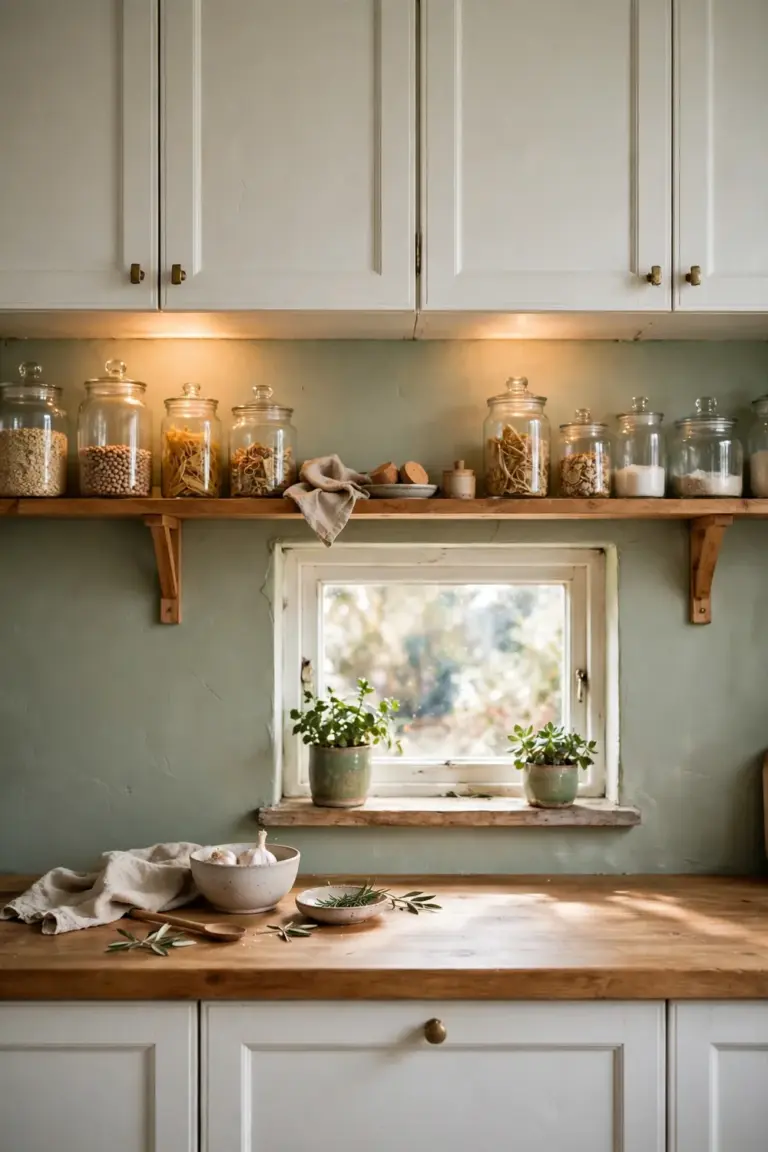
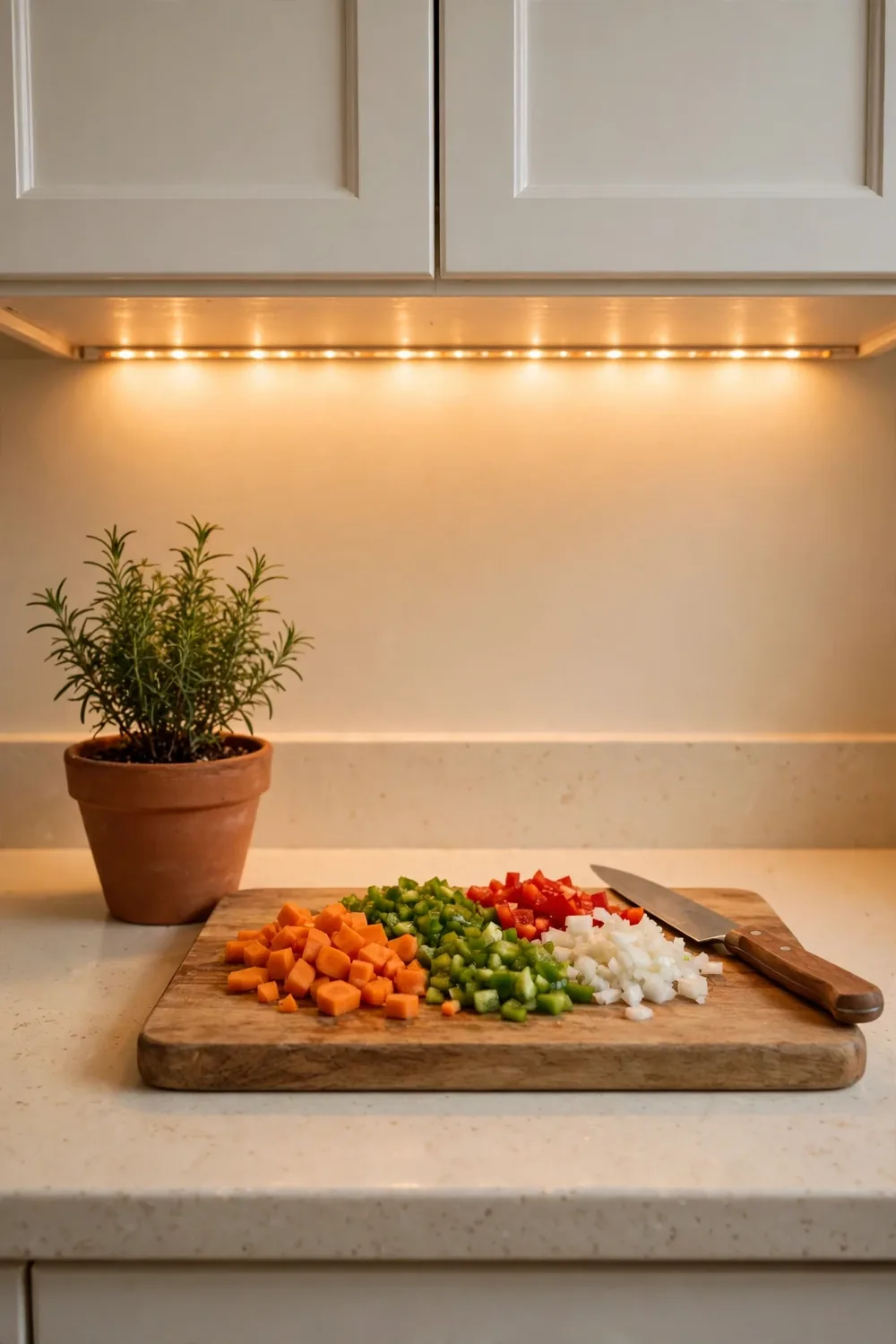
Under-cabinet light is the least glamorous layer and the one you will notice most, because it is the light you actually cook by. A slim LED strip stuck to the underside of the upper cabinets throws light straight down onto the counter, right where the knife and the cutting board live.
Mount the strip toward the front edge of the cabinet, not against the wall, so the light falls on the middle of the counter. Warm white, about 2700K, keeps food looking like food; cool white turns tomatoes grey and makes cream tile look like an office. Battery strips cost little and take ten minutes to stick up, while plug-in bars give steadier light for a long run. Start above your main prep spot and add the rest later.
3. Put each zone on its own dimmer
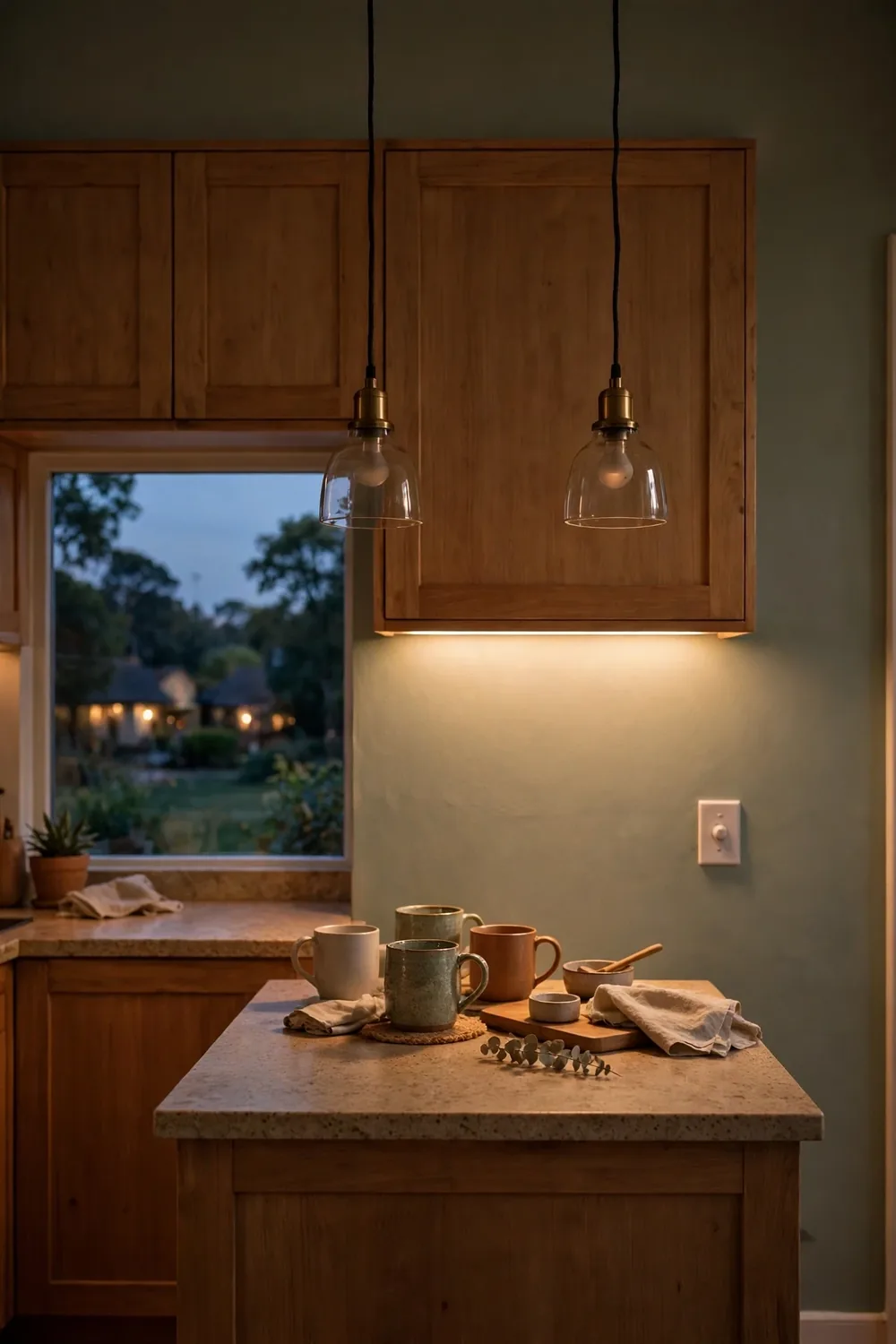
A dimmer is the cheapest way to make one room feel like two rooms. Without it, your kitchen has one mood: bright. With it, the same kitchen is bright at seven in the morning when you are packing lunches and soft at eight at night when the dishes are done.
Put the pendants on one dimmer and the under-cabinet lights on another, so you can brighten the work zone while the eating zone stays low. A basic dimmer swaps in where a regular switch sits, and a renter can get the same effect with smart bulbs and a phone app. Test the dimmer at the lowest setting before you buy more bulbs, because some LEDs flicker or buzz when dimmed low.
4. Light the task spots with strips and pucks
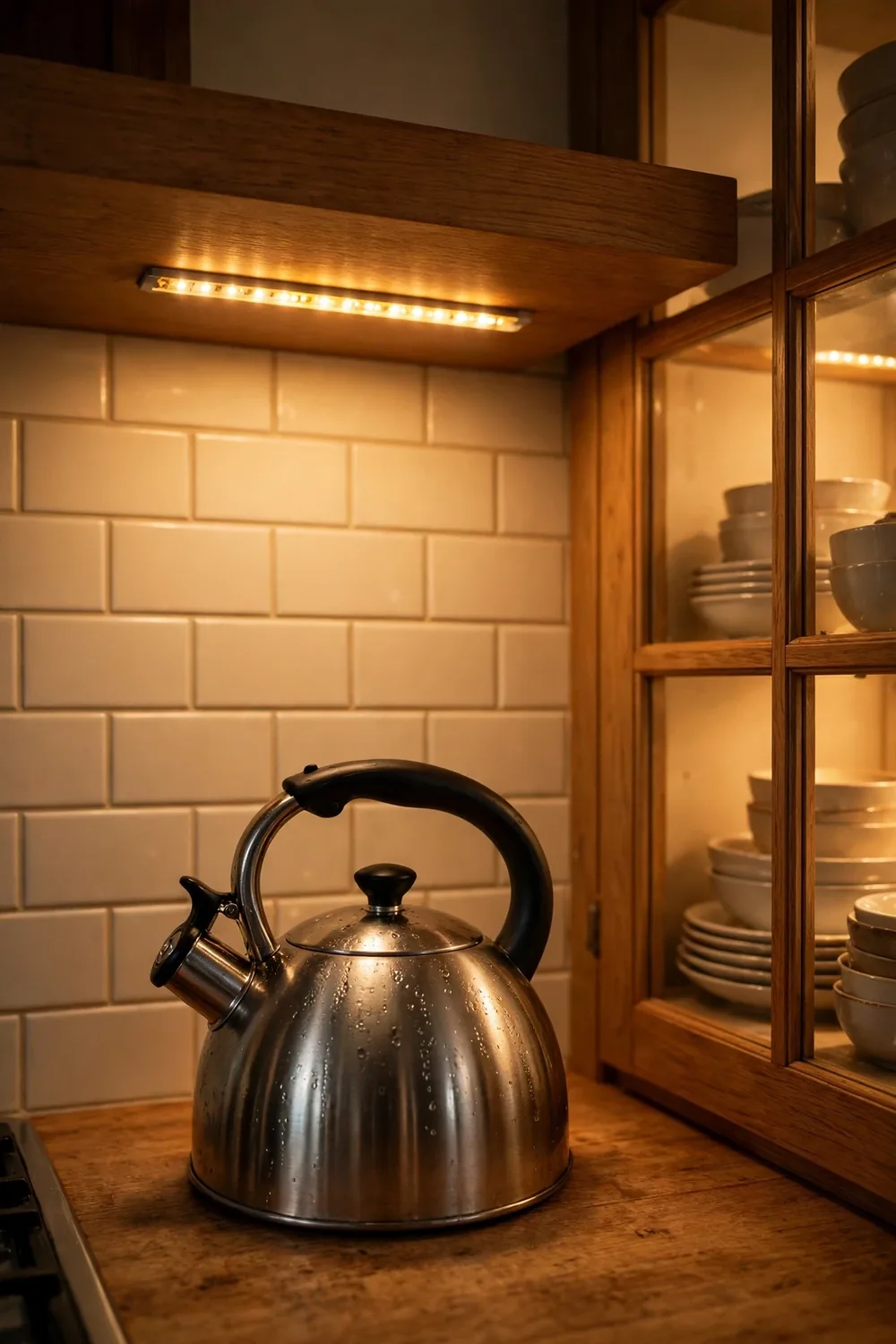
Beyond the main prep counter, every kitchen has small task spots the ceiling light never reaches: a deep pantry shelf, the corner by the kettle, the drawer where the measuring cups live. A strip or a puck light in each spot removes a daily annoyance for almost no money.
Stick a short LED strip under the shelf above the kettle so you can see the water level without holding the kettle up to the window. Put a puck light inside the pantry, on a motion sensor if you can, so it comes on when the door opens and off when it closes. Run a strip inside a glass-front cabinet and the dishes turn into a display instead of a dark stack. These are ten minute jobs, and they add up to a kitchen that never makes you squint. Keep the color temperature the same as the rest of the room, warm white throughout.
5. Let one fixture be the statement
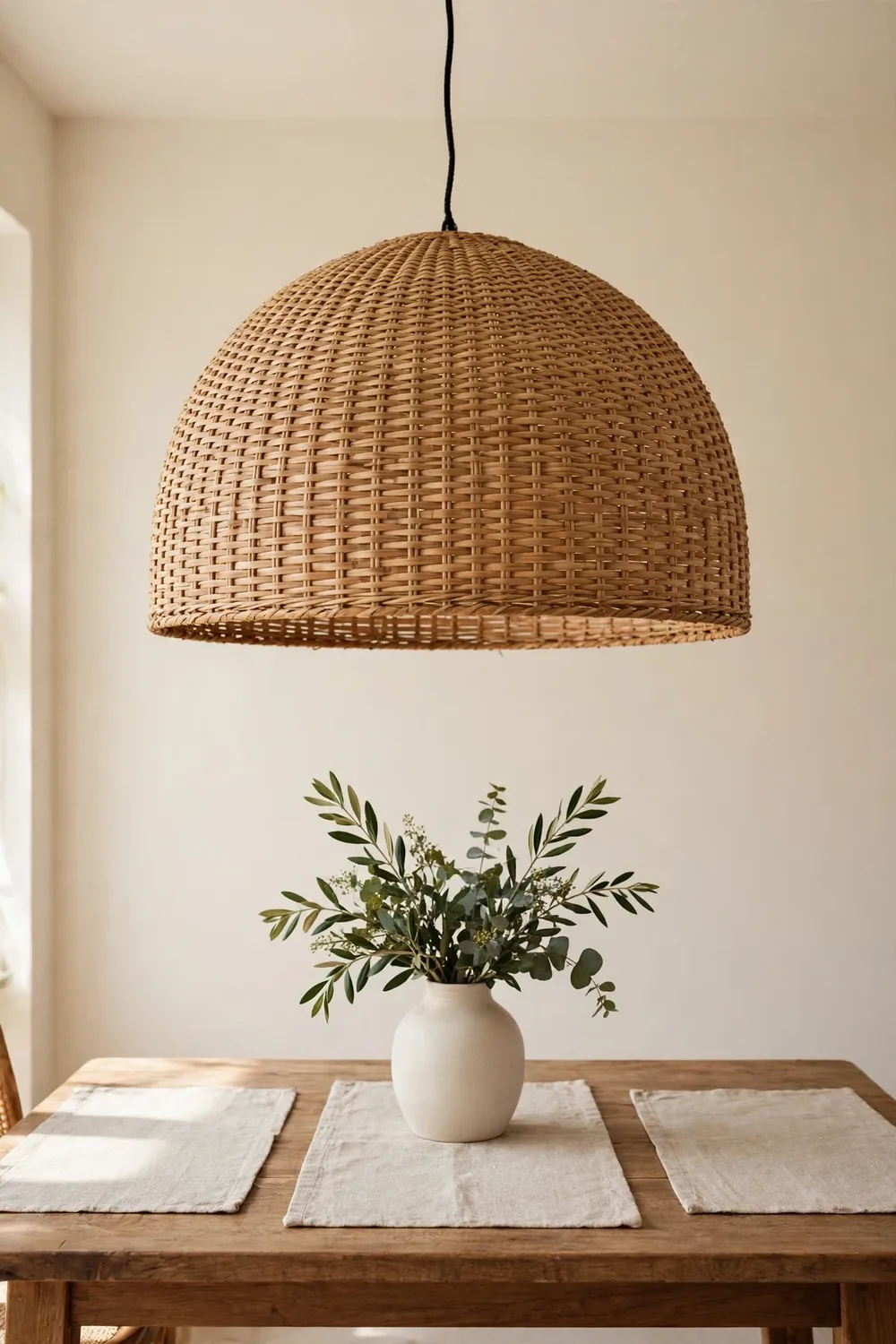
Every kitchen can carry one fixture with personality, and one is enough. A rattan pendant, a brass dome, a row of small glass globes: pick the one that makes you smile and let the rest of the lighting stay quiet. It usually hangs over the island, the dining table, or a breakfast nook, the spot where the eye lands when you walk in.
Size matters more than style here. A shade that is too small over a big table looks lost, and one that is too big crowds the room. Pick a shade about one third the width of the table or island beneath it, and keep the rest of the fixtures plain so the statement has room to breathe. I chose a woven rattan dome for mine, and it is the first thing guests comment on, even though the under-cabinet strips do far more actual work. The statement fixture is for joy, and the quiet layers are for cooking.
6. Choose warm bulbs everywhere
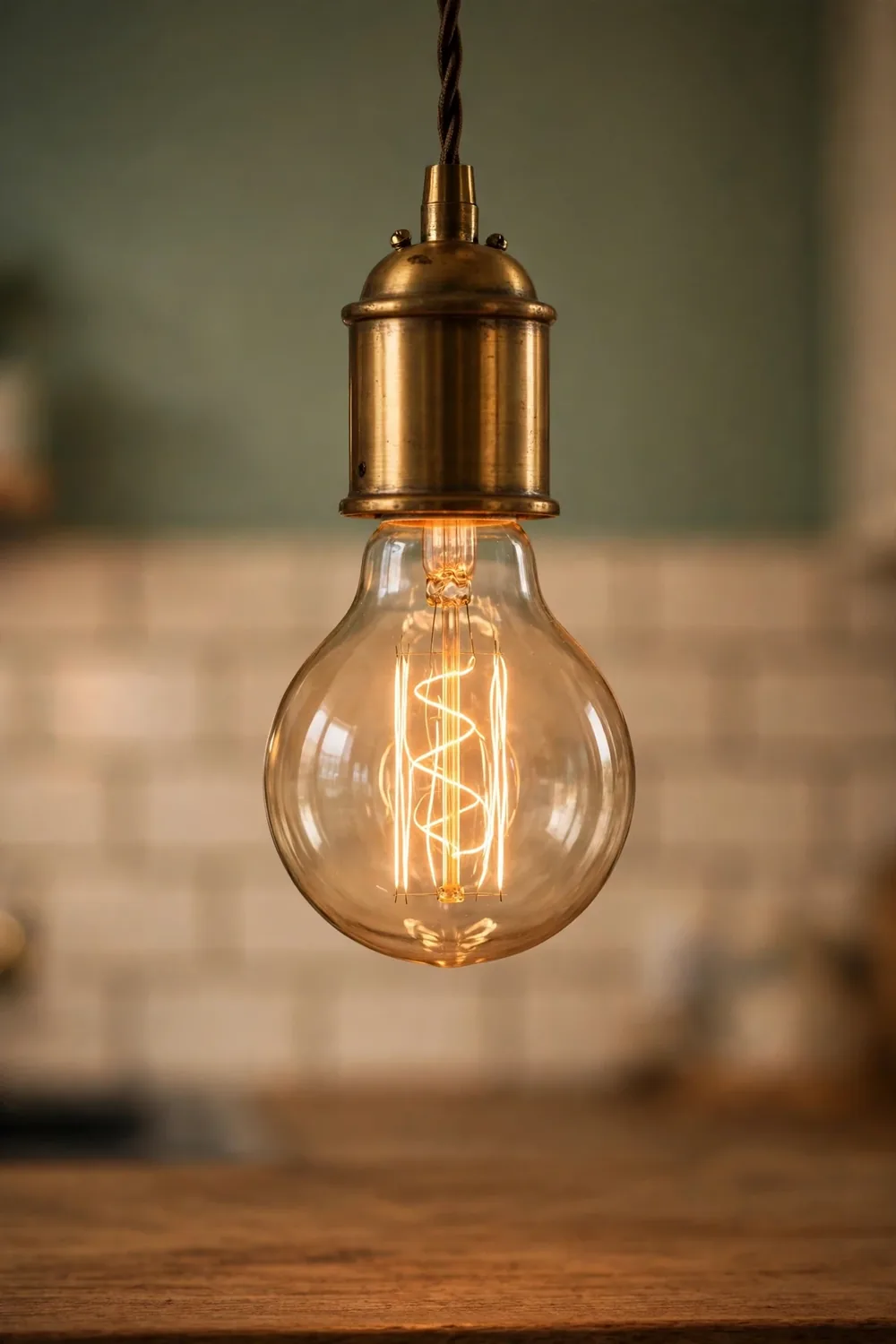
Bulb color quietly decides whether your kitchen feels like a home or a hallway. Warm white light, 2700K on the box, flatters wood, cream tile, and skin, and it makes food look appetizing. Cool white light, 4000K and up, belongs in a garage, not a kitchen, and it will make the same room feel flat and a little tense.
The fix is simple: check the number on every bulb box before you buy, and replace the odd ones out one at a time. Mixed color temperatures are the usual culprit when a kitchen looks almost right but somehow restless, one cool bulb over the sink fighting three warm ones over the island. Match them all to 2700K and the room settles. If you buy smart bulbs, set the default scene to warm white.
7. Plan the evening glow last
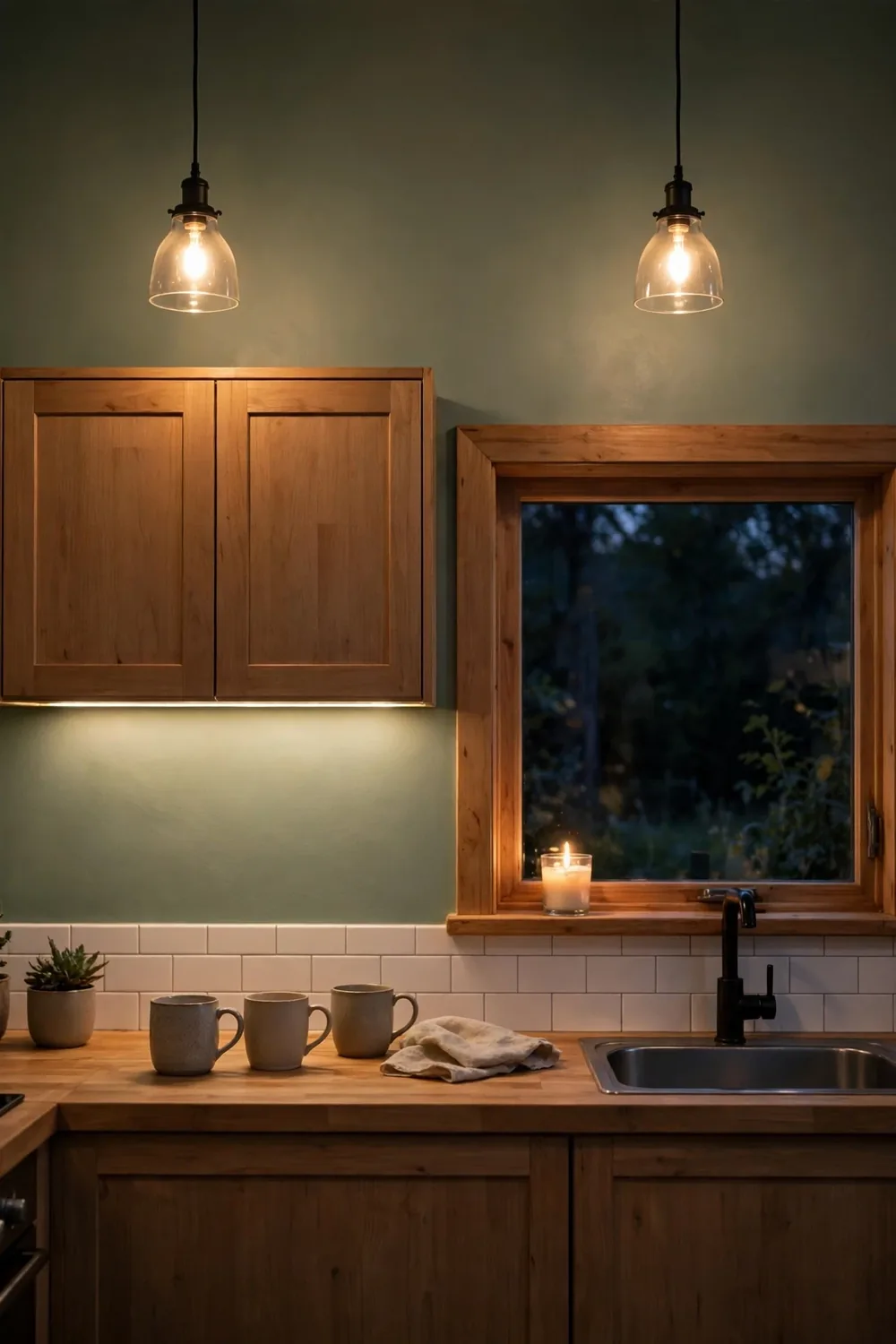
The last layer is the one you enjoy rather than the one you work by. Once the pendants, the task lights, and the dimmers are in, sit in the kitchen at dusk with everything on low and look for what is missing. Usually it is one small glow: a candle on the windowsill, a tiny lamp on the open shelf, or the under-cabinet strip left on at its lowest setting.
This glow makes the kitchen a place to linger instead of a place to finish chores and leave. A small plug-in lamp with a linen shade on the counter, kept on a timer, gives the room a soft edge after dark. Keep this layer low and warm, and separate from the work lights, so one switch does not kill the whole mood. Live with the evening glow for a week before adding anything else.
What went wrong in my kitchen?
I bought the statement fixture first, before measuring anything, and it hung too low over the table for a month. It blocked the view across the table so thoroughly that my husband and I ate dinner peering around it like it was a third person at the table. I had measured the ceiling and the table and still got it wrong, because I measured to the top of the shade instead of the bottom, where the light actually comes from.
Measure to the bottom of the shade, and check the height by sitting at the table before you fix anything in place. Five minutes of sitting saves a month of ducking. A beautiful fixture at the wrong height is worse than a plain one at the right height, because you notice the beautiful one every single time it gets in your way.
Good kitchen light is not brighter light. It is light in the right places, warm enough to linger in, and low enough at night to let the day end.
FAQ
What color temperature is best for a kitchen? Warm white, 2700K, for every bulb in the room. It flatters wood and cream tile, makes food look appetizing, and dims to a soft evening glow.
How high should a pendant hang over a kitchen island? The bottom of the shade should sit 30 to 36 inches above the counter. Lower than 30 inches it blocks the view across the room, and higher than 36 inches the light spreads too thin.
Do I need an electrician to add kitchen lighting? Not for most of these layers. Battery and plug-in LED strips, puck lights, plug-in pendants, and smart bulbs all install without touching wiring. A hardwired dimmer or a new ceiling fixture is when to call an electrician.
Can layered lighting work in a rental kitchen? Yes. Battery strips under cabinets, plug-in pendants on ceiling hooks, puck lights in the pantry, and smart bulbs all come off or move out with you.
How many layers of light does a small kitchen need? Three is enough: a pendant over the table or island, under-cabinet light where you chop, and a dimmer to bring both down in the evening. Add the rest when the first three feel settled.
What if my kitchen has no island or dining table? Hang the pendant over the main stretch of counter instead, and let the under-cabinet light carry the work. The pendant marks the gathering spot and the task light marks the working spot.