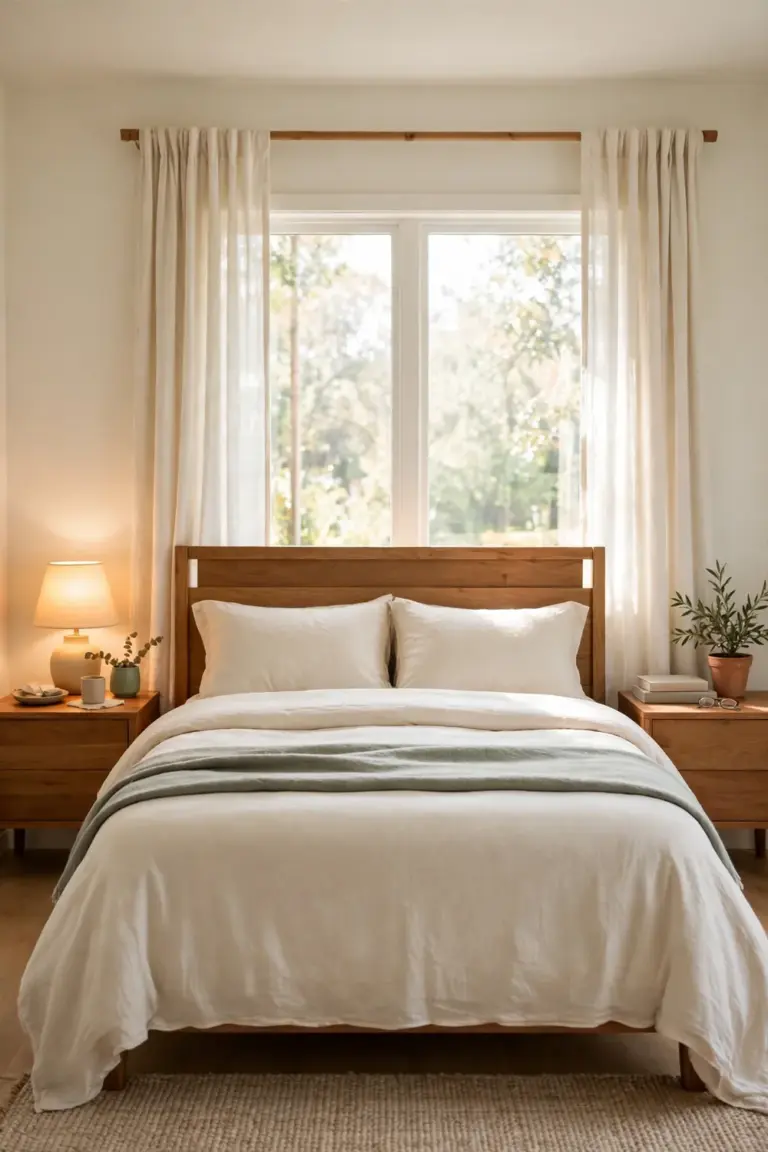
Closet Door Alternatives for Tight Bedrooms
Short answer: A standard hinged closet door needs about 24 to 30 inches of clear floor space to swing open, and that swing is often what makes a tight bedroom feel cramped. Swap the door for a curtain, a sliding panel, or an open styled opening, and you get the floor back without losing the closet. The seven options below cover every layout, from rentals to rooms with no clearance at all.
| Time | About 2 hours to swap a door for a curtain or panel, plus drying time for paint if you refinish anything |
| Difficulty | Beginner; most options need a rod, a track, or a few screws |
| Space | Works in bedrooms where a swinging door would hit the bed, a dresser, or a nightstand |
A hinged closet door is honest about what it needs: a clear arc of floor, every time you open it. In a tight bedroom that arc is the reason the bed sits two feet from the wall and the dresser cannot go where you want it. The closet itself is fine. The door is the problem.
The fix is a door that asks for less room, or no room at all. A curtain hangs flat against the opening. A sliding panel moves along the wall instead of into the room. An open closet, styled on purpose, needs no clearance whatsoever. Each option trades a little privacy or polish for floor space.
What are the best closet door alternatives for a tight bedroom?
Seven options, from a simple curtain to a fully styled open closet. Each one frees the swing space a hinged door wastes, and each one suits a different kind of bedroom.
1. Hang a curtain panel
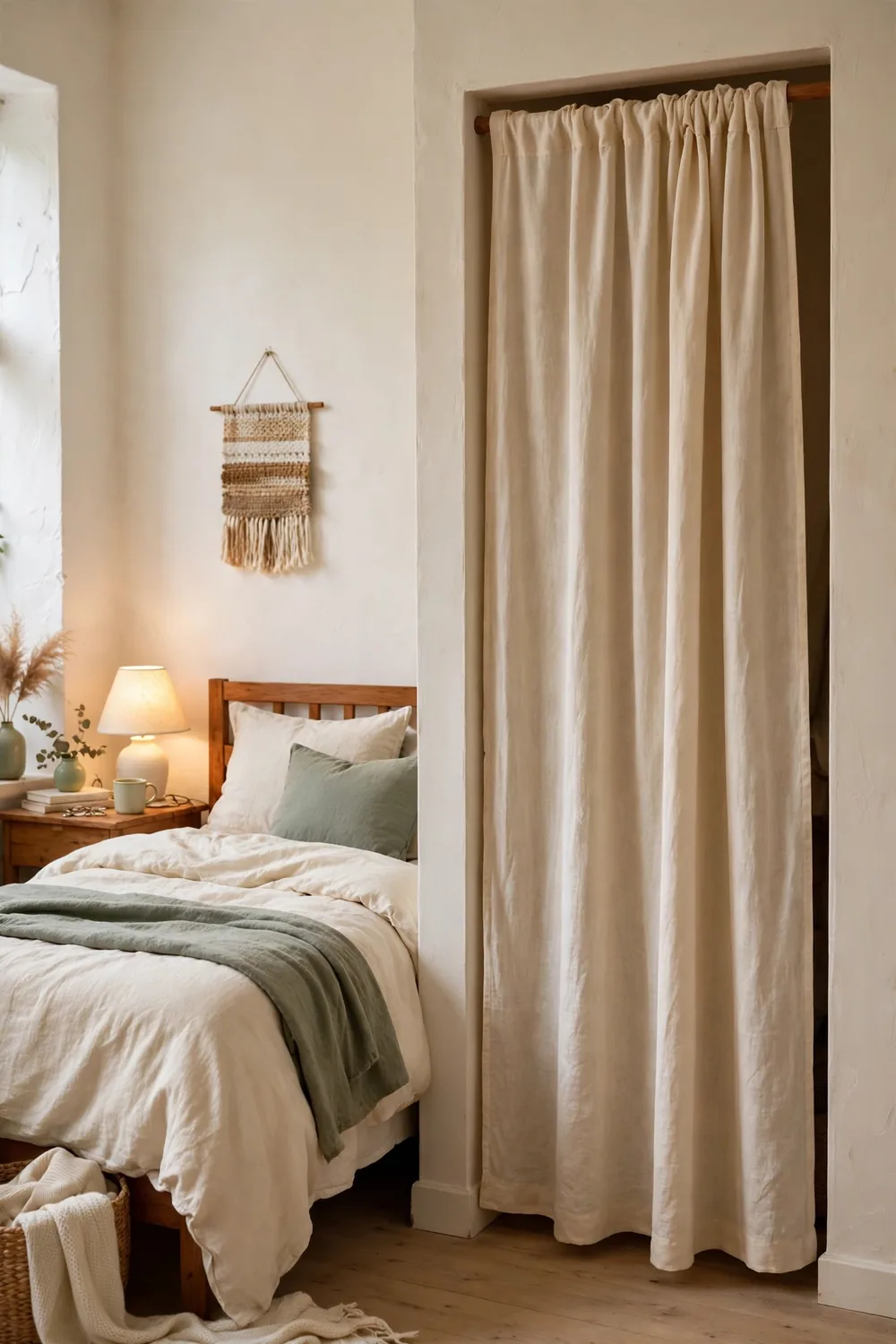
A curtain is the fastest way to reclaim the swing space, and the most forgiving option for renters. Mount a rod or a ceiling track just above the opening, hang a panel that covers the full width with a few inches of overlap, and the door is gone. The fabric hangs flat, so nothing swings into the room, and you can pull it aside with one hand when you need full access.
Choose a panel in a solid color close to the wall color, and the opening reads as a soft wall rather than a covered hole. A heavier fabric like cotton canvas or linen hangs straight and stays put, while a thin fabric billows and shows the shape of whatever hangs behind it. A common rule of thumb is to make the panel about one and a half times the width of the opening, so the fabric gathers instead of stretching flat, and to hem it about half an inch above the floor.
2. Try a sliding barn door
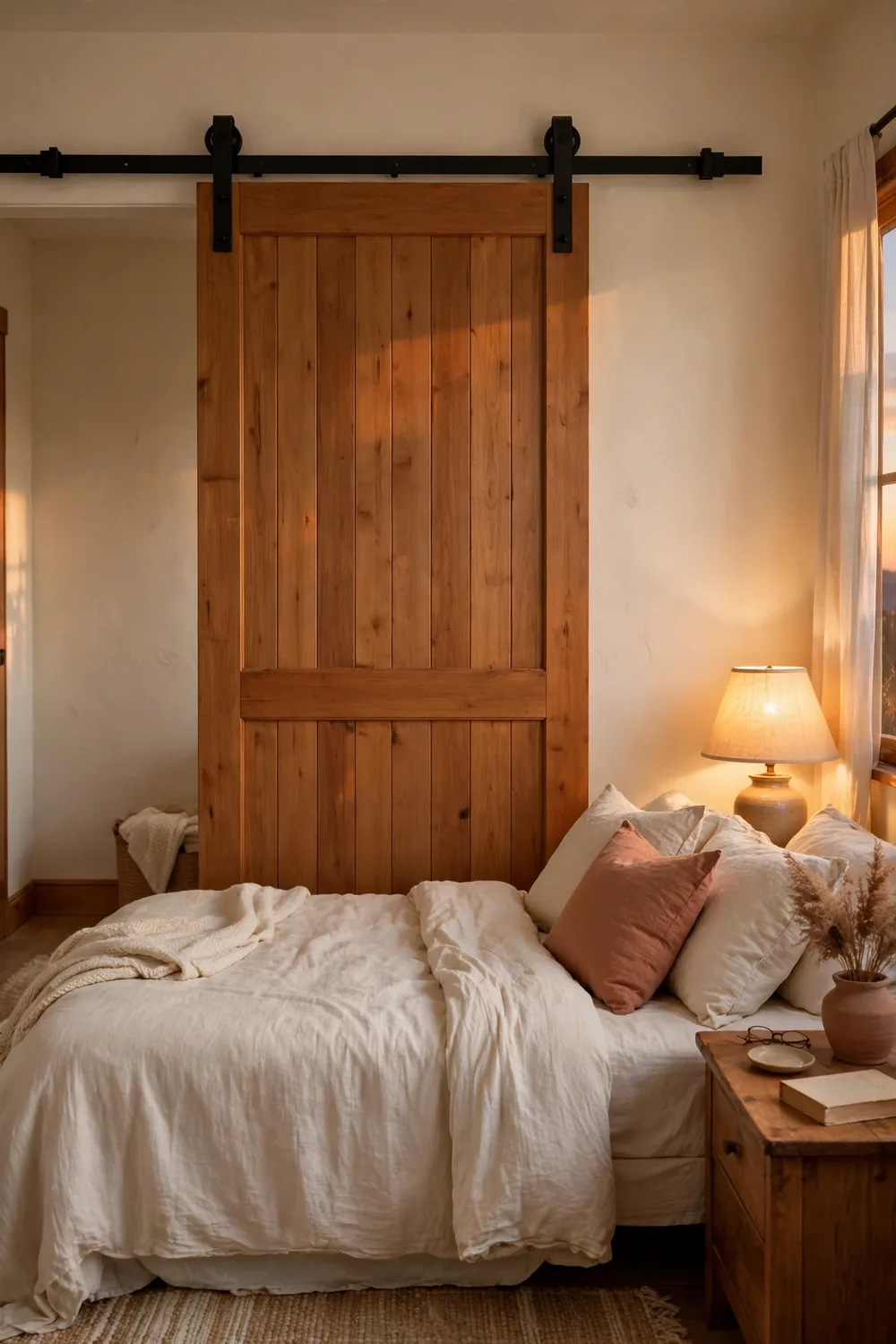
A sliding barn door moves along a track mounted above the opening, so it never swings into the room at all. One panel slides left or right to cover the closet, and the floor in front stays completely clear. It is the closest thing to a real door on this list, with the same solid feel and privacy, minus the swing.
The catch is wall space. A sliding panel needs a stretch of empty wall beside the opening at least as wide as the panel itself, so it has somewhere to go when it slides open. In a tight bedroom that wall is often where the bed or the dresser already sits. Measure the wall beside the opening before you buy anything, and check that the panel will not cover a light switch or a vent when open. Mount the track into studs, not just drywall, and leave a gap of about half an inch so the panel clears the baseboard.
3. Fold it away with bifold doors
Bifold doors fold in half as they open, so they need about half the swing space of a hinged door. Two panels hinge together and stack against one side of the opening, leaving most of the closet accessible while the doors stay inside the frame. They are a good middle step if you want real doors but cannot spare a full swing.
The folding action is the trade. Bifold doors need the track at the top and the pivot at the bottom to stay aligned, and a door that jumps its track is a door you will fight every morning. Keep the track clean and tighten any screw that works loose before the door starts to sag. They suit a wide, shallow closet best. A shared closet works less well, because the folded stack blocks part of the opening.
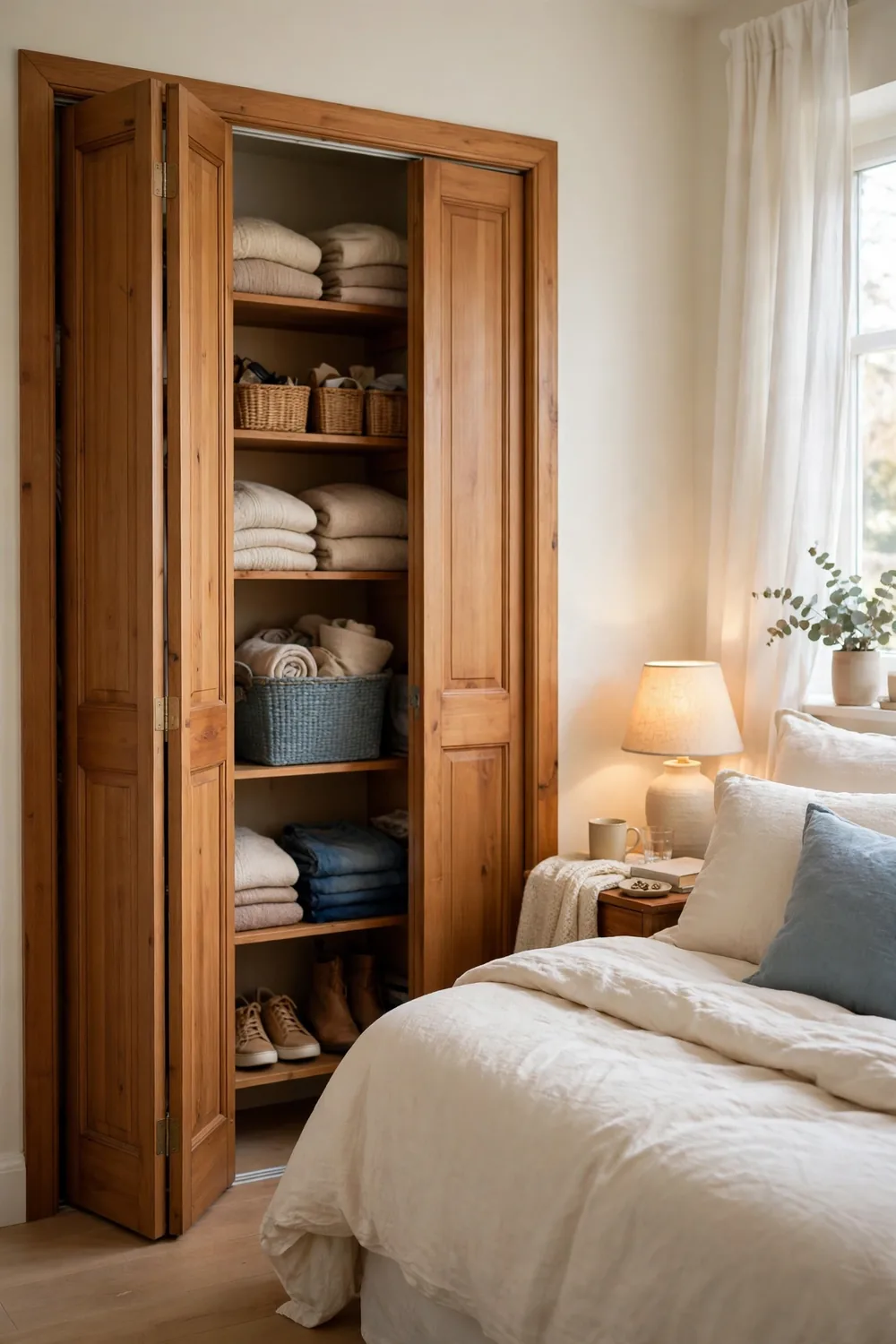
4. Leave it open with styled shelving
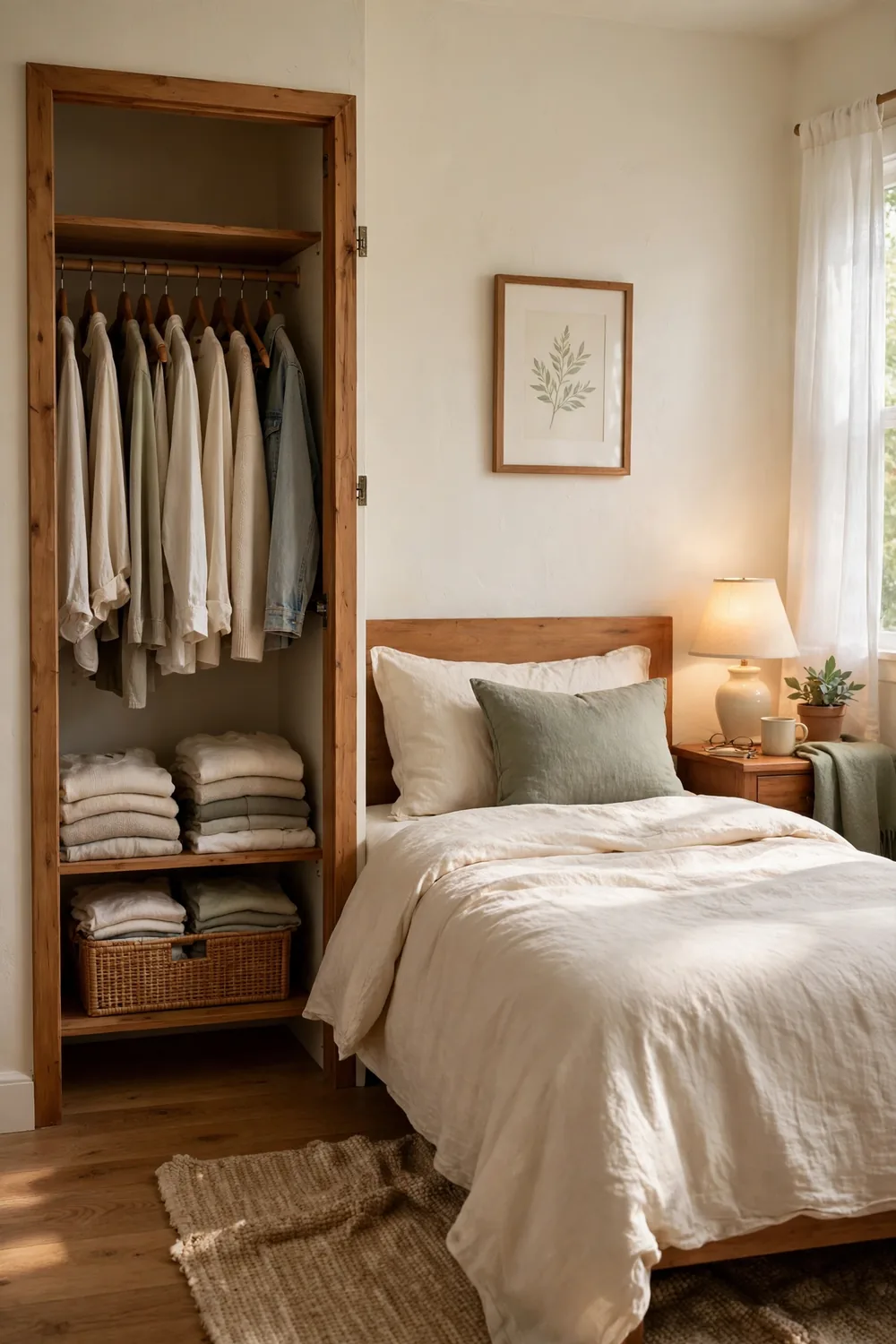
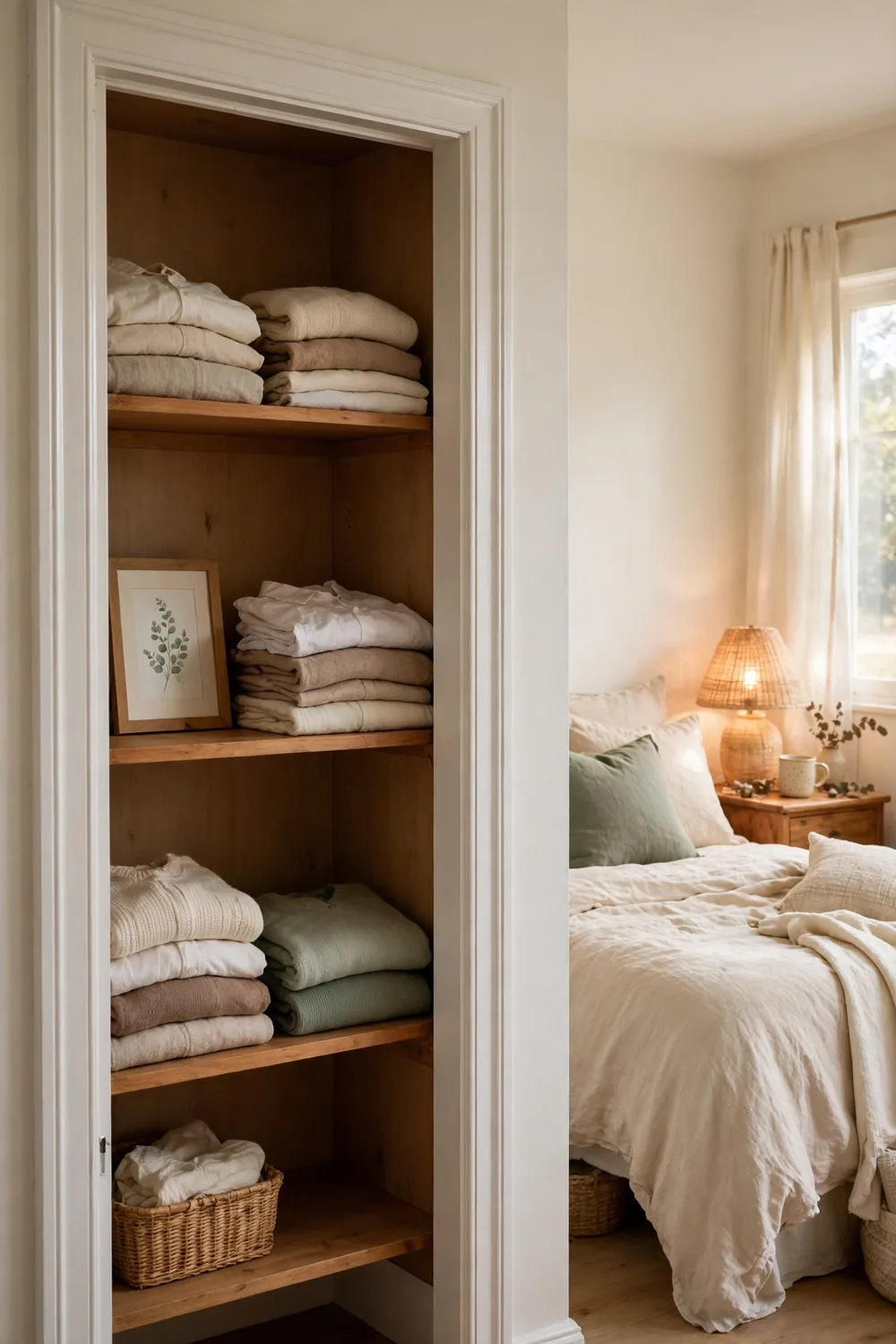
An open closet is the most honest option on this list: no door, no curtain, no track, just the closet itself, styled so it looks intentional. Remove the door and the hinges, add a second hanging rod or a few shelves, and treat the opening the way you would treat a bookshelf. Matching hangers, folded stacks in a calm color range, and a few baskets on the top shelf turn storage into part of the room.
This works best when the closet holds clothes you actually wear and the room is tidy by habit. An open closet shows everything, including the pile of sweaters you meant to fold. The upside is real: zero clearance, full access to every shelf at once, and a small bedroom that feels larger because the eye reads the closet depth as part of the room. The small bedroom ideas for couples guide uses the same logic at room scale, because two people can reach in at the same time without a door swinging between them.
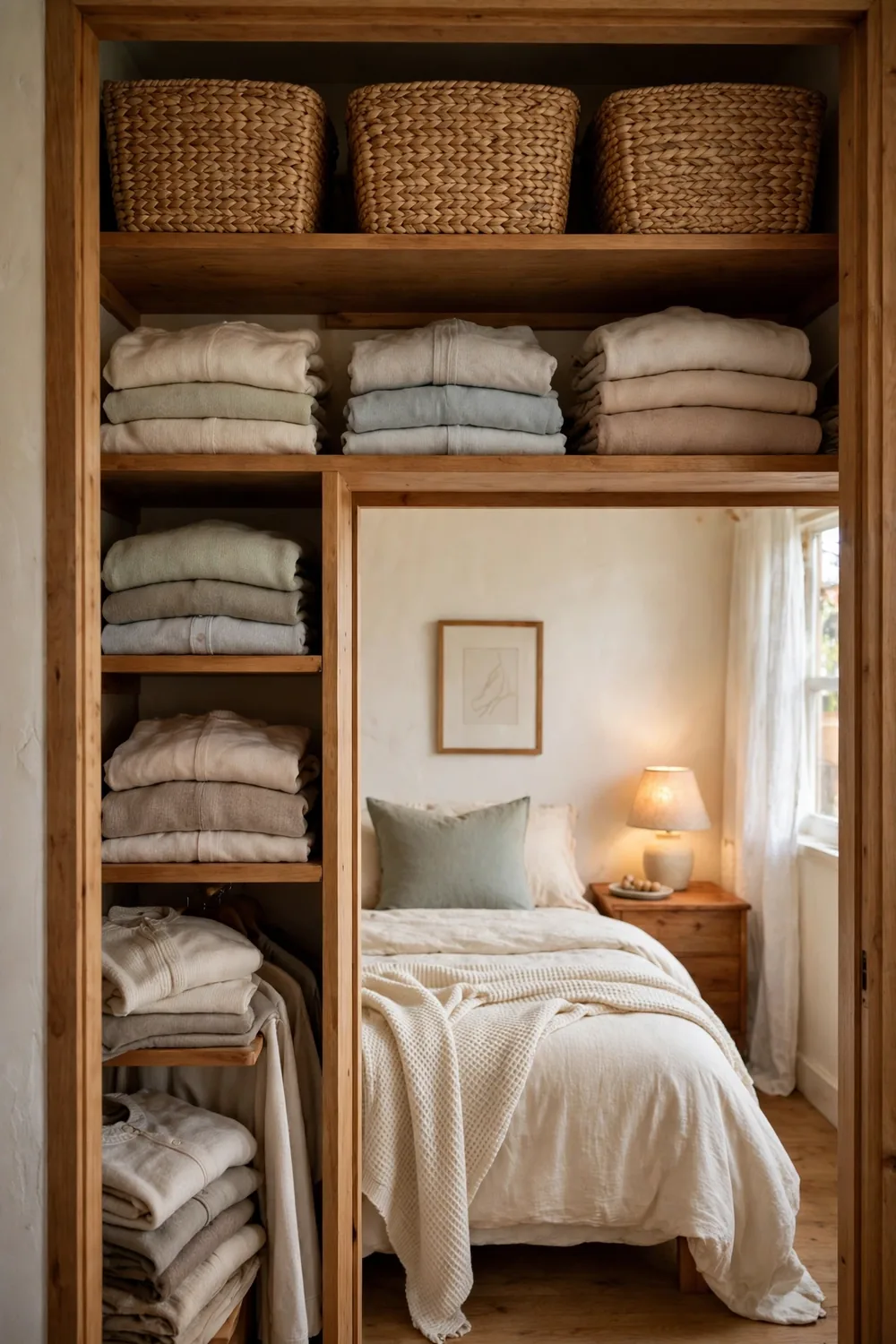
5. Try a beaded curtain
A beaded curtain is the lightest option on this list, and the most playful. Strands of wood, glass, or acrylic beads hang from a rod across the opening, parting when you walk through and falling back into place behind you. They block the view into the closet while letting light and air pass through, and they need no clearance at all.
Beaded curtains suit a bedroom where the closet holds everyday clothes and the room already leans casual. Wood beads in a warm tone look calmer than bright glass or plastic. The practical test is noise and tangling: cheap strands tangle and click every time they move, while a well made curtain hangs straight, parts cleanly, and settles back without a sound. Hang it so the strands end about an inch above the floor.
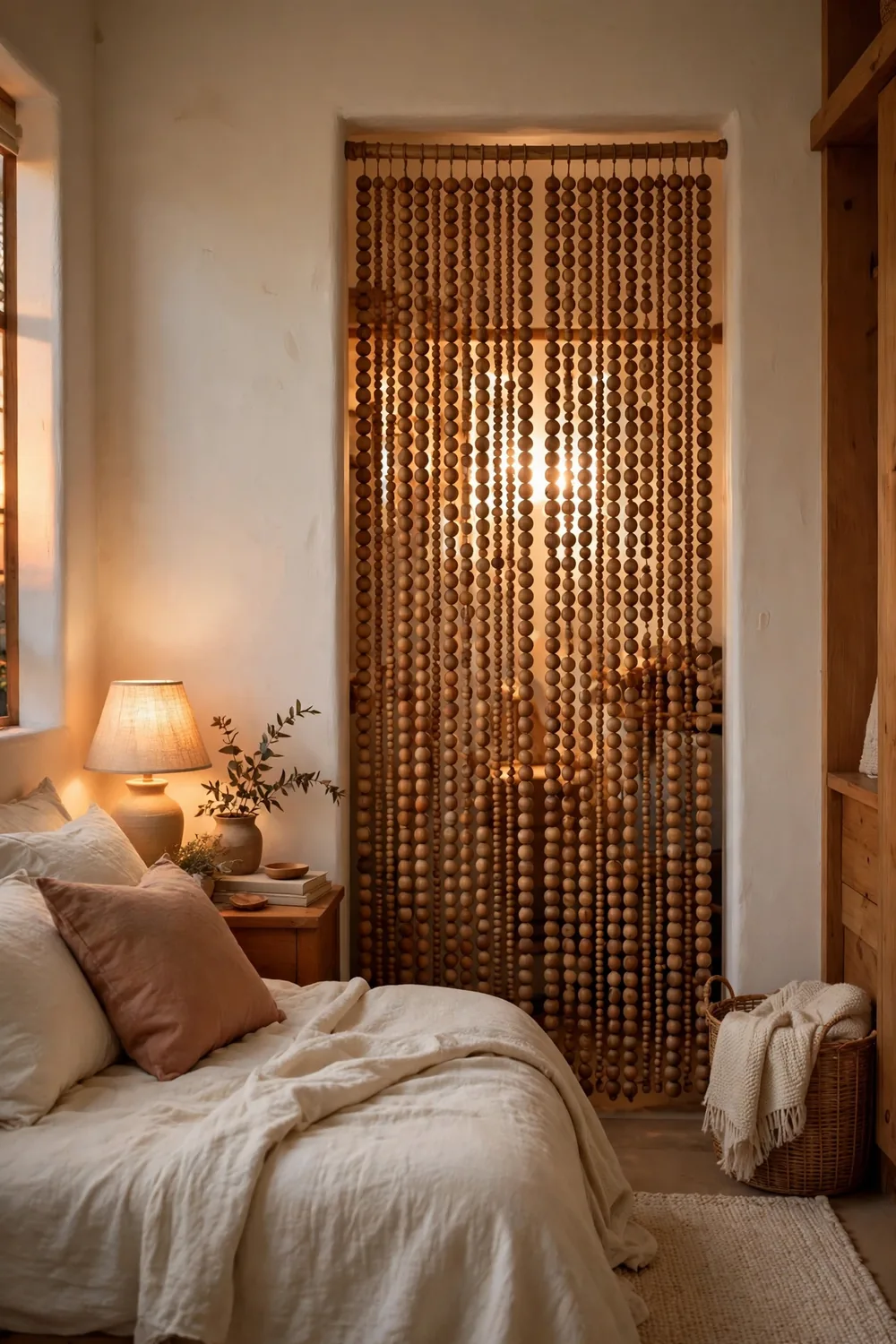
6. Use a frosted glass panel
A frosted glass panel gives you the look of a real door with almost none of the swing. The panel slides on a track like a barn door, or hangs in a frame like a fixed screen, and the frosted surface hides the closet contents while letting light through. The bedroom keeps its brightness, the closet stays private, and the floor stays clear.
Frosted glass suits a bedroom that borrows light from the closet, or a closet with a window or a light inside that would otherwise be wasted behind a solid door. It also suits a modern room, where a flat panel with a slim frame looks like it belongs. Safety comes first: use tempered glass, which breaks into small blunt pieces rather than sharp shards, mount the track or frame into studs, and choose two narrower panels if the opening is wider than about 48 inches.
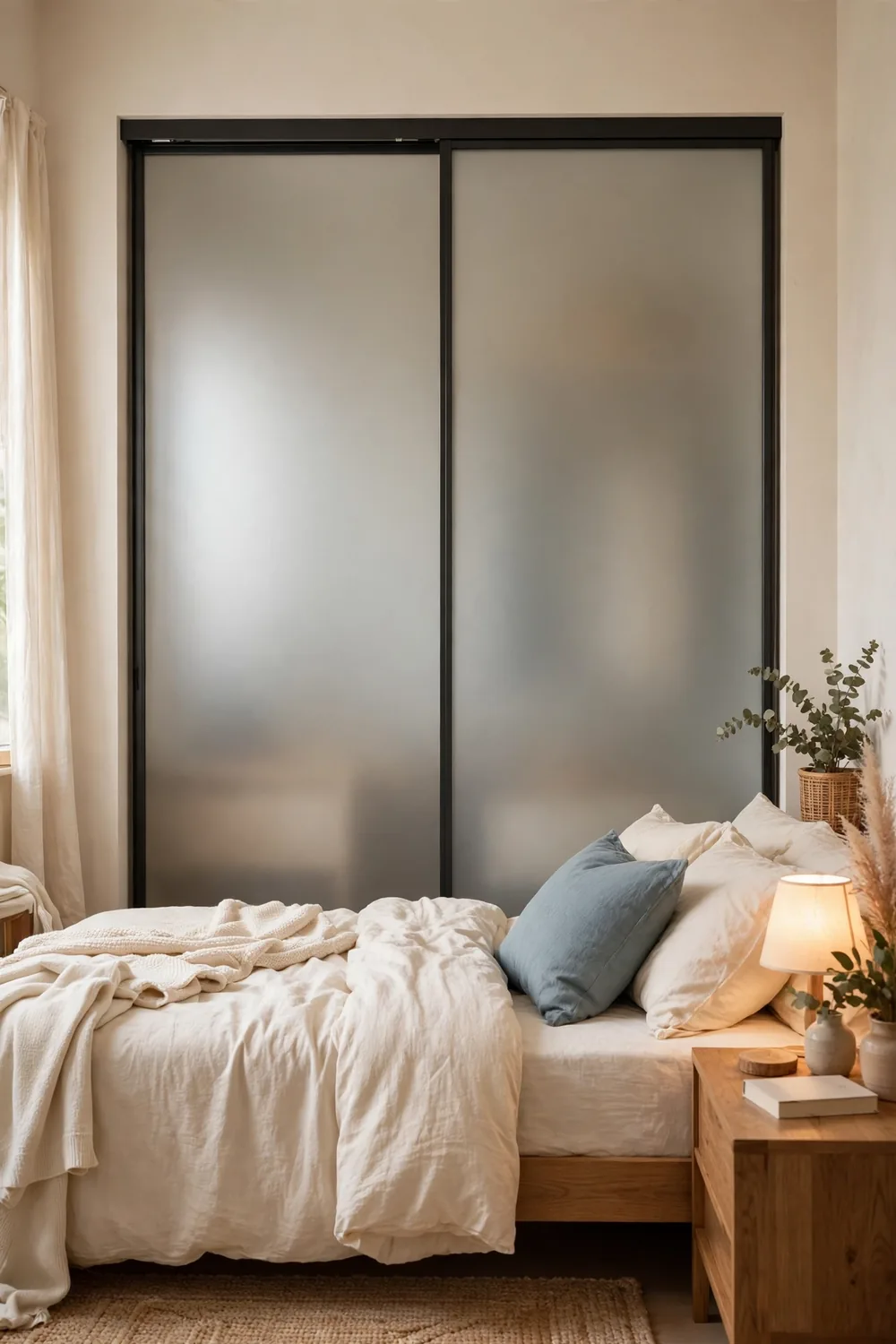
7. Skip the door entirely and style the opening
The last option is the most committed: take the door off, finish the opening, and let the closet become part of the bedroom. Paint the inside the same color as the walls, or one shade deeper, so the opening reads as a niche rather than a hole. Add a picture ledge, a small lamp, or a framed print on the wall beside the opening, and the closet stops looking like missing architecture.
This is the right choice when the closet is shallow and the clothes inside are part of the room’s look, like a capsule wardrobe in a calm palette. The guest room ideas guide uses this approach often, because a guest closet that stays open invites the guest to use it, and a styled opening signals that the room is ready. Fill the old hinge holes, paint the trim, and add a slim shelf or a row of hooks inside, so the space looks finished even when the closet is half empty.
Common mistakes
Hanging a curtain that is too short or too narrow. A panel that ends halfway down the opening, or one that barely covers the width, looks like a sheet thrown over a problem. It shows the closet contents at the edges and makes the room look unfinished. Fix it by making the panel one and a half times as wide as the opening, hemmed to end half an inch above the floor.
Choosing a sliding door with nowhere to slide. A barn door that cannot open fully because the bed or the dresser blocks its path is worse than the hinged door it replaced. The panel stays half closed and the closet stays half hidden. Fix it by measuring the wall beside the opening before you buy, and picking a different option if the clear wall is shorter than the panel.
Treating an open closet like a doorless closet. Taking the door off is not the same as styling an open closet. Without matching hangers, a few baskets, and a tidy top shelf, the opening shows every pile and every stray hanger. Fix it by editing the closet first, then taking the door off, and keeping one basket on the top shelf for the things that have no better home.
Editor’s pick
If we had to pick one option for most tight bedrooms, we would pick the curtain panel. It takes the least effort, it works in rentals, and it frees the full swing space. A solid linen panel in a color close to the wall, hung from a ceiling track and hemmed half an inch above the floor, looks calm and deliberate. Start there, and only invest in a sliding panel or a styled open closet once you know the curtain works.
The door is not the closet. Take away the swing, and the smallest bedroom gets back the floor it was wasting on an arc nobody walks through.
FAQ
What is the simplest closet door alternative? A curtain panel is the simplest swap, because it needs only a rod or a track and a panel cut to fit the opening. It installs in about an hour, works in rentals, and frees the full swing space a hinged door wastes.
Do closet curtains look unfinished? A curtain looks unfinished when it is too short, too narrow, or made from thin fabric. A lined panel in a solid color close to the wall, hemmed half an inch above the floor, reads as a deliberate design choice.
Can a closet door be removed in a rental? Many landlords allow it if you store the door and its hardware and reinstall everything before you move out. Ask first, and keep every screw and hinge in a labeled bag.
How much clearance does a bifold door need? A bifold door needs about half the swing space of a hinged door, because the panels fold together instead of swinging out in one piece. Measure the opening depth first.
Is an open closet a good idea for a small bedroom? An open closet works well when the closet holds clothes you wear every day and the room stays tidy by habit. It makes the bedroom feel larger, but it shows every pile.