Calm Color Palettes for Bedrooms With Paint Names
Short answer: A calm bedroom palette starts with one warm white on the walls and one muted color as the accent, repeated in the bedding and one more place in the room. Plan on testing three paint swatches on the wall for a full day before choosing, since the same color can look warm at noon and gray at dusk.
| Time | About 3 hours to paint a test wall, plus a day to live with the swatches |
| Difficulty | Beginner; swatches first, full walls later |
| Space | Works in any bedroom, from a small studio nook to a wide master bedroom |
A bedroom should feel slower than the rest of the house the moment you walk in, and color does more of that work than any single piece of furniture. A calm palette is not about using only white. It is about choosing colors with low contrast and soft edges, so nothing in the room shouts for attention and the eye can rest wherever it lands.
The palettes below all follow the same rule: one quiet wall color, one muted accent, and warm wood or cream to soften the edges. Each one names real paints you can find at a paint store, so you can test the exact color instead of guessing from a screen.
Why do some bedrooms feel calm and others feel busy?
A bedroom feels busy when too many colors compete at the same volume. Three strong colors, a patterned rug, and bright bedding all ask for attention at once, and the room feels loud even when it is tidy. A calm bedroom keeps the contrast low: the walls, the bedding, and the furniture sit close together in tone, so the eye moves slowly across the room instead of jumping from one bright thing to the next.
Light plays a part too. A north facing bedroom gets cool, bluish light all day, which can make a gray wall look cold and a white wall look blue. A south facing bedroom gets warm, golden light, which can make a cream wall look yellow by afternoon. Our cozy bedroom ideas guide makes the same point at room scale: calm comes from fewer decisions, repeated well, not from more color.
What are the 7 calm palettes to try first?
Seven palettes, each built around one wall color and one accent. Each one works on its own, and each one can be mixed with the others by keeping the same warm white on the ceiling and trim.
1. Warm white walls with soft linen bedding
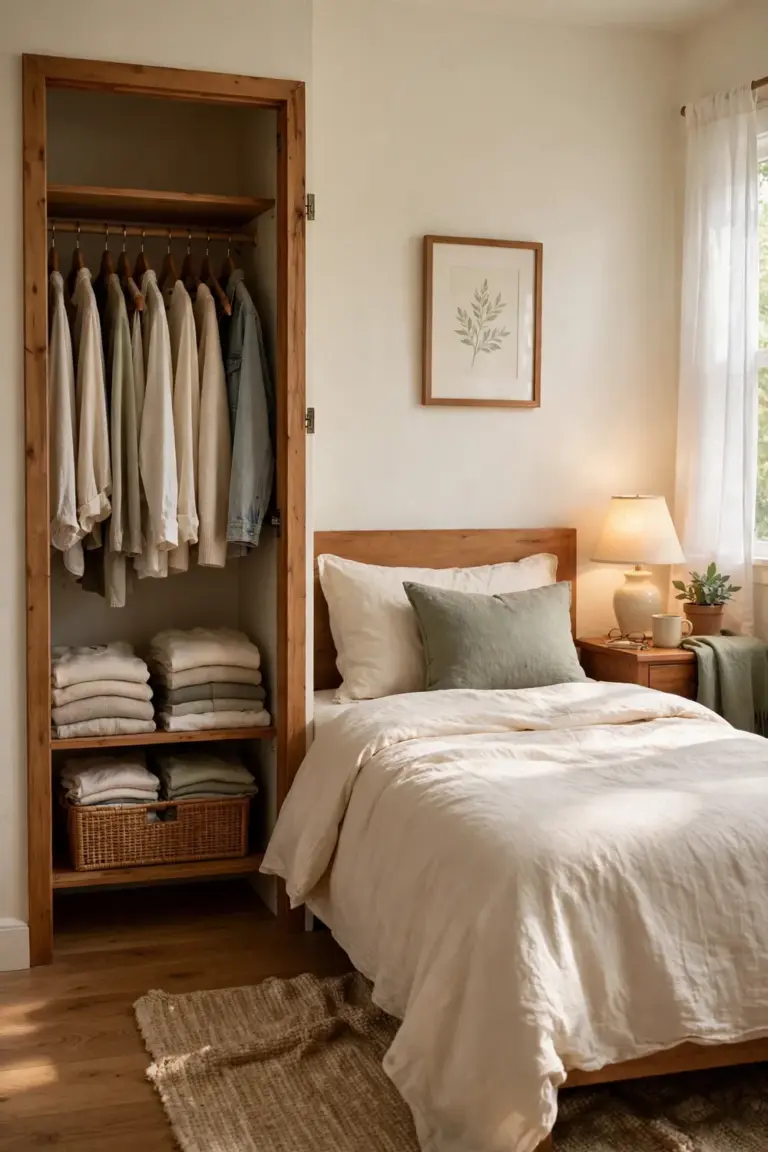
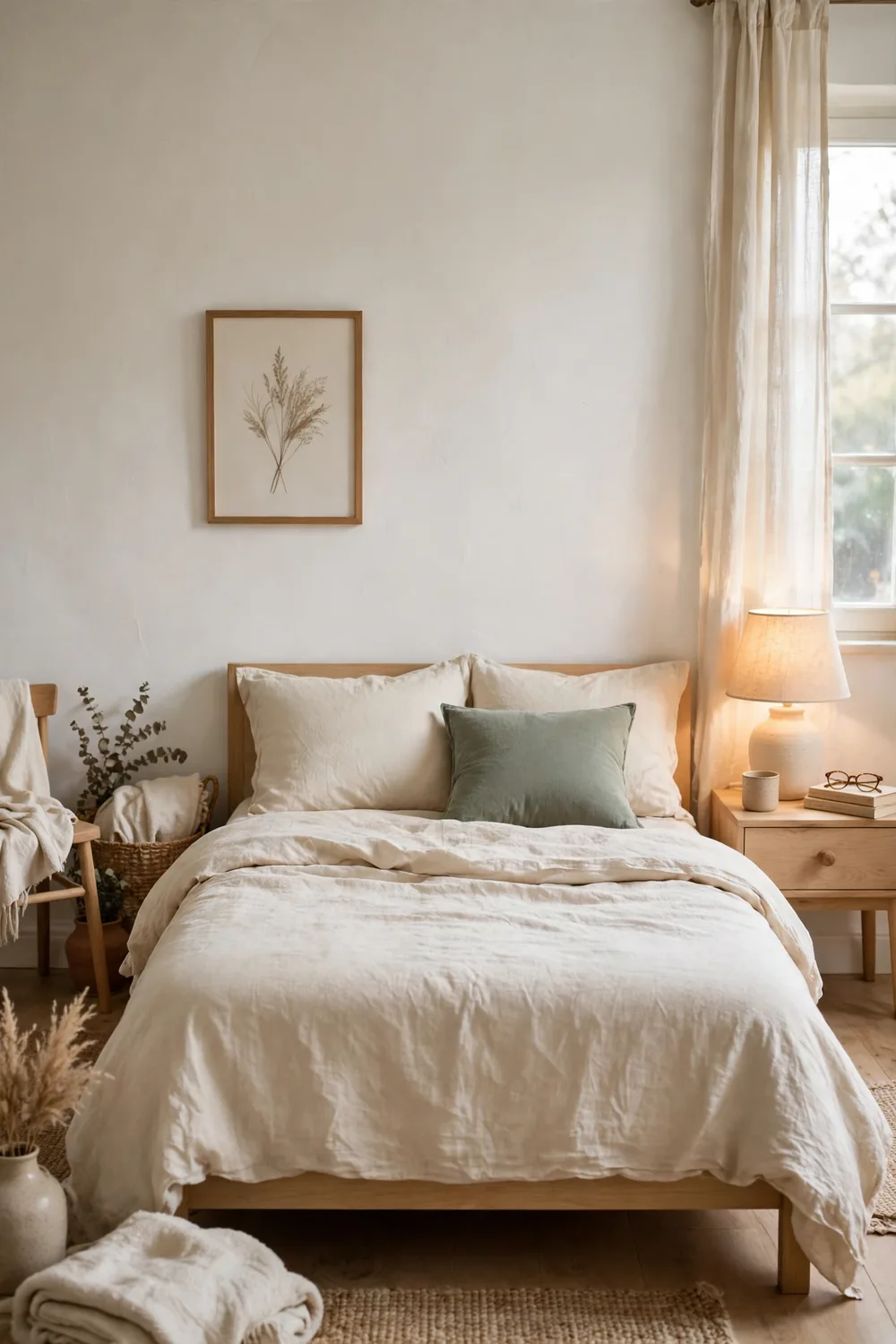
The simplest calm palette is also the most forgiving: warm white walls, cream bedding, and warm wood furniture. Benjamin Moore White Dove (OC-17) is the warm white we suggest most often, because it reads as white without going cold or yellow, and it stays soft in both morning and evening light. Pair it with bedding in natural linen or washed cotton in cream, and add one warm wood piece, like a nightstand or a bench, to keep the room from feeling flat.
This palette suits small bedrooms best, because light walls and light bedding make the room feel wider than it is. One caution: a warm white can look yellow in a south facing room with strong afternoon sun. If it reads yellow, try Sherwin-Williams Alabaster (SW 7008), a slightly cleaner warm white.
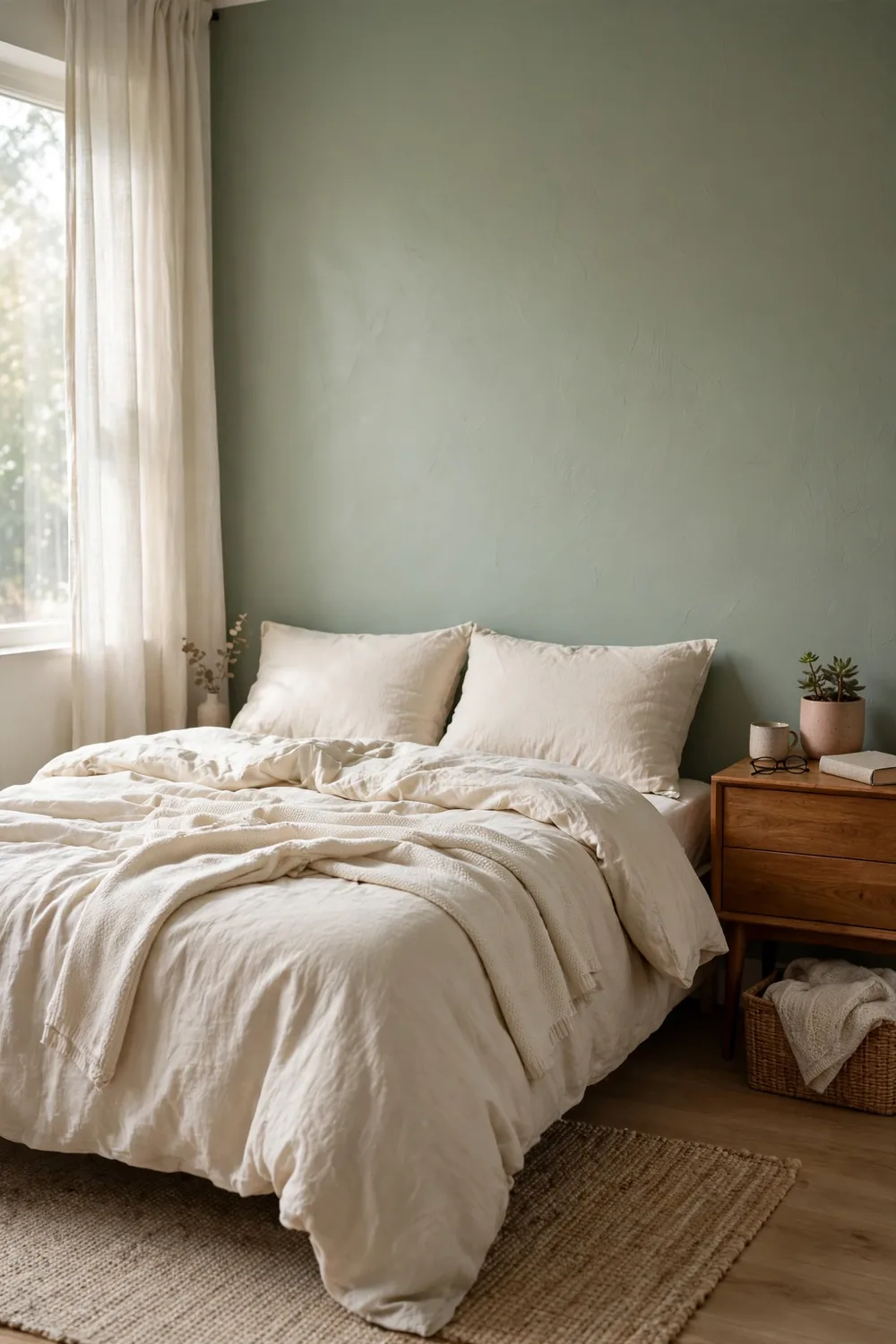
2. Sage green for a bedroom that feels like a garden
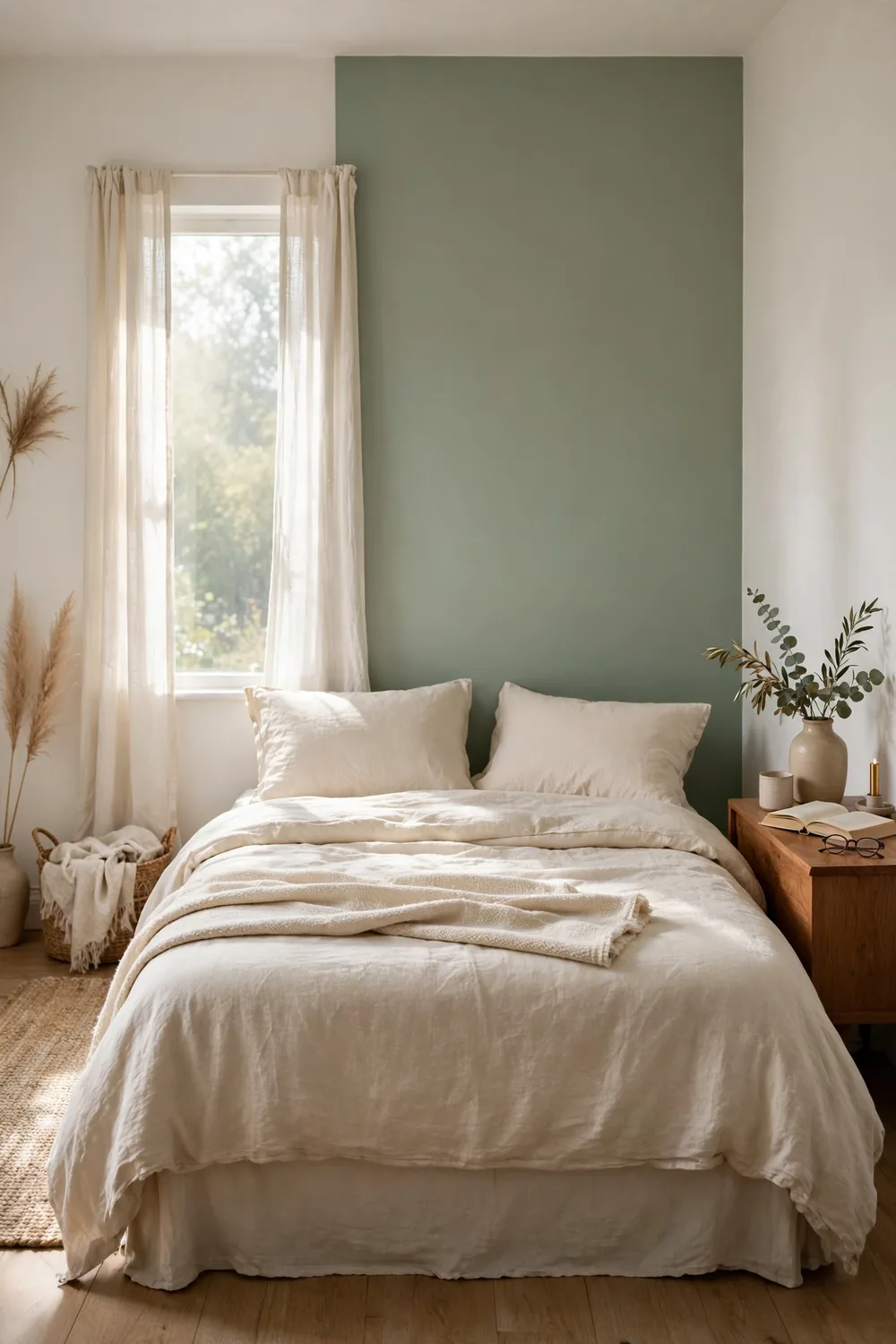
Sage green is the calm color most people reach for first, and for good reason: it sits between green and gray, so it feels alive without feeling loud. Benjamin Moore Saybrook Sage (HC-114) is a classic sage with a soft gray undertone, and it works on all four walls in a bedroom with good daylight, or on one accent wall behind the bed in a darker room.
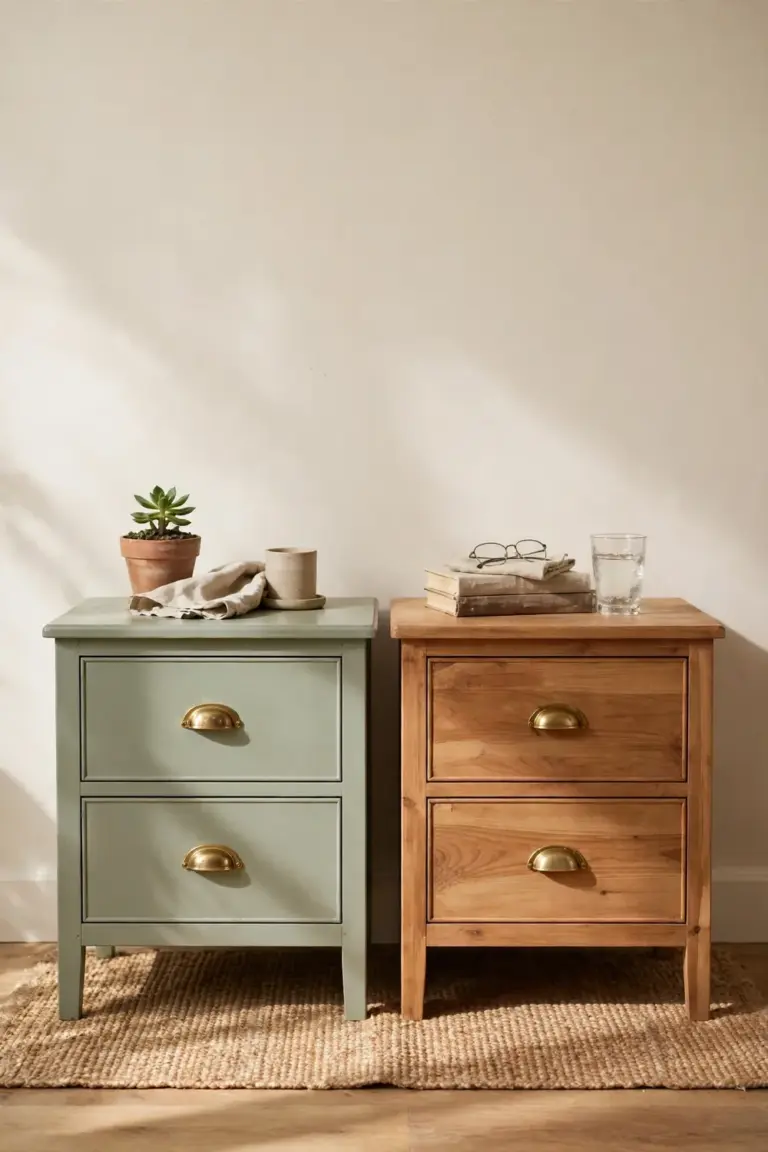
Sage works best with warm accents, not cool ones. A brass lamp, a warm wood frame, or a cream throw keeps the green feeling soft. If Saybrook Sage feels a touch dark on your walls, try Sherwin-Williams Retreat (SW 6207), a lighter sage that reads fresher in small rooms.
3. Dusty blue for cooler light and better sleep
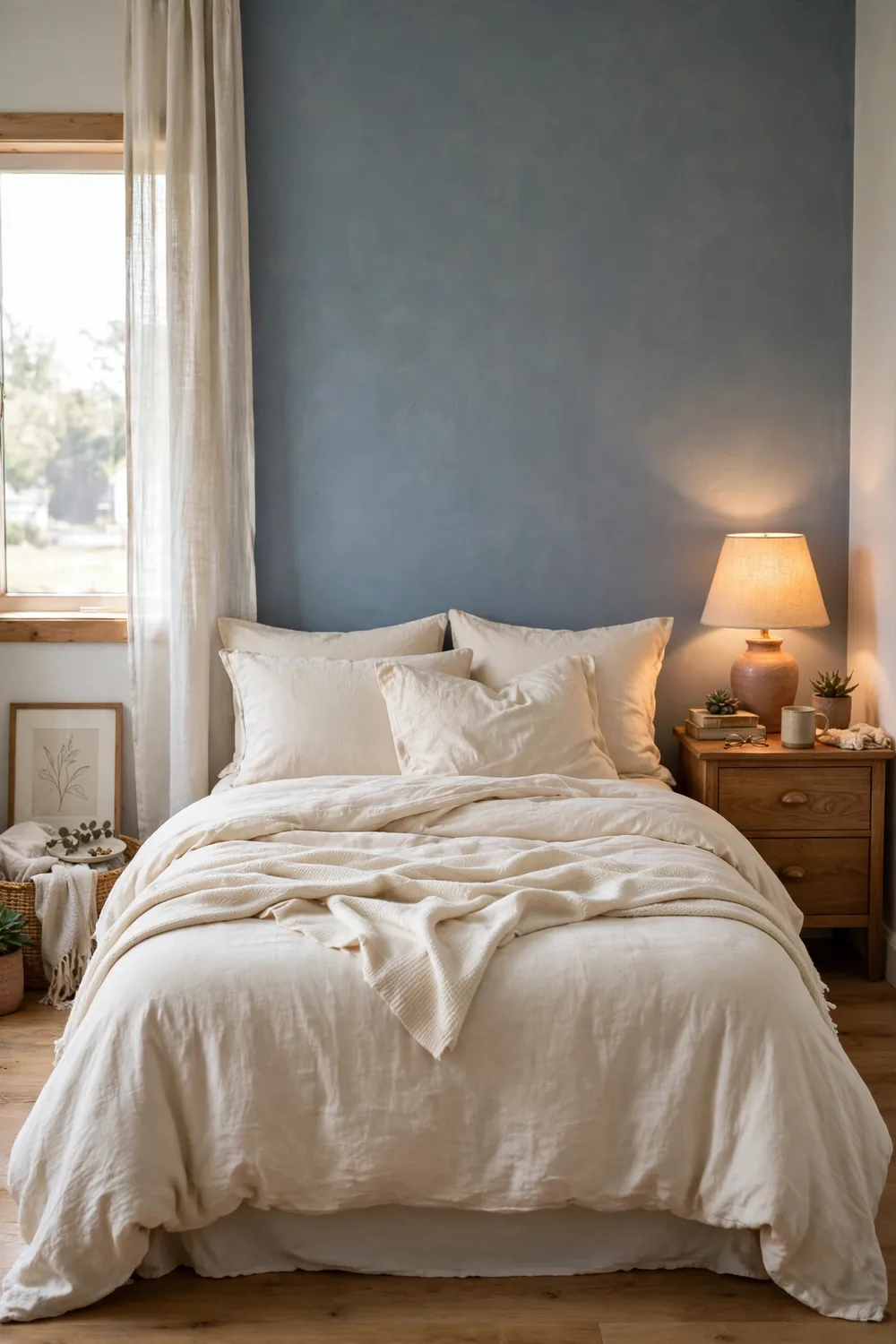
Dusty blue suits bedrooms that get cool northern light, because the color works with the light instead of fighting it. Benjamin Moore Boothbay Gray (HC-165) is a soft blue gray that reads as dusty blue on the wall, calm in daylight and a little deeper at night. Use it on the wall behind the bed, with warm white on the other three walls, and the room will feel cool and quiet without feeling cold.
Balance the blue with warmth everywhere else. Cream bedding, a warm wood nightstand, and a soft beige throw keep the room from sliding into cold. Our bedding layering guide shows the same balance on the bed itself: cool color on the wall, warm layers on the bed, and the room feels settled.
4. Warm greige for a bedroom that never dates
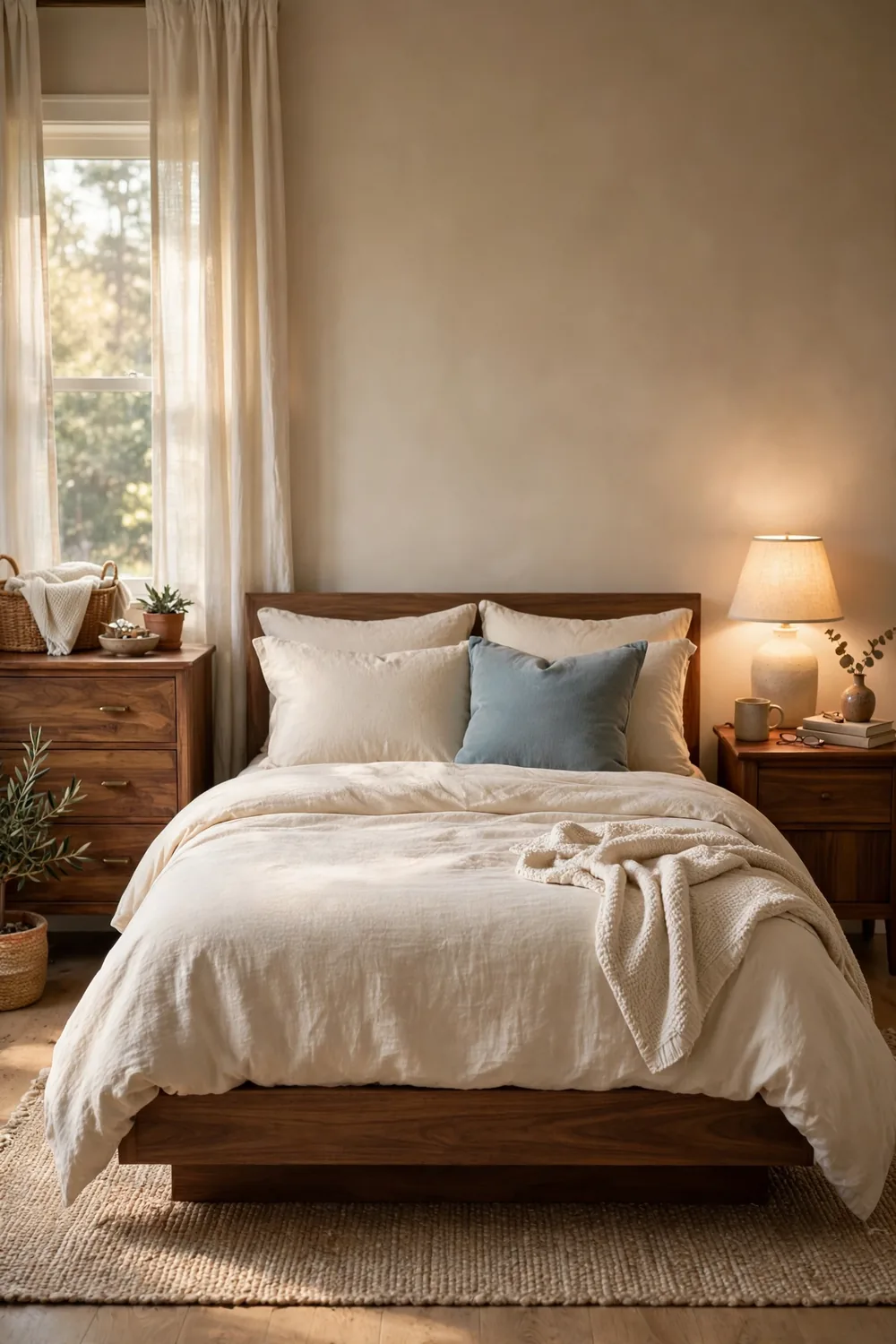
Greige, the blend of gray and beige, is the workhorse of calm bedrooms: it hides dust, suits almost any wood tone, and never shouts. Benjamin Moore Revere Pewter (HC-172) is a warm greige that reads gray in cool light and beige in warm light, so it shifts gently through the day without ever looking wrong.
Pair Revere Pewter with cream bedding and medium wood tones, like walnut or warm oak, and add one soft accent, like a dusty blue cushion or a sage throw. The greige holds the room together while the accent gives the eye somewhere gentle to land.
5. Soft terracotta as a warm accent, not a whole room
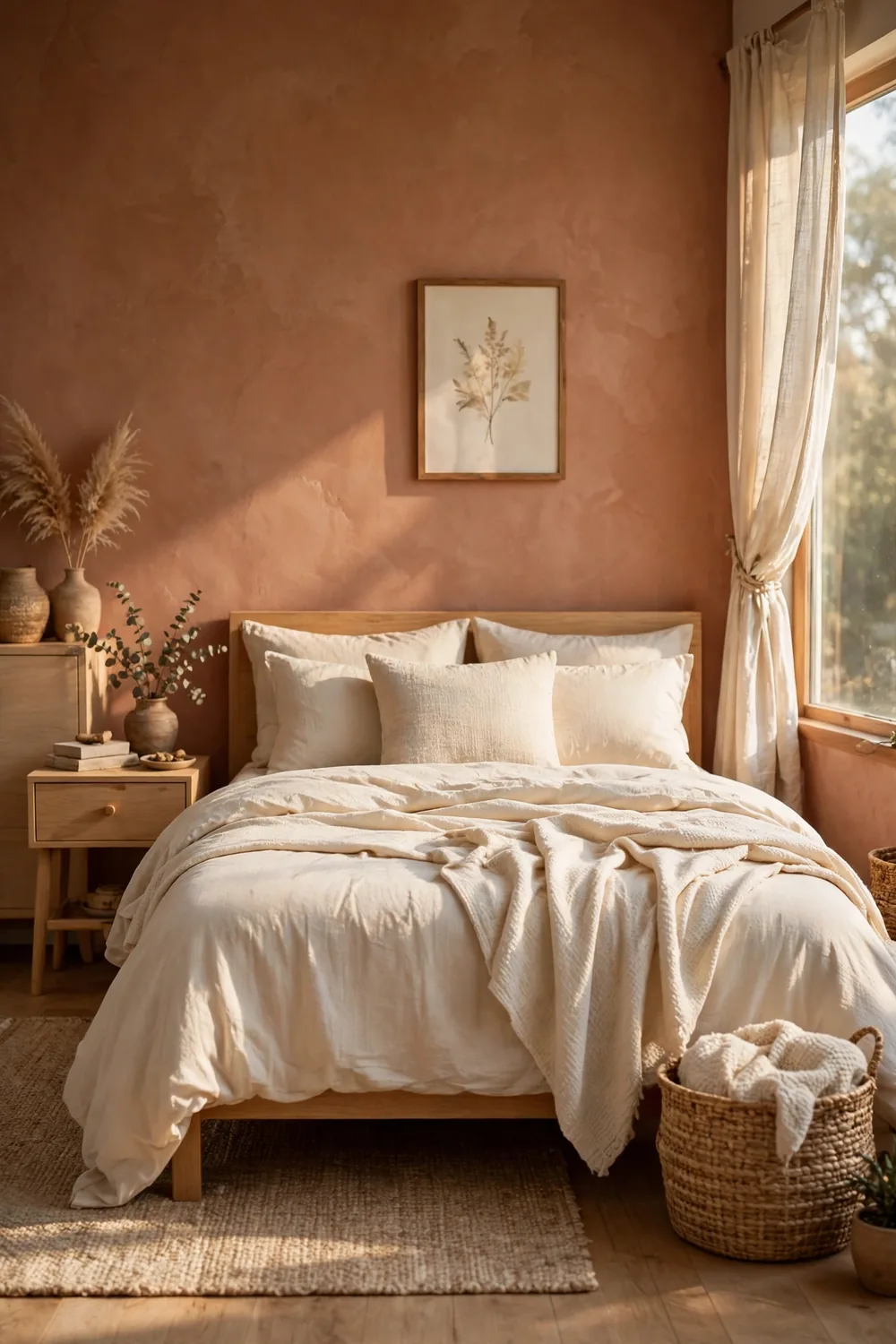
Terracotta brings warmth into a bedroom faster than any other color, but it works best as an accent, not as a wall color on all four walls. Sherwin-Williams Cavern Clay (SW 7701), a soft clay terracotta, is the accent we suggest: one wall behind the bed, or a painted headboard wall, with warm white on the rest.
Keep everything else in the room quiet so the terracotta can do its job. Cream bedding, light wood, and a single warm neutral on the rug let the clay wall be the warmest thing in the room. Test a large swatch, at least 2 feet square, on the wall behind the bed, and look at it at three times of day before deciding.
6. Two tone walls for depth without clutter
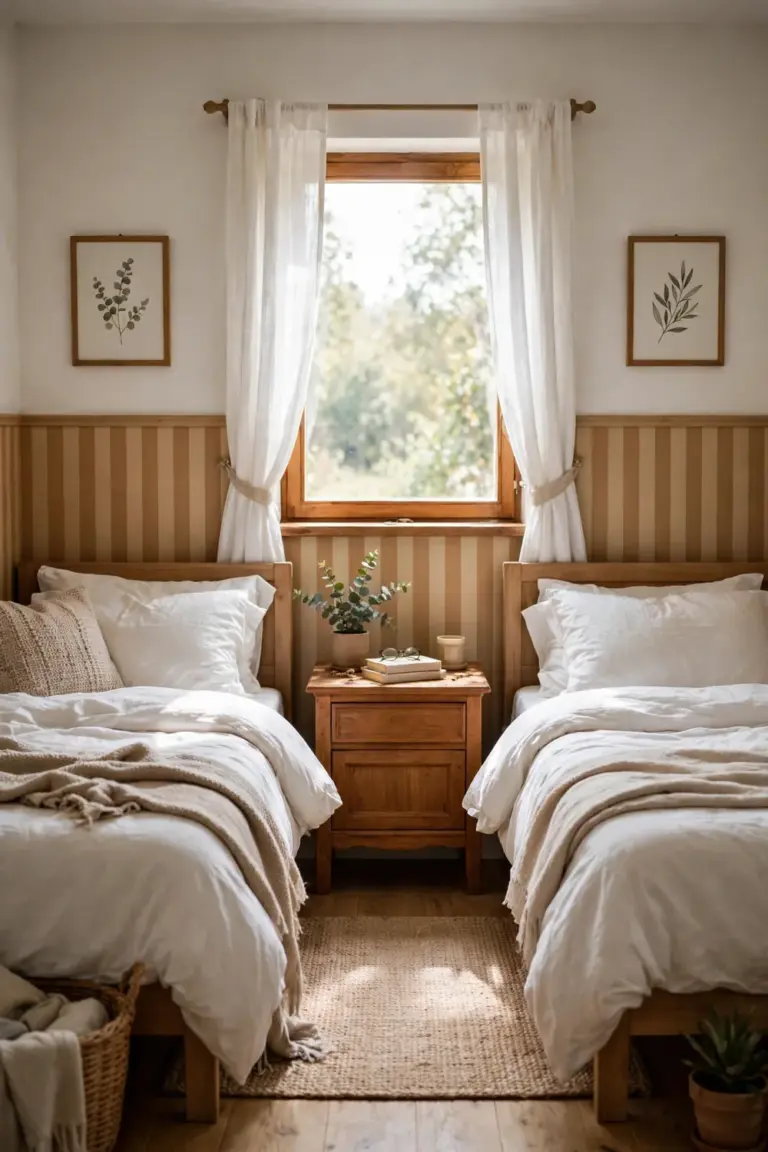
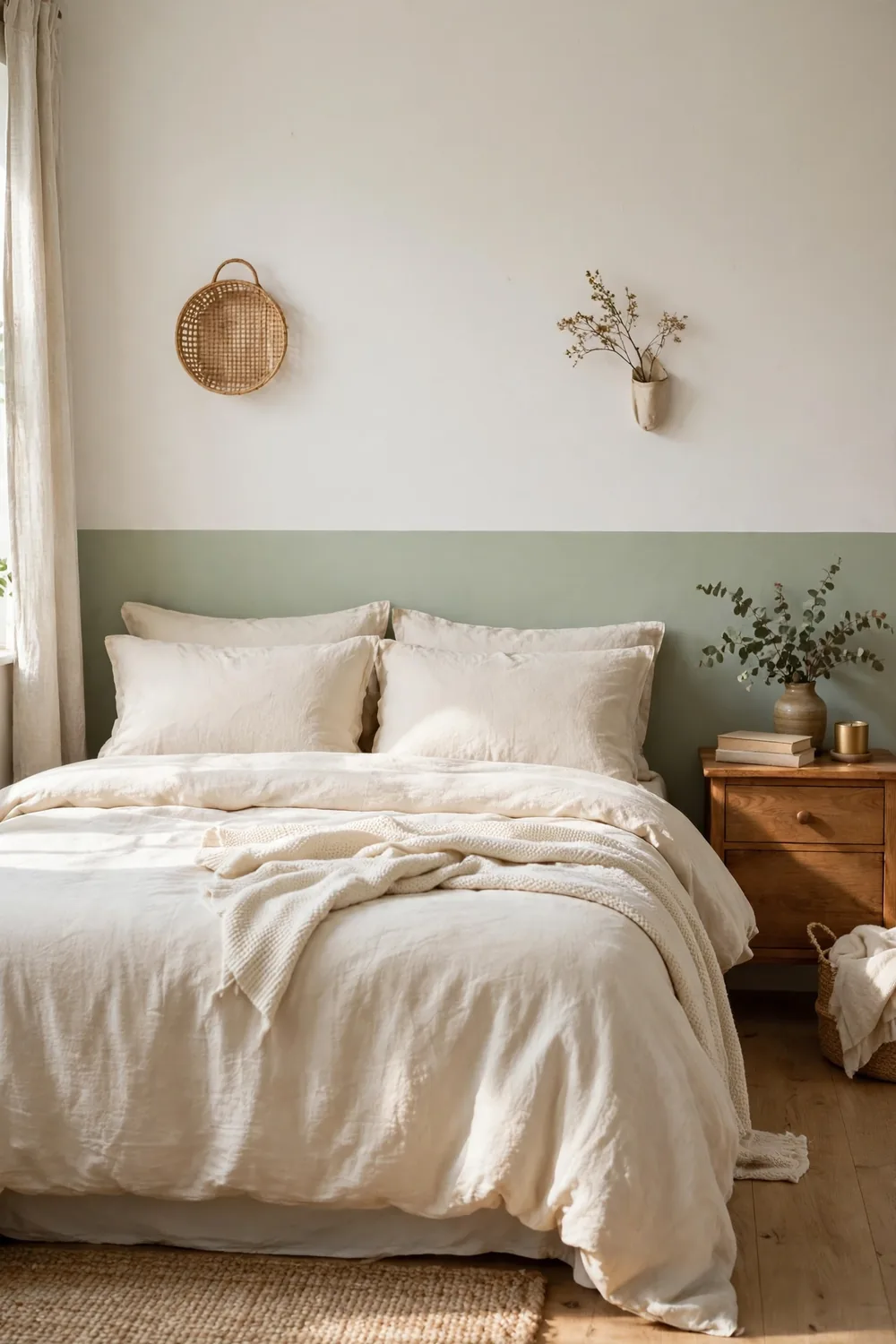
A two tone wall gives a bedroom depth without adding furniture or pattern, and it suits renters too, since it uses paint only. The simplest version paints the lower third of the wall, up to about 36 inches high, in a muted color, and the upper two thirds in warm white. Try Benjamin Moore White Dove (OC-17) on top and Benjamin Moore Saybrook Sage (HC-114) below.
The two tone trick works because it lowers the visual weight of the room: the darker color sits low, where the furniture is, and the lighter color sits high, where the eye rests. Keep the bedding and the rug in the same family as the lower color, so the whole lower half of the room feels like one calm band.
7. Test swatches on the wall before you commit
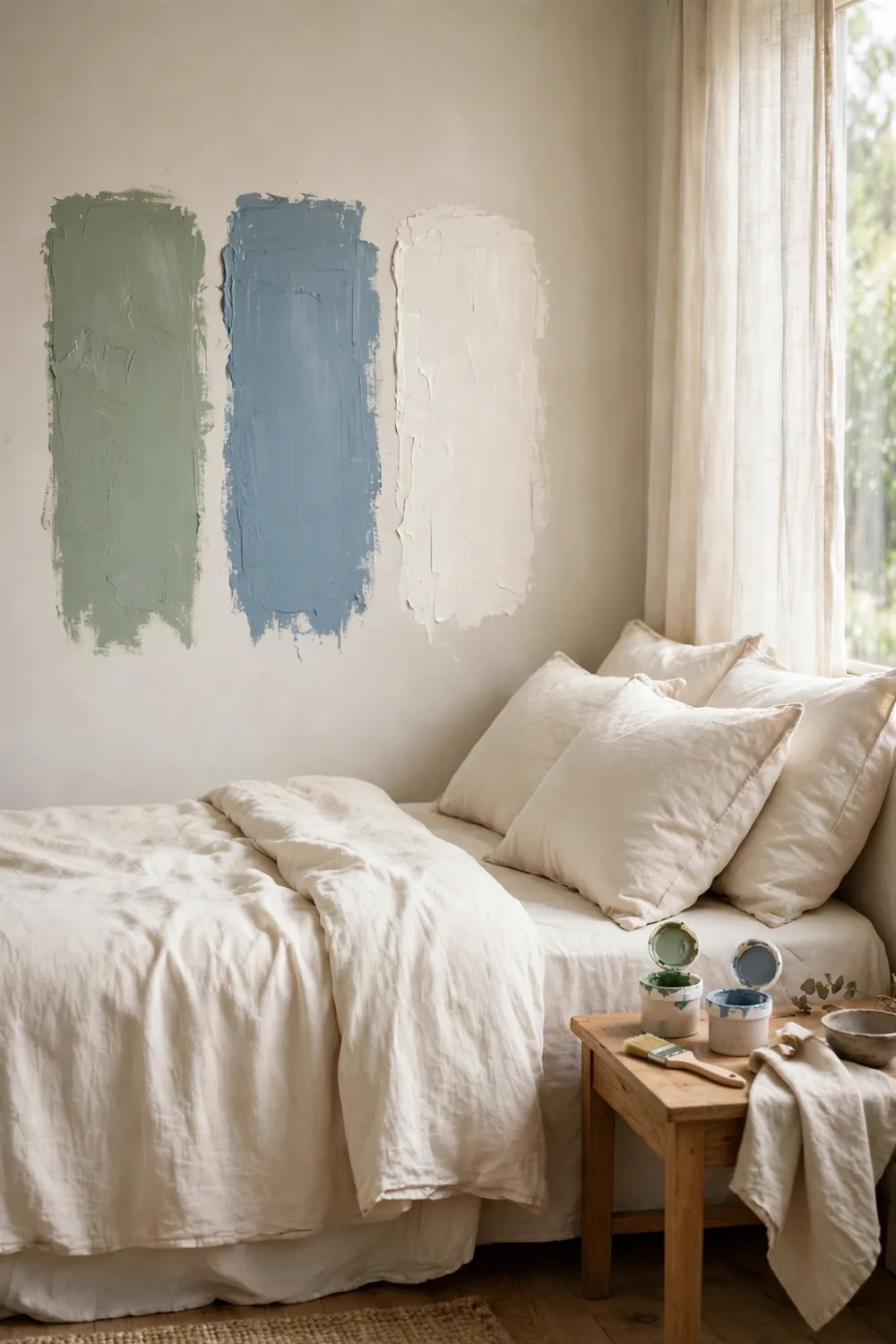
The last step is the one that saves the most regret: paint test swatches on the actual wall and live with them for a full day before buying a single gallon. Paint three swatches, each about 12 inches square, side by side on the wall you see most, and leave a few inches of white between them so each color reads on its own. Check them in the morning, at noon, and at dusk, and look at them with the bedding and the lamp on, since the room at night is the room you will actually sleep in.
Order sample pots, not full gallons, for the test. Most paint stores sell small sample sizes of the colors named above. Paint the swatches with two coats, the same as the real job, because one coat always looks lighter and patchier than the finished wall.
Common mistakes
Three patterns show up in almost every bedroom repaint that ends in regret, and each one has a simple fix.
Choosing from a screen instead of a swatch. A color on a phone looks different on every screen, and different again on a real wall. Fix it by painting a swatch at least 12 inches square on the actual wall and living with it for a full day before buying paint.
Painting all four walls in the accent color. A sage or terracotta that looks calm on one wall can feel heavy on four, especially in a small bedroom. Fix it by using the accent on the wall behind the bed only, with warm white on the other three walls, and letting the bedding repeat the accent at a smaller scale.
Pairing a cool wall with cool bedding. A dusty blue wall with bright white bedding and chrome lamps can make a bedroom feel cold, even in summer. Fix it by warming one layer: cream bedding, a warm wood nightstand, or a brass lamp will balance the cool wall and keep the room feeling restful.
Editor’s pick
If we had to paint one bedroom tomorrow, we would choose warm white walls in Benjamin Moore White Dove (OC-17), one sage accent wall in Benjamin Moore Saybrook Sage (HC-114) behind the bed, and cream bedding with a warm wood nightstand. It is the palette that forgives the most mistakes: the white keeps the room bright, the sage keeps it calm, and the wood keeps it warm.
A calm bedroom is not a white bedroom. It is a bedroom where every color agrees with the light, and no single wall asks for more attention than the bed.
FAQ
Which paint color is calmest for a bedroom? A warm white like Benjamin Moore White Dove (OC-17) or Sherwin-Williams Alabaster (SW 7008) is the calmest starting point, with one muted accent, like sage or dusty blue, on the wall behind the bed.
Should a small bedroom use light or dark paint? Light paint suits a small bedroom best, because it reflects daylight and makes the room feel wider. If you love a deeper color, use it on one wall only, behind the bed, and keep the other three walls in a warm white.
How can paint colors be tested before committing? Paint three swatches, each about 12 inches square, on the wall you see most, and check them in the morning, at noon, and at dusk. Order small sample pots first, and paint two coats, since one coat always looks lighter than the finished wall.
Can a bedroom mix two paint colors on one wall? Yes, with a two tone wall: a muted color on the lower third, up to about 36 inches high, and warm white above. Keep the split level with painter’s tape, and repeat the lower color in the bedding or rug so the room feels tied together.
What bedding color suits a calm palette? Cream, natural linen, or washed cotton in a warm white suits almost every calm palette, because it keeps the contrast with the walls low. Add one accent in the palette color, like a sage cushion or a dusty blue throw, rather than a second strong color.
Related guides
- Cozy Bedroom Ideas for Better Sleep and Slower Mornings
- Bedding Layering Guide: How Hotels Make a Bed Look Inviting
- Nightstand Styling: The 3-Object Rule and When to Break It
- Small Living Room Ideas That Actually Make the Room Feel Bigger