Thrift Store Home Decor Finds Worth Buying (and What to Skip)
Short answer: Buy the solid wood, the brass, and the ceramics. Skip the particle board, the stained upholstery, and anything that smells of smoke. A good thrift haul for one room costs about $30 to $60 and takes one Saturday morning: a pair of nightstands, a lamp, a mirror, and a basket or two. Here is what to pick up, and what to leave behind.
I start every thrift run in the furniture aisle. That is where the money is. A small vase costs a few dollars and changes one shelf. A solid wood nightstand costs about the same and changes a whole bedroom after one can of paint. Searches for “dream thrift finds” are up 550 percent among Gen Z, so the good pieces move fast.
| Find | What I usually pay | What it becomes |
|---|---|---|
| A pair of wood nightstands | $15 to $30 | A painted pair with brass pulls, worth $300 after a flip |
| A solid wood dresser | $30 to $60 | One bold paint colour, a new anchor piece |
| A brass or glass lamp | $5 to $10 | A new shade and warm light in a dark corner |
| Ceramic vases and planters | $2 to $5 each | A plant shelf or a table centrepiece |
| Woven baskets | $3 to $8 each | Storage that looks like decor |
| A framed mirror | $5 to $15 | Light and size in a small room |
What is actually worth buying?
Buy materials, not finished looks. Wood, brass, glass, ceramic, and natural fibre survive paint, cleaning, and a second life. Particle board and thin plastic do not. That is the whole rule. I would rather come home with one good nightstand than with a bag of small decor that does nothing in the room.
1. Solid wood nightstands, the best buy in the store
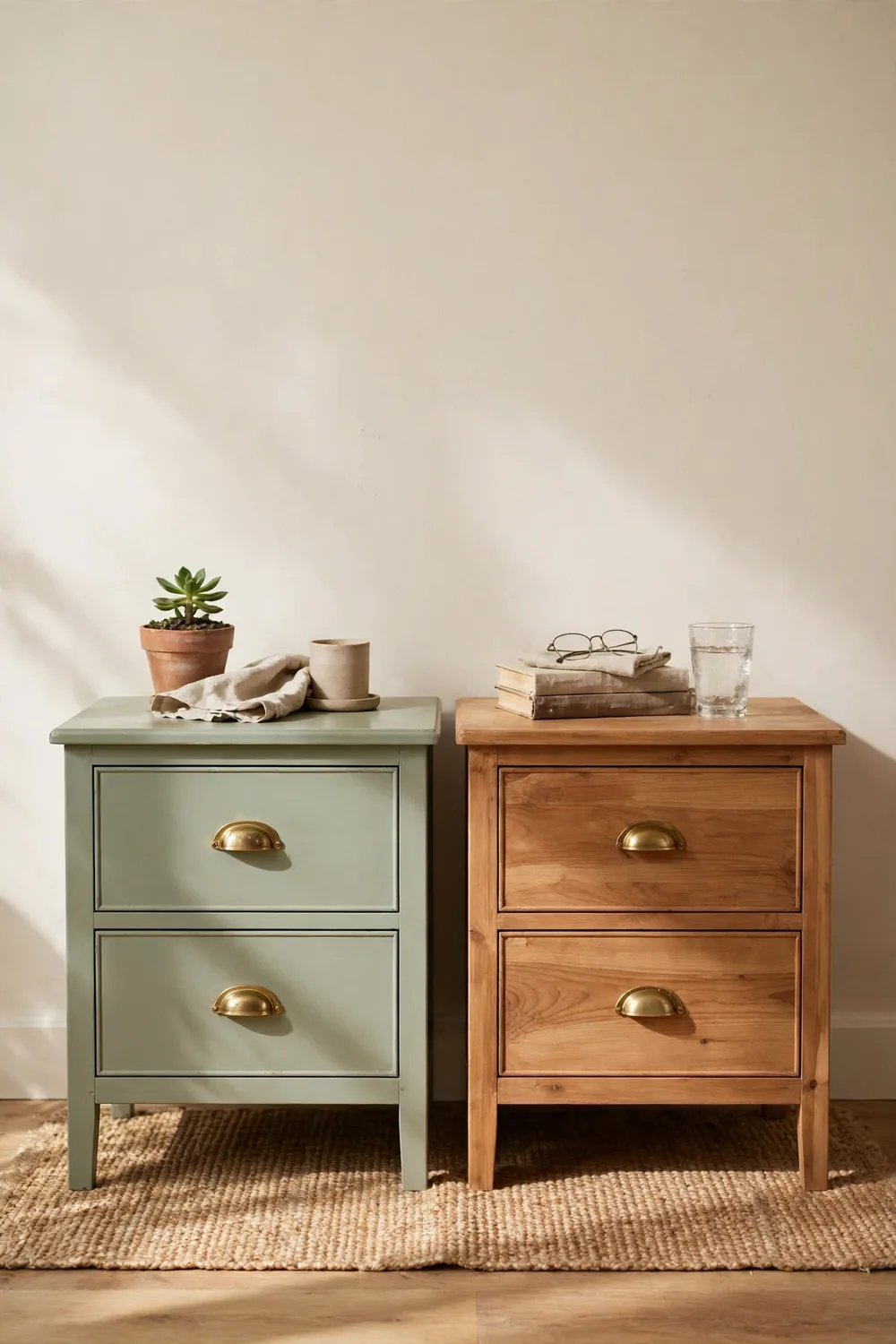
A pair of wood nightstands is the single best thrift find. Homebody Workshop flipped a pair bought for $15 and sold them for $300. Look for three drawers, a flat top, and a frame that does not wobble when you push it. Pull every drawer out and push it back in. A sticking drawer is fine, wax fixes it. A twisting frame is not, leave it. The flip is simple: one can of paint, new brass pulls, and a stained or painted top. Reimagined Furniture Studios painted a pair Dark Forest by Wise Owl Paint with brass hardware, and that pin passed 743 saves, because dark green plus brass plus warm wood is the luxe cue of this whole cluster.
2. Dressers and sideboards, the anchor piece
A dresser is the biggest piece you can carry home for the least money, and it anchors a room the way a rug does. Heirloom Traditions bought a furniture set for $100, painted it with ALL-IN-ONE Paint in Iron Gate, their truest black, and sold it for $800. That is $700 of profit from paint alone. Shackteau Interiors painted a tall dresser Deep Sea Blue milk paint, and that pin passed 2,900 saves. Check the joints before you pay: press the corners, check that the drawers slide, and check that the top is flat enough to hold a lamp. A sideboard in Fusion Mineral Paint Bellwood, a soft sage green, is the safer colour.
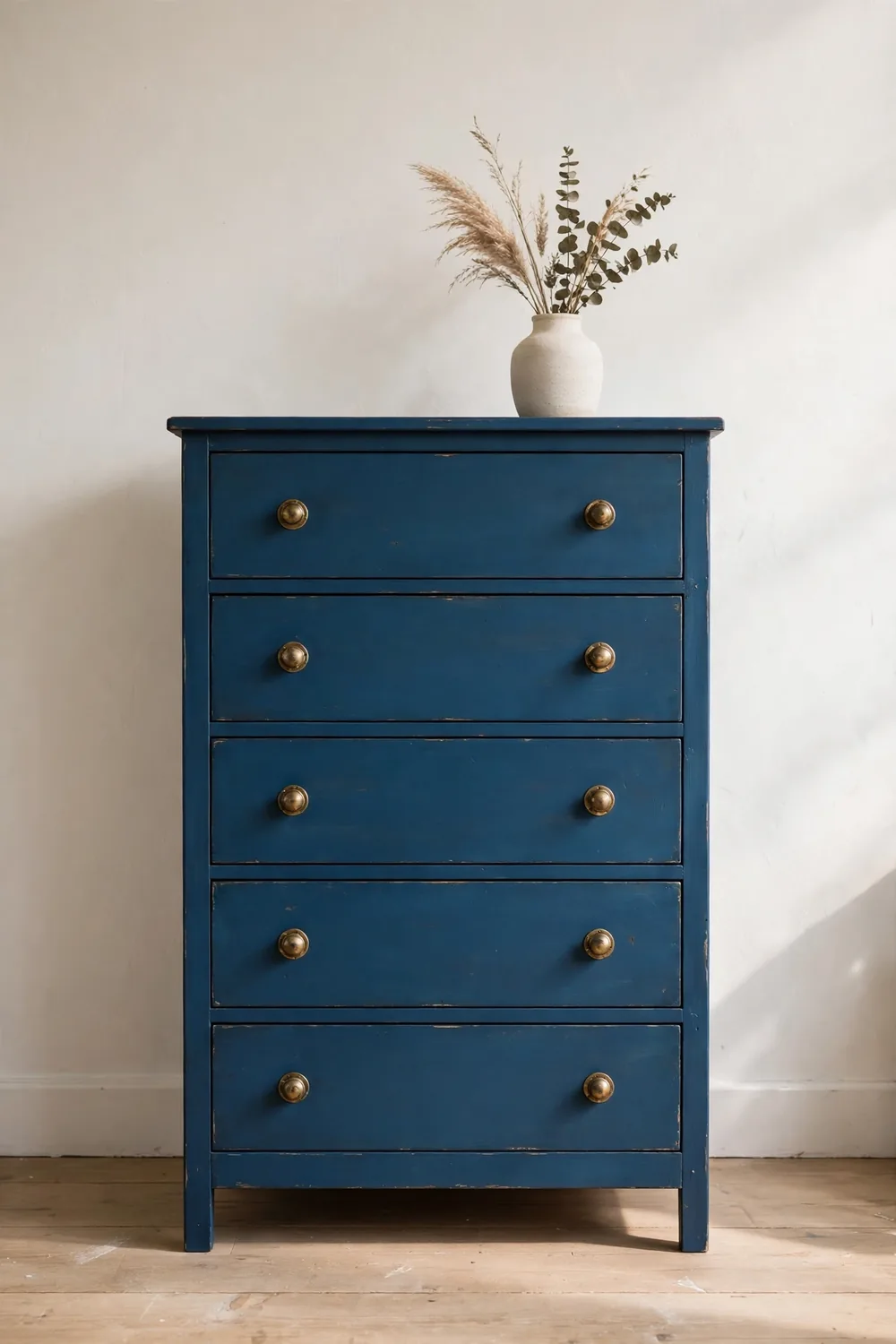
3. Brass and glass lamps, the warm light
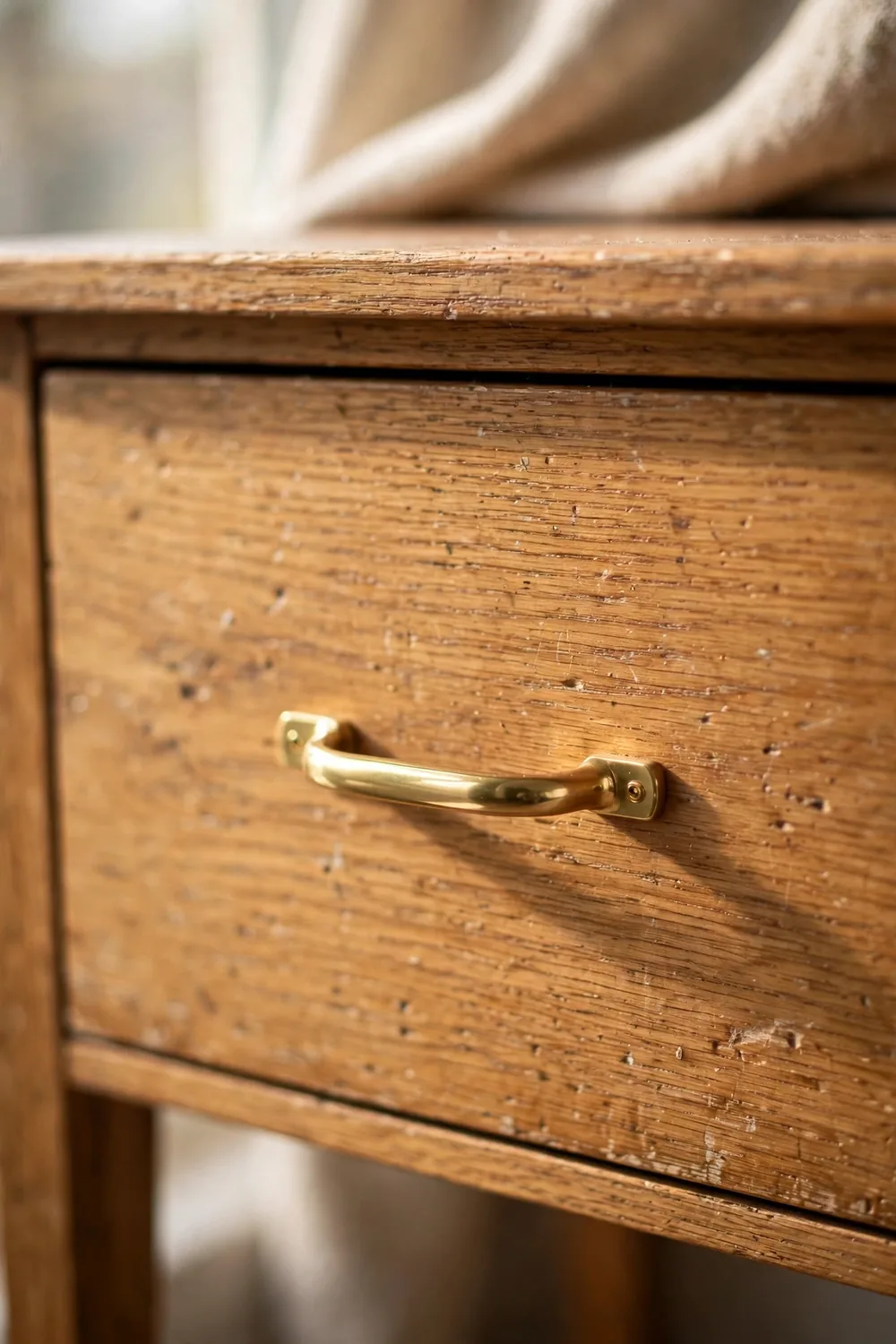
A thrift lamp is the cheapest way to get warm light in a dark corner. A heavy brass base or a glass base with a working socket is worth picking up even if the shade is ugly, because the shade is replaceable and the base is the value. Real brass is heavy. If it feels light, it is probably painted plastic, and painted plastic chips. Check the cord for cracks and the socket for burn marks. A new cream shade costs about $10 to $15 and turns a $5 lamp into the warm glow in the corner. Put it on a nightstand, and the room reads finished at night, which is when you actually live in it.
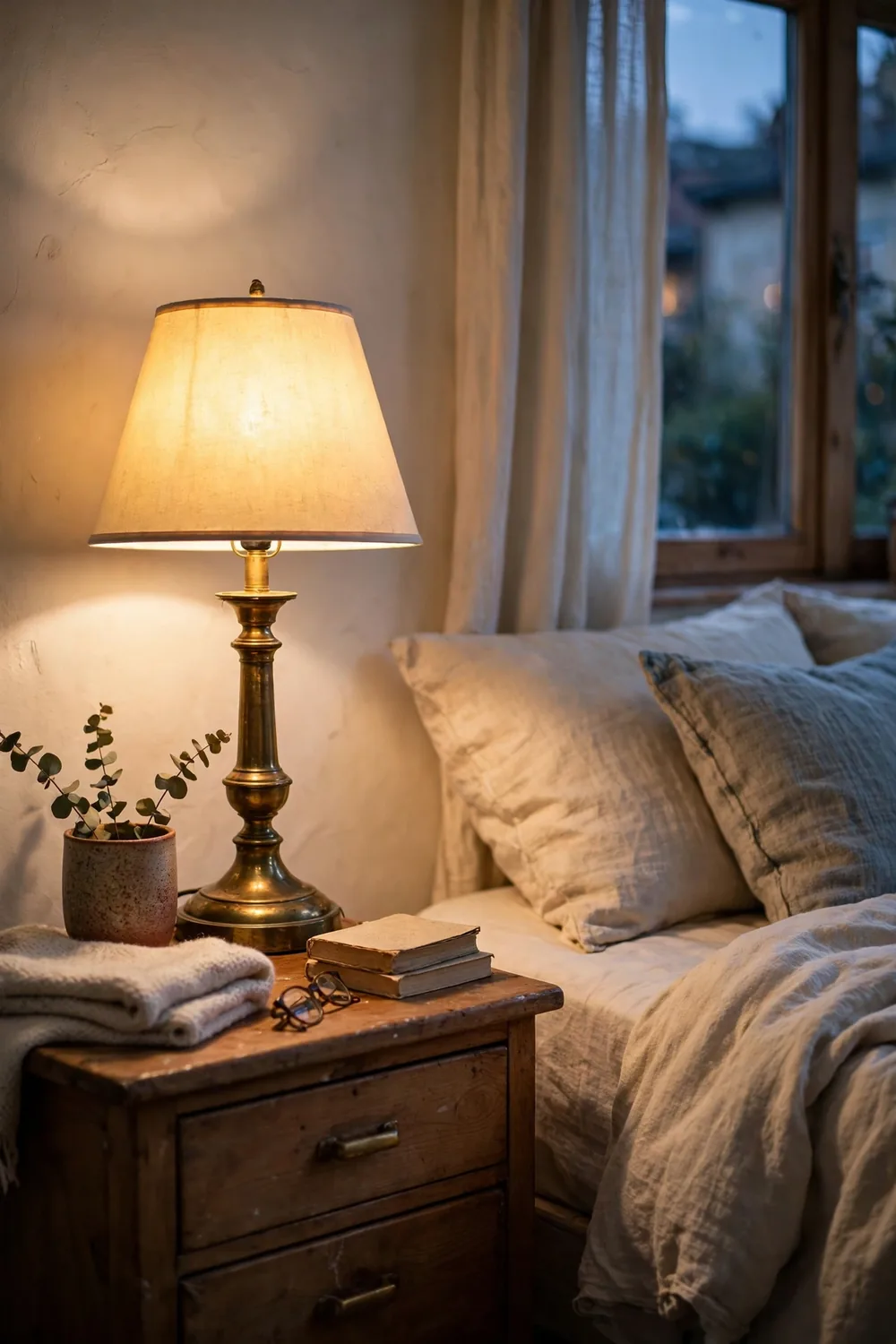
4. Ceramic vases and planters, the small win
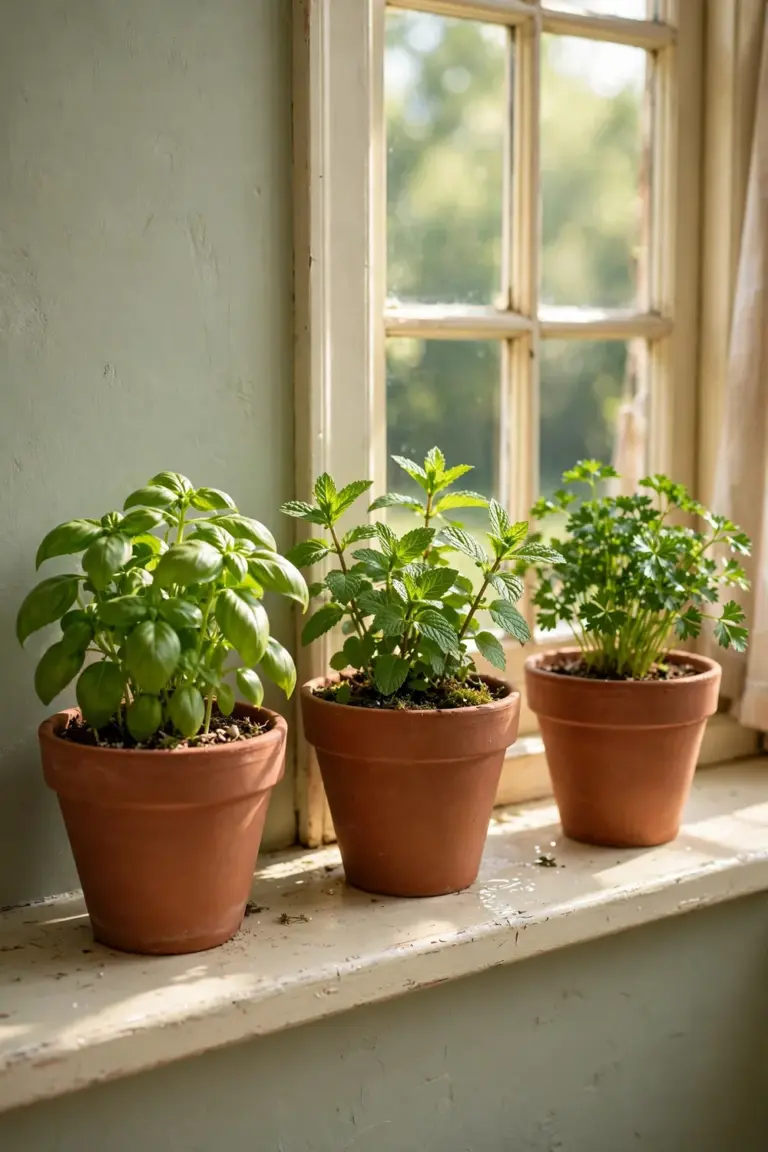
Ceramics are the safest small buy in the store. They do not fade or smell, and they clean up with soap and water. I buy them in threes: one tall, one round, one small, all in cream, sage, or white, never in three different patterns. Check the rim for chips, and check that a planter holds water or has a drainage hole. A chip on the back can turn to face the wall, but a crack through the base is a leak waiting to happen. Three pieces on a shelf with one plant cost less than $15.
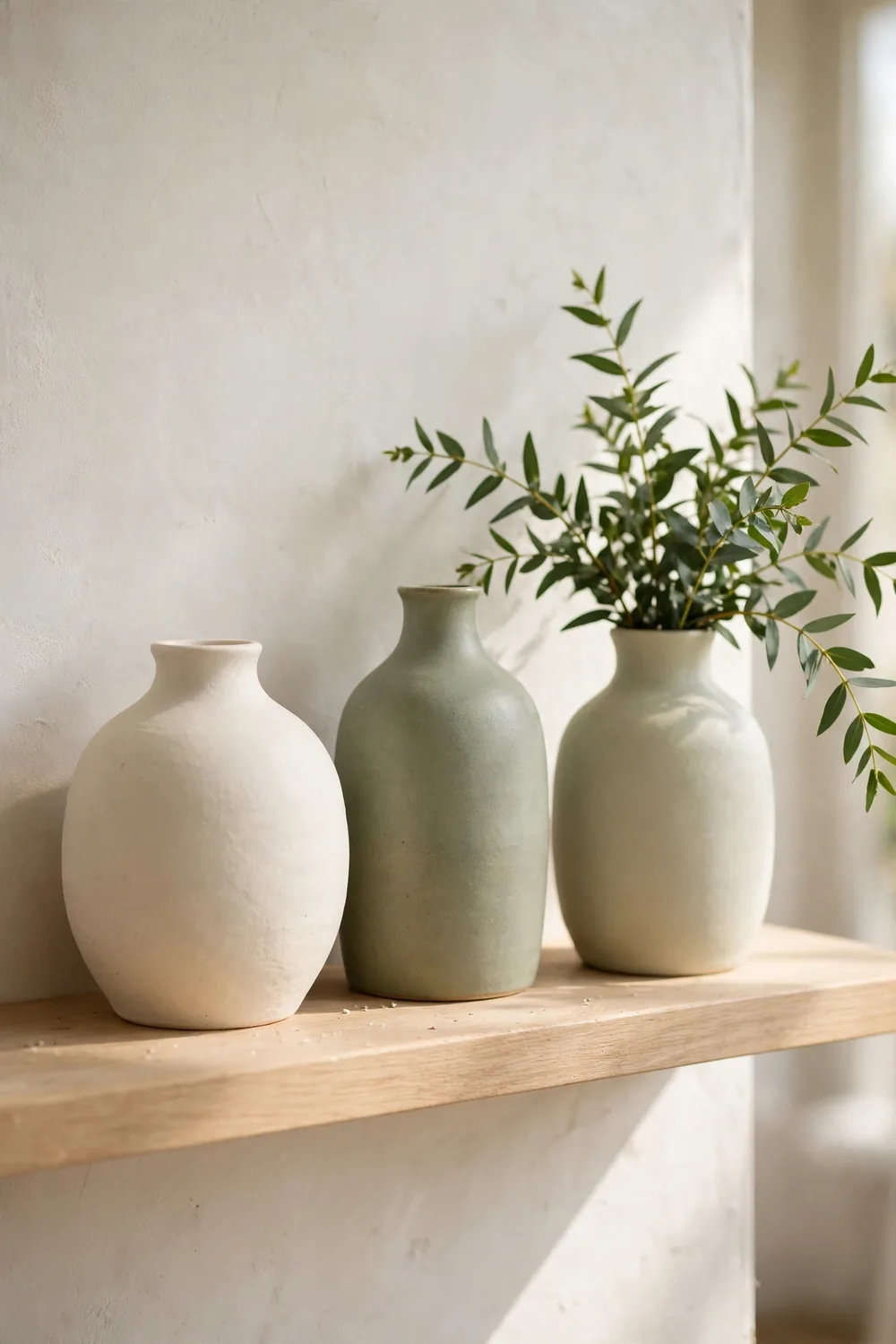
5. Woven baskets, storage that looks like decor
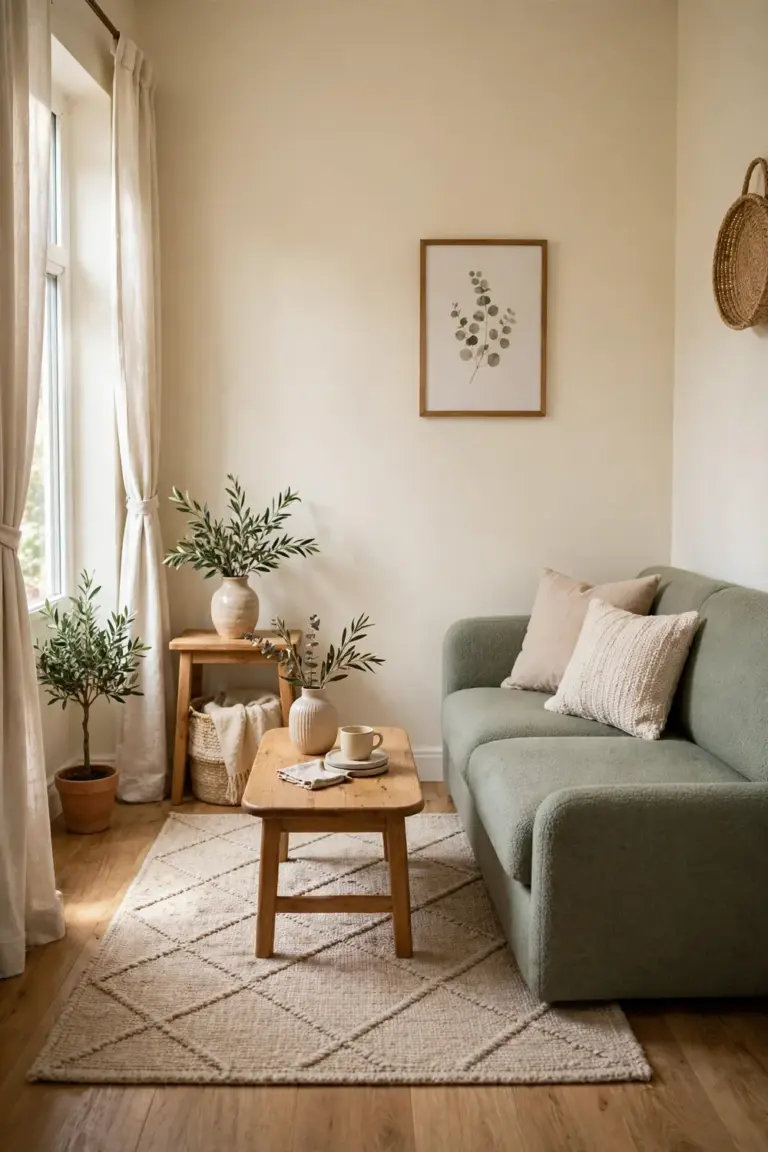
Baskets solve two small-room problems at once: nowhere to put things, and nothing warm to look at. A basket holds throws, toys, or spare cushions in a natural texture that softens a white room. Check the weave for broken strands and lift the basket to your nose. Mildew smells like a damp basement and it does not wash out, so a smelly basket stays in the store. Use one big basket on the floor for blankets and two small ones on a shelf.
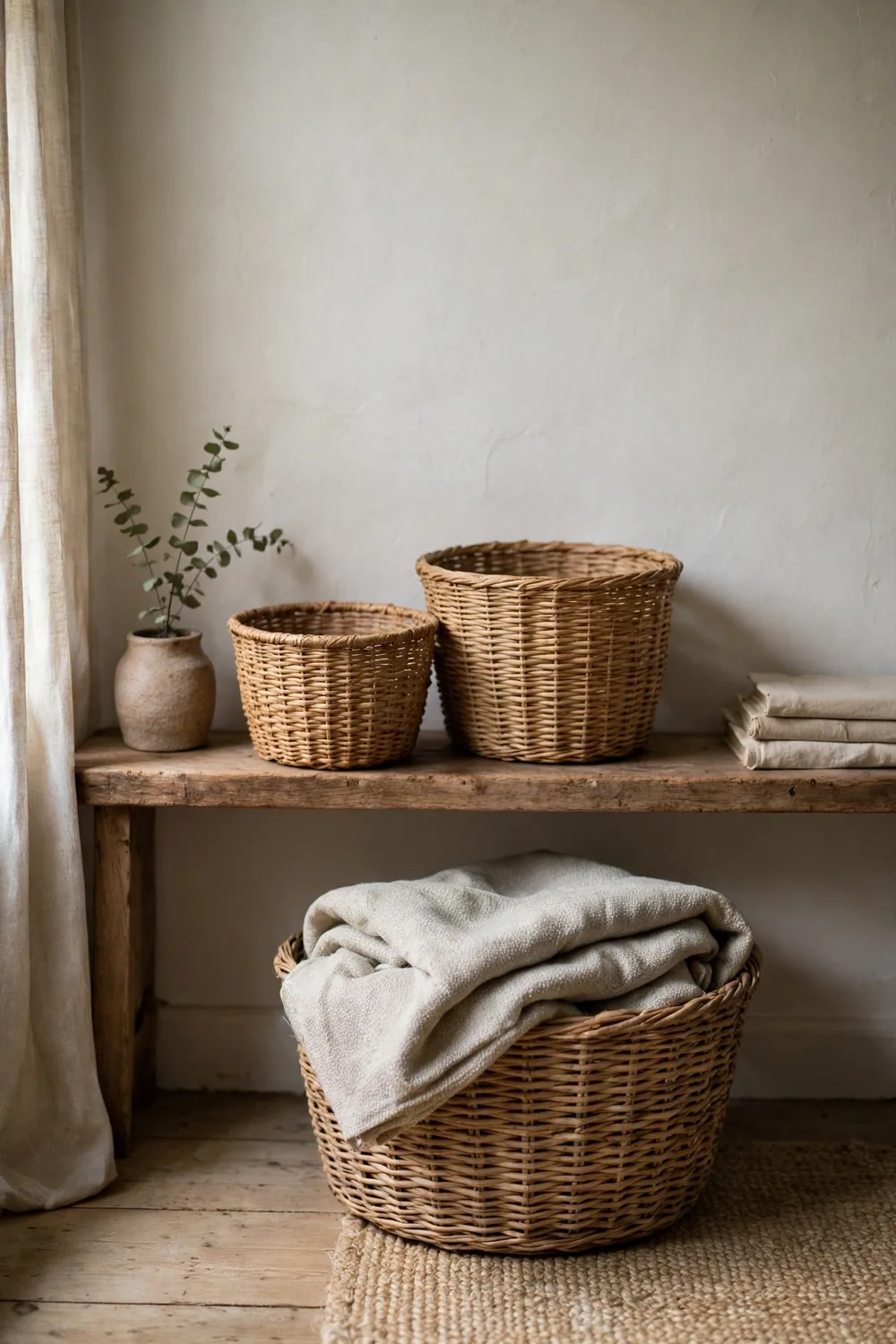
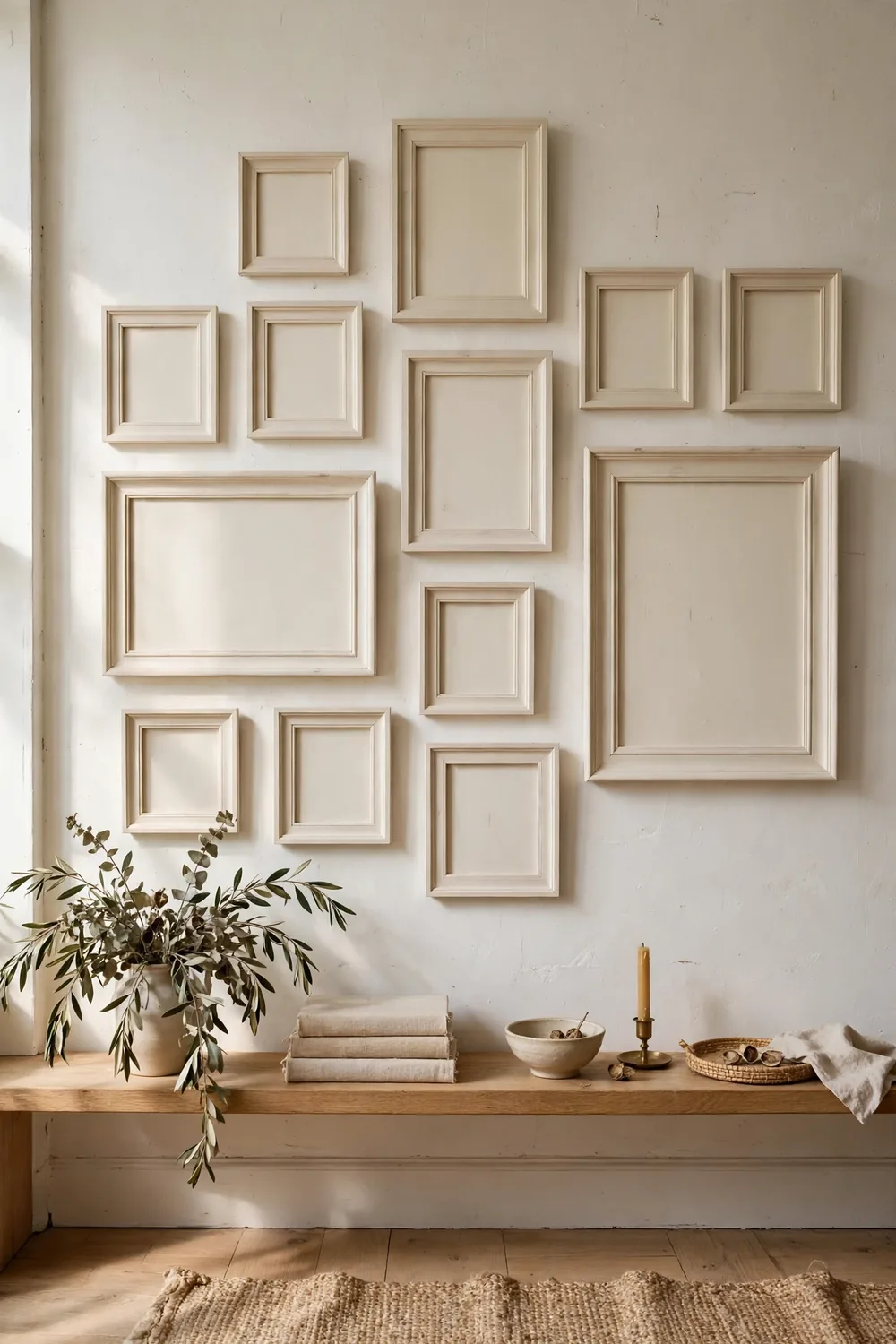
6. Wooden picture frames, the gallery wall
Frames are the cheapest way to fill a blank wall, and wood frames take paint best. Look for real glass, a solid backing, and a size you actually need, not a size that is merely cheap. A frame with broken glass is still worth buying if the frame is good, because a glass shop cuts a replacement for a few dollars. Paint the frames one colour, cream or black or sage, and hang them with the same spacing between them. Three frames in one colour read as a gallery. Three frames in three colours read as a garage sale.
7. Linen and cotton textiles, curtains and tablecloths
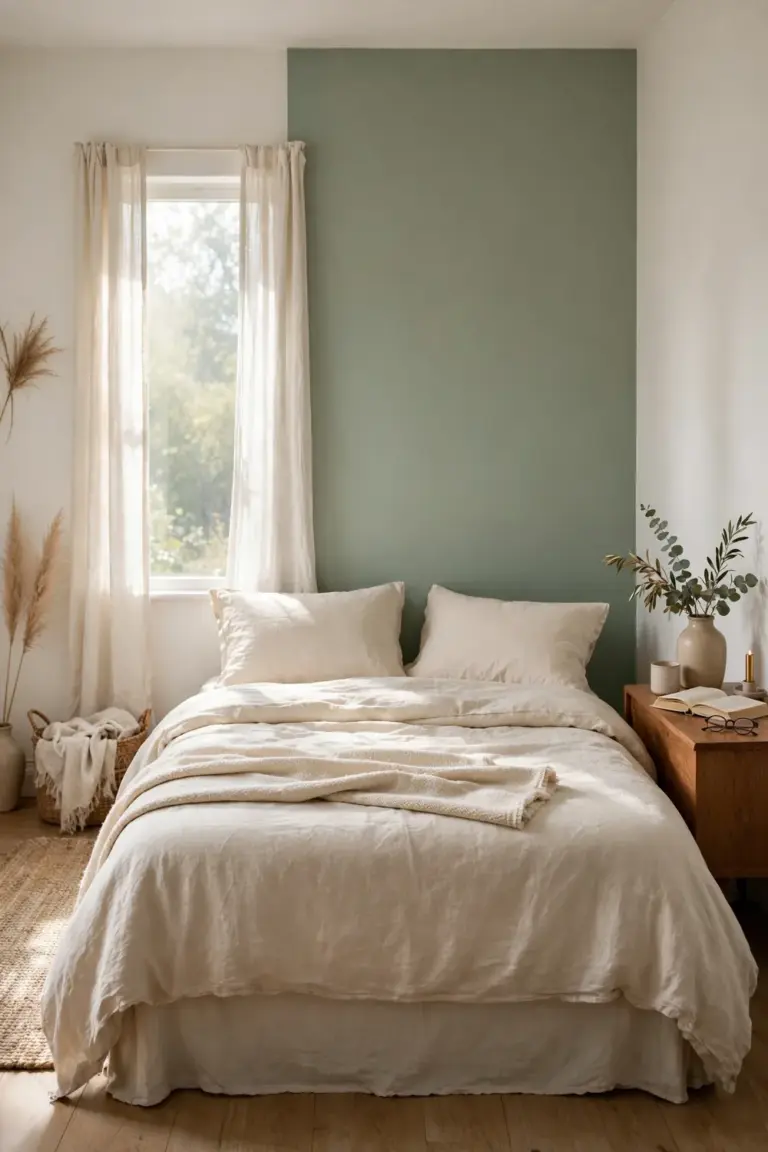
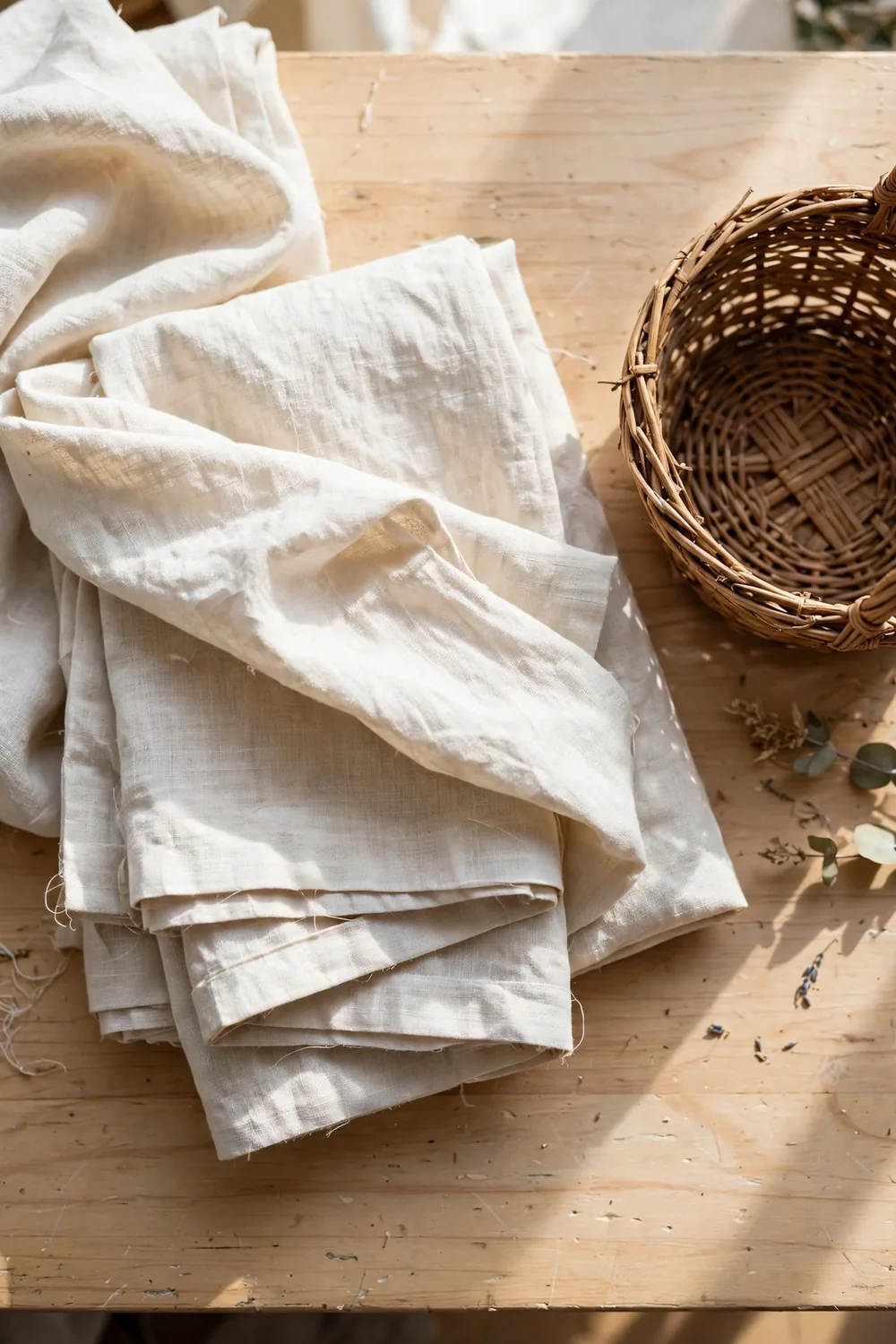
Fabric is the find most people walk past, and it changes a room fastest. A pair of solid cream linen curtains costs a few dollars secondhand and hundreds new, and curtains hung high make a window read bigger than it is. Check every piece in daylight for stains, thin spots, and faded patches. Wash everything before it goes up, and skip anything with a stain you can see from across the aisle. Solid colours only. A patterned curtain from someone else’s house will fight with your room, and a solid one will not.
8. Mirrors, the light doubler
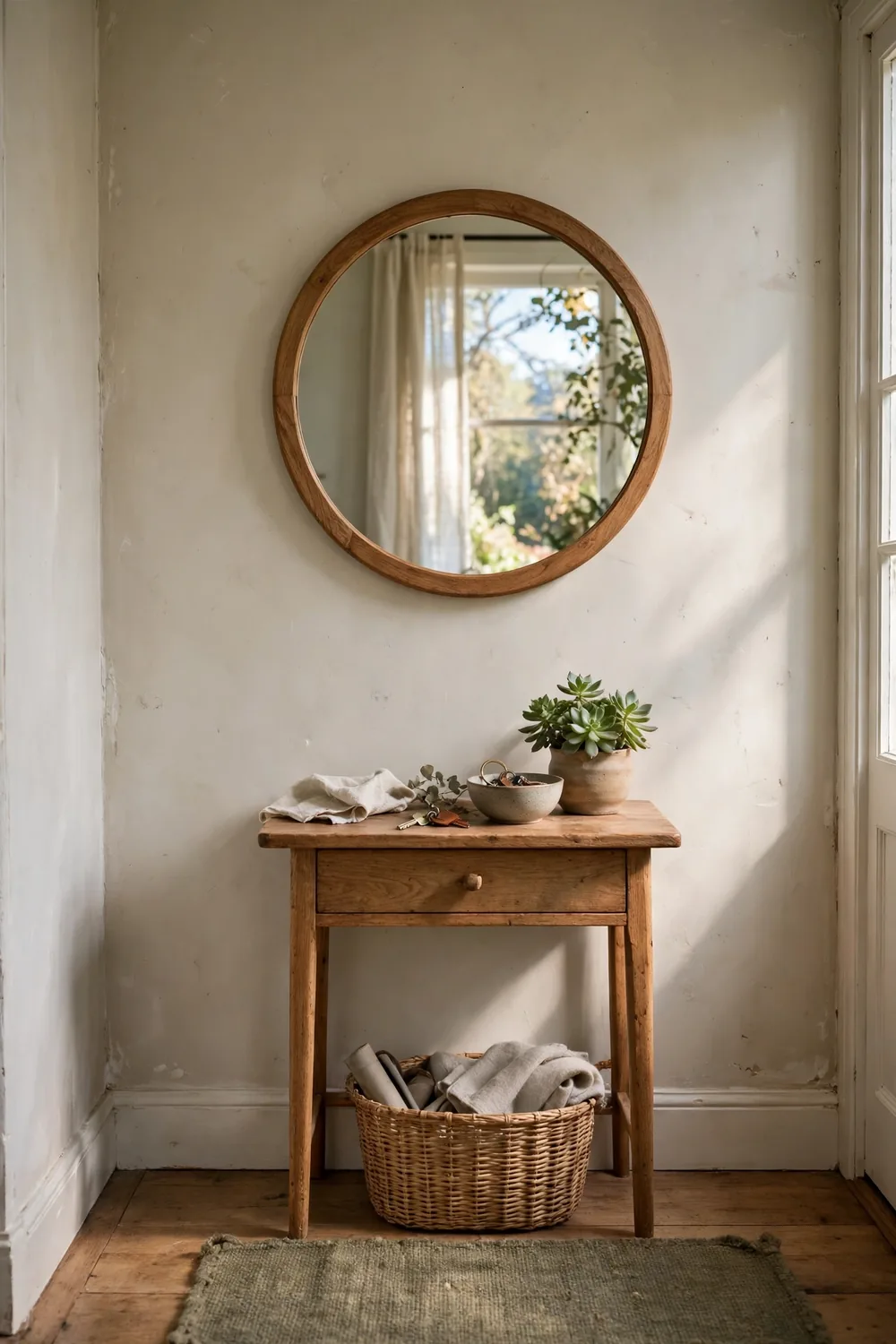
A mirror is the only thrift find that makes a room bigger without moving a wall. It bounces daylight across the room and gives a small space a second window. Check the silvering first: black spots around the edges mean the mirror is dying, and the spots only spread. Check the frame for solid joints and a hanger that holds. A round wood-framed mirror above a small console is the classic entryway move. Hang it across from a window, because a mirror only shows what it faces.
What should you leave on the shelf?
Particle board is the first skip. It swells when it gets wet, the edges crumble, and no paint fixes a swollen board. If the edge feels soft or puffy, put it back. Stained or smelly upholstery is the second skip. A chair with a mystery stain or a smoke smell is not a project, it is a problem you carry home. Mildew and smoke live deep in foam. Chipped melamine is the third skip, because the chip always grows and the white core shows. Broken electronics are the fourth: a lamp with a cracked socket is a fire risk, not a bargain. Skip the matching furniture set from one store. It looks like a showroom, it costs more than a mixed set, and painting a mixed set to match gives you the same look for less.
The three checks before you pay
My rule fits in one hand. First, the material check: knock on it. Solid wood sounds deep and feels heavy. Metal is cold and heavy. Particle board sounds hollow and feels light. Second, the movement check: open every drawer, close every door, and push the piece from the side. Drawers should slide, doors should close, and the frame should not wobble. A sticking drawer is a $2 fix with wax. A twisting frame is a lost cause. Third, the smell check: put your nose close and breathe in. Smoke and mildew never leave, so a piece that smells wrong stays in the store. That is how a $15 pair of nightstands becomes $300, and a $100 furniture set becomes $800.
The best thrift find is not the cheapest one. It is the $15 nightstand that looks like $300 after one can of paint.
FAQ
Is it worth buying thrift furniture if I still have to paint it? Yes, because paint is the highest-leverage change in this whole cluster. A $15 pair of nightstands sold for $300 after paint and brass pulls, and a $100 furniture set sold for $800 after one can of Heirloom Traditions Iron Gate. The paint costs about $35 to $50 and the pulls about $12.
How do I get the thrift smell out of a find? Air and sun first, then baking soda for wood and a hot wash for fabric. Leave a wood piece outside for a day and wipe it with vinegar water. If the smell is smoke or mildew and it survives all of that, the piece was never worth it.
What is the single best thrift find for a small room? A mirror, if the room is dark, and a pair of nightstands, if the room needs furniture. The mirror doubles the daylight and the nightstands anchor the bed. Either one costs less than $30.
Should I buy a matching furniture set at the thrift store? No. A matching set looks like a showroom and costs more than a mixed set. Buy the good pieces one at a time, paint them the same colour, and swap the hardware to match. The result looks intentional and costs less.
Where do I find the good pieces before someone else does? Facebook Marketplace first, then the thrift store early on Saturday morning. Searches for “thrift decor” are up 488 percent, so the good pieces move fast. Go with measurements in your pocket: the wall width, the doorway width, and the height of the space. A tape measure costs $5 and saves more money than any coupon.